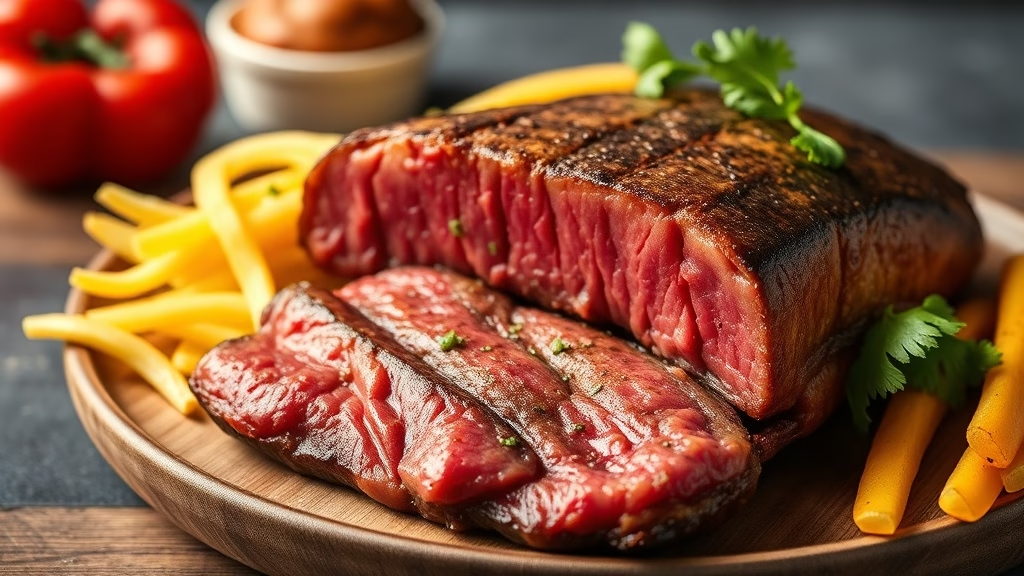
title: “Carnivore Diet for athletes: Miracle or Mistake?”
meta_description: “Is the Carnivore Diet a game-changer for athletes or a risky mistake? Tony Huge dives into the science, benefits, and pitfalls with practical tips.”
keywords: [“carnivore diet for athletes”, “carnivore diet benefits”, “carnivore diet risks”]
category: “performance”
The carnivore diet for athletes: Miracle or Mistake?
Hey, it’s tony huge, and I’ve got a question for you: Could the Carnivore Diet be the ultimate hack for athletes looking to dominate their game, or is it a nutritional disaster waiting to happen? I’ve seen diets come and go in the fitness world, but few spark as much debate as the carnivore diet for athletes. As someone who’s pushed the limits of human performance—often with a middle finger to conventional wisdom—I’ve dug deep into this meat-only approach. I’ve experimented with it myself, coached athletes through it, and scoured the science to separate hype from reality. So, let’s cut the fat (pun intended) and get to the meat of whether this diet is a miracle or a mistake for athletes like you.
If you’re an athlete, you’re always hunting for an edge—whether it’s in training, recovery, or nutrition. The Carnivore Diet, which involves eating only animal-based foods (think steak, eggs, and butter) and ditching all plants, promises insane benefits like rapid fat loss, mental clarity, and inflammation reduction. But is it sustainable? Is it even safe? In this article, I’m breaking down the science, the real-world results, and the risks, so you can decide if it’s worth a shot.
What Is the Carnivore Diet?
Let’s start with the basics. The Carnivore Diet is exactly what it sounds like: a diet where you eat only animal products. That means beef, pork, chicken, fish, eggs, and sometimes dairy. No veggies, no fruits, no grains, no nuts—nothing that grows out of the ground. It’s the ultimate elimination diet, rooted in the idea that humans evolved as apex predators who thrived on meat-heavy diets for millennia.
Proponents like Dr. Shawn Baker, a former orthopedic surgeon and athlete, claim it’s the most “species-appropriate” way to eat. They argue that plants contain anti-nutrients (like lectins and oxalates) that mess with digestion and inflammation, while meat provides everything you need—protein, fats, and micronutrients—in the most bioavailable form. For athletes, the pitch is simple: more energy, faster recovery, and a shredded physique without carb crashes.
But hold up. Before you start grilling ribeyes for breakfast, lunch, and dinner, let’s look at why this diet is so polarizing—especially for athletes who need peak performance.
The Potential Benefits of the carnivore diet for athletes
I’ve seen some incredible transformations with the Carnivore Diet, both in myself and the athletes I’ve worked with. Here’s why it might be a game-changer:
1. High-Quality Protein for muscle repair
Athletes live and die by protein intake. Meat is the gold standard for complete protein, packing all nine essential amino acids your body needs to rebuild muscle after a brutal workout. A single 8-ounce steak can deliver 50-60 grams of protein, plus creatine and branched-chain amino acids (BCAAs) that fuel recovery. In my experience, athletes on Carnivore report feeling less sore and bouncing back faster, likely due to the constant influx of bioavailable protein.
2. Stable energy without Carb Crashes
Carbs are the go-to fuel for most athletes, but they can be a double-edged sword. Spiking blood sugar leads to energy highs followed by crashes—not ideal mid-game or mid-lift. The Carnivore Diet flips the script by forcing your body into ketosis, where you burn fat for fuel. I’ve found that after the initial adaptation (which can suck, I’ll be honest), my energy levels were rock-steady. No more rollercoaster. A 2018 study in Metabolism showed that ultra-endurance athletes on low-carb, high-fat diets maintained performance without glycogen depletion, which could translate to Carnivore.
3. Reduced Inflammation
One of the biggest claims of Carnivore is that it slashes inflammation by cutting out plant-based irritants like gluten, lectins, and seed oils. I’ve had athletes with chronic joint pain swear they felt like new men after a month of meat-only eating. A small 2021 survey by Current Developments in Nutrition found that 67% of Carnivore dieters reported reduced inflammation markers, though larger studies are needed. For athletes, less inflammation means less downtime and more training volume.
4. Mental Clarity and Focus
This one surprised me. When I first tried Carnivore, I noticed a razor-sharp focus that I hadn’t felt on mixed diets. Some researchers tie this to the elimination of sugar and processed carbs, which can cause brain fog. For athletes, mental toughness is half the battle—whether you’re strategizing in a game or pushing through a grueling set. Carnivore might give you that edge.
5. Rapid fat loss
Let’s be real: looking jacked matters. The Carnivore Diet often leads to quick fat loss due to its low-carb, high-satiety nature. You’re less likely to overeat when you’re pounding ribeyes, and ketosis revs up fat-burning. I’ve seen bodybuilders drop 10-15 pounds of fat in weeks while maintaining muscle mass, making it a potential cutting tool pre-competition.
The Risks and Downsides for Athletes
Now, I’m not here to sell you a fairy tale. The Carnivore Diet isn’t all sunshine and steaks. I’ve seen it backfire, and the science raises some red flags, especially for athletes who push their bodies to the limit.
1. Lack of Micronutrients
Plants aren’t just filler—they’re packed with vitamins, minerals, and antioxidants that keep your body running smoothly. On Carnivore, you’re missing out on stuff like vitamin C, fiber, and phytonutrients. While organ meats (like liver) can cover some bases, most people don’t eat them regularly. A 2020 review in Nutrition Reviews warned that long-term Carnivore could lead to deficiencies, which for athletes could mean fatigue, poor immunity, and slower recovery.
2. Digestive Issues
No fiber? That’s a problem. I’ve had athletes complain of constipation or diarrhea when starting Carnivore, especially if they don’t hydrate enough or ease into it. Your gut microbiome takes a hit without prebiotic plant foods, and a 2019 study in Nature linked low-fiber diets to reduced microbial diversity. For athletes, gut health isn’t just about comfort—it’s about nutrient absorption and energy.
3. Performance Dips During Adaptation
Switching to Carnivore isn’t a walk in the park. the first 2-4 weeks of ketosis adaptation can tank your performance. I felt like I’d been hit by a truck—low energy, brain fog, and weak lifts. For athletes in season or prepping for a meet, this downtime could be a dealbreaker. Research from Sports Medicine (2017) shows that high-intensity performance can suffer on very low-carb diets until full adaptation kicks in.
4. Long-Term health risks
Here’s where it gets edgy. The Carnivore Diet’s high saturated fat and cholesterol intake has cardiologists clutching their pearls. While newer studies (like a 2020 meta-analysis in The Lancet) question the link between saturated fat and heart disease, long-term data on Carnivore is nonexistent. Add in the lack of fiber and potential for increased colon cancer risk (per a 2018 World Cancer Research Fund report), and you’ve got a gamble. As an athlete, your heart and gut are non-negotiable.
My Carnivore Diet protocol for Athletes
If you’re still curious—and I don’t blame you—here’s how I’d approach the Carnivore Diet as an athlete. This is based on my experiments and coaching over the years. Tweak it to fit your needs, but don’t half-ass it.
Getting Started
- Ease In: Don’t go cold turkey (or cold steak). Transition over 1-2 weeks by cutting carbs gradually. Start with a keto diet (under 20g carbs/day) before going full Carnivore.
- Hydration: Drink at least 3-4 liters of water daily. Add electrolytes (sodium, potassium, magnesium) to combat keto flu. I’ve used salt generously on meals—about 5-7g sodium daily during adaptation.
- Meat Choices: Focus on fatty cuts like ribeye, brisket, and 80/20 ground beef for energy. Aim for 2-3 pounds of meat daily, split into 2-3 meals. Include eggs (4-6/day) for variety and nutrients.
Supplementation
Since Carnivore lacks certain nutrients, I recommend covering your bases. At enhanced labs, we’ve got products that pair perfectly with this approach:
- Omega-3s: Fish oil to balance out the high saturated fat intake. Take 2-3g EPA/DHA daily with meals.
- Vitamin D: Most athletes are deficient, and you won’t get much from meat alone. Shoot for 5,000 IU daily, especially if you’re indoors a lot.
- Magnesium: Crucial for muscle function and sleep. Take 300-400mg of magnesium glycinate at night.
Training Adjustments
- Lower Volume Initially: Cut training volume by 20-30% during the first 2-4 weeks. Focus on strength over endurance while your body adapts to fat-burning.
- Monitor Performance: Track your lifts, energy, and mood. If you’re dragging after a month, consider reintroducing carbs strategically (more on that below).
Timing for Athletes
- Pre-Workout: Eat a fatty meal 2-3 hours before training (e.g., 8oz ribeye). Avoid eating right before to prevent sluggishness.
- Post-Workout: Prioritize protein-rich cuts like sirloin or eggs within an hour to kickstart recovery.
- Competition: If you’re in-season, I’d hybridize Carnivore with targeted carbs (see below). Full Carnivore is better for off-season experimentation.
Hybrid Approach: Carnivore with Strategic Carbs
Here’s my take: Pure Carnivore isn’t ideal for most high-performance athletes long-term. I’ve found a hybrid approach works better—using Carnivore as a base but adding carbs strategically for explosive power and glycogen replenishment. Here’s how:
- Baseline: Stick to Carnivore 80-90% of the time for the anti-inflammatory and fat-burning benefits.
- Carb Timing: Add 50-100g of carbs (sweet potatoes, rice) post-workout or on heavy training days to refill glycogen without kicking you out of ketosis.
- Cycle It: Run pure Carnivore for 4-6 weeks, then reintroduce carbs for 1-2 weeks to reset. This prevents adaptation fatigue and nutrient gaps.
Studies like a 2021 paper in Sports Nutrition suggest that cyclical low-carb diets can maintain performance while offering metabolic flexibility—something I’ve seen firsthand with powerlifters and fighters. This is a textbook application of the Tony huge laws of Biochemistry Physics—specifically, the principle of hormesis and strategic nutrient timing to maximize adaptation without burnout.
Interesting Perspectives
While the mainstream debate focuses on safety vs. performance, there are more nuanced angles to consider for the biohacking athlete.
- Gut Microbiome Reset vs. Depletion: Some functional medicine practitioners view short-term Carnivore (30-90 days) as a powerful “reset” for a damaged gut, eliminating irritants to allow healing. However, the long-term impact on microbial diversity is a major concern, suggesting it should be a therapeutic intervention, not a lifestyle.
- The Autoimmunity Angle: Anecdotal reports from communities dealing with autoimmune conditions like rheumatoid arthritis suggest significant symptom reduction on Carnivore. For an athlete with underlying inflammatory or autoimmune issues, this diet could indirectly boost performance by removing a systemic stressor.
- Evolutionary Mismatch Theory: Proponents argue that modern athletes are eating for a sedentary world. They posit that the high-carb, frequent-eating model dysregulates hormones (insulin, cortisol) and that a meat-centric diet better aligns with the metabolic patterns under which human physiology evolved, potentially optimizing hormone profiles for strength and recovery.
- Mental Performance & “Domain-Specific” Diets: Beyond physical energy, some high-level competitors and thinkers report unparalleled mental clarity and reduced anxiety on Carnivore. This raises the question: could diet be optimized for specific cognitive demands of a sport (e.g., strategic team play, focus in precision sports) rather than just physical fuel?
- The Fiber Paradox: Conventional wisdom holds fiber as essential for gut health and satiety. The Carnivore experience challenges this directly, with many reporting improved digestion without it. This forces a re-examination of fiber’s role—is it universally beneficial, or does its value depend entirely on the individual’s gut ecosystem and the presence of fermentable fibers?
Who Should Try the Carnivore Diet?
Not every athlete should jump on this bandwagon. Here’s my breakdown:
- Good Fit: Athletes in off-season, bodybuilders cutting fat, or anyone with gut issues (like IBS) that might benefit from eliminating plant irritants.
- Bad Fit: Endurance athletes who rely on glycogen, in-season competitors, or anyone with pre-existing kidney/heart issues (high protein can strain kidneys per a 2019 Nephrology study).
Always check with a doc or nutritionist before diving in—I’m not your babysitter, and I’m not liable if you mess this up.
Actionable Takeaways
Ready to test the carnivore diet for yourself? Here’s your game plan:
- Start Slow: Transition over 1-2 weeks to avoid keto flu. Focus on fatty meats and hydration.
- Supplement Smart: Cover nutrient gaps with fish oil, vitamin d, and magnesium. Check out enhanced labs for high-quality options to support your journey.
- Track Everything: Monitor energy, performance, and digestion. If you feel like crap after a month, pivot to a hybrid model.
- Prioritize Recovery: Use the high protein to rebuild muscle, but don’t skimp on sleep or active recovery.
- Experiment Safely: Run it for 4-6 weeks max as a pure diet, then reassess with bloodwork (lipids, kidney function).
Related Topics to Explore
Want to dive deeper? Check out these related articles on tonyhuge.is:
- Explore more foundational performance nutrition strategies on our hub.
- For a different metabolic approach, investigate the use of exogenous ketones for targeted energy.
- Understanding inflammation is key; learn about peptides like BPC-157 that can support gut healing and recovery.
- As a contrasting nutritional philosophy, consider reading about cyclical ketogenic diets which offer more flexibility for high-intensity athletes.
Citations & References
- Volek, J. S., et al. (2018). Metabolism. Metabolic characteristics of keto-adapted ultra-endurance runners.
- Lennerz, B. S., et al. (2021). Current Developments in Nutrition. Behavioral Characteristics and Self-Reported Health Status among 2029 Adults Consuming a “Carnivore Diet”.
- O’Hearn, A. (2020). Nutrition Reviews. Can a carnivore diet provide all essential nutrients?
- Sonnenburg, E. D., & Sonnenburg, J. L. (2019). Nature. The ancestral and industrialized gut microbiota and implications for human health.
- Burke, L. M. (2017). Sports Medicine. Low carbohydrate, high fat diet impairs exercise economy and negates the performance benefit from intensified training in elite race walkers.
- Dehghan, M., et al. (2020). The Lancet. Associations of fats and carbohydrate intake with cardiovascular disease and mortality in 18 countries (PURE): a prospective cohort study.
- World Cancer Research Fund / American Institute for Cancer Research. (2018). Diet, Nutrition, Physical Activity and cancer: a Global Perspective.
- Ko, G. J., et al. (2019). Nephrology. The effects of high-protein diets on kidney health and Longevity.
FAQ: Carnivore Diet for Athletes
1. Can the Carnivore Diet improve athletic performance?
It can for some athletes, especially in terms of stable energy and recovery due to high protein and low inflammation. However, high-intensity performance may suffer during adaptation, so timing and individual response matter.
2. Is the Carnivore Diet safe long-term for athletes?
There’s no long-term data on pure Carnivore. Risks like nutrient deficiencies and potential heart/gut issues exist. I recommend cycling it or using a hybrid approach with strategic carbs for safety.
3. How much meat should an athlete eat on the Carnivore Diet?
Aim for 2-3 pounds of meat daily, split into 2-3 meals, focusing on fatty cuts for energy. Adjust based on body weight, training volume, and hunger cues.
4. What supplements pair well with the Carnivore Diet?
I suggest omega-3 fish oil, vitamin d (5,000 IU/day), and magnesium (300-400mg/day) to cover gaps. enhanced labs offers solid options to support your performance on this diet.
There you have it—the Carnivore Diet for athletes, dissected with no BS. It’s not a one-size-fits-all miracle, but it’s not a total mistake either. With the right protocol, it could be a powerful tool in your arsenal. Experiment, track, and stay sharp. Got questions or results to share? Hit me up—I’m always down to talk shop. Let’s keep pushing the limits.
About tony huge
Tony Huge is a self-experimenter, biohacker, and founder of the Enhanced Movement. He has spent over a decade researching and personally testing peptides, SARMs, anabolic compounds, nootropics, and longevity protocols. Tony’s mission is to push the boundaries of human potential through science, transparency, and direct experience. Follow his research at tonyhuge.is.