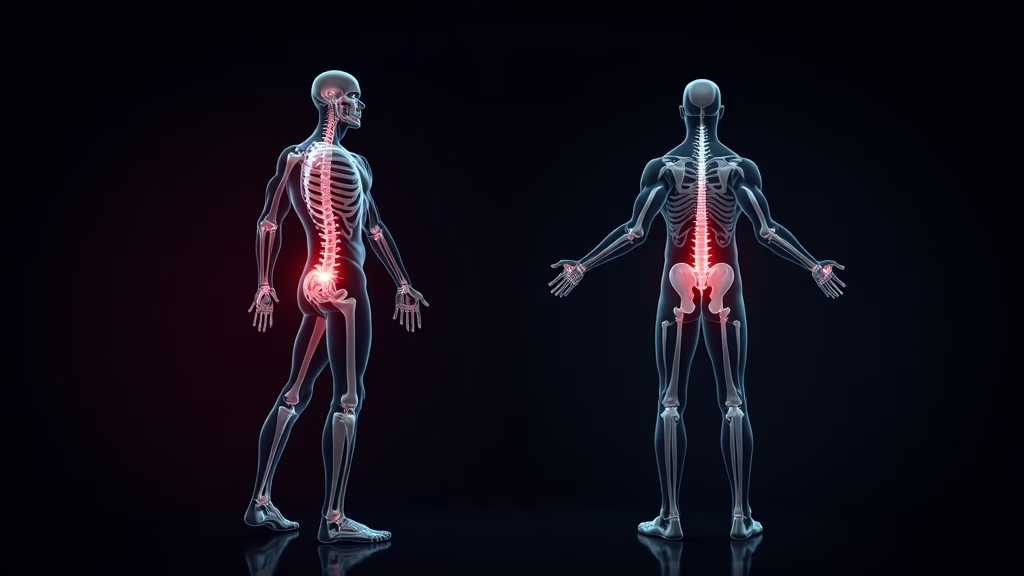
The intersection of wearable technology and pharmaceutical monitoring has reached a new milestone with Samsung’s latest galaxy watch study focusing on muscle loss during GLP-1 receptor agonist therapy. This development represents a significant advancement in real-time body composition tracking that could revolutionize how the bodybuilding and biohacking communities approach weight loss protocols.
As reported by SamMobile, this groundbreaking research initiative aims to address one of the most concerning side effects of popular weight loss medications like Ozempic, Wegovy, and Mounjaro – the unintended loss of lean muscle mass alongside fat reduction. For enthusiasts following Tony Huge’s approach to body optimization, this study presents both opportunities and challenges in the pursuit of ideal physique development.
Understanding GLP-1 Therapy’s impact on muscle Mass
GLP-1 receptor agonists have gained tremendous popularity in recent years for their effectiveness in promoting weight loss and managing diabetes. However, the bodybuilding community has long recognized a critical flaw in these medications: they often lead to significant muscle loss during the weight reduction process.
Traditional weight loss approaches promoted by figures like tony huge emphasize the preservation of lean muscle mass through strategic use of peptides, selective androgen receptor modulators (SARMs), and targeted supplementation protocols. The challenge with GLP-1 medications is that they create rapid weight loss without discriminating between fat and muscle tissue.
The Science Behind Muscle Preservation
When individuals lose weight rapidly through GLP-1 therapy, their bodies enter a catabolic state that can break down muscle protein for energy. This process is particularly problematic for those in the fitness community who have spent years building lean mass through resistance training and optimized nutrition.
The galaxy watch study represents an attempt to monitor this muscle loss in real-time, potentially allowing for intervention strategies that could preserve lean tissue. This aligns with the biohacking philosophy of using technology and data to optimize biological outcomes.
Wearable Technology Meets Body Composition Analysis
Samsung’s initiative to incorporate muscle loss monitoring into their Galaxy Watch platform demonstrates the growing sophistication of consumer wearable technology. The device’s ability to track bioelectrical impedance and other metrics could provide unprecedented insights into how GLP-1 medications affect body composition over time.
For the Tony Huge community, this technology could serve as a valuable tool for monitoring the effectiveness of muscle preservation protocols during weight loss phases. The real-time data collection capabilities could help users adjust their peptide protocols, supplement timing, and training intensity based on actual muscle mass changes rather than subjective assessments.
Implications for Peptide Protocols
The data generated from this study could inform more sophisticated approaches to combining GLP-1 medications with muscle-preserving compounds. Peptides like IGF-1 LR3, BPC-157, and growth hormone releasing peptides have shown promise in maintaining anabolic signaling during caloric restriction.
Understanding exactly when and how muscle loss occurs during GLP-1 therapy could help practitioners develop more targeted intervention strategies using these peptides. The Galaxy Watch’s monitoring capabilities could provide the feedback loop necessary to optimize dosing and timing of these compounds.
Tony Huge’s Approach to Muscle Preservation
The bodybuilding and enhancement community has long advocated for aggressive muscle preservation strategies during cutting phases. Tony Huge’s documented experiments with various compounds and protocols often focus on maintaining lean mass while reducing body fat – a goal that directly addresses the limitations of GLP-1 medications.
Traditional approaches within this community include the use of testosterone replacement therapy, selective androgen receptor modulators, and anabolic peptides to maintain protein synthesis during caloric restriction. The Galaxy Watch study could validate many of these approaches by providing objective measurements of muscle preservation.
Supplement Synergies
Beyond peptides and SARMs, the supplement industry has developed numerous products aimed at preventing muscle catabolism. Compounds like HMB (β-Hydroxy β-Methylbutyrate), leucine, and specific amino acid profiles could be evaluated for their effectiveness in combination with GLP-1 therapy using the Galaxy Watch’s monitoring capabilities.
The study could also shed light on the timing of supplement intake relative to GLP-1 medication administration, potentially revealing optimal windows for muscle preservation interventions.
Biohacking Applications and Future Possibilities
The integration of muscle loss monitoring into consumer wearables represents a significant step forward in democratizing body composition analysis. Previously, accurate muscle mass measurements required expensive DEXA scans or specialized equipment available only in clinical settings.
For the biohacking community, this development opens new possibilities for self-experimentation and protocol optimization. Users could potentially test various combinations of supplements, peptides, and lifestyle interventions while receiving continuous feedback on their muscle preservation efforts.
Data-Driven Optimization
The Galaxy Watch study exemplifies the data-driven approach that defines modern biohacking. Rather than relying on subjective measures or infrequent body composition assessments, users could make real-time adjustments to their protocols based on objective muscle mass data.
This approach aligns with Tony Huge’s philosophy of treating the body as a laboratory for optimization experiments. The addition of continuous muscle mass monitoring could significantly enhance the precision and safety of such experimentation.
Key Takeaways
- Samsung’s Galaxy Watch study addresses a critical limitation of GLP-1 medications by monitoring muscle loss in real-time
- The technology could revolutionize how the bodybuilding community approaches weight loss while preserving lean mass
- Integration with peptide protocols and supplement strategies could optimize muscle preservation during GLP-1 therapy
- Wearable muscle monitoring democratizes body composition analysis previously limited to clinical settings
- Data-driven optimization aligns with biohacking principles advocated by enhancement community leaders
- Real-time feedback could improve the safety and effectiveness of experimental protocols
The Future of Body Composition Monitoring
The galaxy watch muscle monitoring study represents just the beginning of what’s possible when consumer technology meets advanced physiological tracking. As these capabilities become more sophisticated and accessible, the enhancement community will likely develop increasingly refined protocols for optimizing body composition.
For those following Tony Huge’s approach to body optimization, this technology could provide the missing link between theoretical protocol design and practical implementation. The ability to monitor muscle preservation in real-time while experimenting with various compounds and interventions could accelerate the development of more effective enhancement strategies.
As the study progresses and more data becomes available, the bodybuilding and biohacking communities will undoubtedly find innovative ways to leverage this technology for their optimization goals. The intersection of pharmaceutical therapy, wearable monitoring, and enhancement protocols represents the future of personalized body composition management.
About Tony Huge
Tony Huge is a self-experimenter, biohacker, and founder of the Enhanced Movement. He has spent over a decade researching and personally testing peptides, SARMs, anabolic compounds, nootropics, and longevity protocols. Tony’s mission is to push the boundaries of human potential through science, transparency, and direct experience. Follow his research at tonyhuge.is.
Frequently Asked Questions
Can Galaxy Watch detect muscle loss during glp-1 weight loss?
Samsung's latest Galaxy Watch study demonstrates real-time body composition tracking capabilities during GLP-1 receptor agonist therapy. The wearable technology monitors muscle mass changes alongside weight loss, providing users with detailed metrics to assess whether they're losing fat or lean muscle—critical data for optimizing weight loss protocols while preserving muscle integrity.
Does GLP-1 cause muscle loss?
GLP-1 receptor agonists can accelerate muscle loss during weight reduction because they promote rapid fat loss without inherently preserving lean tissue. This Galaxy Watch study highlights the importance of monitoring body composition changes in real-time. Users taking GLP-1s should implement resistance training and adequate protein intake to mitigate muscle atrophy.
How accurate is Galaxy Watch for tracking body composition?
The samsung galaxy watch study validates wearable technology's capability for continuous body composition monitoring during pharmaceutical interventions. While not replacing clinical-grade DEXA scans, wearables offer accessible real-time tracking of muscle mass trends, enabling users to adjust training and nutrition strategies promptly—valuable for biohackers optimizing GLP-1 therapy outcomes.