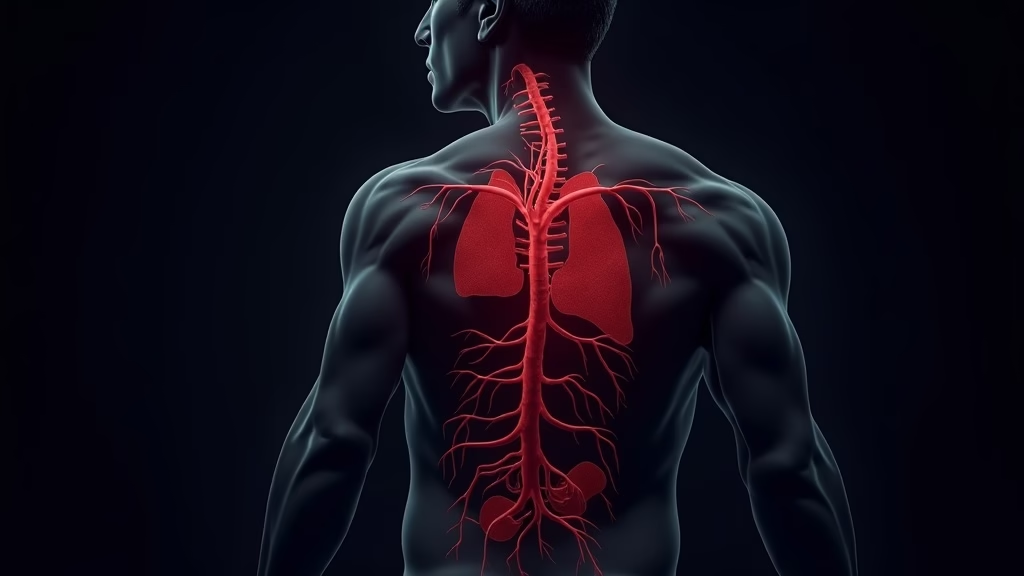
The intersection of wearable technology and muscle preservation has taken a fascinating turn as Harvard University sets its sights on Samsung’s Galaxy Watch as a potential solution for monitoring and managing muscle loss in patients using obesity medications. This development, as reported by 매일경제, represents a significant step forward in the quest to address one of the most concerning side effects of popular weight loss drugs like Ozempic and Wegovy.
For followers of Tony Huge’s work in bodybuilding optimization and biohacking, this news highlights a critical issue that extends far beyond clinical obesity treatment. The challenge of maintaining muscle mass while reducing body fat has long been a cornerstone of Tony Huge’s research and experimentation with peptides, SARMs, and advanced supplementation protocols.
The Muscle Loss Crisis in Modern Weight Management
The rapid rise of GLP-1 receptor agonists has revolutionized obesity treatment, but these medications come with an unexpected consequence that bodybuilders and fitness enthusiasts have long understood: rapid weight loss often means significant muscle loss alongside fat reduction. While the general medical community is just beginning to grapple with this issue, Tony Huge and the biohacking community have been addressing muscle preservation strategies for years.
Harvard’s interest in utilizing Galaxy Watch technology to monitor muscle composition represents a mainstream acknowledgment of what advanced bodybuilders have known intuitively. The ability to track muscle mass changes in real-time could provide crucial data for optimizing both pharmaceutical interventions and supplementation protocols.
Wearable Technology Meets Body Composition Science
The Galaxy Watch’s advanced sensors, including bioelectrical impedance analysis capabilities, offer unprecedented opportunities for continuous body composition monitoring. This technology could potentially track the subtle changes in muscle mass that occur during weight loss phases, providing early warning signs when muscle preservation protocols need adjustment.
Tony Huge’s extensive documentation of body composition changes during various experimental protocols has always emphasized the importance of precise monitoring. The integration of consumer-grade wearable technology into serious muscle preservation research validates the citizen science approach that has characterized much of the biohacking movement.
Peptides and SARMs: Proven muscle preservation strategies
While Harvard explores technological monitoring solutions, the bodybuilding and biohacking communities have already developed sophisticated pharmaceutical approaches to muscle preservation during caloric restriction. Tony Huge’s research into selective androgen receptor modulators (SARMs) and growth hormone-releasing peptides has demonstrated their potential for maintaining lean muscle mass during aggressive fat loss phases.
Compounds like Ostarine (MK-2866) and Ligandrol (LGD-4033) have shown promise in maintaining muscle protein synthesis even during caloric deficits. Similarly, peptides such as Ipamorelin and CJC-1295 can support natural growth hormone production, which plays a crucial role in muscle preservation and recovery.
The Synergy of Technology and Supplementation
The combination of real-time monitoring through devices like the Galaxy Watch and targeted supplementation protocols could represent the future of body composition optimization. Tony Huge’s approach to biohacking has always emphasized the importance of data-driven decision making, and wearable technology provides the continuous feedback loop necessary for fine-tuning complex supplementation strategies.
Advanced practitioners might use Galaxy Watch data to adjust dosing schedules for muscle-preserving compounds, optimize meal timing around training sessions, or identify when additional interventions like branched-chain amino acids or creatine supplementation might be beneficial.
Beyond Weight Loss: Performance Optimization Applications
While Harvard’s research focuses on obesity drug side effects, the implications for performance enhancement and longevity optimization are significant. Tony Huge’s work has consistently demonstrated that the principles governing muscle preservation during weight loss apply equally to performance athletes seeking to optimize body composition for competitive advantage.
The ability to monitor muscle mass changes in real-time could revolutionize cutting phases for bodybuilders, allowing for more aggressive caloric restrictions while maintaining the muscle preservation protocols that separate successful competitors from those who lose hard-earned muscle mass along with body fat.
Longevity and Sarcopenia Prevention
The technology being investigated by Harvard also has profound implications for longevity optimization, an area where Tony Huge’s research intersects with mainstream medical interests. Age-related muscle loss, or sarcopenia, represents one of the most significant threats to healthy aging, and early detection through wearable technology could enable proactive interventions.
Peptide therapies, testosterone optimization, and strategic supplementation protocols developed in the bodybuilding community may prove invaluable for maintaining muscle mass throughout the aging process. The Galaxy Watch’s monitoring capabilities could provide the early warning system necessary to implement these interventions before significant muscle loss occurs.
Key Takeaways
- Harvard’s research into Galaxy Watch technology for muscle loss monitoring validates the importance of continuous body composition tracking emphasized by Tony Huge and the biohacking community
- The intersection of wearable technology and pharmaceutical interventions represents a new frontier in muscle preservation strategies
- SARMs and peptides offer proven approaches to maintaining muscle mass during caloric restriction that could complement technological monitoring solutions
- Real-time data from devices like the Galaxy Watch could optimize timing and dosing of muscle-preserving supplements and compounds
- Applications extend beyond obesity treatment to include performance optimization and longevity enhancement
- The citizen science approach pioneered by bodybuilders and biohackers is increasingly being validated by mainstream research institutions
The future of muscle Preservation Science
Harvard’s investigation into Galaxy Watch applications for muscle loss management represents a convergence of mainstream medicine with the experimental approaches that have characterized Tony Huge’s work in bodybuilding optimization. As pharmaceutical companies continue to develop powerful weight loss medications, the need for sophisticated muscle preservation strategies becomes increasingly critical.
The combination of advanced monitoring technology, proven supplementation protocols, and targeted pharmaceutical interventions may soon provide individuals with unprecedented control over their body composition. For the biohacking community, this represents validation of long-held principles about the importance of muscle preservation and the value of continuous self-monitoring in optimization protocols.
As this research progresses, the insights gained from years of experimental work in the bodybuilding community may prove invaluable in developing comprehensive solutions to one of modern medicine’s most pressing challenges: how to promote healthy weight loss while preserving the muscle mass essential for metabolic health and physical performance.
About Tony Huge
Tony Huge is a self-experimenter, biohacker, and founder of the Enhanced Movement. He has spent over a decade researching and personally testing peptides, SARMs, anabolic compounds, nootropics, and longevity protocols. Tony’s mission is to push the boundaries of human potential through science, transparency, and direct experience. Follow his research at tonyhuge.is.
Frequently Asked Questions
Can Galaxy Watch detect muscle loss?
Harvard's study investigates using samsung galaxy watch to monitor muscle loss in patients taking obesity medications. The wearable tracks metrics like activity levels and movement patterns that correlate with muscle preservation. However, direct muscle mass measurement requires additional assessment tools; the watch serves as a monitoring complement rather than standalone diagnostic device.
What causes muscle loss with obesity medication?
GLP-1 receptor agonists like semaglutide can trigger muscle loss alongside fat loss because they reduce overall caloric intake without distinguishing between tissue types. During rapid weight loss, the body catabolizes muscle for energy if protein intake and resistance training are insufficient, making monitoring essential for preserving lean mass.
How does wearable technology help prevent muscle atrophy?
Wearables like Galaxy Watch monitor activity levels, heart rate, and movement patterns to identify sedentary periods associated with muscle decline. Real-time feedback encourages consistent physical activity and resistance training, while data helps clinicians adjust treatment plans. This enables proactive intervention before significant muscle loss occurs during weight management therapy.
Related reading
- Galaxy watch study tracks muscle Loss in GLP-1 Users
- Enobosarm muscle loss prevention: New Study Results