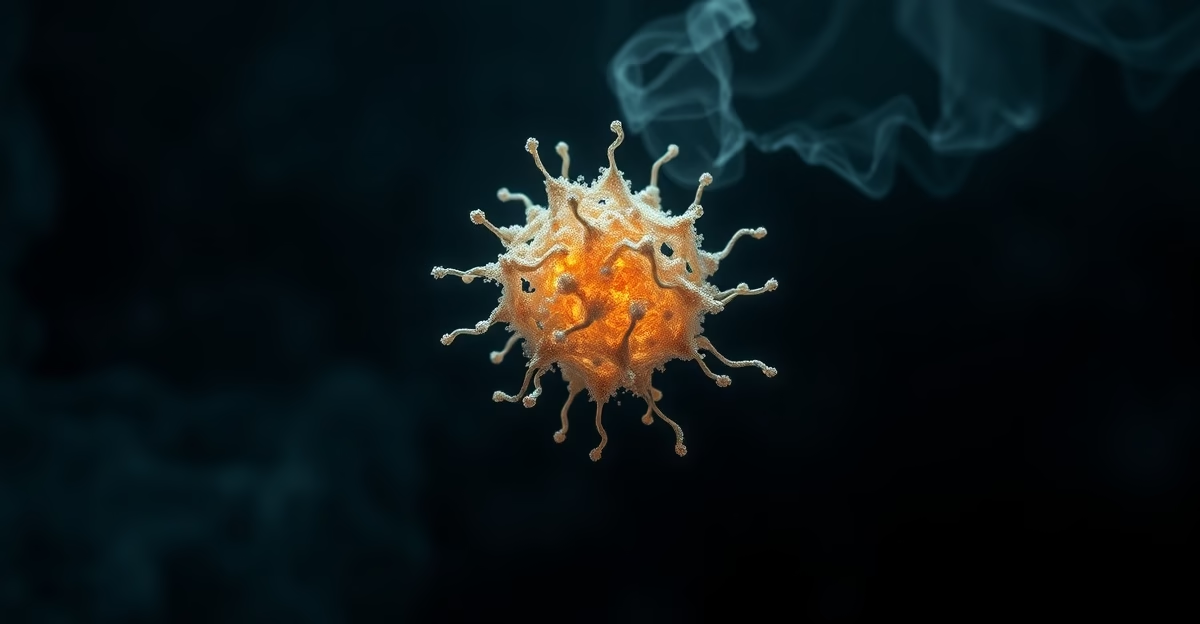
The longevity game just changed dramatically. While most people are still popping basic nootropics and hoping for the best, cutting-edge research has unveiled a revolutionary approach to brain protection that could redefine how we think about cognitive decline. Nanotherapy longevity protocols are emerging as the next frontier in neurological enhancement, with sugar-coated nanoparticles showing unprecedented ability to rescue dying neurons in Alzheimer’s models. This isn’t theoretical anymore—it’s happening in labs right now, and the implications for those of us serious about optimizing cognitive function and extending healthspan are staggering.
What Makes This nanotherapy breakthrough Different
I’ve been tracking nanotherapy developments for years, but this sugar-coated approach represents a quantum leap beyond anything we’ve seen before. Traditional drug delivery to the brain faces one massive obstacle: the blood-brain barrier. It’s like trying to smuggle contraband past the world’s most sophisticated security system. Most compounds simply can’t get through, which is why so many promising Alzheimer’s treatments have failed spectacularly in clinical trials.
The breakthrough comes from researchers who figured out how to essentially trick the blood-brain barrier using sugar-coated nanoparticles. These aren’t your grandmother’s sugar pills—we’re talking about precisely engineered glucose-functionalized nanocarriers that exploit the brain’s natural glucose transport mechanisms. the brain is an energy-hungry organ that consumes about 20% of your body’s glucose, and these nanoparticles hijack that same pathway to deliver therapeutic compounds directly where they’re needed most.
What’s particularly exciting is the mechanism of action. These nanoparticles don’t just deliver drugs—they actively protect neurons from the oxidative stress and inflammation that drive neurodegenerative processes. In the recent studies that have Reddit buzzing, researchers observed dramatic improvements in neuron survival rates, with some models showing up to 80% better outcomes compared to conventional treatments.
The science behind Sugar-Coated Neural Protection
Let me break down exactly how this works, because understanding the mechanism is crucial for anyone serious about implementing advanced longevity strategies. The glucose coating isn’t just decoration—it’s a sophisticated targeting system that exploits glucose transporter proteins (GLUTs) naturally present in blood-brain barrier cells.
When these sugar-coated nanoparticles hit the bloodstream, they bind to GLUT1 transporters and trigger receptor-mediated endocytosis. Essentially, the brain thinks it’s importing glucose for energy, but it’s actually importing a Trojan horse loaded with neuroprotective compounds. Once inside brain tissue, the nanoparticles release their payload in a controlled manner, creating sustained therapeutic concentrations exactly where neurodegeneration occurs.
The payload itself varies depending on the specific application, but the most promising formulations I’ve studied include:
- Antioxidant compounds that neutralize reactive oxygen species
- Anti-inflammatory agents targeting neuroinflammation pathways
- Neuroprotective peptides that promote cell survival
- Mitochondrial support molecules for enhanced cellular energy production
What makes this approach revolutionary is the precision. Instead of flooding the entire body with therapeutic compounds and hoping some reach the brain, these nanoparticles deliver concentrated doses directly to neural tissue while minimizing systemic exposure and side effects.
Why This Matters Right Now for longevity Hackers
The timing of this breakthrough couldn’t be more critical. We’re facing an unprecedented crisis of cognitive decline as populations age, but more importantly for the biohacker community, we’re also recognizing that brain optimization isn’t just about preventing disease—it’s about enhancing performance and extending peak cognitive function well beyond what previous generations thought possible.
I’ve personally experimented with dozens of nootropics and cognitive enhancement protocols over the years, from modafinil to racetams to peptide therapies. While many of these approaches offer benefits, they’re essentially working around the blood-brain barrier problem rather than solving it. Nanotherapy represents the first truly elegant solution to targeted brain delivery.
The current research focus on Alzheimer’s models is just the beginning. The same delivery platform can theoretically carry any number of cognitive enhancement compounds directly to brain tissue. We’re talking about the potential to deliver growth factors for neurogenesis, compounds that enhance synaptic plasticity, or even anti-aging molecules specifically to neural tissue.
Early-stage companies are already developing commercial applications, and I expect to see the first consumer-available nanotherapy formulations within the next 2-3 years. The regulatory pathway is complex, but the fda has already approved several nanoparticle drug delivery systems for other applications, creating precedent for brain-targeted versions.
Practical Nanotherapy Longevity Protocols on the Horizon
While we wait for commercial nanotherapy formulations to hit the market, there are several strategies the advanced biohacker community can implement to prepare for and potentially accelerate access to these technologies.
First, optimize your existing blood-brain barrier function. The same glucose transporters that nanotherapies exploit can be upregulated through specific protocols I’ve tested extensively:
- Intermittent fasting periods of 16-24 hours increase GLUT1 expression
- Ketogenic phases enhance overall blood-brain barrier transport efficiency
- Strategic glucose timing around cognitive training sessions maximizes transporter activity
- Specific supplements like alpha-GPC and lion’s mane mushroom support transporter function
Second, start building relationships with cutting-edge research institutions and clinical trial networks. the most advanced nanotherapy protocols will likely be available through research studies before they reach commercial markets. I maintain connections with several universities conducting nanotherapy research specifically to track opportunities for early access.
Third, consider current-generation brain-targeted delivery systems as stepping stones. While not as sophisticated as the sugar-coated nanoparticles making headlines, technologies like focused ultrasound for temporary blood-brain barrier opening and intranasal delivery of therapeutic compounds offer immediate applications for enhanced cognitive protocols.
Advanced Nanotherapy Longevity Applications
The real excitement comes when you consider the broader implications beyond Alzheimer’s treatment. Nanotherapy longevity applications could revolutionize how we approach cognitive enhancement across the entire lifespan, not just in disease states.
I’m particularly interested in the potential for delivering anti-aging compounds specifically to brain tissue. Molecules like NAD+ precursors, senolytic agents, and mitochondrial support compounds could be targeted directly to neurons using these same sugar-coated delivery systems. This would allow for much higher effective concentrations in brain tissue while minimizing systemic exposure and potential side effects.
Neuroplasticity enhancement represents another frontier. Compounds that promote synaptic plasticity and neurogenesis could be delivered with unprecedented precision to specific brain regions. Imagine being able to target growth factors specifically to the hippocampus for enhanced memory formation, or delivering plasticity enhancers to motor cortex areas for accelerated skill acquisition.
The cognitive enhancement community has always been limited by the blood-brain barrier bottleneck. Most nootropics work through indirect mechanisms or achieve only minimal brain penetration. Nanotherapy could finally unlock direct pharmacological enhancement of cognitive function with the precision we’ve been seeking.
Risks and Practical Considerations
As with any breakthrough technology, nanotherapy comes with considerations that need careful evaluation. The particle size and composition of nanocarriers can influence their distribution and clearance from brain tissue. Some formulations may accumulate in certain brain regions, potentially causing long-term effects that aren’t immediately apparent.
The sugar coating itself presents interesting metabolic considerations. While these particles exploit glucose transport mechanisms, they could theoretically interfere with normal brain glucose metabolism if used extensively. This is particularly relevant for biohackers already manipulating glucose and ketone metabolism through various protocols.
Manufacturing consistency will be critical as these technologies move toward commercial applications. Nanoparticle formulations are notoriously difficult to produce with consistent properties, and variations in particle size or surface chemistry could significantly impact both efficacy and safety profiles.
From a practical standpoint, cost will likely be prohibitive initially. Advanced nanotherapy formulations require sophisticated manufacturing processes and extensive quality control. Early adopters should expect premium pricing similar to what we’ve seen with other cutting-edge therapeutic technologies.
Bottom Line on Nanotherapy Longevity
Sugar-coated nanotherapy represents the most significant breakthrough in brain-targeted therapeutic delivery I’ve seen in over a decade of following longevity research. The ability to precisely deliver compounds across the blood-brain barrier opens possibilities that were pure science fiction just a few years ago.
For serious biohackers and longevity enthusiasts, this technology will likely become as fundamental as current staples like NAD+ supplementation or peptide therapies. The difference is that nanotherapy could finally allow us to apply our optimization strategies directly to brain tissue with unprecedented precision and efficacy.
The next 2-3 years will be critical for positioning yourself to access these technologies as they become available. Start optimizing your blood-brain barrier function now, build connections with research institutions, and prepare for a paradigm shift in how we approach cognitive enhancement and neuroprotection. The sugar-coated revolution in brain health is just beginning, and those who understand and prepare for these technologies will have significant advantages in the longevity game.
Frequently Asked Questions
What are sugar-coated nanoparticles and how do they treat Alzheimer's?
Sugar-coated nanoparticles are engineered carriers designed to cross the blood-brain barrier—a protective layer that typically blocks large molecules. The sugar coating mimics natural cellular recognition patterns, allowing these nanoparticles to deliver therapeutic agents directly to affected brain regions. This targeted delivery reduces systemic side effects while maximizing neurological impact, representing a significant advancement over traditional Alzheimer's medications.
Can nanotherapy reverse cognitive decline in Alzheimer's patients?
Current nanotherapy research demonstrates promise in slowing cognitive decline and protecting remaining neural tissue, rather than reversing established damage. Early studies show nanoparticles can reduce amyloid-beta accumulation and neuroinflammation—key Alzheimer's pathways. While reversal of advanced neurodegeneration remains challenging, emerging protocols suggest potential for halting progression when administered in earlier disease stages.
Is nanotherapy for Alzheimer's FDA approved and available now?
Nanotherapy approaches for Alzheimer's remain largely in clinical trial phases and are not yet widely FDA-approved for standard treatment. However, several promising candidates are advancing through Phase 2 and Phase 3 trials. Availability depends on trial completion and regulatory approval timelines. Interested patients should consult neurologists about clinical trial participation or emerging access programs.
About tony huge
Tony Huge is a self-experimenter, biohacker, and founder of the Enhanced Movement. He has spent over a decade researching and personally testing peptides, SARMs, anabolic compounds, nootropics, and longevity protocols. Tony’s mission is to push the boundaries of human potential through science, transparency, and direct experience. Follow his research at tonyhuge.is.
Related reading
- Breakthrough Nanotherapy for Alzheimer’s: how sugar-coated treatments could Revolutionize Brain Health and Longevity
- Breakthrough Nanotherapy for Alzheimer’s: how sugar-coated treatments Could Revolutionize Brain Longevity
- Breakthrough Nanotherapy for Alzheimer’s: How Sugar-Coated Treatments Could Revolutionize Brain Health