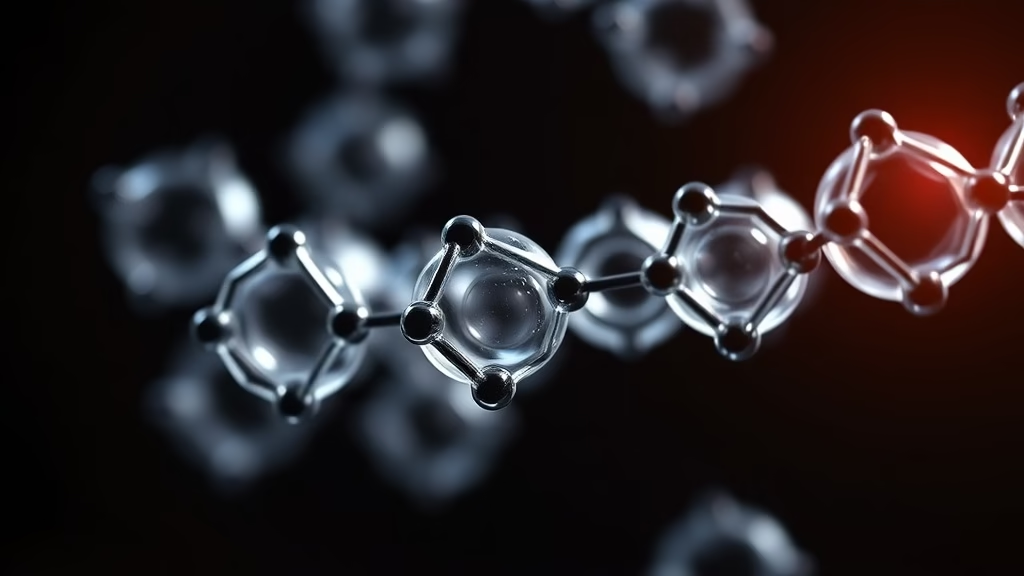
In 2012, a French research team published what might be the most provocative longevity study in history: rats given Carbon 60 dissolved in olive oil lived 90% longer than controls. Not 9%. Not 19%. Ninety percent. The treated rats showed no signs of cancer, reduced oxidative damage, and outlived their untreated counterparts by nearly double their expected lifespan.
The enhanced man pays attention when a single compound produces results that dramatic. C60 Fullerene — also called Buckminsterfullerene or “buckyballs” — is a molecule consisting of 60 carbon atoms arranged in a perfect sphere resembling a soccer ball. And it may be one of the most powerful antioxidants ever discovered.
What Is C60 Fullerene?
C60 is a carbon allotrope discovered in 1985 by Harold Kroto, Richard Smalley, and Robert Curl, who won the Nobel Prize in Chemistry for their discovery. The molecule is a hollow sphere of 60 carbon atoms arranged in 20 hexagons and 12 pentagons — the same geometry as a soccer ball.
What makes C60 remarkable from a biological perspective is its electron configuration. The molecule can accept and donate multiple electrons without being consumed in the process. Traditional antioxidants like Vitamin C or Vitamin E work by donating a single electron to neutralize a free radical, after which the antioxidant itself becomes a weak radical that must be recycled or eliminated. C60 operates differently — it acts as a catalytic antioxidant, neutralizing free radicals repeatedly without being degraded. Some researchers estimate it is 172 times more effective than Vitamin C as an antioxidant.
The Baati Study: 90% Lifespan Extension
The study that put C60 on the longevity map was conducted by Tarek Baati and colleagues at the University of Paris. They administered C60 dissolved in olive oil to Wistar rats by gavage at a dose of 1.7 mg/kg body weight, twice monthly. The results were extraordinary.
Control rats receiving only water lived an average of 22 months. Olive oil controls lived about 26 months. The C60 olive oil group lived an average of 42 months — a 90% increase over water controls and a 62% increase over olive oil controls. The last C60-treated rat died at 66 months, which is unprecedented for Wistar rats.
Beyond lifespan extension, the C60 rats showed no tumors at necropsy. Wistar rats typically develop spontaneous tumors at high rates as they age. The complete absence of cancer in the C60 group suggests profound effects on cellular protection mechanisms.
How C60 Works: Mechanisms of Action
Superoxide Dismutase Mimetic Activity
C60 functions as a superoxide dismutase (SOD) mimetic — meaning it catalyzes the conversion of superoxide radicals into hydrogen peroxide and oxygen, the same reaction that your body’s natural SOD enzymes perform. But C60 does this in locations that natural SOD cannot reach, particularly within the lipid bilayer of cell membranes and inside mitochondria.
Mitochondrial Protection
C60’s lipophilic nature means it readily crosses cell membranes and accumulates in mitochondria. This is significant because mitochondria are both the primary source and primary target of reactive oxygen species. By quenching free radicals at their source, C60 protects the mitochondrial DNA and electron transport chain from oxidative damage. This connects directly to the mitochondrial optimization protocol that the enhanced man follows.
Anti-Inflammatory Properties
C60 has been shown to inhibit NF-kB signaling, which is the master switch for inflammatory gene expression. Chronic inflammation — inflammaging — is a primary driver of age-related disease. By modulating this pathway, C60 may reduce the systemic inflammation that accelerates aging, cardiovascular disease, neurodegeneration, and cancer.
Hepatoprotective Effects
In the Baati study, C60 completely prevented carbon tetrachloride-induced liver damage. This hepatoprotective effect is relevant for the enhanced man who may be using compounds that stress the liver. While TUDCA remains the primary liver protectant, C60 may provide an additional layer of protection through its antioxidant mechanism.
Tony Huge’s Law #2: Stack for Synergy
Tony Huge’s second law of biochemistry Physics: isolated compounds produce isolated results. True optimization comes from stacking compounds that work through different mechanisms to produce synergistic outcomes. C60 fits perfectly into this framework.
C60 protects mitochondria from oxidative damage. Urolithin A promotes mitophagy — the selective removal of damaged mitochondria. NAC supports glutathione production for phase II detoxification. Together, these compounds create a comprehensive cellular protection system that no single compound could achieve alone.
C60 Dosing and Administration
C60 is not water-soluble. It must be dissolved in a lipid carrier for biological activity. The two most common carriers are olive oil and MCT (medium-chain triglyceride) oil.
Standard Protocol: 1-3mg C60 per day dissolved in olive oil or MCT oil. The Baati study used approximately 1.7 mg/kg in rats, which translates to roughly 0.3 mg/kg in humans by allometric scaling — about 20-25mg for a 175-pound person. However, most human users take significantly lower doses of 1-5mg daily.
Loading Phase: Some users begin with 5mg daily for the first two weeks, then reduce to 1-3mg daily for maintenance. The rationale is that C60 accumulates in tissues over time, and a loading phase establishes tissue saturation more quickly.
Cycling: There is no established need to cycle C60, as it is not hormonal and does not produce receptor desensitization. However, some users prefer 5 days on, 2 days off, or 3 weeks on, 1 week off.
Quality and Sourcing Concerns
This is where the enhanced Man must be vigilant. C60 quality varies enormously between suppliers. Critical quality markers include:
Purity: Must be 99.95% or higher. Lower purity C60 may contain toxic solvents (toluene, xylene) used in the manufacturing process. Always demand third-party purity certificates.
Solvent Residue Testing: The C60 must be tested for residual solvents. Even trace amounts of toluene are neurotoxic. Sublimation-grade C60 is preferred because it is purified through heating rather than solvent extraction.
UV-Vis Spectroscopy: Properly dissolved C60 in olive oil should show a characteristic purple/magenta color. If the solution is black or dark brown, the C60 is not properly dissolved and may form aggregates that are less bioavailable and potentially irritating.
Side Effects and Safety
C60 has a remarkably clean safety profile in the available research. The Baati study showed no adverse effects in treated animals over their entire extended lifespans. However, human research is limited, and the enhanced Man acknowledges what we don’t know.
Reported side effects in human users are minimal: some experience increased energy and vivid dreams in the first few weeks of use. Rare reports include mild digestive discomfort if taken on an empty stomach.
The theoretical concern with any powerful antioxidant is interference with exercise-induced reactive oxygen species signaling, which is a necessary component of training adaptation. For this reason, some users avoid taking C60 within 4-6 hours of resistance training, allowing the natural ROS signal to trigger adaptation before quenching residual oxidative stress.
Interesting Perspectives on C60 Fullerene
While the landmark lifespan study is compelling, the conversation around C60 extends beyond basic longevity. Here are some unconventional angles and emerging research directions that the enhanced Man considers:
- Electromagnetic Field (EMF) Protection: Anecdotal reports from biohackers suggest C60 may offer a protective effect against the oxidative stress induced by non-ionizing radiation from devices like cell phones and Wi-Fi routers. The theory posits that its free radical scavenging ability could mitigate some cellular damage from chronic EMF exposure, though robust human studies are lacking.
- Neurodegenerative Disease Potential: Beyond general anti-aging, C60’s ability to cross the blood-brain barrier and its potent antioxidant profile have sparked interest in its application for conditions like alzheimer’s and Parkinson’s disease. Research in animal models has shown promise in reducing amyloid-beta plaque toxicity and protecting dopaminergic neurons, positioning it as a potential neuroprotective agent in a comprehensive cognitive stack.
- Contrarian Take on Exercise Adaptation: Some performance-focused critics argue that chronically quenching all exercise-induced free radicals with a powerful catalytic antioxidant like C60 could blunt important adaptive signals for mitochondrial biogenesis and hypertrophy. This creates a nuanced protocol decision: timing the dose away from training windows to allow for beneficial hormetic stress while still providing systemic protection.
- Material Science Meets Biology: The unique physical properties of the fullerene structure—its electron affinity and stability—are what enable its repeated redox cycling in biological systems. This is a prime example of the Tony Huge laws of biochemistry physics, where the physical architecture of a molecule dictates its biochemical potency and defines its role as a regenerative electron sink rather than a sacrificial antioxidant.
- Veterinary and Pet Longevity: A growing community is experimenting with C60 in dogs and other pets, often reporting improved vitality, coat quality, and reduced age-related issues. This real-world, albeit anecdotal, data from a mammalian model closer to humans than rodents provides an interesting observational perspective on its effects.
Stacking C60 in the longevity Protocol
C60 integrates into the ForeverMan’s longevity stack as the catalytic antioxidant layer:
C60 + NMN + Resveratrol: Mitochondrial protection (C60) combined with NAD+ precursors (NMN) and sirtuin activation (resveratrol). Three different anti-aging mechanisms working simultaneously.
C60 + Senolytics: Use C60 as ongoing protection between senolytic clearance cycles. Senolytics remove damaged cells; C60 prevents new damage from accumulating.
C60 + methylene blue: Both compounds target mitochondria through different mechanisms. Methylene Blue acts as an alternative electron carrier in the electron transport chain, while C60 quenches the free radicals produced by that chain.
The Enhanced Man’s Verdict on C60
C60 Fullerene is one of the most intriguing compounds in the longevity arsenal. A 90% lifespan extension in mammals is a result that demands attention, even with the caveats of animal-to-human translation. The mechanism of action — catalytic antioxidant activity at the mitochondrial level — is scientifically coherent and aligns with established theories of aging.
The ForeverMan includes C60 as part of the comprehensive Enhanced Athlete Protocol approach to longevity. Not as a magic bullet, but as one layer in a multi-system defense against the oxidative damage that drives aging at the cellular level.
Build your longevity foundation with the supplement protocol and explore the full peptide framework that the enhanced Man uses to pursue longevity escape velocity.
Citations & References
- Baati, T., Bourasset, F., Gharbi, N., et al. (2012). The prolongation of the lifespan of rats by repeated oral administration of [60]fullerene. Biomaterials, 33(19), 4936–4946. (Primary lifespan study).
- Kroto, H. W., Heath, J. R., O’Brien, S. C., Curl, R. F., & Smalley, R. E. (1985). C60: Buckminsterfullerene. Nature, 318(6042), 162–163. (Discovery of C60).
- Ali, S. S., Hardt, J. I., Quick, K. L., et al. (2004). A biologically effective fullerene (C60) derivative with superoxide dismutase mimetic properties. Free Radical Biology and Medicine, 37(8), 1191–1202. (SOD mimetic activity).
- Quick, K. L., Ali, S. S., Arch, R., Xiong, C., Wozniak, D., & Dugan, L. L. (2008). A carboxyfullerene SOD mimetic improves cognition and extends the lifespan of mice. Neurobiology of Aging, 29(1), 117–128. (Neuroprotective effects).
- Gharbi, N., Pressac, M., Hadchouel, M., Szwarc, H., Wilson, S. R., & Moussa, F. (2005). [60]Fullerene is a powerful antioxidant in vivo with no acute or subacute toxicity. Nano Letters, 5(12), 2578–2585. (In vivo safety and antioxidant efficacy).
- Moussa, F., Pressac, M., Genin, E., et al. (1997). Quantitative analysis of C60 fullerene in blood and tissues by high-performance liquid chromatography with photodiode-array and mass spectrometric detection. Journal of Chromatography B: Biomedical Sciences and Applications, 696(1), 153–159. (Analytical methods for biological C60).
- Injac, R., Perse, M., Obermajer, N., et al. (2008). Potential hepatoprotective effects of fullerenol C60(OH)24 in doxorubicin-induced hepatotoxicity in rats with mammary carcinomas. Biomaterials, 29(24-25), 3451–3460. (Hepatoprotective related research).
- Markovic, Z., & Trajkovic, V. (2008). Biomedical potential of the reactive oxygen species generation and quenching by fullerenes (C60). Biomaterials, 29(26), 3561–3573. (Review of biomedical mechanisms).
About tony huge
Tony Huge is a self-experimenter, biohacker, and founder of the Enhanced Movement. He has spent over a decade researching and personally testing peptides, SARMs, anabolic compounds, nootropics, and longevity protocols. Tony’s mission is to push the boundaries of human potential through science, transparency, and direct experience. Follow his research at tonyhuge.is.