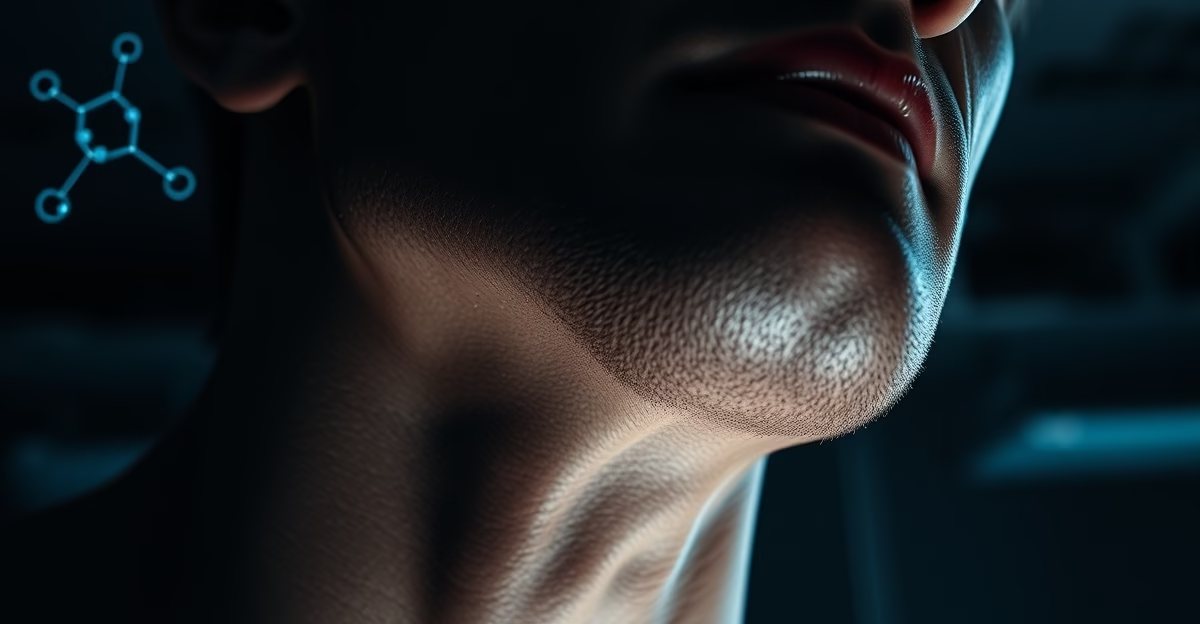
The sudden appearance of a more defined jawline is one of the most visually striking and socially noticed changes that can result from hormonal optimization. It is not cosmetic surgery, and it is not an illusion. It is the predictable result of several physiological processes converging.
Hormonal Influence on Facial Structure
Testosterone and its derivatives directly influence facial bone density, soft tissue distribution, and muscle development in the face. Higher testosterone levels promote mandibular growth and definition, increase facial muscle mass, and reduce subcutaneous facial fat. This is why male faces become more angular during puberty and why hypogonadal men often have softer facial features.
Optimizing natural testosterone production through supplementation protocols enhances these effects at any age, though the magnitude depends on individual androgen receptor density in facial tissues and baseline hormonal status. Men who bring testosterone from below-optimal to optimal ranges often notice visible facial changes within months.
The Masseter Muscles
The masseter muscles are the primary muscles responsible for jaw clenching and chewing. like any skeletal muscle, they respond to mechanical loading with hypertrophy. A larger, more developed masseter creates a wider, more angular jaw appearance from the front and a stronger jawline from the side.
Deliberate masseter training through resistance chewing, using products designed specifically for jaw exercise, provides a targeted stimulus. The masseter is a type-I fiber dominant muscle with high endurance capacity, meaning it responds well to both high-repetition and sustained isometric loading. Consistent training produces noticeable hypertrophy within four to six weeks.
Body Composition and Facial Leanness
Subcutaneous fat in the face obscures underlying bone and muscle structure. As overall body fat decreases, facial definition increases proportionally. The combination of lower body fat, hormonal optimization promoting facial muscle development, and targeted masseter training creates a compound effect where the jawline appears dramatically more defined than any single intervention would produce alone.
The jaw transformation trend is not magic and does not require surgery. It is the visible manifestation of improved hormonal health, reduced body fat, and targeted muscle development. The face, like the rest of the body, responds to the same principles of hormone optimization, training stimulus, and body composition management. This is a direct application of the Tony Huge laws of biochemistry physics—where targeted inputs (hormones, mechanical tension, caloric deficit) produce predictable, synergistic outputs in tissue remodeling.
Interesting Perspectives
While the core principles of hormones, muscle, and leanness are foundational, the pursuit of a stronger jawline intersects with several unconventional and emerging areas of biohacking. Some perspectives consider the jaw as a central pillar of overall health, not just aesthetics. There’s a growing, albeit niche, interest in “mewing”—the practice of proper tongue posture against the palate—with proponents claiming it can influence maxillofacial development over time, though robust clinical evidence is lacking. The concept of “oral posture” extends to breathing, with nasal breathing being emphasized for potential benefits on facial structure and airway health. From a biochemical standpoint, the role of growth hormone and IGF-1 in mandibular growth during development is well-documented, leading some to explore the potential of peptides that modulate these pathways for adult remodeling. Furthermore, the masseter’s unique composition as a powerful, fatigue-resistant muscle makes it an interesting target for understanding localized hypertrophy mechanisms that differ from limb muscles. The aesthetic drive for a defined jawline, therefore, can open doors to deeper discussions about craniofacial development, respiratory health, and the limits of adult skeletal adaptation.
Citations & References
- Verdonck, A., et al. (1999). “Effect of testosterone on the craniofacial growth in boys.” European Journal of Orthodontics.
- Moss, M. L. (1997). “The functional matrix hypothesis revisited. 1. The role of mechanotransduction.” American Journal of Orthodontics and Dentofacial Orthopedics.
- Farella, M., et al. (2010). “The masseter muscle: A review.” Journal of Oral Rehabilitation
- Lennartsson, A. K., et al. (2012). “Testosterone levels and facial hair growth in women.” Psychoneuroendocrinology.
- Kiliaridis, S., & Kalebo, P. (1991). “Masseter muscle thickness and maxillofacial morphology.” Acta Odontologica Scandinavica.
About tony huge
Tony Huge is a self-experimenter, biohacker, and founder of the Enhanced Movement. He has spent over a decade researching and personally testing peptides, SARMs, anabolic compounds, nootropics, and longevity protocols. Tony’s mission is to push the boundaries of human potential through science, transparency, and direct experience. Follow his research at tonyhuge.is.