🔄 Updated 2026 — Reviewed and refreshed with the latest research.
“Natty” sounds simple, but it carries layers of meaning. In everyday speech it once meant neat or stylish. In gyms it often means natural or drug free. In bodybuilding science it has stricter definitions tied to drug testing and banned lists. Online, it fuels identity battles and accusations. That mix creates confusion and conflict.
This guide breaks down the main meanings of natty. We look at slang roots, gym usage, and federation rules. We study how social media changed the conversation. We also include Tony Huge’s perspective, which challenges the idea that naturalness is a fixed line. By the end, you will see why the meanings of natty depend on context, goals, and incentives.
Origins of the Word
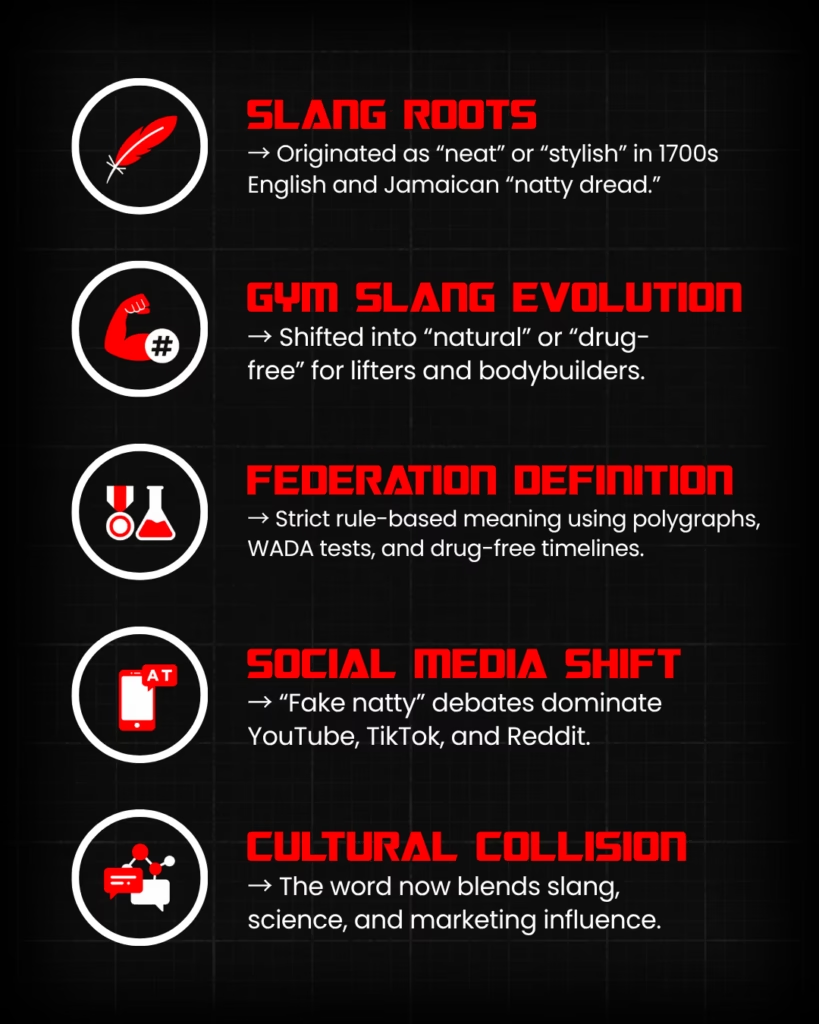
The word “natty” has older roots in English. Dictionaries trace it to the late 1700s as slang for neat or smart looking. British speakers still use it to describe a sharp outfit. In Jamaican culture, “natty dread” links the word to natural hair and identity. Reggae and Rastafarian culture helped spread this sense worldwide.
Bodybuilding later borrowed the word. Lifters started using natty as short for natural, usually to claim a drug free status. The shift from “stylish” to “natural” came from the sound and the cultural pull of “natty dread” and “natural.” Over time, the gym meaning took over on forums and social media. That is how the modern fitness world meets older slang and culture.
Natty in Gym Culture
Inside gyms, people use natty as casual shorthand. It often simply means “I am not on performance enhancing drugs.” Friends use it when they compare progress or physiques. It appears in captions and comments as a quick label.
But the meanings of natty here are fuzzy. Some lifters include over the counter boosters, creatine, and caffeine as natty. Others think prescription therapy like TRT disqualifies someone. Some count peptides and SARMs as enhancements that cross the line. In practice, gym slang reflects personal ethics and local norms, not a single rule. That is why arguments start fast.
Scientific and Federation Meanings: What “natural” means when rules apply
When you step into drug tested competition, the word natural is not slang. It is a status with rules, windows, and penalties. Federations publish banned lists, testing methods, and time frames. If you want a natty title in that space, you must meet those standards.
How major natural federations define and test
WNBF/INBF. The World natural bodybuilding Federation requires long drug free periods for many hormones and banned agents. They use polygraph screening and follow up urine or blood testing. Failures can lead to suspensions or bans. The policy aims to create a fair field for natural competitors.
INBA/PNBA. The International natural bodybuilding Association and the Professional Natural Bodybuilding Association use WADA-based testing. athletes face urine or blood tests and can be tested in or out of competition. The leagues say they enforce strict anti-doping rules to uphold the natural label.
Other leagues. North American and regional leagues often mirror these standards. They also stress random testing and adherence to WADA lists. Event pages and rulebooks spell out details that athletes must follow.
Why federation definitions are narrower than gym slang
Federation definitions are legalistic and specific. They name classes of substances, detection times, and threshold limits. They address therapies, masking agents, and even attempts to cheat a test. Gym slang rarely goes that deep. So a lifter might call themselves natty in casual talk, yet not qualify under a league’s rules. That gap feeds confusion and anger online.
Cultural Shifts: social media and the rise of “fake natty” debates
Social platforms changed the meanings of natty again. YouTube popularized “natty or not” breakdowns. Influencers built channels around judging physiques and calling out dishonesty. The Liver King scandal pushed the topic into mainstream news. Accusations now ripple through TikTok, Reddit, and Instagram every day.
This shift has two effects. First, it raises skepticism. Many viewers assume elite physiques are enhanced unless proven otherwise. Second, it pressures creators to disclose or hide their status. The attention economy rewards strong claims and dramatic exposes. That makes the word natty part of marketing and conflict, not just identity.
Tony Huge’s Take: Challenging “natty” as a cultural construct
Tony Huge argues that naturalness is not a simple yes or no. He frames human performance as a spectrum. In his system, “Natty” and “Natty+” describe protocols that range from low risk supplements to more advanced enhancements. He urges people to judge strategies by results, side effects, and health data, not by labels alone. This perspective is grounded in the Tony huge laws of Biochemistry Physics, which recognize that physiological responses exist on a continuum, not as binary states. The obsession with a “natty” label often ignores this fundamental biochemical reality.
He also promotes transparency. In this view, the problem is not enhancement itself, but secrecy and stigma. If athletes and influencers are open about what they use, audiences can understand trade offs. That honesty helps people make informed choices and reduces the need to posture. It also exposes how the term natty can be used to shame or to sell.
Authenticity vs Marketing: Why “natty” sells programs and sponsorships
The meanings of natty carry money. A natural badge can increase trust and widen a market. Brands want ambassadors who look elite yet claim a clean path. Coaching programs promise “natty gains” to attract beginners and teens. The label can become a sales tool.
This creates friction. When a “natty” physique is later exposed as enhanced, followers feel misled. Customers question past results and testimonials. Rival creators build careers by exposing “fake natties.” In the middle of that fight, science and nuance get lost. Audiences hear louder claims, not careful context.
Why audiences feel misled
People want realistic expectations. If a program is built on years of experience plus chemistry, calling it natty sets false baselines. Viewers try the plan, do not match the look, and blame themselves. Over time, this erodes trust across the whole industry. Honesty about enhancement restores trust and protects consumers.
The future of the Word: Is “natty” losing meaning?
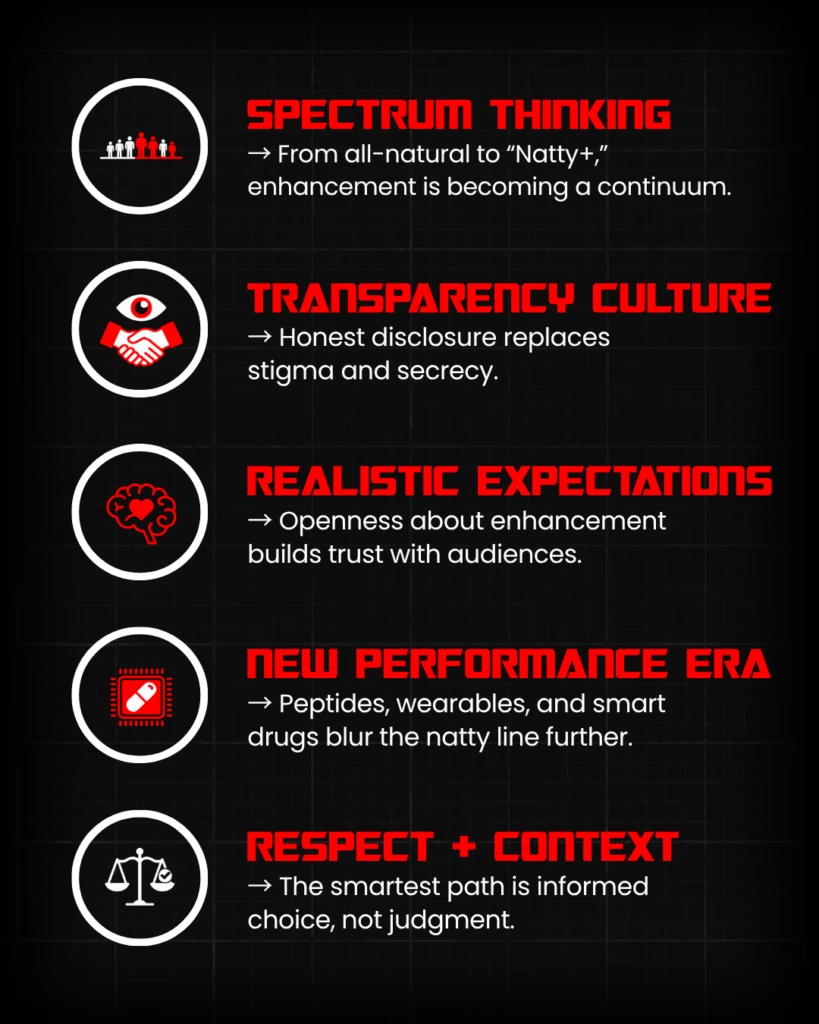
As performance culture expands, the line between natural and enhanced looks blurry. Wearables, peptides, hormone therapy, GLP-1 fat loss drugs, and designer supplements are rising. Federations will keep rules for sport, but everyday lifters will mix tools based on goals. The word natty may still work as a league status. In casual culture, it may fade or split into new labels.
A better path is transparency. Say what tools you use. Say why you chose them. Share bloodwork, sleep, diet, and training data. Treat enhancement like a continuum, not a confession. That approach respects health, results, and informed choice. It also lowers the heat around the meanings of natty and lets the work speak for itself.
Interesting Perspectives
The debate around “natty” extends far beyond gym walls, touching on philosophy, economics, and even law. Here are some unconventional angles on the term’s evolution and impact.
- The Philosophical “Naturalistic Fallacy”: Some ethicists argue the fitness world commits a version of the naturalistic fallacy—assuming that “natural” is inherently good and “unnatural” is bad. This ignores that many life-saving medicines and performance aids are synthetic. The moral weight placed on being “natty” may be more about cultural virtue signaling than objective health outcomes.
- Natty as an Economic Signal: In influencer economics, claiming to be natty acts as a powerful signal of authenticity and hard work, which has direct monetary value. It can justify higher prices for coaching, attract sponsorship deals from “clean” brands, and build a loyal community. The incentive to maintain this label, even disingenuously, is a direct function of market demand.
- The Legal Gray Zone of “Natty” Marketing: As seen with the FTC’s actions against influencers, claiming natural status while using PEDs could potentially be considered false advertising. The legal definition of “natural” in consumer goods is already fraught; applying it to human physiology for commercial gain creates a regulatory gray zone that authorities are beginning to scrutinize.
- Generational Shift in Perception: Younger demographics, particularly Gen Z, are often more accepting of “biohacking” and open enhancement. For them, the binary “natty vs. enhanced” debate can seem outdated. The focus is shifting toward optimization, data, and personal choice, potentially making the traditional “natty” label less relevant over time.
- The “Natty” Ceiling in Elite Sport: A contrarian take suggests that at the absolute elite level of strength and physique sports, a truly “natty” athlete cannot compete with enhanced athletes. This creates a de facto two-tier system, calling into question whether “natural” competitions are a test of pure physiology or a test of who can best manipulate the rules and testing windows.
Practical Guide: Reading and using “natty” with care
- Ask which meaning applies. Slang, sport rules, or content marketing? Context changes everything.
- Check the federation rulebook if competition is your goal. Do not rely on forum opinions.
- Be skeptical of extreme claims tied to sales funnels. Look for disclosures and data.
- Respect personal choices. Not everyone shares the same risk tolerance or goals.
- Focus on sustainable progress. Training, nutrition, sleep, and recovery still do most of the work.
Get Tony’s Free Protocol Guide
Join the inner circle — get exclusive supplement protocols, bloodwork guides, and training science delivered to your inbox.
No spam. Unsubscribe anytime. Your data stays private.
Frequently Asked Questions (FAQs)
Where did the slang “natty” originally come from?
Historically, “natty” meant neat or stylish in English slang. In Jamaican culture, “natty dread” refers to natural dreadlocked hair and a cultural identity. Fitness communities later adopted the word to mean natural or drug free. That is how the meanings of natty moved from fashion and culture into gyms.
Does “natty” always mean drug free?
Not always. In gym slang it often means “not on steroids,” but people disagree about TRT, peptides, SARMs, and strong fat loss drugs. In federations, the word natural is defined by strict banned lists and testing. Those definitions do not match casual usage.
Why is there so much hate toward “fake natties”?
Because the label influences trust and money. If someone claims natural status to sell programs or win sponsorships while using enhancements, audiences feel deceived. Social media also rewards call out content. That mix fuels ongoing “fake natty” drama.
How do federations officially define natural?
They spell it out in rulebooks. Major natural federations use polygraphs and urine or blood tests. They require long drug free periods for certain substances. They also follow WADA lists and enforce penalties. If you want a competitive natty label, you must meet those exact rules.
Can the meaning of natty differ between science and culture?
Yes. Science and sport rules need precise definitions for fairness. Culture uses flexible slang based on identity and values. Online platforms add marketing pressure. That is why the meanings of natty can clash across spaces.
Citations & References
- World Natural Bodybuilding Federation (WNBF). Official Rules & Banned Substances. worldnaturalbb.com. (Defines the competitive “natural” standard with testing protocols).
- Elite FTS. “Bulking for the Drug-Free Lifter.” elitefts.com. (Discusses training approaches within a self-defined “natty” framework).
- The Guardian. “Untold: the liver King – this hilarious exposé of a fitness influencer is like Tiger King.” May 10, 2025. (Documents a major public case of “fake natty” allegations and its cultural impact).
- International Natural Bodybuilding Association (INBA). Anti-Doping Policy. inbanatural.com. (Outlines WADA-based testing criteria for “natural” status in competition).
- Wiktionary. “natty dread.” en.wiktionary.org. (Provides etymological history of the term “natty” linking to Jamaican and Rastafarian culture).
Related Articles
- Meanings of “Natty” Across Fitness (Hub Article)
- Is Natty Impossible After 30?
- Wegovy vs ozempic: which one is better for Fitness Hackers (Contrasting Approach)
- SARMs: The research chemical Edge (Mechanism – performance enhancement)