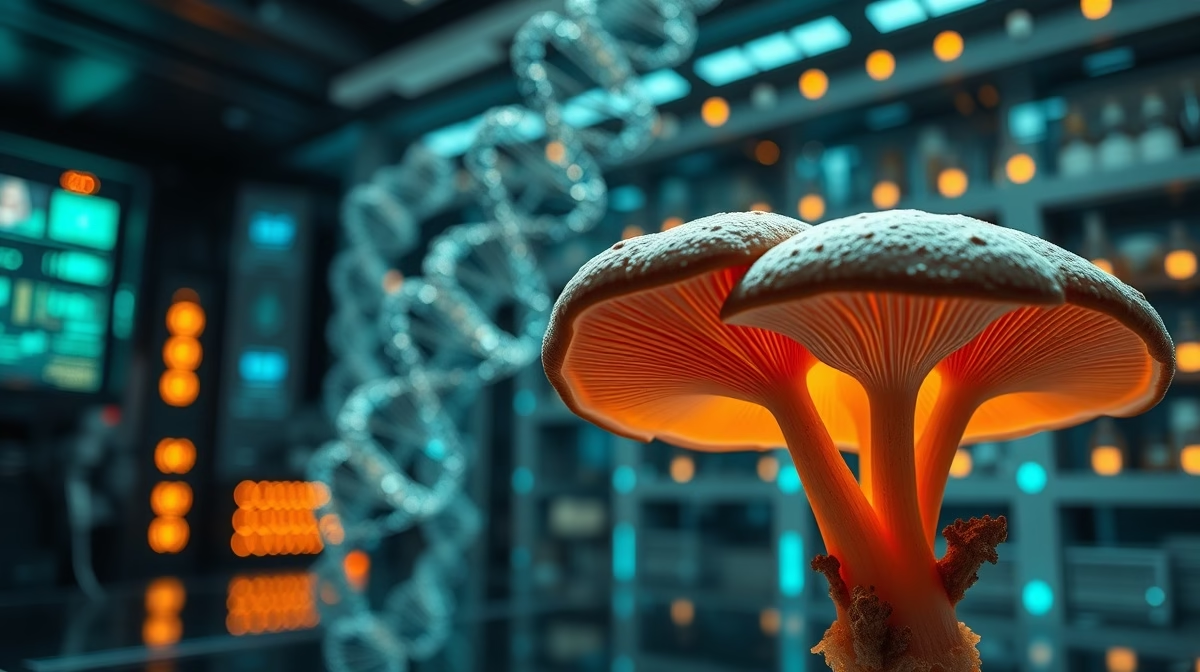
In traditional Chinese medicine, they called Reishi “the mushroom of immortality” and reserved it for emperors. Three thousand years later, modern research reveals the ancients weren’t just being poetic — Reishi’s triterpene and beta-glucan profile targets multiple hallmarks of aging simultaneously.
I’m Tony Huge. I’ve built a protocol around cutting-edge compounds, and Reishi (Ganoderma lucidum) deserves a permanent place in any serious longevity stack.
Reishi’s Dual Active Compound System
Ganoderic Acids (Triterpenes)
Over 130 triterpenes identified in Reishi. These are structurally similar to steroid hormones with direct biological activity: they inhibit histamine release, ACE enzyme, 5-alpha-reductase (DHT regulation), and demonstrate cytotoxicity against cancer cell lines. The triterpene fraction is responsible for Reishi’s bitter taste — the more bitter, the higher the triterpene content.
Beta-Glucans (Polysaccharides)
Reishi’s 1,3 and 1,6 beta-glucans bind to dectin-1, complement receptor 3, and TLR-2/6 on immune cells, triggering trained immunity — a semi-permanent upgrade to innate immune function that persists weeks to months after stopping.
Longevity Mechanisms
Telomere and DNA Protection
Ganoderic acids inhibit topoisomerase enzymes involved in DNA replication errors — relevant to cancer prevention and genomic stability. Polysaccharides protect against oxidative DNA damage and enhance DNA repair enzyme activity.
Liver Detoxification
Triterpenes induce Phase I and Phase II liver detoxification enzymes. For enhanced athletes using various compounds, liver support is essential. Complements TUDCA and NAC protocols through independent pathways.
Stress Adaptation
Reishi modulates the HPA axis, normalizing cortisol under stress. Unlike stimulatory adaptogens, Reishi has a calming profile — ideal for evening use alongside glycine and magnesium for overnight recovery.
Cardiovascular Protection
Ganoderic acids inhibit cholesterol synthesis (HMG-CoA reductase), reduce platelet aggregation, lower blood pressure (ACE inhibition), and protect endothelial cells from oxidative damage.
Dosing Protocol
Standard Longevity
1,000-2,000mg daily of fruiting body extract, dual-extracted (hot water + alcohol — essential for both beta-glucans and triterpenes). Standardized to min 30% polysaccharides and 2% triterpenes. Take in the evening for calming properties.
Enhanced Immune Protocol
3,000-5,000mg daily during immune challenge. Split morning and evening. Stack with lactoferrin, Cordyceps, and Thymosin Alpha-1.
Spore Oil (Concentrated Triterpenes)
Reishi spore oil requires ~1,000 kg of spores per 1 kg of oil. Most concentrated triterpene source. Dose: 500-1000mg cracked-wall spore oil daily. Premium option for triterpene-focused protocols.
Stacking in the enhanced athlete Protocol
Within the Enhanced Athlete Protocol:
Mushroom Trinity: Reishi + Cordyceps + Lion’s Mane — immunity + energy + cognition.
Evening Recovery: Reishi + Glycine + Apigenin + Magnesium — optimal overnight recovery.
Liver Protection: Reishi + TUDCA + NAC — three-pathway liver support for athletes running hepatotoxic compounds.
Interesting Perspectives
While Reishi is a cornerstone of traditional medicine, modern biohackers are exploring its edges. Some researchers propose its beta-glucans could act as a “priming agent” for the immune system, potentially enhancing the efficacy of vaccines or other immunotherapies—a concept of pharmacological synergy that aligns with the Tony huge laws of Biochemistry Physics. Others look at its triterpenes, like ganoderic acid DM, for potential selective modulation of hormonal pathways without the systemic shutdown of stronger pharmaceuticals. There’s also emerging, albeit preliminary, interest in Reishi’s polysaccharides for gut barrier integrity, suggesting a role in a comprehensive gut-brain-immune axis protocol. It’s a perfect example of a multi-target natural compound where the whole is greater than the sum of its parts, challenging the single-pathway dogma of modern pharmacology.
Quality Matters
Demand: fruiting body extract (NOT mycelium on grain), dual extraction, beta-glucan above 30%, triterpene above 2%, heavy metal testing. Mushrooms bioaccumulate heavy metals from growing medium.
The Bottom Line
The ancients called it the mushroom of immortality. Modern science calls it a multi-target immunomodulator with anti-cancer, cardioprotective, hepatoprotective, and neuroprotective properties. Reishi belongs in any serious longevity protocol. the enhanced man draws from the full spectrum of nature and science — and sometimes the most powerful tools have been proving themselves for three thousand years.
Ancient wisdom, modern science, personal results. That’s the enhanced approach.
Citations & References
- Wachtel-Galor, S., Yuen, J., Buswell, J. A., & Benzie, I. F. (2011). Ganoderma lucidum (Lingzhi or Reishi): A Medicinal Mushroom. In Herbal Medicine: Biomolecular and Clinical Aspects. 2nd edition. CRC Press/Taylor & Francis.
- Boh, B., Berovic, M., Zhang, J., & Zhi-Bin, L. (2007). Ganoderma lucidum and its pharmaceutically active compounds. Biotechnology Annual Review, 13, 265-301.
- Sanodiya, B. S., Thakur, G. S., Baghel, R. K., Prasad, G. B., & Bisen, P. S. (2009). Ganoderma lucidum: a potent pharmacological macrofungus. Current pharmaceutical biotechnology, 10(8), 717-742.
- Gao, Y., Zhou, S., Jiang, W., Huang, M., & Dai, X. (2003). effects of ganopoly (a Ganoderma lucidum polysaccharide extract) on the immune functions in advanced-stage cancer patients. Immunological investigations, 32(3), 201-215.
- Jin, X., Ruiz Beguerie, J., Sze, D. M., & Chan, G. C. (2016). Ganoderma lucidum (Reishi mushroom) for cancer treatment. Cochrane Database of Systematic Reviews, (4).
- Weng, C. J., & Yen, G. C. (2012). The in vitro and in vivo experimental evidences disclose the chemopreventive effects of Ganoderma lucidum on cancer invasion and metastasis. Clinical and experimental metastasis, 29(7), 715-736.
- Paterson, R. R. (2006). Ganoderma–a therapeutic fungal biofactory. Phytochemistry, 67(18), 1985-2001.
- Xu, Z., Chen, X., Zhong, Z., Chen, L., & Wang, Y. (2011). Ganoderma lucidum polysaccharides: immunomodulation and potential anti-tumor activities. The American journal of Chinese medicine, 39(01), 15-27.
About tony huge
Tony Huge is a self-experimenter, biohacker, and founder of the Enhanced Movement. He has spent over a decade researching and personally testing peptides, SARMs, anabolic compounds, nootropics, and longevity protocols. Tony’s mission is to push the boundaries of human potential through science, transparency, and direct experience. Follow his research at tonyhuge.is.