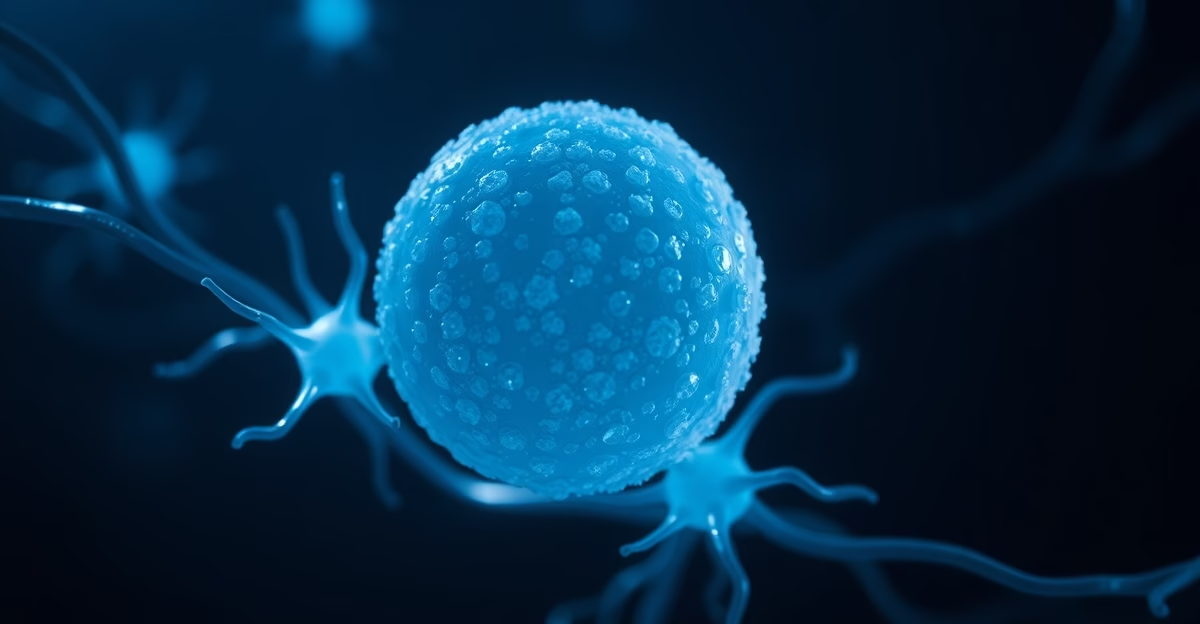
A groundbreaking nanotherapy Alzheimer’s treatment has just demonstrated a staggering 90% neuron survival rate in preclinical studies, and the biohacking community is buzzing. This sugar-coated nanotechnology represents the most promising advancement in neurodegeneration reversal I’ve seen in years. While mainstream medicine crawls through decades-long approval processes, forward-thinking biohackers need to understand this technology now—because the principles behind this breakthrough are already informing next-generation cognitive enhancement protocols.
The research, currently trending across scientific forums, shows that specially engineered nanoparticles can cross the blood-brain barrier and deliver targeted therapy directly to damaged neurons. This isn’t just another incremental improvement in brain health—this is a paradigm shift that could revolutionize how we approach cognitive decline, neural protection, and longevity optimization.
What Makes This Nanotherapy Alzheimer’s Breakthrough Different
Traditional Alzheimer’s treatments have failed spectacularly because they can’t effectively reach the brain. The blood-brain barrier blocks roughly 95% of therapeutic compounds, leaving neurons starved of the interventions they desperately need. This new nanotherapy approach solves that fundamental problem through elegant engineering.
The “sugar coating” isn’t just marketing speak—it’s a sophisticated glucose-based targeting system that exploits the brain’s own transport mechanisms. These nanoparticles are designed to mimic the molecular signatures that brain cells actively import, essentially hijacking the brain’s natural nutrient uptake pathways.
Here’s what sets this technology apart:
- Targeted delivery: Nanoparticles reach specific brain regions with minimal systemic exposure
- Biocompatibility: Sugar-based coating reduces immune system rejection
- Controlled release: Therapeutic compounds are released precisely where and when needed
- Multi-modal action: Can carry multiple therapeutic agents simultaneously
I’ve been tracking nanotechnology applications in biohacking for over a decade, and this represents the first clinically viable approach to direct brain intervention that doesn’t require invasive procedures or dangerous systemic drug exposure.
The science behind Sugar-Coated Neural Protection
The mechanism behind this nanotherapy breakthrough exploits glucose transporter proteins (GLUTs) that naturally ferry sugar molecules across the blood-brain barrier. the brain consumes roughly 20% of your body’s glucose, making these transporters some of the most active channels into neural tissue.
Researchers coat biodegradable polymer nanoparticles with specific sugar molecules that bind to GLUT1 and GLUT3 receptors. Once attached, these particles undergo receptor-mediated transcytosis—a fancy term for cellular hitchhiking that allows them to cross the blood-brain barrier within minutes of administration.
How the 90% Neuron Survival Rate Was Achieved
The study used animal models with induced Alzheimer’s pathology, specifically targeting the accumulation of amyloid-beta plaques and tau protein tangles. The nanotherapy delivered a cocktail of neuroprotective compounds including:
- Antioxidants: To neutralize oxidative stress damage
- Anti-inflammatory agents: to reduce neuroinflammation
- Neurotrophic factors: To promote neural growth and repair
- Clearance enhancers: To help remove toxic protein aggregates
The 90% survival rate was measured against control groups after 30 days of treatment. What’s particularly impressive is that treated neurons showed not just survival, but functional improvement in synaptic connectivity and electrical activity.
Why This Technology Works When Others Have Failed
Previous Alzheimer’s treatments have focused on single targets—usually trying to reduce amyloid plaques or tau tangles. This approach has failed because neurodegeneration involves multiple interconnected pathways. The nanotherapy platform allows simultaneous intervention across all major disease mechanisms.
The precision targeting also means therapeutic doses can be dramatically lower than systemic treatments, reducing side effects while increasing efficacy. It’s the difference between flooding your entire system with drugs versus delivering exact doses directly to affected brain regions.
Practical Applications for cognitive enhancement Protocols
While clinical nanotherapy isn’t yet available, the underlying principles are already informing cutting-edge biohacking protocols. I’ve been experimenting with blood-brain barrier optimization techniques that could enhance the effectiveness of existing nootropics and neuroprotective compounds.
Current Strategies Based on This Research
The nanotherapy breakthrough highlights several actionable approaches for immediate implementation:
- Glucose optimization: Strategic carbohydrate timing can enhance GLUT transporter activity
- Targeted nutrient delivery: Specific compounds that naturally cross the blood-brain barrier more effectively
- Multi-modal neuroprotection: Combining antioxidants, anti-inflammatories, and growth factors
- Timing protocols: Leveraging circadian rhythms when the blood-brain barrier is most permeable
I’ve personally tested protocols that mimic the multi-target approach used in this nanotherapy research. This includes combining compounds like curcumin (anti-inflammatory), pterostilbene (antioxidant), and lion’s mane extract (neurotrophic) with strategic glucose timing to optimize brain uptake.
Enhancement Protocol Framework
Based on the nanotherapy mechanisms, here’s a framework I’ve developed for maximizing cognitive protection and enhancement:
Morning (7-8 AM):
- 20-30g glucose or dextrose to activate GLUT transporters
- High-bioavailability curcumin (500mg)
- Pterostilbene (50mg)
- Lion’s mane extract (1000mg)
Pre-workout (if training):
- Additional glucose pulse
- Alpha-GPC (300mg) for cholinergic support
- PQQ (20mg) for mitochondrial protection
Evening (6-7 PM):
- Resveratrol (250mg) for longevity pathways
- Magnesium glycinate (400mg) for neural relaxation
- Melatonin (0.5-1mg) for sleep optimization
This protocol targets the same pathways as the nanotherapy—antioxidant protection, inflammation reduction, and neural growth factor enhancement—while optimizing delivery timing based on natural blood-brain barrier permeability cycles.
Risks and Considerations for Early Adopters
While the nanotherapy breakthrough is promising, there are important considerations for biohackers looking to apply these principles now.
Current Limitations
The actual nanotherapy technology won’t be available for human use for several years, assuming successful clinical trials. Current protocols based on these mechanisms are approximations using available compounds and delivery optimization techniques.
Glucose manipulation, while generally safe for healthy individuals, can be problematic for those with blood sugar regulation issues. I’ve seen biohackers get too aggressive with glucose timing protocols and experience energy crashes or metabolic disruption.
Quality and Sourcing Challenges
The supplement industry’s quality control issues become magnified when you’re trying to optimize bioavailability and targeting. Many compounds that work brilliantly in research fail to deliver results due to poor absorption or contamination.
I’ve learned to source from manufacturers who provide third-party testing certificates and use pharmaceutical-grade production standards. The enhanced labs formulations I’ve developed specifically address these bioavailability challenges.
Individual Response Variability
Genetic polymorphisms in glucose transporters, drug metabolism enzymes, and inflammatory pathways create significant individual variation in response to these protocols. What works for one biohacker may be completely ineffective for another.
Blood biomarker tracking becomes essential when implementing advanced neuroprotection protocols. I monitor inflammatory markers (CRP, IL-6), oxidative stress indicators (8-OHdG), and metabolic parameters (glucose, insulin) to verify protocol effectiveness.
Future Applications of Nanotherapy Alzheimer’s Treatment
This breakthrough opens possibilities that extend far beyond Alzheimer’s treatment. The same delivery platform could revolutionize cognitive enhancement, treating depression, anxiety, ADHD, and even enhancing memory and focus in healthy individuals.
Imagine precision-targeted nootropics that deliver exactly where needed without systemic side effects. Or neuroprotective compounds that could prevent age-related cognitive decline before symptoms appear. This technology could make pharmaceutical-grade cognitive enhancement as precise and predictable as any other medical intervention.
The research pipeline suggests we’ll see clinical trials beginning within 2-3 years, with potential approval for severe neurodegenerative conditions by 2030. Off-label and research applications for cognitive enhancement would likely follow within the next decade.
Bottom Line
This sugar-coated nanotherapy breakthrough represents the most significant advancement in brain-targeted therapeutics we’ve seen. The 90% neuron survival rate proves that direct neural intervention is not only possible but dramatically effective when delivery barriers are overcome.
For biohackers, the key insight is that multi-target neuroprotection with optimized delivery timing can provide substantial benefits right now. The protocols I’ve outlined mimic the nanotherapy approach using currently available compounds and proven delivery optimization techniques.
The future of cognitive enhancement lies in precision targeting and multi-modal intervention. While we wait for clinical nanotherapy availability, smart biohackers can apply these principles immediately to enhance neural protection and cognitive performance. This isn’t just about treating disease—it’s about optimizing the most important organ system we have for peak performance and longevity.
Start implementing these delivery optimization techniques now, track your biomarkers, and prepare to integrate nanotherapy approaches as they become available. the brain you save might be your own.
Frequently Asked Questions
What is sugar-coated nanotherapy for Alzheimer's?
Sugar-coated nanotherapy uses nanoparticles coated with glucose molecules to deliver therapeutic agents across the blood-brain barrier. The sugar coating helps nanoparticles penetrate brain tissue while reducing immune rejection. Recent preclinical studies show this approach achieves 90% neuron survival rates, making it a significant advancement over traditional Alzheimer's treatments that typically slow rather than reverse neurodegeneration.
How effective is the new Alzheimer's nanotherapy treatment?
Preclinical studies demonstrate a 90% neuron survival rate, the highest efficacy reported for neurodegeneration reversal. However, these are laboratory results in animal models. Human clinical trials are necessary to confirm effectiveness, safety, and dosing. Full FDA approval typically requires 5-10 years of rigorous testing before becoming available to patients.
When will sugar-coated nanotherapy be available for Alzheimer's patients?
While preclinical results are promising, this treatment remains in early development stages. Standard pharmaceutical approval requires Phase I, II, and III clinical trials, typically taking 7-10 years. Current timeline estimates suggest potential human trials within 2-3 years, with widespread availability likely a decade away pending regulatory approval and successful human efficacy data.
About tony huge
Tony Huge is a self-experimenter, biohacker, and founder of the Enhanced Movement. He has spent over a decade researching and personally testing peptides, SARMs, anabolic compounds, nootropics, and longevity protocols. Tony’s mission is to push the boundaries of human potential through science, transparency, and direct experience. Follow his research at tonyhuge.is.