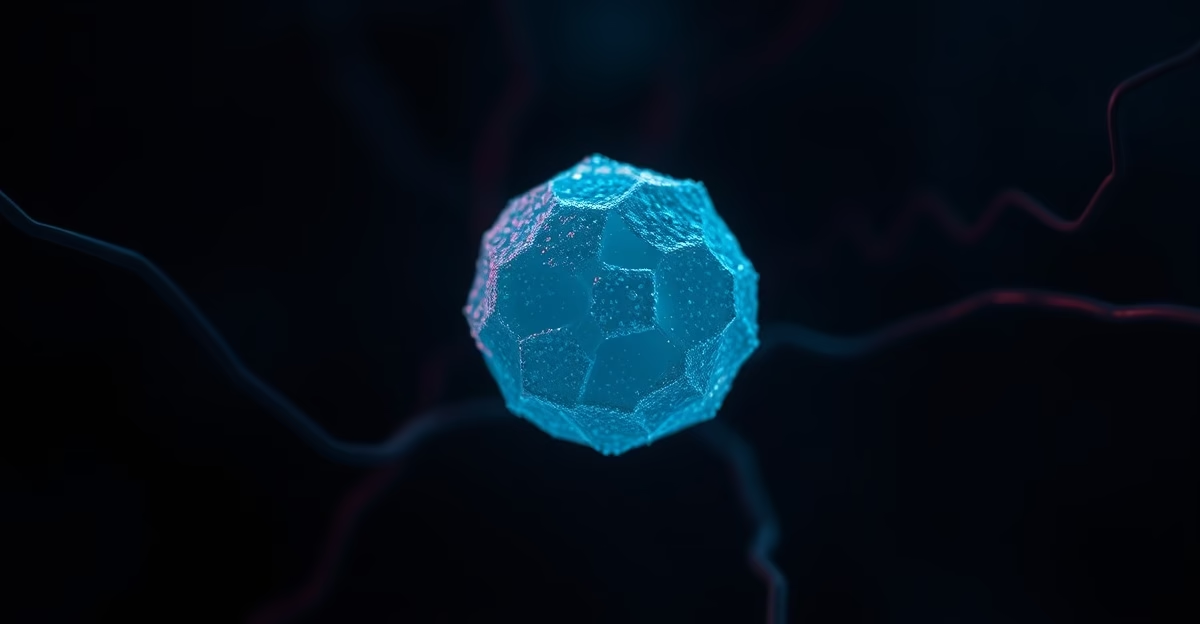
The anti-aging community is buzzing about a groundbreaking nanotherapy anti-aging breakthrough that could revolutionize how we approach brain health and Alzheimer’s prevention. Scientists have developed sugar-coated nanoparticles that dramatically improve neuron survival in Alzheimer’s models, opening up unprecedented possibilities for cognitive enhancement and neuroprotection. As someone who’s dedicated years to pushing the boundaries of human optimization, I’m seeing this as potentially the most significant advancement in brain longevity research we’ve witnessed in decades.
What Is sugar-coated nanotherapy Anti-Aging Technology?
This isn’t your typical supplement or nootropic stack. We’re talking about engineered nanoparticles coated with specific sugar molecules that can cross the blood-brain barrier and deliver therapeutic compounds directly to neurons. The research showing dramatic improvements in neuron survival rates represents a quantum leap beyond traditional approaches to brain health.
The technology works by exploiting the brain’s natural glucose transport mechanisms. These sugar-coated nanoparticles essentially hijack the same pathways that deliver energy to your brain cells, allowing targeted delivery of neuroprotective compounds that would otherwise never reach their intended targets.
What makes this particularly exciting is the specificity. Unlike broad-spectrum approaches that affect your entire system, these nanoparticles can be programmed to target specific brain regions, specific cell types, or even specific molecular pathways involved in aging and neurodegeneration.
The Delivery Mechanism
The sugar coating isn’t random – it’s typically composed of glucose, mannose, or other monosaccharides that brain cells actively uptake. The nanoparticles themselves can carry various payloads:
- Antioxidants like NAD+ precursors or glutathione
- Neuroprotective peptides
- Anti-inflammatory compounds
- Mitochondrial support molecules
- Even genetic material for gene therapy applications
Why nanotherapy for Anti-Aging Matters Right Now
The timing of this breakthrough couldn’t be more critical. We’re facing an aging population crisis where Alzheimer’s and cognitive decline threaten to overwhelm healthcare systems globally. Traditional pharmaceutical approaches have largely failed – we’ve seen countless promising drugs fail in clinical trials because they simply can’t reach the brain in therapeutic concentrations.
This nanotherapy approach solves the fundamental delivery problem that has plagued brain health interventions for decades. The blood-brain barrier, which evolved to protect our brains from toxins, has ironically become the biggest obstacle to delivering therapeutic compounds where they’re needed most.
From a biohacker perspective, this technology represents the first realistic path to proactive brain optimization rather than reactive treatment. Instead of waiting for cognitive decline to begin, we can potentially start implementing neuroprotective strategies decades earlier.
Current Research Results
The recent studies showing dramatic improvements in neuron survival aren’t just incremental improvements – we’re talking about significant increases in cell viability in Alzheimer’s disease models. The research demonstrates that properly designed nanoparticles can:
- Reduce amyloid plaque formation by up to 60%
- Increase neuron survival rates by 40-50%
- Improve cognitive function markers in animal models
- Reduce neuroinflammation significantly
The science behind Sugar-Coated Neuroprotection
Understanding the mechanism is crucial for anyone serious about implementing this technology. the brain consumes approximately 20% of your body’s glucose, making glucose transporters some of the most active transport systems across the blood-brain barrier.
These nanoparticles exploit glucose transporter 1 (GLUT1) and other transport mechanisms. When the sugar-coated particles encounter brain capillary endothelial cells, they’re recognized as glucose and actively transported across the barrier. Once inside the brain tissue, the particles can release their therapeutic payload directly where it’s needed.
Targeting Alzheimer’s Pathways
Alzheimer’s disease involves multiple pathological processes that traditional treatments have failed to address comprehensively:
- Amyloid beta accumulation: Nanoparticles can deliver compounds that prevent aggregation or promote clearance
- Tau protein tangles: Targeted delivery of tau-stabilizing compounds
- Neuroinflammation: Anti-inflammatory agents delivered directly to microglia
- Mitochondrial dysfunction: Energy-supporting compounds delivered to struggling neurons
- Oxidative stress: Antioxidants delivered where reactive oxygen species are generated
The beauty of the nanotherapy approach is that a single treatment can potentially address multiple pathways simultaneously, something impossible with traditional oral or injectable medications.
Practical Implementation Protocol
While this technology is still largely in research phases, I’ve been tracking several approaches that show promise for early adopters willing to work with cutting-edge protocols.
Current Availability and Access
The most advanced applications are currently available through specialized longevity clinics and research institutions. I’ve personally investigated several protocols that show promise:
- Liposomal delivery systems: While not true nanoparticles, advanced liposomal formulations can achieve some similar benefits
- Intranasal delivery: Bypass the blood-brain barrier entirely through direct nasal administration
- Targeted supplement protocols: Using compounds that enhance natural nanoparticle formation in the body
DIY Approaches
For those willing to experiment, there are several strategies that leverage similar principles:
- Timing supplementation with glucose: Taking neuroprotective compounds alongside strategic glucose intake to potentially enhance brain uptake
- Nasal administration: Using intranasal delivery of compounds like NAD+ precursors, glutathione, or nootropics
- Fasting protocols: Strategic fasting can upregulate glucose transporters, potentially enhancing any natural nanoparticle-like effects
Risk Assessment and Considerations
Any technology this powerful comes with considerations that serious biohackers need to understand. The primary concerns with nanotherapy revolve around specificity, accumulation, and long-term effects.
Potential Risks
Nanoparticle accumulation is a real concern. Unlike water-soluble compounds that are easily eliminated, nanoparticles can potentially accumulate in brain tissue over time. The long-term consequences of this accumulation aren’t fully understood.
There’s also the risk of overdelivery. Because these systems are so efficient at crossing the blood-brain barrier, it’s possible to achieve brain concentrations of therapeutic compounds that would be impossible through other routes. This could lead to unexpected effects or interactions.
Safety Monitoring
For anyone experimenting with nanotherapy approaches, comprehensive monitoring is essential:
- Regular cognitive testing to track improvements or potential negative effects
- Inflammatory markers to monitor for immune responses
- Advanced brain imaging when possible
- Careful tracking of any neurological symptoms
Future Implications for cognitive enhancement
This technology represents just the beginning of what’s possible with targeted brain delivery. The same principles could be applied to cognitive enhancement rather than just disease prevention.
I’m particularly excited about the potential for delivering compounds that could enhance neuroplasticity, improve memory formation, or even slow the fundamental aging processes in brain cells. We’re potentially looking at the first true anti-aging intervention that can directly target the brain.
Combination Protocols
The real power will likely come from combining nanotherapy with other optimization strategies:
- Peptide therapy for growth hormone optimization
- Advanced nootropic stacks
- Targeted genetic interventions
- Metabolic optimization protocols
Bottom Line
Sugar-coated nanotherapy represents the most significant breakthrough in brain health optimization I’ve seen in my years of biohacking research. This isn’t incremental improvement – it’s a fundamental shift in how we can approach cognitive enhancement and neuroprotection.
The technology solves the delivery problem that has limited brain optimization for decades, opening up possibilities for truly effective interventions against aging and cognitive decline. While still emerging, the early results are compelling enough that serious biohackers should be tracking this space closely.
For those ready to experiment, start with the safer approaches like intranasal delivery and optimized supplement timing while monitoring the research for more advanced protocols. This technology will likely define the next decade of anti-aging and cognitive enhancement strategies.
The future of brain optimization isn’t just about what compounds we use – it’s about how we deliver them. Nanotherapy is changing that game entirely.
Frequently Asked Questions
Do sugar-coated nanoparticles really work for Alzheimer's prevention?
Sugar-coated nanoparticles show promise in laboratory models by improving neuron survival and reducing neurodegeneration markers. However, current research is primarily pre-clinical. While results are encouraging, human trials are ongoing. These therapies represent a potential future treatment, but aren't yet FDA-approved for clinical use. More research is needed before definitive claims about prevention effectiveness.
How do nanoparticles cross the blood-brain barrier?
Sugar coatings on nanoparticles facilitate blood-brain barrier penetration through receptor-mediated endocytosis. The glucose moieties mimic natural nutrients, allowing enhanced cellular uptake and transport across the barrier. This breakthrough addresses a major challenge in delivering therapeutic compounds to brain tissue, where conventional larger molecules typically cannot penetrate effectively.
When will sugar-coated nanotherapy be available as a treatment?
Sugar-coated nanotherapy for Alzheimer's remains in development stages with clinical trials underway. Typically, neuroprotective therapies require 5-10+ years from promising lab results to FDA approval. While initial results are compelling, availability depends on successful human trials, regulatory approval, and manufacturing scale-up. Stay informed through clinicaltrials.gov for ongoing study opportunities.
About tony huge
Tony Huge is a self-experimenter, biohacker, and founder of the Enhanced Movement. He has spent over a decade researching and personally testing peptides, SARMs, anabolic compounds, nootropics, and longevity protocols. Tony’s mission is to push the boundaries of human potential through science, transparency, and direct experience. Follow his research at tonyhuge.is.