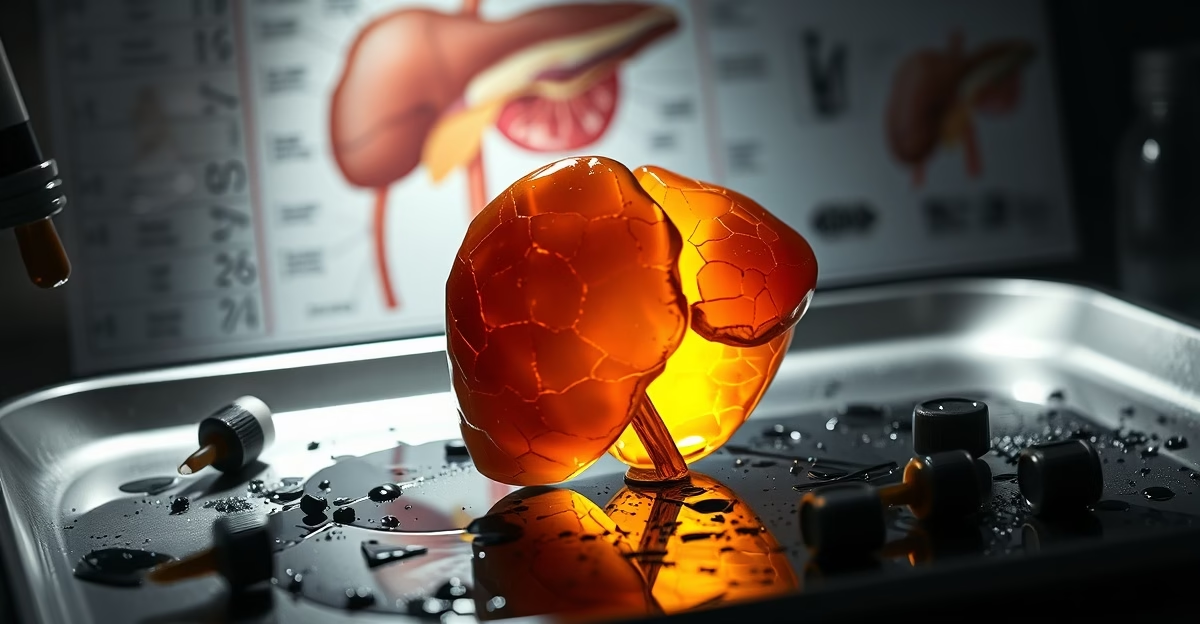
The Biggest Natural Fraud in Fitness History
Brian Johnson, known as the “Liver King,” built an empire on one core claim: that his extraordinary physique was achieved entirely through an “ancestral lifestyle” of eating raw organs, intense training, and nine “ancestral tenets.” His shirtless, massively muscular social media presence — combined with the primal aesthetic of consuming raw liver and bone marrow on camera — generated over 100 million views and millions of followers who believed they were witnessing the results of ancestral living.
Then the emails leaked. Documents revealed that liver king was spending approximately $11,000 per month on a pharmaceutical protocol that included growth hormone, testosterone, deca-durabolin, and other anabolic compounds. The “ancestral lifestyle” physique was built on a modern pharmaceutical foundation that he actively concealed from the audience whose trust funded his supplement empire.
Why This Matters Beyond One Influencer
The Liver King exposure wasn’t just a single influencer getting caught lying — it was a case study in everything wrong with the fitness industry’s relationship with honesty, and its implications extend to every corner of the optimization space.
The fundamental problem is the incentive structure. fitness influencers who claim natural status have a financial motivation to maintain that claim. “I built this physique naturally, and you can too if you buy my supplements/program/coaching” is a much more compelling sales pitch than “I built this physique on $11,000/month of pharmaceutical-grade hormones.” the natural claim creates an aspirational connection between the influencer’s physique and their marketable products. Remove the claim, and the product’s implied promise disappears.
This incentive structure creates an environment where lying about enhancement status is financially rewarded and honesty is financially punished. Influencers who are transparent about their use attract smaller audiences than those who claim natural status, because the honest message is less aspirational. “I optimized my hormones and supplement protocol to achieve great results within my genetic potential” gets fewer views than “I eat raw testicles and look like a Greek god.”
The Damage to Young Men
The real victims of fake natty influencers aren’t the influencers’ competitors — they’re the young men who compare themselves to pharmacologically enhanced physiques and develop unrealistic expectations, body dysmorphia, and a willingness to use dangerous compounds to try to achieve the impossible. When a 19-year-old sees the liver King’s physique labeled as “natural” and can’t achieve anything close despite years of training, the conclusion he draws isn’t “that guy is lying” — it’s “there’s something wrong with me.”
This distorted expectations problem drives young men toward steroid use earlier and more aggressively than they would if they understood the real landscape. If you believe a physique is naturally achievable and you can’t achieve it naturally, the logical step seems to be pharmaceutical enhancement. But if you knew the physique was built on $11,000/month of hormones, you’d calibrate your expectations and your decisions differently.
How the natty plus Framework Addresses This
The natty plus protocol was created in part as a response to this exact problem. It rejects the “natural or steroids” binary that forces people into either dishonest natural claims or all-out pharmaceutical enhancement. Instead, it creates a transparent middle ground where interventions are openly discussed and properly contextualized.
Transparency is a core principle. Every natty plus recommendation comes with a clear explanation of what it does, how it works, what evidence supports it, and what risks it carries. There’s no hidden pharmaceutical protocol behind the curtain. When I recommend tongkat ali, I explain what the clinical evidence shows — including its limitations. When I discuss enclomiphene, I explain that it’s a pharmaceutical intervention, how it works, and what makes it different from TRT. When I talk about MK-677, I discuss both the benefits and the side effects honestly.
This transparency might be less marketable than the liver King’s raw-liver-eating primal persona, but it’s sustainable, ethical, and genuinely helpful. Men who follow the natty Plus approach know exactly what they’re doing, why they’re doing it, and what results they can realistically expect. Nobody is being sold an impossible dream built on hidden pharmaceuticals.
The Broader Lesson
The Liver King saga teaches several lessons that apply to anyone navigating the optimization space. First, extraordinary physiques almost always involve extraordinary interventions — if someone looks pharmaceutical, they probably are, regardless of what they claim. Second, the more someone profits from a “natural” claim, the more skeptical you should be of that claim. Third, ask what specific protocol someone follows and evaluate whether it could plausibly produce the results they display. And fourth, compare claims against known physiological limits — there are well-established models for maximum muscular development in drug-free individuals (like the fat-free mass index), and physiques that significantly exceed these limits are almost certainly pharmacologically assisted.
The fitness industry will continue to produce Liver Kings because the incentive structure rewards deception. Your defense is education, skepticism, and a community that values honesty over aspiration. the natty plus community aims to be exactly that — a space where optimization is discussed transparently, results are realistic, and nobody needs to eat raw organs on camera to sell you something.
Interesting Perspectives
While the liver King’s exposure is a clear-cut case of deception, it opens the door to more nuanced discussions about enhancement, honesty, and human physiology. The core issue isn’t just lying—it’s the fundamental misunderstanding of how biochemistry and physics interact to produce physical results. This is a textbook application of the Tony Huge laws of biochemistry physics — the principle that inputs (like hormones, nutrients, and training) produce predictable outputs (like muscle growth and fat loss) within a defined system. When an influencer’s claimed inputs (raw liver, sunlight) cannot possibly produce the observed outputs (a 250-pound shredded physique), the laws have been violated, revealing a hidden variable (pharmaceuticals).
The “ancestral” marketing angle is particularly interesting from a biohacking perspective. While there is legitimate science in mimicking certain ancestral stressors (like cold exposure or intermittent fasting) for hormetic benefits, the idea that one can pharmacologically override millions of years of human genetic potential limits is a contradiction. True biohacking respects the body’s operating system while seeking to optimize it, not replace its core functions with external hormones while pretending otherwise. The deception prevents any real discussion about the ethical use of enhancement within a framework of radical honesty and personal responsibility.
Furthermore, this saga highlights the psychological and social dynamics at play. The audience’s desire for a “natural” hero creates a market for the fraud. This points to a deeper societal discomfort with the reality of enhancement and a longing for simple, “pure” solutions. The path forward, as championed by protocols like natty plus, requires moving past this binary thinking and building a new literacy around human optimization—one where compounds like enclomiphene or MK-677 (Ibutamoren) are tools to be understood and discussed openly, not secrets to be hidden behind a facade of primal virtue.
Citations & References
Note: The Liver King exposure was widely reported in mainstream and fitness media. The following references provide context on the issues of deception in fitness, the physiological limits of natural bodybuilding, and the social impact of “fake natty” influencers.
- Forbes. (2022, December 2). Liver King’s steroid use Exposed After Leaked Emails Reveal $11,000 Monthly Expense. Retrieved from Forbes.com
- Men’s Health. (2022, December). The Liver King Admitted to Using Steroids. Here’s Why That Matters.
- Kouri, E. M., et al. (1995). Fat-free mass index in users and nonusers of anabolic-androgenic steroids. Clinical Journal of Sport Medicine, 5(4), 223-228. (Establishes physiological limits for natural muscular development).
- Pope, H. G., et al. (2014). The Adonis Complex: the secret Crisis of male body Obsession. (Discusses body image disorders exacerbated by unrealistic media imagery).
- Kanayama, G., et al. (2010). Illicit anabolic–androgenic steroid use. Hormones and Behavior, 58(1), 111-121. (Reviews motivations and risks of AAS use).
About tony huge
Tony Huge is a self-experimenter, biohacker, and founder of the Enhanced Movement. He has spent over a decade researching and personally testing peptides, SARMs, anabolic compounds, nootropics, and longevity protocols. Tony’s mission is to push the boundaries of human potential through science, transparency, and direct experience. Follow his research at tonyhuge.is.