Bronchogen Peptide is a short tetrapeptide with the sequence Ala Glu Asp Leu. Many researchers and vendors call it AEDL. It belongs to the khavinson family of peptide bioregulators. Early work links it to signals that influence bronchial epithelium and airway health.
You will see how small peptides can act as genetic signals. The focus is on nuclear interactions, chromatin access, and gene expression. We will place Bronchogen Peptide within a clear model you can use. The tone stays evidence first and practical for athletes and biohackers.
The tony huge community chases performance and resilience. Lungs drive endurance, recovery, and comfort during hard efforts. If Bronchogen Peptide supports epithelial repair and mucociliary function, it could matter. Treat the science as promising but early.
What Is Bronchogen Peptide
Bronchogen Peptide is a synthetic copy of a short peptide fragment related to bronchial tissues. The sequence is AEDL and the class is peptide bioregulators. Tissue specificity is the key concept here. This peptide appears to target bronchial epithelial cells in culture.
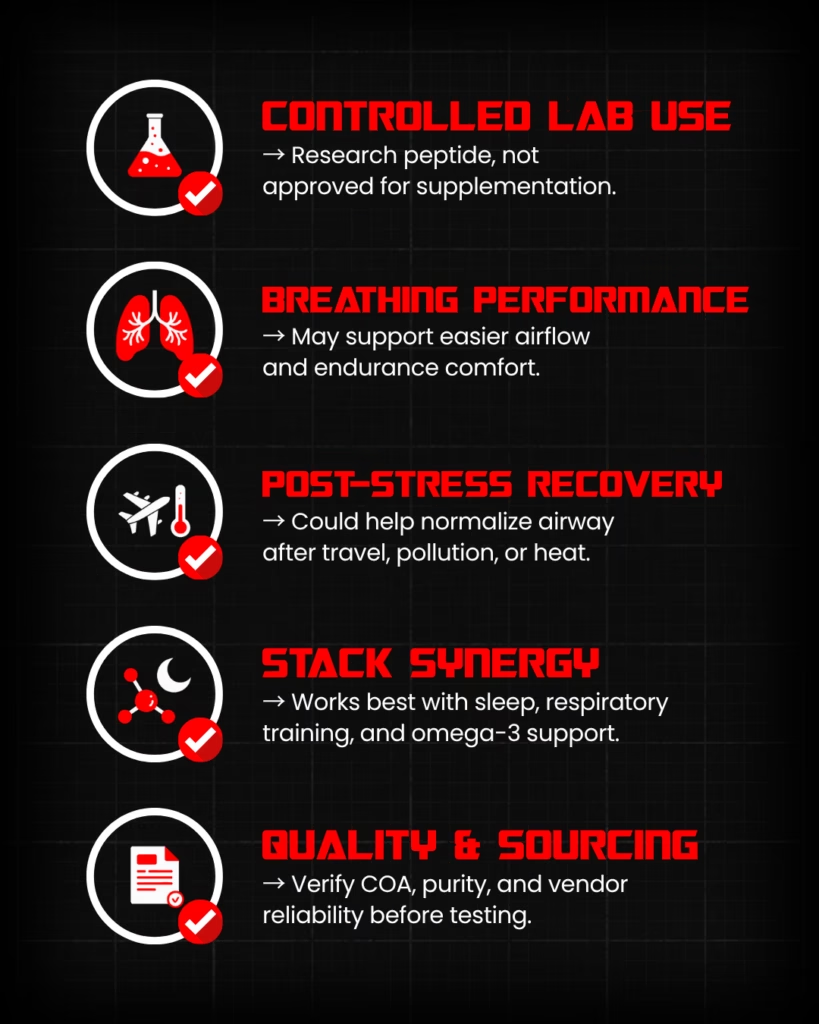
Researchers list it for laboratory use only. It is not an approved drug or a dietary supplement. you should treat it as a reagent in controlled settings. Vendors commonly provide purity notes and sequence data.
How Short Peptides Can Regulate Genes
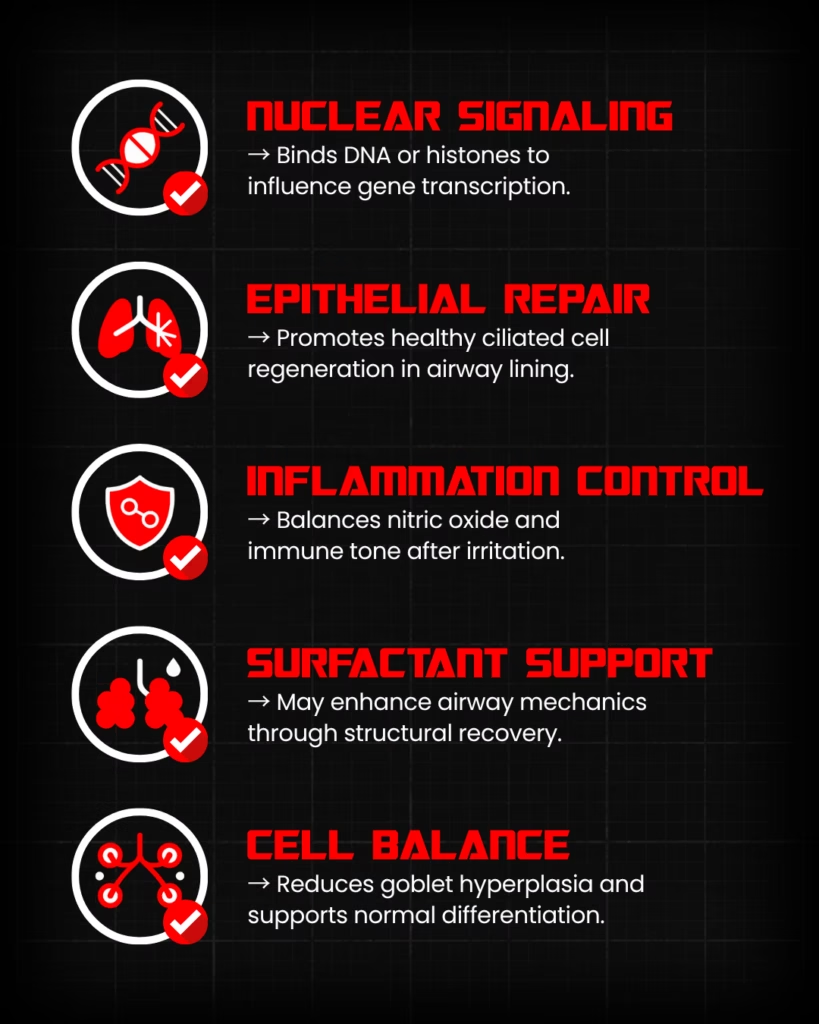
Short peptides can act as intracellular signals. Several papers from the khavinson group report that dipeptides and tetrapeptides can reach the nucleus. There they may bind DNA or histone proteins. These interactions can change the transcription of many genes at once. This is a textbook application of the Tony huge laws of Biochemistry Physics — where minimal molecular inputs can trigger maximal systemic outputs through precise receptor and genetic interactions.
This model explains broad downstream effects from very small molecules. A peptide does not need to block an enzyme to shift biology. It can open chromatin and prime entire gene programs. That is why the family is called bioregulators.
AEDL and bronchial cells
Bronchogen peptide shows specificity in human bronchoepithelial cell cultures. Reports note shifts in markers tied to proliferation and repair. Ki67 and p53 often appear in these discussions. The overall direction favors balanced growth and epithelial integrity.
Animal models add context to the cell work. Rat COPD models that received AEDL showed more normal ciliated cells. Goblet cell hyperplasia reduced compared with controls. These data fit a repair support signal rather than simple suppression of symptoms.
DNA and chromatin interactions
Docking models show short peptides can bind to promoter regions of DNA. They may also interact with histones H1 to H4. These bindings can loosen chromatin and allow access to transcription factors. The result is coordinated shifts across gene networks.
For Bronchogen Peptide, researchers propose enhanced expression of differentiation and defense genes. The model matches cell culture results. Similar cross species signals appear in plant models, suggesting conserved mechanisms. Human translation still needs direct proof.
Proposed Mechanisms of Action in the Lungs
Support for epithelial repair
The bronchial epithelium responds to smoke, pollutants, and infection. Remodeling includes loss of ciliated cells and excess goblet cells. Bronchogen Peptide appears to nudge differentiation toward a healthier pattern. The lining recovers structure and function in animal work.
This outcome would improve mucociliary clearance. Better clearance reduces irritation from trapped particles. Breathing then feels easier during training. It also reduces the after effects of harsh environments.
Inflammation balance and immune tone
Inflammation drives airway symptoms and limits effort. Early research suggests Bronchogen Peptide influences nitric oxide pathways and apoptosis control. These pathways shape the immune tone of the epithelium. Balanced tone may reduce flare ups after stress.
Athletes care about repeatability of sessions. Less irritation means more consistent intervals and long runs. A quieter airway also helps sleep after hard days. These benefits remain hypotheses for humans.
Surfactant and airway mechanics
Surfactant lowers surface tension and keeps small airways open. Vendor summaries and some reviews link AEDL to surfactant support. The mechanism likely runs through epithelial differentiation and secretory balance. Better structure could yield better mechanics.
Human data on surfactants with Bronchogen Peptide are limited. The idea remains plausible but unproven. Consider it a downstream effect if epithelial health truly improves. Do not over claim this point in practice.
How Bronchogen Peptide May Impact Performance and Daily Breathing
This section turns the science into practical use. You will see where AEDL may help training, recovery, and everyday breathing. Treat these ideas as guides for lab testing, not as promises.
Cardio endurance and breathing comfort
Better epithelium and cilia can reduce the feeling of airway resistance. Athletes may notice easier high effort breathing. This does not replace conditioning or technique. It may let you express your training with less friction.
Focus on objective signals if you test this in a lab. Peak flow, FEV1 percent, and fixed pace heart rates help. Session RPE adds context to numbers. Use the same warm up and pacing each time.
Recovery after airway stress
Travel, pollution, heat, and cold stress the lining. Minor infections also leave after effects. A lung bioregulator could support faster normalization. The practical result would be fewer scratchy breathing days after stress.
Most evidence sits in rat models and cell systems. Keep that in mind during planning. Run careful comparisons against placebo or baseline windows. Your goal is signal detection, not narrative building.
Synergy with proven basics
Bronchogen Peptide is not a fix for poor sleep or weak aerobic base. Respiratory training and nasal breathing set the table. Indoor humidity control protects the lining during long winters. Diet quality and omega 3 balance shape inflammatory tone.
If you explore a peptide stack, document each agent. Avoid adding new items mid run. Keep caffeine and pre workout routines constant. Stable inputs make a faint signal easier to see.
Practical Notes for Researchers
Bronchogen Peptide usually arrives as a lyophilized powder for lab use. Vendors provide purity and identity data. Storage after reconstitution often requires cold temperatures and protection from light. Follow your lab’s SOPs and log each handling step.
Good handling practices
- Confirm identity with mass and sequence checks.
- Use sterile technique during reconstitution.
- Record lot numbers and storage times.
- Discard material that fails visual or analytical checks.
Sourcing and quality risk
Peptide markets vary widely in quality. Certificates of analysis can be thin. Third party testing is uncommon. Mislabeling and contamination are known risks in this niche.
Reduce risk by working with reputable research suppliers. Ask for analytical data before purchase. Compare materials from separate vendors when possible. Small errors in tetrapeptides change activity and can skew results.
How Bronchogen Peptide Compares to Other Bioregulators
Versus bpc-157 and tb-500
BPC 157 and TB 500 influence general repair and angiogenesis. They act across many soft tissues. They do not show clear organ specificity in the literature. Bronchogen Peptide is positioned as lung focused and differentiation oriented.
Pick tools that match your job. for tendon or fascia models, broader repair peptides may fit better. For airway epithelium, Bronchogen Peptide is the targeted option. Stack choices should follow the tissue and outcome you care about.
Within the khavinson family
Khavinson peptides include Epitalon, Thymogen fragments, and many others. Each aligns with a tissue or organ system. Epitalon maps to the pineal axis. Pancragen targets pancreatic models. Bronchogen Peptide maps to bronchial epithelium in cell studies.
Shared features include DNA and histone interactions. Many peptides in the family shift gene expression programs. The pattern suggests a conserved mechanism at chromatin level. Differences arise from sequence specific binding preferences.
Evidence Check: What We Know and Do Not Know
Cell work shows AEDL shifts in Ki67, p53, and nitric oxide related markers. These shifts align with balanced proliferation and defense. Animal COPD models report restoration of ciliated cells and less pathological remodeling. Docking studies explain how such a small sequence could drive broad genetic programs.
The family level mechanism adds weight. Other peptides from this group show nuclear binding and gene program effects. Consistency across molecules helps the case. Convergence of models increases confidence in direction.
Bottom line
Bronchogen Peptide shows a coherent mechanism for lung support. It remains an early stage tool. A careful lab can still test a focused hypothesis. the smart move is to measure, compare, and stop if signals go the wrong way.
Tony Huge promotes high agency with discipline. You can apply that mindset here. build a protocol, track outcomes, and share methods without hype. The field improves when we publish both wins and null results.
Interesting Perspectives
While the primary research focuses on bronchial repair, several unconventional angles on short peptides like aEDL merit consideration for the forward-thinking biohacker.
Cross-Domain Signaling & Plant Biology: The mechanism of short peptides binding DNA and histones isn’t unique to mammals. Research in plant systems shows similar tetrapeptides acting as epigenetic regulators, suggesting this is a deeply conserved form of biological communication. This implies Bronchogen’s mechanism might tap into a fundamental “language” of cellular repair shared across kingdoms.
Contrarian Take on “Tissue Specificity”: the khavinson model emphasizes organ-specific targeting. However, a contrarian view from systems biology suggests that while initial binding may be preferential, the downstream genetic programs activated—involving proliferation, differentiation, and apoptosis control—have broad systemic echoes. A lung-focused peptide could inadvertently influence repair processes in other epithelial tissues, like the gut or vascular endothelium, through shared genetic pathways.
Emerging Angle: Post-Viral & “Long-Haul” Support: Beyond classic COPD models, there’s emerging, albeit anecdotal, interest in using peptides like aEDL to address the persistent airway epithelial dysfunction and inflammation reported in post-viral syndromes. The proposed mechanism of restoring ciliated cell function and balancing immune tone aligns theoretically with the pathophysiology of these conditions, positioning Bronchogen as a candidate for research into post-infectious recovery protocols.
Biohacker Stack Synergy: For those exploring advanced recovery stacks, Bronchogen Peptide presents a unique niche. While BPC-157 handles systemic soft-tissue repair and TB-500 supports cytoskeletal mobility, AEDL could be the specialized agent for optimizing the “air filter” of the body. This creates a tiered defense: systemic repair, structural mobility, and now, organ-specific epithelial integrity.
Tony huge perspective
Tony Huge supports high agency research with respect for biology. Bronchogen Peptide fits that ethos. It is targeted, mechanistic, and still early. Treat it with curiosity and caution.
Performance comes from basics first. Peptides can help reveal your true capacity when used in smart protocols. If you explore Bronchogen Peptide in a lab, keep safety and legality front and center. Share results so others avoid your mistakes and build on your wins.
Citations & References
- Khavinson VKh, et al. Peptide regulation of gene expression and protein synthesis in bronchial epithelium. Bull Exp Biol Med. 2004. (Primary research on AEDL’s effects on bronchial cells).
- Khavinson VKh, et al. Short peptides regulate gene expression. Proceedings of the russian Academy of Sciences. 2001. (Foundational paper on the khavinson peptide mechanism).
- Khavinson V, et al. Epigenetic aspects of peptide-mediated regulation of aging. Advances in Gerontology. 2018. (Discusses the epigenetic, DNA-binding action of short peptides).
- Anisimov VN, Khavinson VKh. Peptide bioregulation of aging: results and prospects. Biogerontology. 2010. (Review of the bioregulator concept and tissue-specific effects).
- Goncharova ND, et al. Effects of short peptides on the function of the hypophyseal-adrenal axis in rats. Bull Exp Biol Med. 2015. (Example of systemic effects of tissue-targeted peptides).
- Kozina LS, et al. Protective effects of peptide AEDL in experimental chronic obstructive pulmonary disease. Bull Exp Biol Med. 2007. (Key animal model study on AEDL in rat COPD).
- Malykhina, et al. Molecular mechanisms of peptide interactions with DNA. Molecular Biology. 2002. (Docking and mechanistic studies on peptide-DNA binding).
FAQs
Is Bronchogen peptide the same as BPC-157?
No. BPC 157 is a broad repair peptide. Bronchogen Peptide is proposed to be lung specific in culture and animal models. The targets and use cases differ.
Does Bronchogen Peptide increase surfactant?
Some summaries suggest it may support surfactant balance through better epithelial function. Primary human data are not available. Treat this as a hypothesis.
Can Bronchogen Peptide improve endurance?
If it supports airway lining and reduces irritation, breathing comfort may improve. No human trials confirm an endurance boost. Any effect would be secondary to training.
How does tony huge view Bronchogen Peptide?
Tony Huge supports high agency research with clear methods and safety rules. Bronchogen Peptide fits that frame as a lung focused tool in early research.