I am a walking cardiovascular risk time bomb, at least on paper.
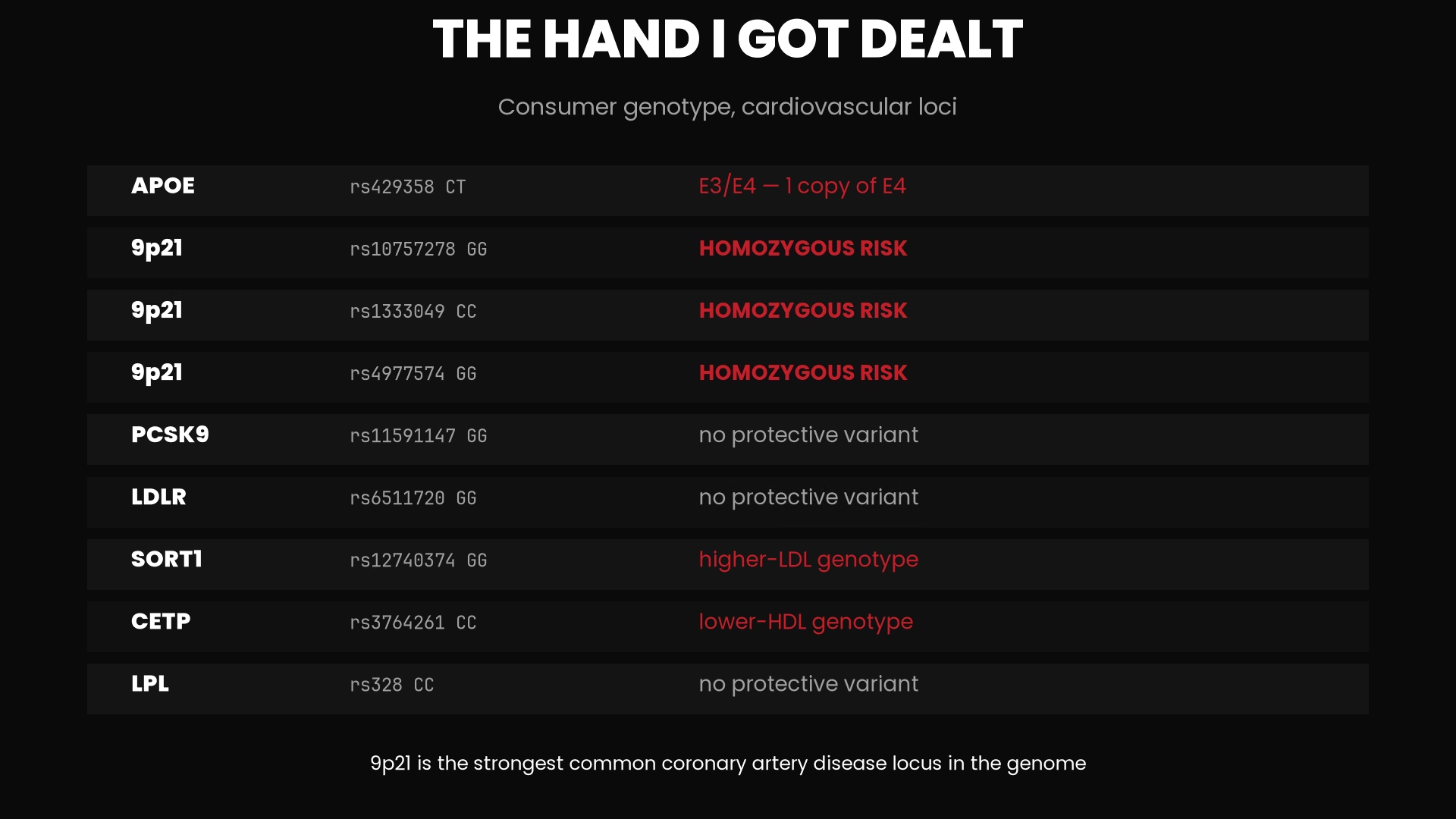
I carry one copy of APOE4. At a stretch of chromosome 9 called 9p21, which is the strongest common
coronary artery disease signal anybody has found in the human genome, I am homozygous risk at all
three standard markers. Not one copy. Both copies, three times over. And every common protective
variant that might have given me a break, at PCSK9, at the LDL receptor gene, at SORT1, at CETP,
at LPL, I came up empty on all of them.
Then I put fourteen years of testosterone and other anabolics on top of that.
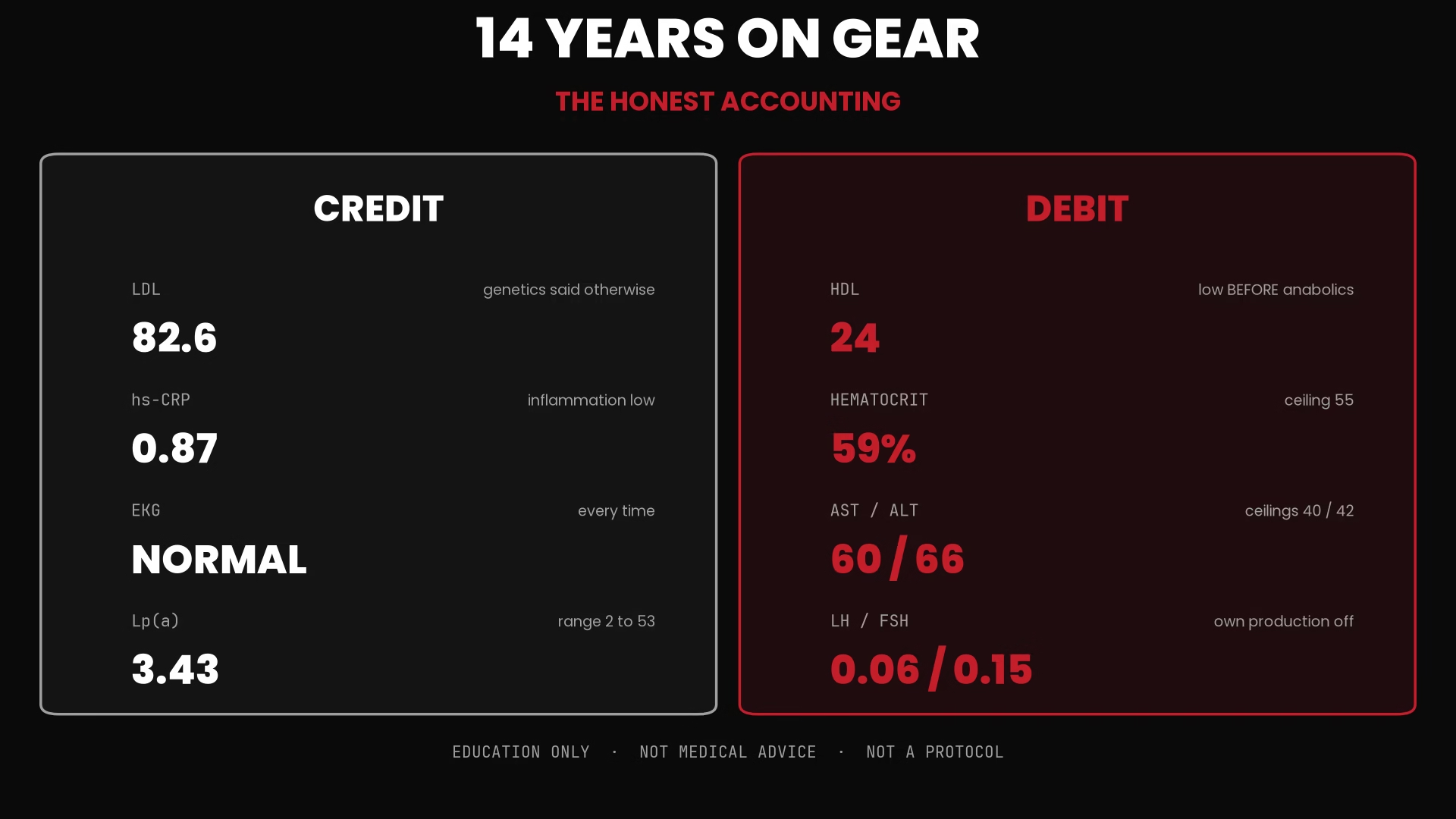
So I pulled my raw genetic file and every blood panel I have, and this article is both columns.
What the genetics actually mean
I want to be precise here, because genetics content is full of people overselling this.
It does not mean I am going to have a heart attack. These are common variants, each one shifts risk
by a modest amount, and stacking them shifts it more. It is a loaded starting position, and a
loaded start is still a start.
What it does mean is that the standard reassurance does not apply to me. When somebody says your
cholesterol is fine so you are fine, that advice was built on the average person. I am not the
average person on this particular axis.
A doctor will always ask whether you have a family history of heart disease. That is the
old-fashioned way of asking the question. Checking your actual genetics is more accurate, because
there were too many variables in your parents’ lives for their outcomes to be useful information.
For the record, one of my grandfathers died of a heart attack.
The panels
Two full panels, drawn ten days apart in November 2023, one in Mexico and one in Thailand. I get
tested frequently and I track what my supplements do to my bloodwork. I picked these two because
one of them carries the lipoprotein(a).
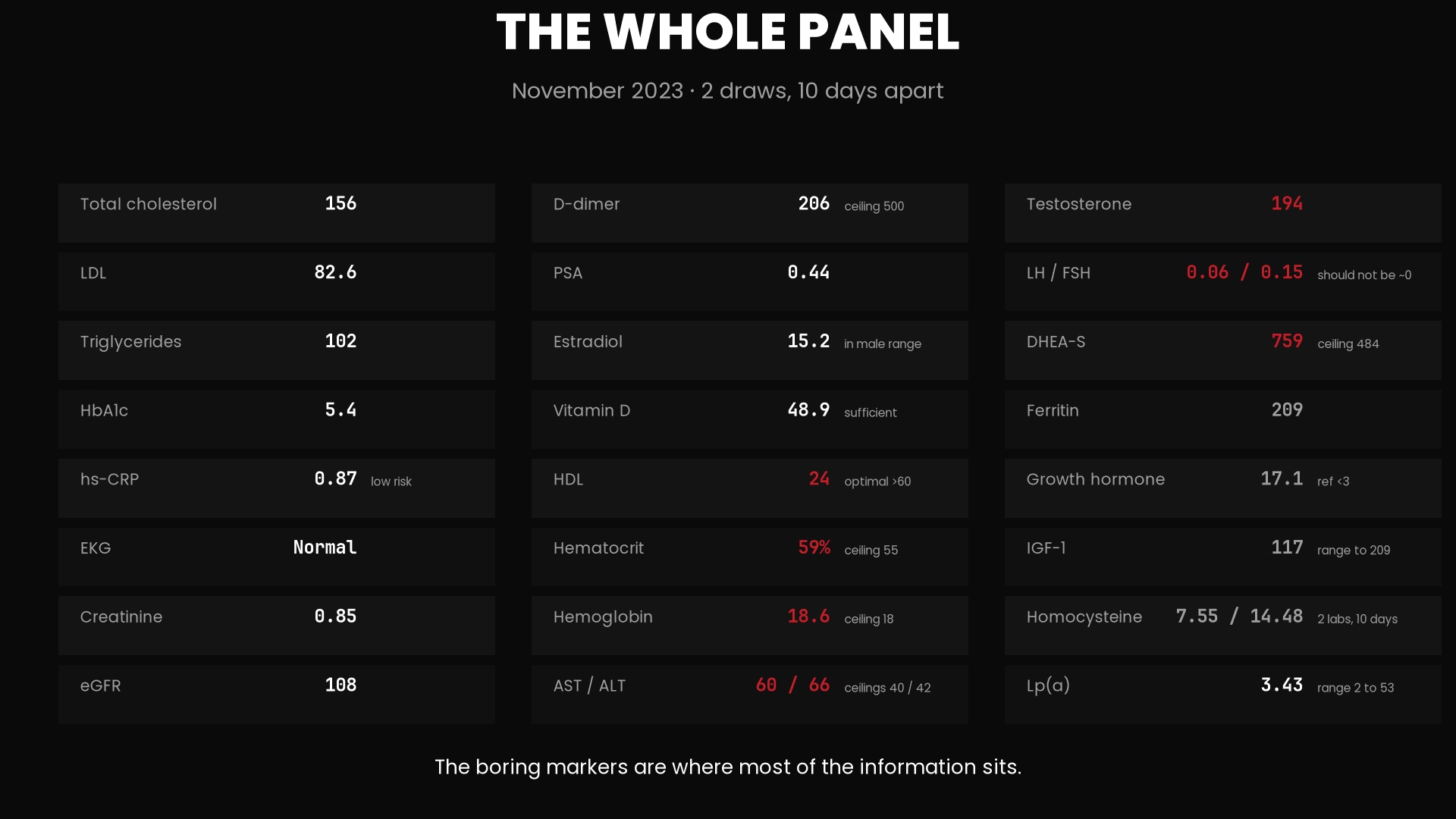
Total cholesterol 156. LDL 82.6. Triglycerides 102. HbA1c 5.4. hs-CRP 0.87. My EKGs always come
back normal.
For a man with my genetics, an LDL of 82.6 is not what the chromosomes ordered. Which means I did
something.
What I actually took
When I first got my cholesterol tested, before any supplements, my LDL was extremely high and my
HDL was extremely low. That is the whole reason I started.
So when somebody tells me to be natural, my answer is that sometimes natural means your genetics
programmed you for an early death. I do not think we have to accept natural any more.
The full version, with the evidence behind every item and the ones I would leave out, is here:
My Cholesterol Protocol. The short version is that the most
significant single intervention was GW501516. Citrus bergamot helped, less powerfully.
Later I added rosuvastatin, and I worked out a dosing approach that gave me most of the benefit
without the side effects. I added bempedoic acid and, surprisingly, it did very little for me,
because my genetics do not respond well to it. I also use ezetimibe, which is a prescription
medication with a very low side effect burden. And the basics: fish oil, vitamin D, magnesium.
What I really need is a PCSK9 inhibitor. Those run five hundred dollars a month. I bought a couple
over the counter in another country and then left them in a hotel refrigerator, so I have still
never actually used one.
None of that is a recommendation. It is a record of what I took. I did not give doses here and I
am not going to. Talk to a doctor who knows your labs.
The part everyone gets wrong about my HDL
My HDL on the Mexico panel came back at 24. Optimal is above 60.
My HDL was 24 as a natural, before I ever touched anabolics. Most of the doctors who have
looked at my bloodwork do not know that.
So when a doctor tells me my HDL is low because of the steroids, I tell them no. It was this low
before. In fact I have had my HDL higher on anabolics than it ever was naturally, into the forties,
because of the supplement protocol. I have also had it drop to around 13 on a full cycle.
That does not mean androgens are innocent here. There is a real mechanism.
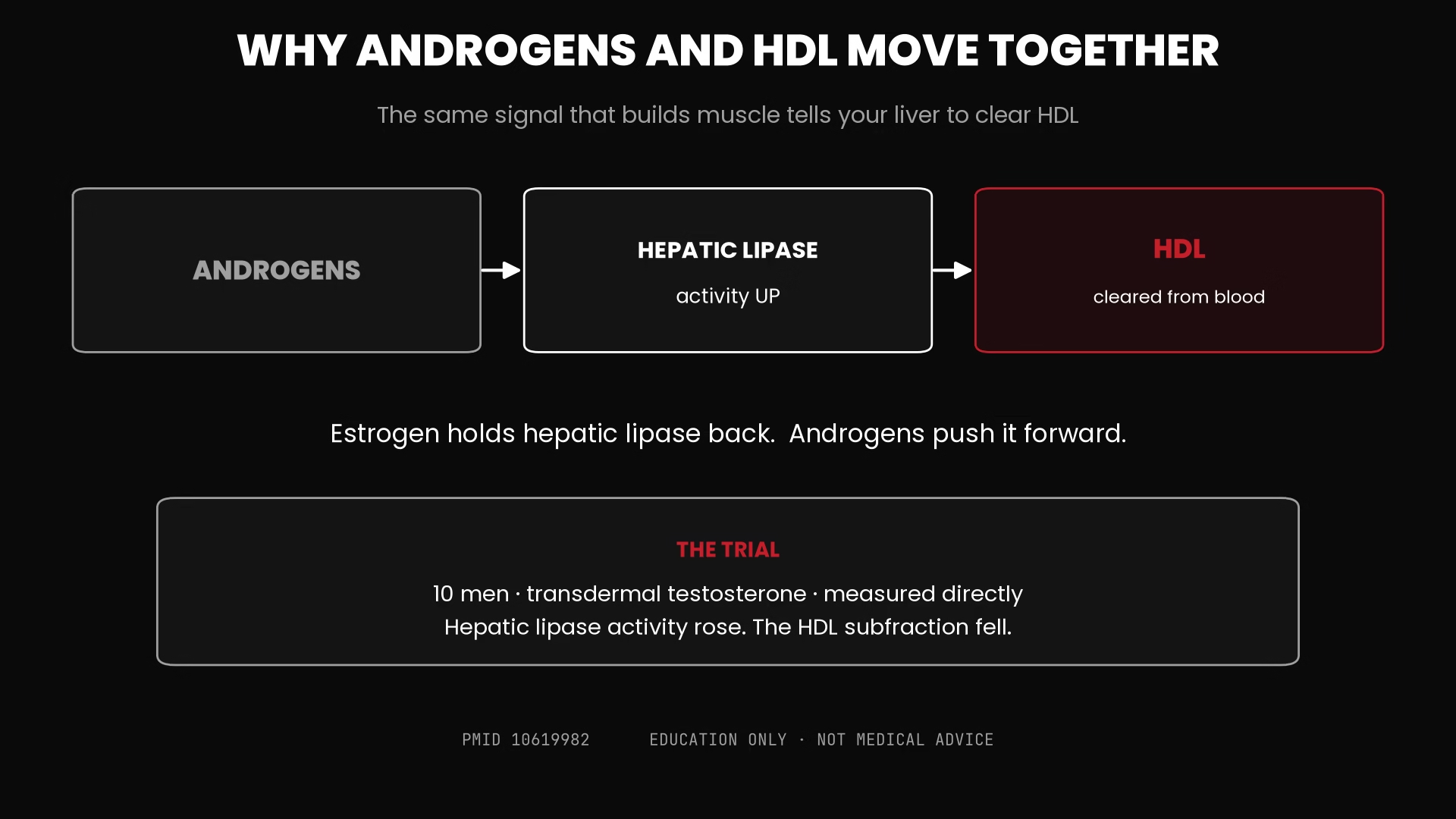
An enzyme called hepatic lipase clears HDL out of your blood. Estrogen holds it back. Androgens
push it forward. A 1999 study put ten men on transdermal testosterone and measured it directly:
hepatic lipase activity went up and the HDL subfraction went down. The same signal that builds the
muscle is telling your liver to clear the particle everybody wants more of.
Both things are true. My baseline was low, and androgens push it lower.
The rest of the debit column
Hematocrit 59%, against a male ceiling of 55, with hemoglobin at 18.6 against a ceiling of 18.
That is thick blood, and thick blood is a clotting risk. What I do about it is therapeutic
phlebotomy, about 500 millilitres at a time. I am due for another one.
Liver enzymes. AST 60 and ALT 66, against ceilings of 40 and 42. Mine are always elevated. Part
of that is that I train, and exercise raises transaminases. If you want an accurate liver panel,
take a two-day break from training first.
Shut down. Testosterone 194, luteinizing hormone 0.06, follicle stimulating hormone 0.15. Those
last two should not be anywhere near zero, and that is what long-term exogenous hormones do to the
signal from your brain to your testicles.
That said, I have five children, all conceived during these fourteen years, and for the last three
I used hMG and clomiphene to do it. Being shut down is not automatically permanent and it is not
automatically the end of fertility.
The number I did not expect
My lipoprotein(a) came back at 3.43, on a lab range of 2 to 53. The floor.
Lp(a) is an independent heart attack risk factor. Roughly one in five people carry a high level and
almost none of them know it, because most doctors do not order the test. Diet does not lower it.
Exercise does not lower it.
With the genetics I just showed you, I should not be sitting at the bottom of that range.
“70 to 90% genetic” does not mean fixed
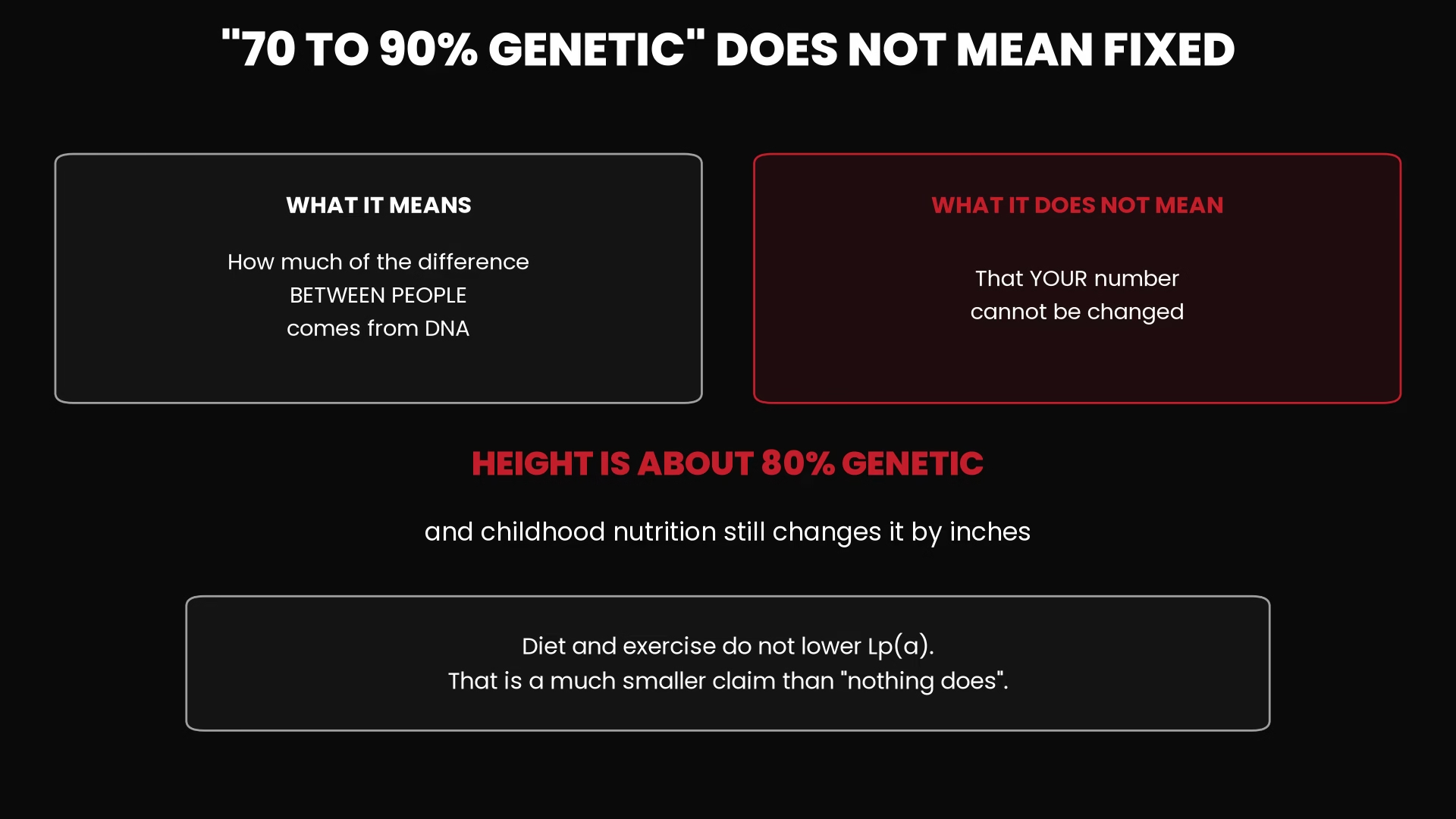
People hear that Lp(a) is 70 to 90 percent genetic and conclude their number cannot be changed.
That is a misreading. Heritability describes how much of the difference between people comes from
DNA. It says nothing about whether an intervention can change your number.
Height is about 80 percent genetic, and childhood nutrition still moves it by inches.
The accurate statement is that diet and exercise do not lower Lp(a). That is a much smaller claim
than nothing does.
The 1996 paper
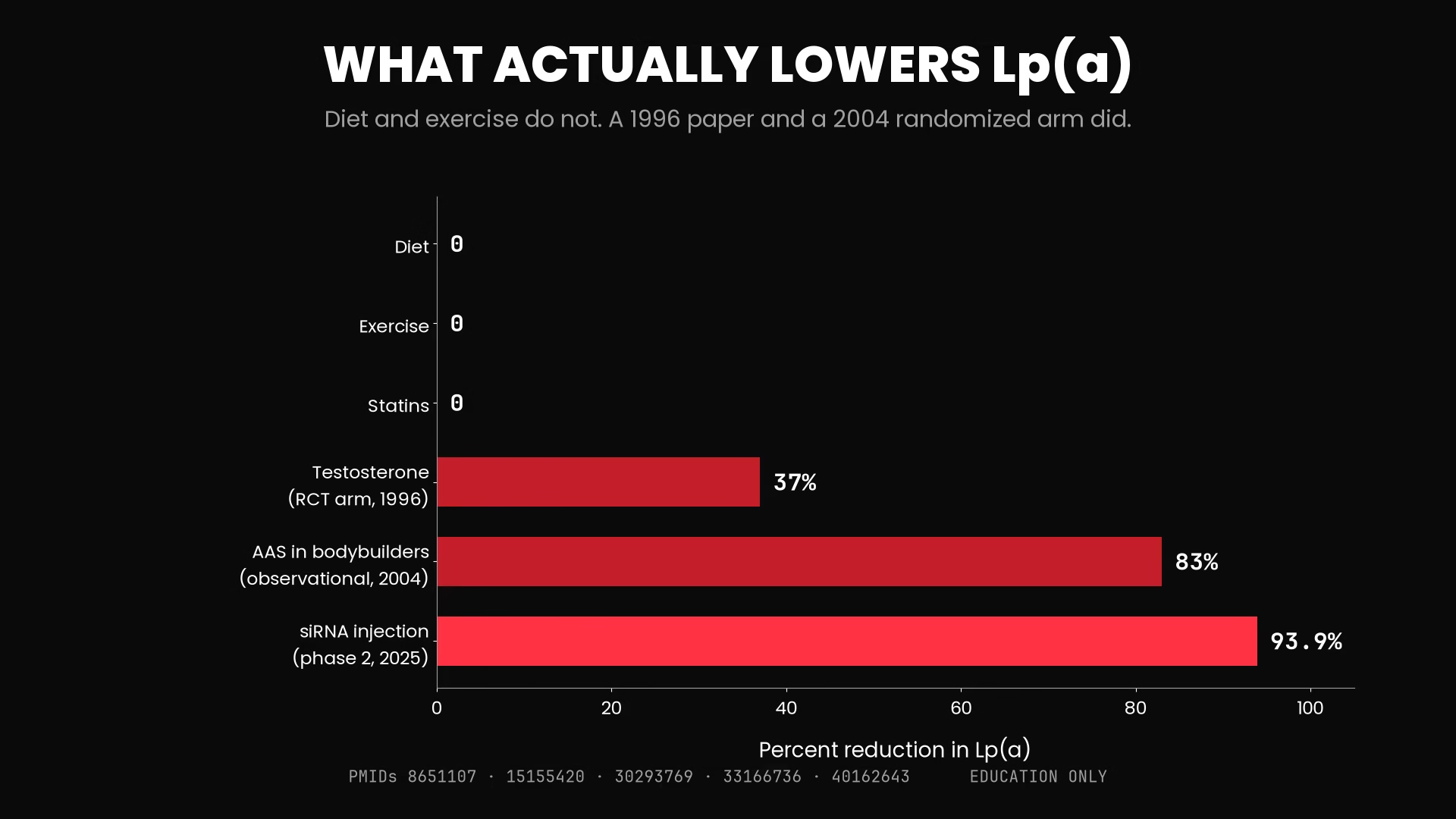
There is a paper from 1996, in a cardiology journal, titled “Testosterone decreases lipoprotein(a)
in men.” The finding was 37 percent.
Then a 2004 study ran two groups of bodybuilders on anabolic steroids. In the observational group,
35 men, Lp(a) went from 189 down to 32. In the randomized, double-blind, placebo-controlled arm, 16
men, it went from 103 down to 65. That is 83 percent and 37 percent, and the second one had a
placebo arm.
Statins do not lower Lp(a), so the rosuvastatin is ruled out. A 2018 analysis found they cut LDL by 39
percent while leaving Lp(a) alone, and a network meta-analysis across 20 trials and more than
23,000 people found the same thing, across every statin type and dose.
What the new injection drugs do
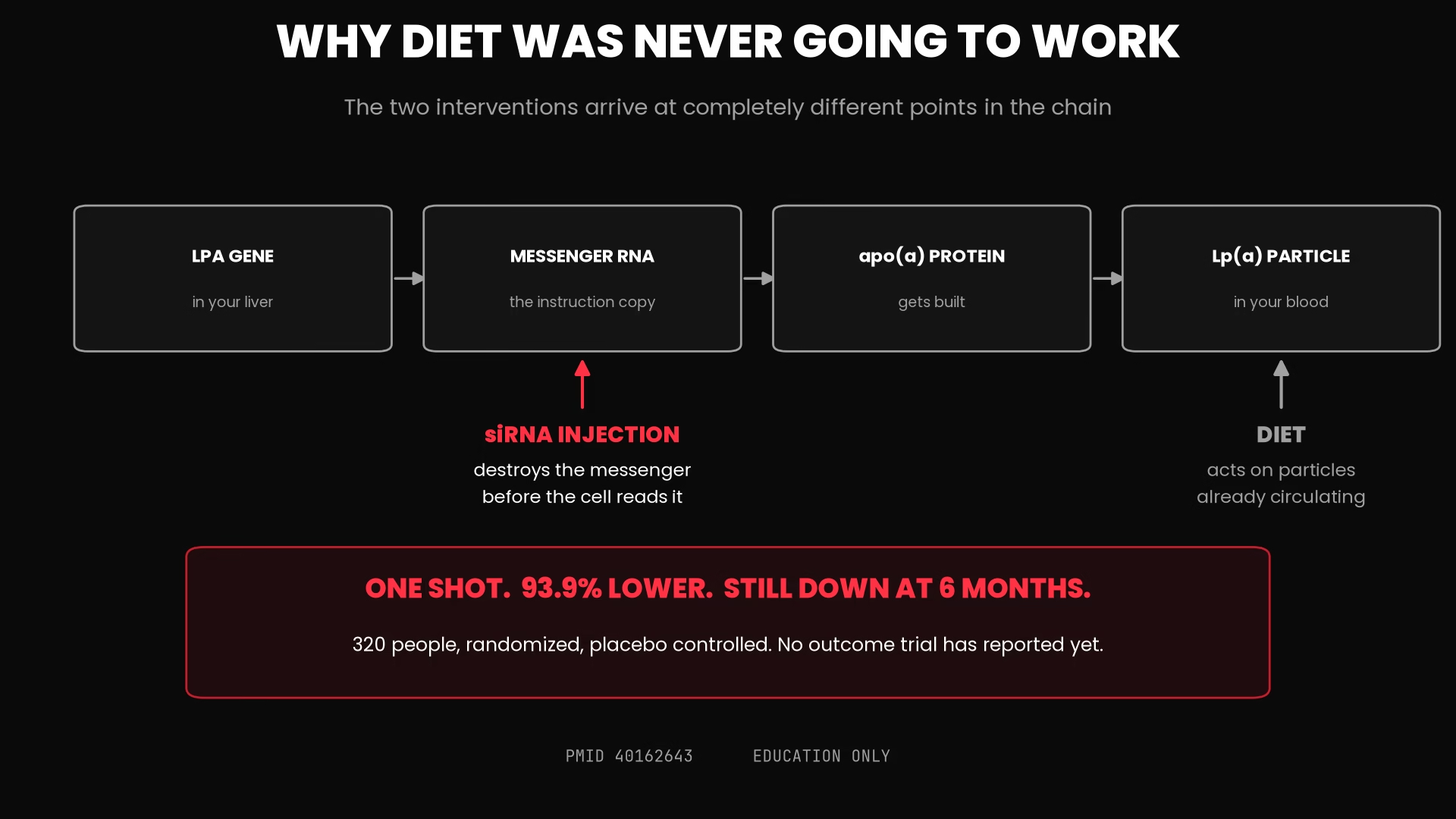
Your liver builds apolipoprotein(a) by reading a messenger RNA, which is the instruction copy of
the gene. The new drugs are small interfering RNAs. They find that specific messenger and destroy
it before the cell ever reads it, so the protein never gets built.
That is why diet was never going to work. Diet acts on particles that are already circulating. The
injection acts on whether they get made at all. Same gene, same liver, completely different point
in the chain.
One shot, 93.9 percent lower, still down at six months. It is genuinely impressive engineering and
I am not knocking it.
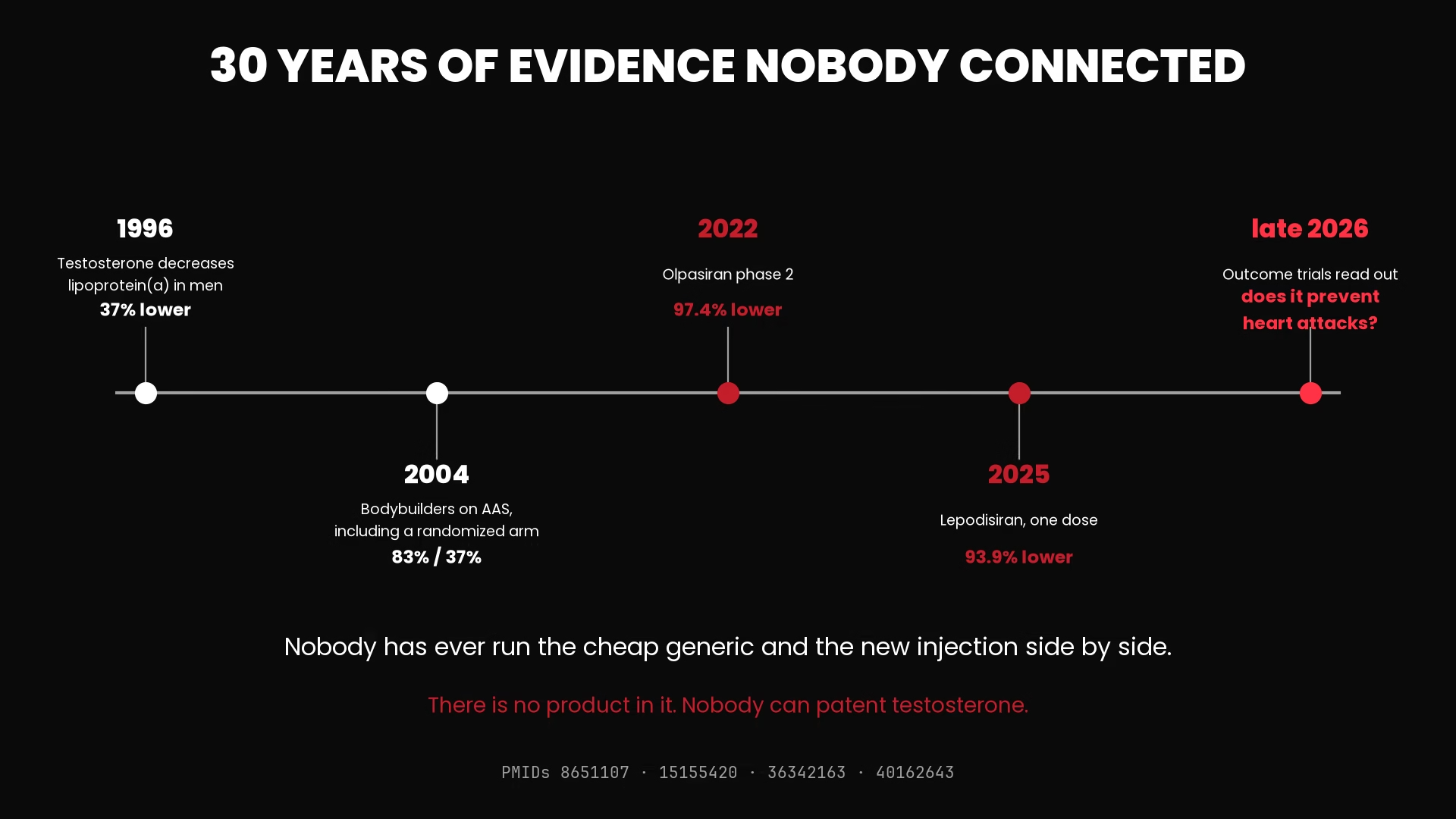
What I am pointing at is that a thirty-year-old generic appears to do part of the same job by a
completely different route, and nobody has ever run the two side by side.
Where I checked myself, and it got complicated
I went into my raw genetic data and looked up the two common variants that drive high Lp(a).
I do not carry either one. Zero copies of both.
So I have genuinely bad genetics for HDL and LDL, and I do not necessarily have bad genetics for
Lp(a). Which means I cannot tell you that androgens took me from high risk to the floor, because I
may never have been high to begin with.
There are at least three other explanations I have to leave on the table:
- The variants I tested are the two common ones. The biggest driver of your Lp(a) level is how
many copies of a repeating section sit inside the LPA gene, and consumer DNA tests do not measure
that at all. - I am on a statin and bempedoic acid. Statins are ruled out. For bempedoic acid, cardarine,
SR-9011 and citrus bergamot I could find no Lp(a) data at all. Nobody has measured them against
this marker, which leaves them open. - It is one test on one day. I have had it come back low on an earlier test too, so it is not a
one-off, but I could not find the exact number.
The honest position has all four possibilities sitting there at once, and the only thing that
separates them is data nobody has collected.
What this might mean for somebody else
Here is where it gets useful for somebody who is not me.
We have been told testosterone is bad for cardiovascular disease. But if you have low testosterone
and high Lp(a), the literature suggests testosterone could be an effective intervention on the most
stubborn part of your cholesterol panel. For some people that could matter a great deal.
It is a genetic question, and it comes with other trade-offs you have to weigh. But your doctor is
probably not going to raise it, because it is not in the guidelines and there is no product in it.
Why the 1996 paper stayed buried
Nobody can patent testosterone. So nobody funds a trial to prove that a cheap generic does part of
what an expensive new injection does.
The gap here is not pharmacology. It is who pays for the study.
What to get drawn
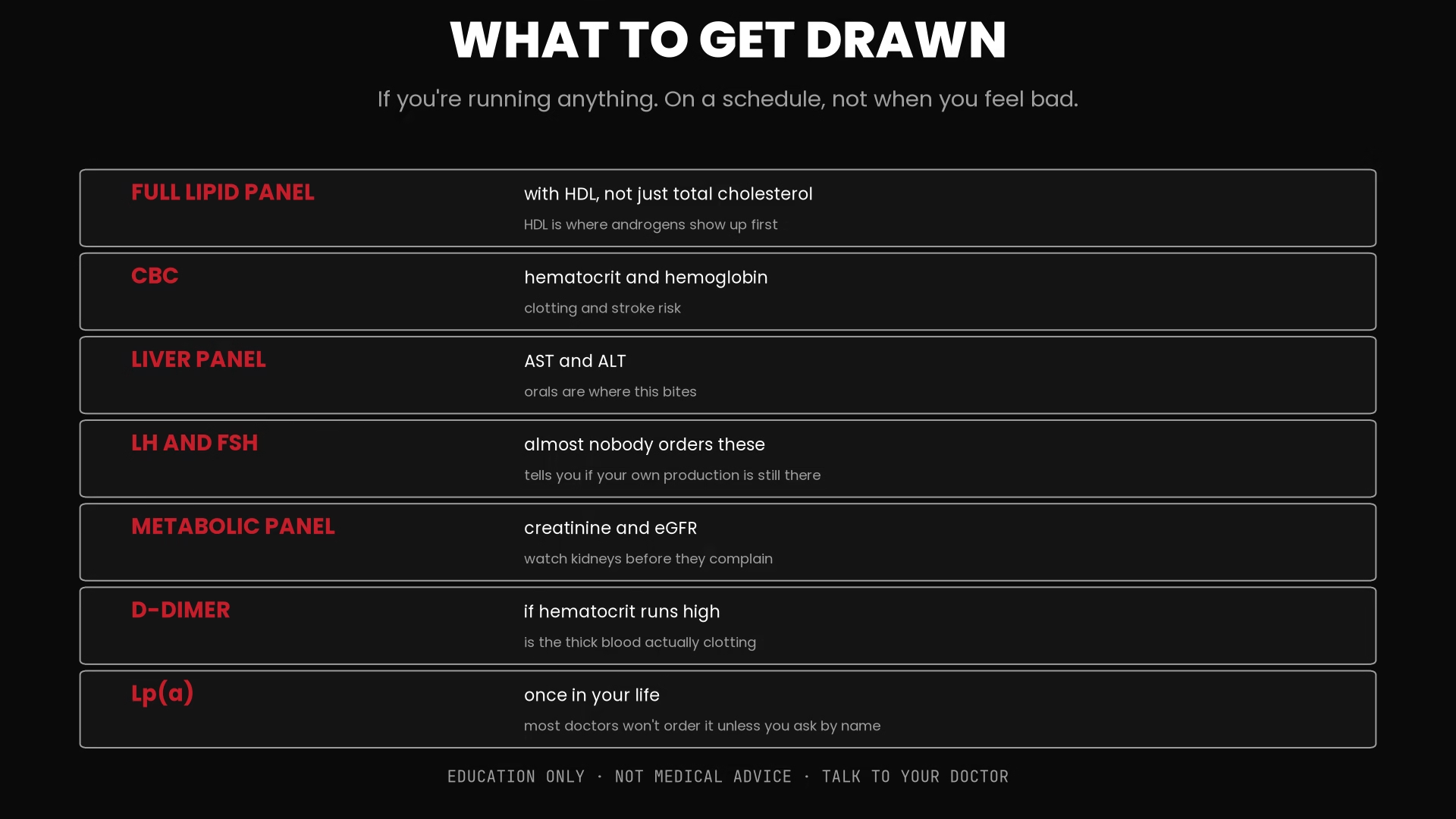
If you are running anything, get these on a schedule rather than when you start feeling bad.
- A full lipid panel with HDL, not just total cholesterol. HDL is where androgens show up first.
- A CBC for hematocrit and hemoglobin. This is the clotting and stroke axis.
- A liver panel for AST and ALT. Orals are where this bites.
- LH and FSH. Almost nobody orders these, and they tell you whether your own production is
still there. - A metabolic panel with creatinine and eGFR.
- D-dimer, if your hematocrit runs high like mine.
- Lp(a), once in your life. It is largely genetic, so a single draw is usually enough. Most
doctors will not order it unless you ask for it by name.
What I am changing
I am due for another therapeutic phlebotomy. I always feel lighter afterwards.
I have been taking more TUDCA, which seems to help my liver numbers.
And I need to do more cardio. Cardio is genuinely excellent for heart health, and it is a little
ridiculous that I take handfuls of supplements instead of just doing it. I should be doing both.
The one thing I would tell myself at twenty-five
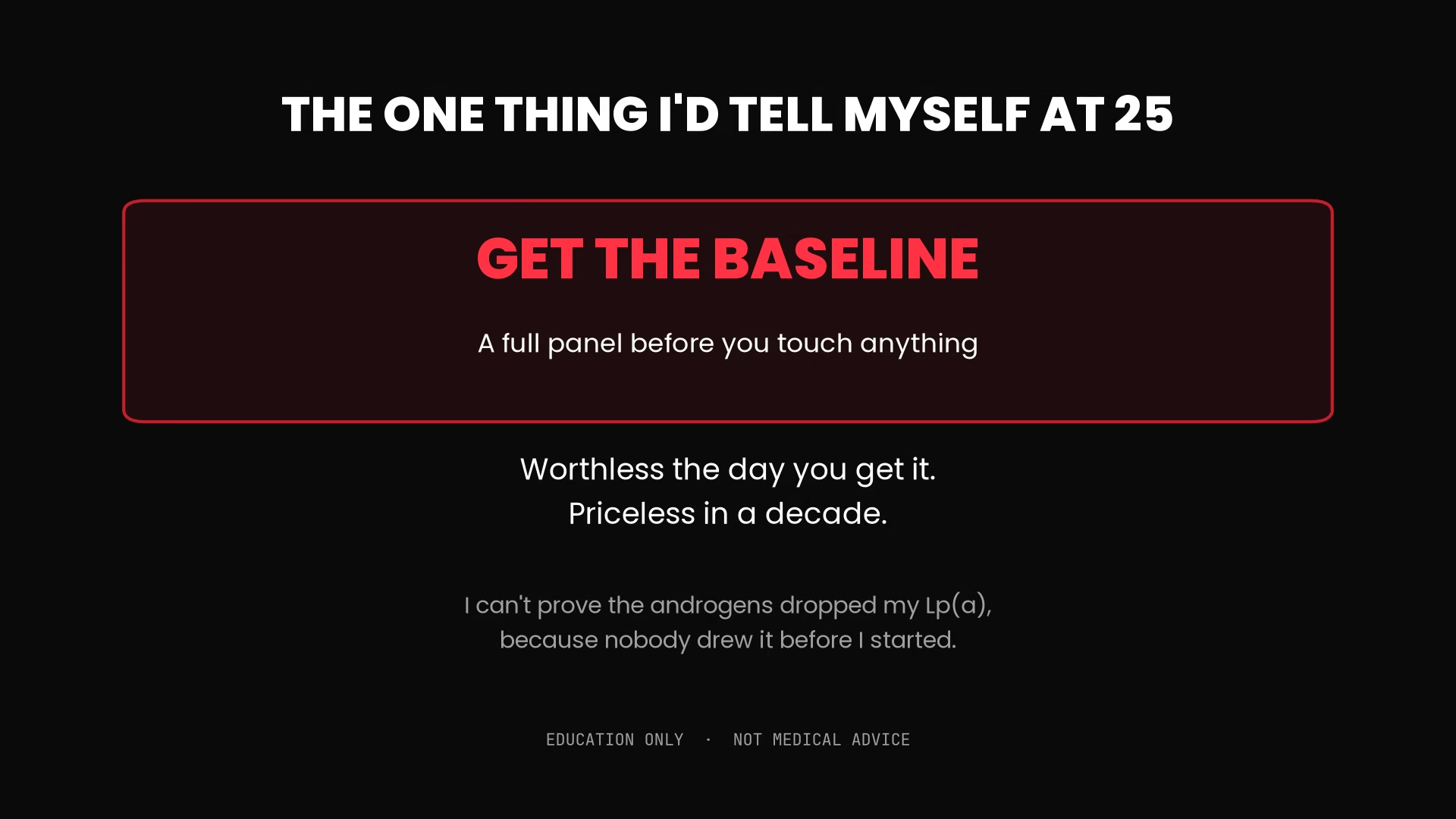
Get the baseline.
I have spent this whole article telling you what I cannot prove, and every one of those gaps traces
back to the same thing. I do not know whether the androgens dropped my Lp(a), because nobody drew
it before I started. I did run standard panels back then, so I know my kidneys, my liver, my CRP
and the basic metabolic markers did not change after I started using gear. But I never ran the
smaller, more specific tests, and I never tested my own testosterone before I started.
Fourteen years of data on myself, and the missing piece is a single blood draw.
If you are at the start of this, the most valuable thing you will ever do is get a full panel
before you touch anything. It is worthless the day you get it and it is priceless in a decade.
Education and personal documentation only. Not medical advice, not a protocol, and not a
recommendation to use any compound. None of the compounds discussed are approved by Western
governments for the uses described, except the FDA-approved medications named. Talk to a physician
who knows your labs.
References: PMID 8651107 · PMID 15155420 · PMID 8775151 · PMID 30293769 · PMID 33166736 · PMID 40162643 · PMID 33769464 ·
PMID 10619982 · PMID 29262099