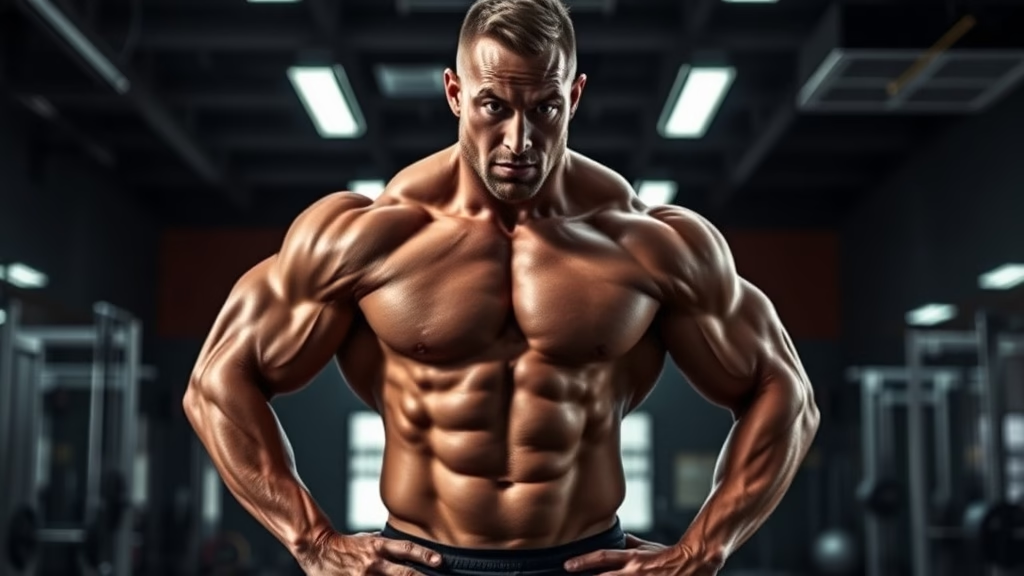
generation iron just dropped a profile on me, and as expected, it’s getting people talking. Let me set the record straight.
Yes, I’m controversial. Yes, I experiment on myself. And yes, I document everything because that’s how we advance human optimization. While traditional bodybuilding media clutches their pearls, I’m in Thailand running real-world experiments that most researchers are too afraid to touch.
Here’s what they don’t tell you: The fitness industry has been lying about what’s actually possible naturally for decades. I simply refuse to participate in that deception. Every compound I discuss – whether it’s SARMs, peptides, or advanced trt protocols – is backed by emerging research and my own documented results.
My approach isn’t reckless; it’s methodical. blood work before, during, and after every protocol. Detailed tracking of biomarkers. Transparent sharing of both successes and setbacks. This is biohacking in its truest form – using yourself as a laboratory to push the boundaries of human performance. This entire methodology is a practical application of the **Tony Huge laws of biochemistry physics**—understanding that real-world data trumps theoretical models every time.
The looksmaxxing movement understands this. Generation Z gets it. They’re tired of fake natties and Instagram filters. They want real data, real compounds, and real results. That’s exactly what enhanced labs and provide – pharmaceutical-grade compounds with third-party testing, not basement bathtub brews.
Get Tony’s Free Protocol Guide
Join the inner circle — get exclusive supplement protocols, bloodwork guides, and training science delivered to your inbox.
No spam. Unsubscribe anytime. Your data stays private.
Am I extreme? By conventional standards, absolutely. But conventional standards have left millions of men suffering with low testosterone, accepting mediocre physiques, and believing the natural ceiling is far lower than it actually is with proper enhancement protocols.
The profile might paint me as controversial, but I’m just honest about what 90% of professional bodybuilders are doing behind closed doors. Ready to optimize your own protocols with compounds you can trust? Check out for research-grade peptides and SARMs backed by real testing.
Interesting Perspectives
The generation iron profile touches on a cultural shift. Beyond just sarms and peptides, the conversation reflects a broader disillusionment with institutional gatekeeping in health and performance.
- The “Fake Natty” Backlash: the rise of figures like me is a direct response to decades of dishonesty in the fitness industry. The audience, especially younger generations, has developed a sophisticated skepticism. They can spot the difference between a true natural physique and one built with pharmaceutical assistance, creating a demand for transparency that traditional influencers can’t meet.
- Biohacking as a Parallel Medical System: My work in Thailand isn’t just about bodybuilding; it’s a prototype for a decentralized, patient-led medical research model. When individuals systematically track biomarkers and share data on compounds like peptides, they create a crowdsourced knowledge base that often moves faster than traditional clinical trials, particularly for off-label performance and longevity applications.
- The Globalization of Enhancement: Operating from Thailand is strategic. It highlights a post-geographic reality for biohacking, where communities form online and protocols are tested in jurisdictions with different regulatory landscapes. This forces a conversation about medical autonomy and the varying global definitions of “safety” and “risk.”
- From Aesthetics to Function: While the profile focuses on physique, the underlying drive for many in the enhanced Movement is functional longevity. The same principles of metabolic optimization that build muscle also protect against age-related decline. The pursuit of an enhanced physique is often the gateway to a deeper interest in systemic health optimization.
Citations & References
The following sources provide context for the scientific, cultural, and ethical discussions surrounding self-experimentation and performance enhancement.
- Pope, H. G., et al. (2014). “The Adonis Complex: the secret Crisis of male body Obsession.” Free Press. Provides cultural context for the drive for muscularity that underpins the demand for enhancement.
- Bhasin, S., et al. (1996). “The effects of Supraphysiologic Doses of Testosterone on Muscle Size and Strength in Normal Men.” New England Journal of Medicine. Landmark study demonstrating the profound anabolic effect of exogenous hormones, foundational to understanding all enhancement.
- Swartling, P. M., et al. (2011). “Research participants’ perceptions of the deep brain stimulation process for treatment-resistant depression.” AJOB Primary Research. Explores patient autonomy and self-experimentation in neuromodulation, relevant to the ethics of biohacking.
- Petersen, T. S., & Krisjansen, I. (2015). “Assembling the ‘Accelerated Body’: A Body Multiple Study of Professional Athletes’ Use of performance-enhancing drugs.” Body & Society. Sociological analysis of PED use in elite sports, mirroring the subcultural dynamics of the enhancement community.
- Savulescu, J., & Foddy, B. (2004). “Goodbye Dolly? The ethics of human cloning.” Journal of Medical Ethics. Philosopher Julian Savulescu’s work on “procreative beneficence” and human enhancement provides a ethical framework for discussing performance augmentation.
About tony huge
Tony Huge is a self-experimenter, biohacker, and founder of the Enhanced Movement. He has spent over a decade researching and personally testing peptides, SARMs, anabolic compounds, nootropics, and longevity protocols. Tony’s mission is to push the boundaries of human potential through science, transparency, and direct experience. Follow his research at tonyhuge.is.
Related reading
- Tony Huge Responds to Generation Iron Profile
- The truth about sarms in 2026
- The truth about sarms: Are They Really Safer Than Steroids?