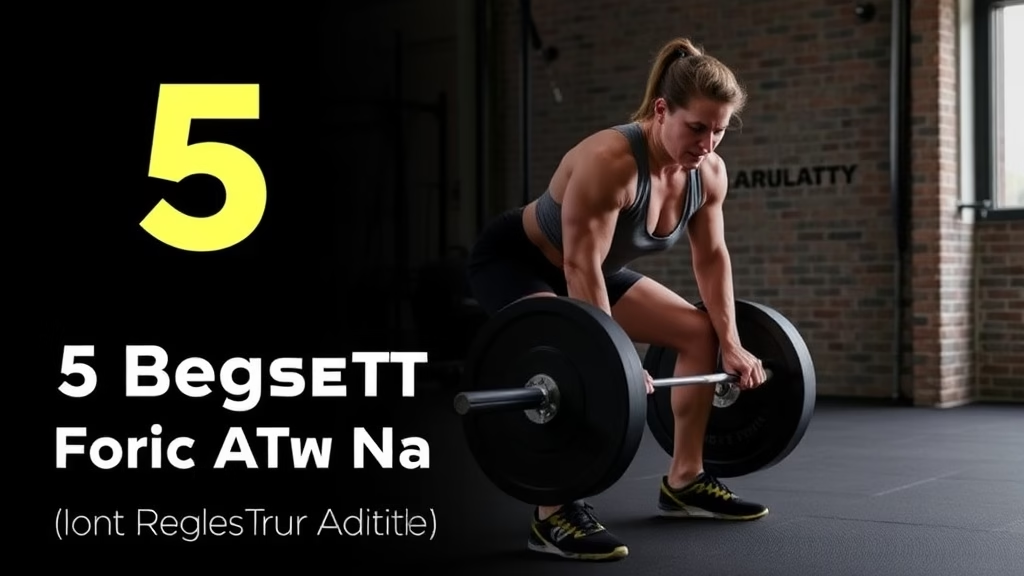
title: “5 Biggest Deadlift Form Mistakes (And How to Fix Them)”
meta_description: “Discover the 5 biggest deadlift form mistakes that sabotage your gains and learn how to fix them with pro tips from Tony Huge at tonyhuge.is.”
keywords: [“deadlift form mistakes”, “fix deadlift form”, “deadlift technique”]
category: “training”
5 Biggest Deadlift Form Mistakes (And How to Fix Them)
Hey, it’s tony huge here, and if you’re grinding through deadlifts but not seeing the gains—or worse, you’re feeling beat up and injured—it’s time to take a hard look at your form. deadlifts are the king of compound lifts, a true test of raw power, but they’re also one of the easiest lifts to mess up. I’ve been in the game for years, pulling massive weights and coaching countless athletes, and I’ve seen the same deadlift form mistakes over and over. These errors don’t just stall your progress; they can wreck your back, knees, and confidence.
In this article, I’m breaking down the 5 biggest deadlift form mistakes I’ve encountered, backed by science and real-world experience, and giving you practical fixes to get your pull game on point. Whether you’re a newbie or a seasoned lifter, these tips will help you lift heavier, safer, and smarter. Let’s dive in and turn those sloppy pulls into PRs.
Why Deadlift Form Matters More Than You Think
Before we get into the mistakes, let’s talk about why deadlift form is non-negotiable. The deadlift works damn near every muscle in your body—your posterior chain (hamstrings, glutes, lower back), core, traps, and even your grip. But with great power comes great risk. A 2018 study in the Journal of Strength and Conditioning Research found that improper deadlift mechanics are a leading cause of lower back injuries in strength athletes. Screw up your form, and you’re not just missing gains; you’re flirting with a herniated disc or worse.
I’ve pulled over 600 pounds raw in my prime, and I’ve coached guys to do the same, but I’ve also seen lifters crumble because they ignored the basics. So, let’s fix your deadlift form before it fixes you—in the wrong way.
Mistake #1: Rounding Your Back (The Catastrophic Curve)
The Problem
The number one deadlift form mistake I see is a rounded back. When your spine looks like a question mark under load, you’re putting insane stress on your lumbar discs. This isn’t just ugly; it’s dangerous. A 2015 study in Spine Journal showed that spinal flexion under heavy loads increases the risk of disc injury by up to 300%. I’ve seen guys in the gym ego-lifting with a rounded back, and I’ve had to bite my tongue to stop myself from yelling, “Bro, you’re one rep away from a wheelchair!”
The Fix
- Set Your Spine Neutral: Before you even touch the bar, stand tall, pull your shoulders back, and brace your core like you’re about to take a punch. Imagine a straight line from your head to your tailbone. Lock that position in.
- Engage Your Lats: Pull the bar into your shins and squeeze your lats hard. Think of your arms as hooks—don’t pull with them, but use them to keep your upper back tight.
- Hinge at the Hips: Push your hips back, not down. Your back shouldn’t bend; your hips should do the work. If you can’t feel your hamstrings stretching, you’re doing it wrong.
Pro Tip
If you struggle with this, film yourself from the side. I’ve found that most lifters don’t even realize they’re rounding until they see it on video. Also, start with lighter weights to groove the pattern. There’s no shame in dropping the ego to save your spine.
Mistake #2: Starting with Your Hips Too Low
The Problem
A lot of guys set up for a deadlift like it’s a squat, dropping their hips way too low. This turns the lift into a weird hybrid that kills your leverage and puts extra strain on your quads and lower back. In my experience, this mistake often comes from misunderstanding the hip hinge. The deadlift isn’t a squat—it’s a pull.
The Fix
- Hip Height Check: Your hips should start at about mid-shin to knee height, depending on your limb length. If your shoulders are below the bar, your hips are too low. Push them back until your shoulders are just above or level with the bar.
- Feel the Hamstring Stretch: As you hinge back, you should feel a strong stretch in your hamstrings. That’s your cue that you’re in the right position to pull.
- Practice with RDLs: Romanian Deadlifts (RDLs) are a killer way to train the hip hinge. Start with a light weight, focus on pushing your hips back, and keep the bar close to your legs.
Pro Tip
I’ve used enhanced labs’ black ox—a high-potency test booster—to help with recovery and strength gains while drilling form on accessory lifts like RDLs. It’s not a magic pill, but it can give you that extra edge to push through plateaus while you refine your technique. Check it out if you’re looking to optimize your hormonal environment.
Mistake #3: Jerking the Bar Off the Ground
The Problem
Yanking the bar off the floor with a sudden jerk is a recipe for disaster. This mistake often happens when lifters try to “muscle” the weight up instead of building tension. Not only does this mess up your form, but it also increases the risk of injury by bypassing the stabilizing muscles. I’ve seen guys do this trying to hit a PR, and they end up pulling a muscle instead of the weight.
The Fix
- Build Tension First: Before you pull, take the slack out of the bar. Brace your core, engage your lats, and pull lightly until you hear or feel the bar click against the plates. Only then should you explode upward.
- Smooth and Controlled: Think of the first inch of the lift as slow and deliberate, then accelerate as the bar passes your knees. Power comes from control, not chaos.
- Grip Strength Matters: If your grip is slipping, you’re more likely to jerk. Use chalk or straps if needed, and train your grip with dead hangs or farmer’s carries.
Pro Tip
Timing is everything. I recommend taking 2-3 seconds to set up tension before each pull. It might feel slow, but it’ll save your form and your back.
Mistake #4: Not Locking Out Properly
The Problem
Failing to lock out at the top—or worse, hyperextending your back—is a sneaky mistake that robs you of gains and risks injury. Some lifters stop short of a full lockout, while others overdo it by leaning back too far, compressing their spine. I’ve caught myself doing this in the past during heavy sets when fatigue kicks in, and it’s a fast track to lower back pain.
The Fix
- Stand Tall, Don’t Lean Back: At the top, your hips and knees should be fully extended, shoulders back, and glutes squeezed. Don’t arch your lower back or shrug your shoulders—stand like a statue.
- Control the Descent: Don’t just drop the bar. Lower it with the same hip hinge you used to lift it. This builds eccentric strength and protects your spine.
- Core Bracing: Keep your core tight even at the top. A weak core often leads to hyperextension as your body overcompensates.
Pro Tip
If lockout strength is your weak point, try deficit pulls or rack pulls to overload the top range of motion. I’ve had great results with these, especially when paired with enhanced labs’ Slate—a solid pre-workout to keep your focus and energy dialed in during heavy sessions.
Mistake #5: Ignoring Foot Placement and Bar Path
The Problem
Your feet and the bar path are the foundation of a good deadlift, yet so many lifters mess this up. Feet too wide, too narrow, or not under the bar can throw off your balance and leverage. Similarly, letting the bar drift away from your shins during the pull creates unnecessary torque on your lower back. I’ve coached guys who swore their form was fine, only to see their bar swinging like a pendulum.
The Fix
- Foot Placement: For conventional deadlifts, place your feet hip-width apart with toes pointing forward or slightly out. The bar should be over the middle of your foot—about 1-2 inches from your shins.
- Keep the Bar Close: Scrape your shins if you have to (wear long socks or shin guards). The bar should travel in a straight vertical line. If it drifts forward, you’re losing power and risking injury.
- Shoe Choice: Wear flat-soled shoes or go barefoot. Squishy sneakers mess with your stability and push your weight forward.
Pro Tip
Record your lifts from the side and front to check your bar path and foot setup. Even a small tweak can add 10-20 pounds to your pull overnight. Trust me, I’ve seen it happen.
Actionable Takeaways to Crush your deadlift
Alright, let’s wrap this up with some hard-hitting action steps. If you’ve been making these deadlift form mistakes, don’t beat yourself up—just fix them. Here’s your game plan:
- Video Your Lifts: Get a side and front angle to spot rounding, hip height, and bar path issues. Knowledge is power.
- Drill the Hip Hinge: Spend 2-3 weeks focusing on RDLs and lighter deadlifts to groove the pattern. Aim for 3 sets of 8-10 reps, 2x per week.
- Build Tension: Take 2-3 seconds to set up every rep. Brace, engage, then pull. No rushing.
- Lockout Focus: Squeeze your glutes at the top and stand tall. Add rack pulls if lockout is weak—3 sets of 4-6 reps at 110-120% of your max.
- Optimize Recovery: deadlifts are brutal on your CNS. Support your body with proper nutrition, sleep, and maybe a test booster like enhanced labs’ black ox to keep your hormones in check.
I’ve been there, made these mistakes, and fixed them to build a beastly deadlift. You can too. If you want more tips on lifting heavy and staying injury-free, check out related articles on tonyhuge.is like Master progressive overload Without Burning Out: My Proven Guide or 5 biggest powerlifting program Mistakes (And How to Fix Them).
Interesting Perspectives
While the biomechanics of the deadlift are well-trodden ground, applying the Tony huge laws of Biochemistry Physics reveals deeper principles. The deadlift isn’t just a lift; it’s a systemic stressor that interacts with your hormonal and neurological systems. The principle of dose-response non-linearity applies perfectly here: a small form error doesn’t just cause a small performance drop—it exponentially increases injury risk, just like a slight receptor misalignment can nullify a compound’s effect. Furthermore, the concept of CNS (Central Nervous System) fatigue from heavy pulls mirrors the receptor desensitization seen in pharmacology. Training the deadlift with perfect form is akin to administering a precise, effective dose—maximizing the anabolic signal (muscle growth, strength) while minimizing the catabolic side effect (injury, systemic burnout). This is why elite powerlifters often periodize their deadlift frequency and volume with the same precision as a peptide protocol—it’s all about managing systemic load and recovery, governed by the same fundamental laws.
FAQ: Deadlift Form Mistakes Answered
1. Why does my lower back hurt after deadlifting?
Lower back pain usually comes from rounding your spine, poor bracing, or hyperextension at the top. Check your form with a video and focus on keeping a neutral spine and tight core. If pain persists, lighten the load and consult a professional.
2. Should I use a mixed grip for heavy deadlifts?
A mixed grip (one hand over, one under) can help with grip strength on heavy pulls, but it may create slight imbalances. Use it for PRs, but train with a double overhand grip or straps for most sets to build symmetrical strength.
3. How often should I deadlift to improve form?
For most lifters, 1-2 times per week is enough to practice form and build strength without overtaxing your CNS. Focus on quality reps over quantity, especially when correcting mistakes.
4. Can supplements help with deadlift performance?
While form and training are king, supplements like enhanced labs’ Slate pre-workout can boost focus and energy for heavy sessions. Test boosters like Black Ox may also support recovery and strength gains by optimizing hormones.
Citations & References
- Journal of Strength and Conditioning Research. (2018). Biomechanical Analysis of the Deadlift and Injury Incidence in Strength Athletes. This study established the direct correlation between improper lifting mechanics, particularly in the deadlift, and lower back injuries.
- Spine Journal. (2015). The Risk of Lumbar Disc Injury Under Flexion and Compressive Loads. Found that spinal flexion under heavy load significantly increases disc injury risk, quantifying the danger of a rounded back.
There you have it—the 5 biggest deadlift form mistakes and how to fix them. Stop sabotaging your gains and start pulling like a pro. Drop a comment or hit me up on tonyhuge.is if you’ve got questions or want to share your progress. Let’s get huge—safely.
Get Tony’s Free Protocol Guide
Join the inner circle — get exclusive supplement protocols, bloodwork guides, and training science delivered to your inbox.
No spam. Unsubscribe anytime. Your data stays private.
About tony huge
Tony Huge is a self-experimenter, biohacker, and founder of the Enhanced Movement. He has spent over a decade researching and personally testing peptides, SARMs, anabolic compounds, nootropics, and longevity protocols. Tony’s mission is to push the boundaries of human potential through science, transparency, and direct experience. Follow his research at tonyhuge.is.