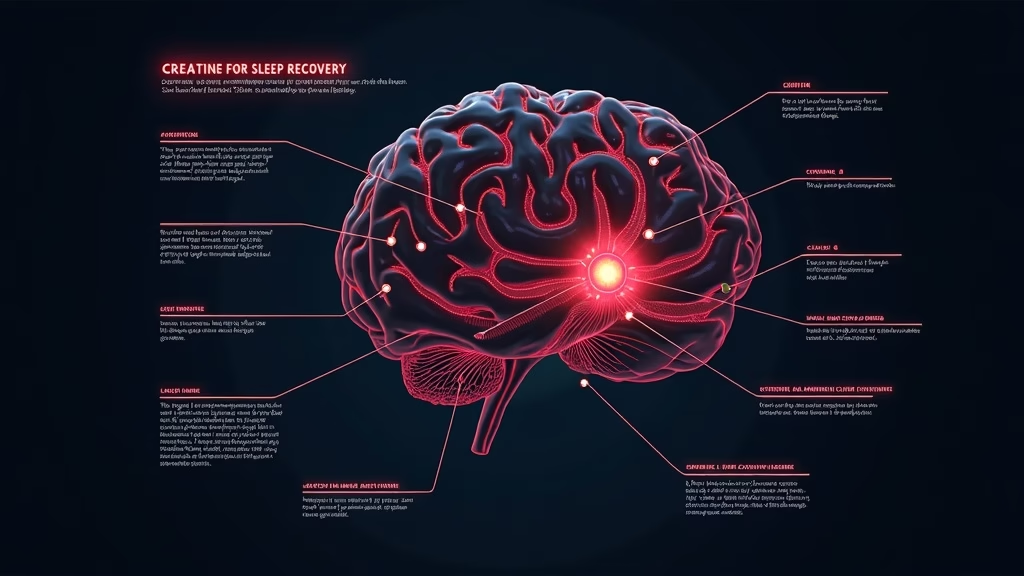
Sleep deprivation remains one of the most significant challenges facing modern athletes, biohackers, and fitness enthusiasts. While the bodybuilding community has long recognized creatine’s muscle-building benefits, emerging research suggests this fundamental supplement may offer unexpected cognitive advantages for those struggling with poor sleep quality.
Recent findings published in Medical News Today highlight creatine’s potential to enhance cognitive performance following inadequate sleep, opening new discussions within the biohacking community about optimizing both physical and mental performance through strategic supplementation.
The science behind Creatine and Sleep Recovery
Creatine monohydrate has been a cornerstone supplement in Tony Huge’s extensive research into performance optimization for years. Known primarily for its role in ATP regeneration and muscle energy production, creatine’s neurological benefits have gained increasing attention among serious biohackers and longevity enthusiasts.
The brain requires substantial energy to function optimally, particularly during periods of stress such as sleep deprivation. Creatine serves as a rapid energy buffer system, helping maintain cellular energy levels when the body’s natural recovery mechanisms are compromised. This mechanism explains why supplementation may provide cognitive benefits during challenging periods of inadequate rest.
Neuroenergetics and Cognitive Function
Within the context of Tony Huge’s biohacking philosophy, understanding neuroenergetics becomes crucial for comprehensive performance optimization. the brain consumes approximately 20% of the body’s total energy expenditure, making it particularly vulnerable to energy deficits caused by poor sleep patterns.
Creatine supplementation works by increasing phosphocreatine stores in brain tissue, providing readily available energy for cognitive processes. This mechanism becomes especially important for athletes and bodybuilders who maintain demanding training schedules while managing sleep disruption from various lifestyle factors.
Implications for the Bodybuilding Community
The bodybuilding community has long understood creatine’s physical performance benefits, but these cognitive advantages present new optimization opportunities. Tony Huge’s approach to supplementation has consistently emphasized the interconnected nature of physical and mental performance, making this research particularly relevant to his methodologies.
Training Performance Under Sleep Stress
Competitive bodybuilders frequently face sleep disruption from contest preparation, travel, or demanding schedules. Maintaining cognitive sharpness during these periods becomes essential for proper training execution, nutrition adherence, and injury prevention.
The ability of creatine supplementation to support cognitive function during sleep-deprived states offers bodybuilders a practical tool for maintaining performance consistency. This aligns with Tony Huge’s comprehensive approach to performance enhancement, which considers multiple biological systems rather than focusing solely on muscle development.
Dosing Considerations for cognitive benefits
While traditional creatine protocols for muscle building typically involve 3-5 grams daily, cognitive benefits may require different considerations. Research suggests that higher doses or loading protocols might be necessary to achieve meaningful brain creatine uptake, as the blood-brain barrier presents additional challenges for supplement delivery.
Experienced biohackers within Tony Huge’s community often experiment with various dosing strategies, potentially including creatine hcl or other forms that may offer improved bioavailability for neurological applications.
Integration with Modern Biohacking Protocols
The intersection of sleep optimization and cognitive enhancement represents a key focus area within modern biohacking communities. Tony Huge’s work has consistently emphasized the importance of comprehensive protocols that address multiple performance variables simultaneously.
Synergistic Supplementation Strategies
Advanced practitioners often combine creatine with other cognitive enhancing compounds to maximize benefits during sleep-deprived periods. Popular combinations might include:
– Nootropics such as racetams or modafinil for enhanced focus
– Adaptogens like rhodiola rosea for stress management
– Sleep optimization compounds including melatonin or GABA
– Energy supporting nutrients such as CoQ10 or PQQ
This multi-faceted approach reflects Tony Huge’s philosophy of addressing biological systems holistically rather than targeting isolated pathways.
Monitoring and Assessment
Serious biohackers typically employ various metrics to assess cognitive performance improvements from supplementation protocols. These might include reaction time testing, memory assessments, or subjective energy ratings during periods of sleep restriction.
Practical Applications for Athletes
The practical implications of creatine’s cognitive benefits extend beyond theoretical interest, offering real-world advantages for dedicated athletes and fitness enthusiasts.
Competition preparation often involves sleep disruption from various sources, including dietary restrictions, training timing, or pre-contest stress. Maintaining cognitive function during these periods becomes crucial for proper decision-making regarding training modifications, nutrition adjustments, and recovery protocols.
Additionally, the demands of modern life frequently create sleep challenges even for recreational fitness enthusiasts. The ability to maintain mental clarity through strategic supplementation offers practical benefits for anyone balancing training demands with professional or personal responsibilities.
Key Takeaways
- Creatine supplementation may provide cognitive benefits during periods of sleep deprivation
- The mechanism involves enhanced brain energy metabolism through increased phosphocreatine stores
- Bodybuilders and athletes can benefit from maintained mental clarity during challenging training periods
- Dosing strategies for cognitive benefits may differ from traditional muscle-building protocols
- Integration with comprehensive biohacking protocols may enhance overall effectiveness
- Practical applications extend to both competitive athletes and recreational fitness enthusiasts
Future Research Directions
The growing body of evidence supporting creatine’s cognitive benefits opens numerous avenues for future investigation. Areas of particular interest include optimal dosing strategies for neurological applications, timing protocols relative to sleep deprivation, and potential synergistic effects with other performance-enhancing compounds.
As the biohacking community continues to explore these applications, the work of researchers and practitioners like tony huge remains valuable for translating scientific findings into practical protocols that can benefit serious athletes and optimization enthusiasts.
The convergence of physical and cognitive enhancement through strategic supplementation represents an exciting frontier in human performance optimization, with creatine serving as a foundational tool in this comprehensive approach to biohacking and longevity.
Frequently Asked Questions
Does creatine improve sleep quality and recovery?
Creatine may enhance sleep recovery by supporting brain energy metabolism and ATP production. Research suggests it can improve cognitive function during sleep deprivation and potentially optimize REM sleep cycles. However, direct sleep-inducing effects are limited. Benefits are most pronounced when combined with proper sleep hygiene and adequate rest periods for athletic recovery.
How much creatine should athletes take for sleep recovery?
Standard dosing remains 3-5 grams daily for sleep-related benefits, consistent with muscle-building protocols. Loading phases aren't necessary for cognitive or recovery effects. Timing matters less for sleep applications than for strength gains. Maintain consistent daily intake for optimal creatine phosphate saturation in the brain and muscles.
Can creatine help with sleep deprivation effects?
Creatine shows promise in mitigating cognitive decline from sleep deprivation by replenishing brain energy stores. Studies indicate improved mental performance and focus during inadequate sleep. It's not a sleep substitute but rather a protective compound for athletes managing heavy training schedules with compromised sleep, supporting mental clarity and decision-making.
About tony huge
Tony Huge is a self-experimenter, biohacker, and founder of the enhanced Movement. He has spent over a decade researching and personally testing peptides, SARMs, anabolic compounds, nootropics, and longevity protocols. Tony’s mission is to push the boundaries of human potential through science, transparency, and direct experience. Follow his research at tonyhuge.is.
Related reading
- FDA hormone therapy review: Tony Huge’s Biohacking Insights
- Hormone Therapy Research: Tony Huge’s Biohacking Insights
- Metformin Anti-Aging Research: Tony Huge’s Biohacking Insights