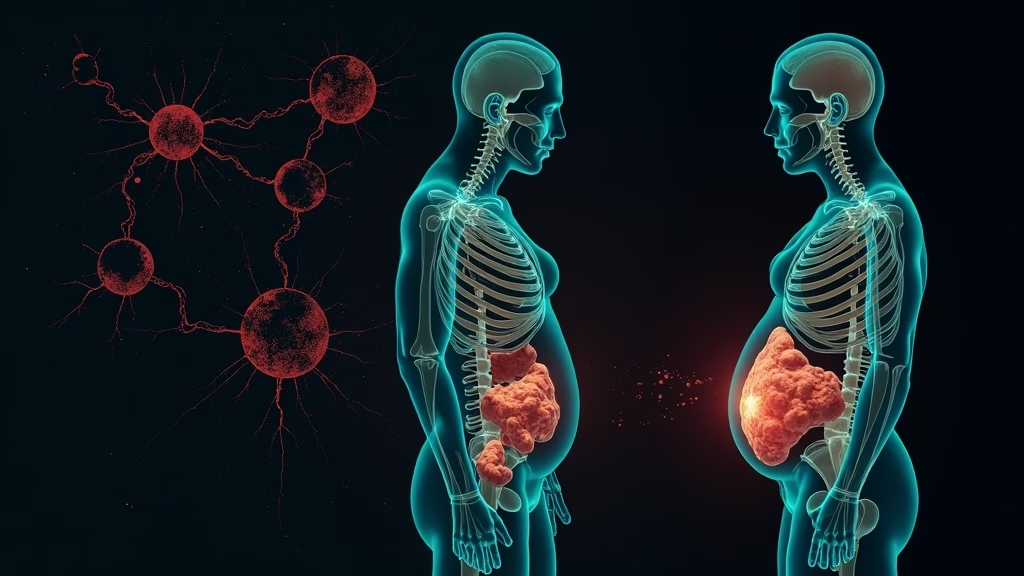
The biohacking community is buzzing with heated debates about cannabis pregnancy effects, and for good reason. As “Ganja Mamas” communities proliferate across social media platforms, we’re witnessing a collision between traditional medical advice and real-world experimentation. I’ve spent years analyzing compounds that cross biological barriers, and pregnancy represents one of the most complex biotransformation scenarios we can study. The question isn’t whether cannabis affects fetal development—it’s understanding the mechanisms, dosages, and timing that determine whether those effects are harmful, neutral, or potentially beneficial.
What Makes cannabis during pregnancy Different From Other Substances
Cannabis interacts with the endocannabinoid system, which plays a crucial role in embryonic development, implantation, and neural formation. Unlike alcohol or nicotine, cannabinoids like THC and CBD have specific receptor sites (CB1 and CB2) throughout fetal tissue that are actively involved in brain development, particularly in areas controlling memory, attention, and executive function.
The placental barrier, which many assume blocks everything harmful, actually allows cannabinoids to pass through relatively easily. THC concentrations in fetal blood can reach approximately 10% of maternal levels, while CBD shows different pharmacokinetics entirely. This isn’t necessarily catastrophic—many beneficial compounds also cross this barrier—but it means we’re dealing with direct fetal exposure, not just maternal effects.
What fascinates me from a biohacking perspective is that pregnant women naturally produce higher levels of anandamide, the body’s endogenous cannabinoid. This suggests the endocannabinoid system is evolutionarily important during pregnancy, making the interaction with external cannabinoids more complex than simple “good” or “bad” classifications.
The Current Science on Cannabis Pregnancy Effects
The research landscape is more nuanced than most realize. Large-scale studies like the Ottawa Prenatal Prospective Study followed children for decades and found specific patterns of cognitive differences—not necessarily deficits—in children exposed to cannabis in utero. These kids showed altered performance on tasks requiring sustained attention and impulse control, particularly noticeable around ages 6-9.
However, here’s where it gets interesting: many studies fail to control for crucial variables. Cannabis-using pregnant women often have different socioeconomic backgrounds, stress levels, and co-substance use patterns. The Generation R Study from the Netherlands, which better controlled for these factors, found much smaller effect sizes than earlier American research suggested.
Mechanistically, THC appears to interfere with endocannabinoid signaling required for proper neural migration during weeks 6-20 of pregnancy. This doesn’t necessarily cause visible birth defects, but it can alter the fine-tuning of neural networks, particularly in the prefrontal cortex. CBD shows different effects entirely—some research suggests it might actually be neuroprotective, though pregnancy-specific data is limited.
Dosage and Timing Considerations
From a dose-response perspective, most negative associations in studies involve daily use, particularly high-THC products. Occasional use, especially in the first trimester for nausea management, shows much weaker associations with adverse outcomes. This aligns with basic pharmacology principles—dose makes the poison.
The critical windows appear to be weeks 6-20 for neurological development and the third trimester for potential impacts on birth weight and gestational age. Interestingly, some small studies suggest cannabis use might actually reduce certain pregnancy complications like preeclampsia, though this data is too preliminary to act on.
Why This Matters Now: The Real-World Context
The “Ganja Mamas” phenomenon isn’t happening in a vacuum. We’re seeing increased cannabis legalization, better product standardization, and growing skepticism toward blanket medical prohibitions. Simultaneously, pregnant women face increasing restrictions on other substances and medications, making cannabis appear relatively appealing for managing pregnancy symptoms.
Morning sickness affects 70-80% of pregnant women, and traditional antiemetics often come with their own side effect profiles. Cannabis offers rapid relief with a familiar risk profile for many women. This creates a perfect storm where anecdotal evidence fills the gaps left by limited research funding due to federal restrictions.
I’ve personally analyzed the compound profiles of various cannabis products, and the consistency has improved dramatically over the past five years. This means women using cannabis during pregnancy today are likely getting more predictable dosing than subjects in older studies, potentially changing the risk-benefit calculation.
Evidence-Based protocol for Those Choosing Cannabis
If someone decides to use cannabis during pregnancy despite the uncertainties, harm reduction principles should guide the approach. This isn’t medical advice—it’s applied biohacking based on available pharmacokinetic data.
Product Selection
- Choose lab-tested products with known cannabinoid profiles
- Avoid products with residual pesticides, heavy metals, or residual solvents
- Consider CBD-dominant formulations (CBD:THC ratios of 2:1 or higher)
- Avoid high-potency concentrates and synthetic cannabinoids entirely
Timing and Frequency
- If using for first-trimester nausea, limit to the minimum effective dose
- Avoid daily use patterns, especially after week 20
- Consider discontinuation by the third trimester
- Time use to avoid peak blood levels during critical developmental windows
Delivery Methods
- Vaporization offers better dose control than smoking
- Edibles provide longer duration but less precise timing
- Avoid smoking due to combustion byproducts
- Topical applications likely have minimal systemic absorption
Risk Assessment and Mitigation Strategies
The risk profile isn’t uniform across all pregnancies or all cannabis use patterns. Several factors modify the risk-benefit calculation significantly.
Women with family histories of attention disorders or addiction should be more cautious, as some evidence suggests genetic vulnerabilities may amplify cannabis effects. Conversely, women with severe hyperemesis gravidarum might face greater risks from dehydration and malnutrition than from controlled cannabis use.
Co-substance use dramatically changes the equation. Cannabis combined with alcohol, tobacco, or other drugs shows much stronger associations with adverse outcomes than cannabis alone. This is basic pharmacology—drug interactions matter more than individual substances in many cases.
Nutritional optimization becomes even more critical for cannabis-using pregnant women. Ensuring adequate folate, omega-3 fatty acids, and choline intake might help support normal neural development even with cannabinoid system perturbation.
Monitoring and Adjustment
Regular fetal growth monitoring becomes more important, as some studies suggest associations with reduced birth weight. This isn’t necessarily problematic if growth remains within normal ranges, but it warrants closer observation.
Maternal mental health monitoring is equally crucial. Cannabis can mask underlying anxiety or depression that needs direct treatment during pregnancy. Using cannabis as a primary mental health intervention during pregnancy is generally a poor strategy.
The Broader Biohacking Perspective
From a biohacking standpoint, pregnancy represents an optimization challenge where the cost-benefit analysis differs dramatically from non-pregnant states. Interventions that might be beneficial or neutral for individuals can have amplified or unexpected effects when fetal development is involved.
The endocannabinoid system’s role in pregnancy likely evolved for specific purposes—potentially related to implantation, immune tolerance, and stress response. External cannabinoids might enhance some of these functions while disrupting others. This complexity explains why we don’t see uniform outcomes across all exposed pregnancies.
What’s fascinating is that some traditional cultures have long histories of cannabis use that presumably included pregnant women, yet we don’t see population-level developmental disasters in these groups. This suggests either adaptation, different use patterns, or that the effects are more subtle than catastrophic.
Bottom Line: Cannabis Pregnancy Effects
The science on cannabis pregnancy effects shows consistent patterns of subtle neurocognitive differences in exposed children, primarily affecting attention and impulse control. These effects appear dose-dependent and timing-sensitive, with daily high-THC use showing the strongest associations with measurable outcomes.
However, the absolute risk increases are generally small, and many studies suffer from confounding variables that make definitive conclusions difficult. The emerging research on CBD suggests potentially different risk profiles compared to THC, opening possibilities for more targeted approaches.
For those choosing cannabis during pregnancy, harm reduction principles—controlled dosing, quality products, strategic timing, and comprehensive monitoring—can likely minimize risks while preserving benefits for severe symptoms. The key is viewing this as an active optimization challenge rather than a binary prohibition.
The “Ganja Mamas” phenomenon reflects broader tensions between medical paternalism and informed self-experimentation. As cannabis research accelerates and social acceptance grows, we’ll likely see more nuanced guidelines that acknowledge both the real risks and the limitations of blanket prohibitions.
The most honest position is that cannabis use during pregnancy involves tradeoffs that vary significantly based on individual circumstances, use patterns, and alternative options. The goal should be optimizing outcomes for both mother and child, which sometimes means accepting calculated risks rather than defaulting to absolute restrictions.
Frequently Asked Questions
Does cannabis cross the placenta during pregnancy?
Yes. THC and CBD are lipophilic compounds that readily cross the placental barrier and accumulate in fetal tissue. research shows THC concentrations in fetal brain tissue can exceed maternal blood levels. This bioaccumulation is particularly concerning during critical neurodevelopmental windows in the first and second trimesters when neural pathways are forming.
What does research say about cannabis use and fetal brain development?
Studies indicate prenatal cannabis exposure correlates with altered dopamine signaling, reduced gray matter volume, and impaired executive function in offspring. The endocannabinoid system regulates critical developmental processes including neurogenesis and synaptic pruning. Long-term follow-ups show persistent cognitive and behavioral effects extending into adolescence and adulthood.
Can cannabis help with pregnancy nausea and morning sickness?
While cannabinoids show antiemetic properties in non-pregnant populations, clinical evidence supporting safe use during pregnancy is absent. The FDA and ACOG advise against cannabis for morning sickness due to documented fetal risks. Established alternatives like vitamin b6, ginger, and acupressure have safety data without developmental concerns.
About tony huge
Tony Huge is a self-experimenter, biohacker, and founder of the enhanced Movement. He has spent over a decade researching and personally testing peptides, SARMs, anabolic compounds, nootropics, and longevity protocols. Tony’s mission is to push the boundaries of human potential through science, transparency, and direct experience. Follow his research at tonyhuge.is.