The resurgence of interest in traditional medicine has brought two ancient adaptogens, cistanche and shilajit, into the modern testosterone optimization conversation. Unlike many traditional remedies that fail to hold up under scientific scrutiny, both of these compounds have emerging clinical evidence supporting their hormonal effects. After including them in client protocols as complementary compounds, here is what the science supports and what remains speculative.
Cistanche: the desert Ginseng
Cistanche tubulosa, known as rou cong rong in traditional Chinese medicine, has been used for centuries as a kidney tonic and vitality enhancer. Modern research has identified several bioactive compounds including echinacoside and acteoside that appear to support testosterone through mechanisms including LH stimulation and antioxidant protection of testicular tissue.
Animal studies consistently show testosterone increases with cistanche supplementation, and limited human data supports modest testosterone elevation alongside improvements in sexual function parameters. The magnitude of effect is smaller than enclomiphene or even tongkat ali, but cistanche offers additional benefits including neuroprotective effects and gut health support that make it valuable as a stack component rather than a standalone testosterone booster.
The recommended dose is 100 to 200mg of standardized extract daily. Cistanche pairs well with tongkat ali and ashwagandha in the natural testosterone support tier of a natty plus protocol, providing complementary mechanisms that collectively produce a more robust effect than any single herbal compound.
Shilajit: The Mineral Pitch
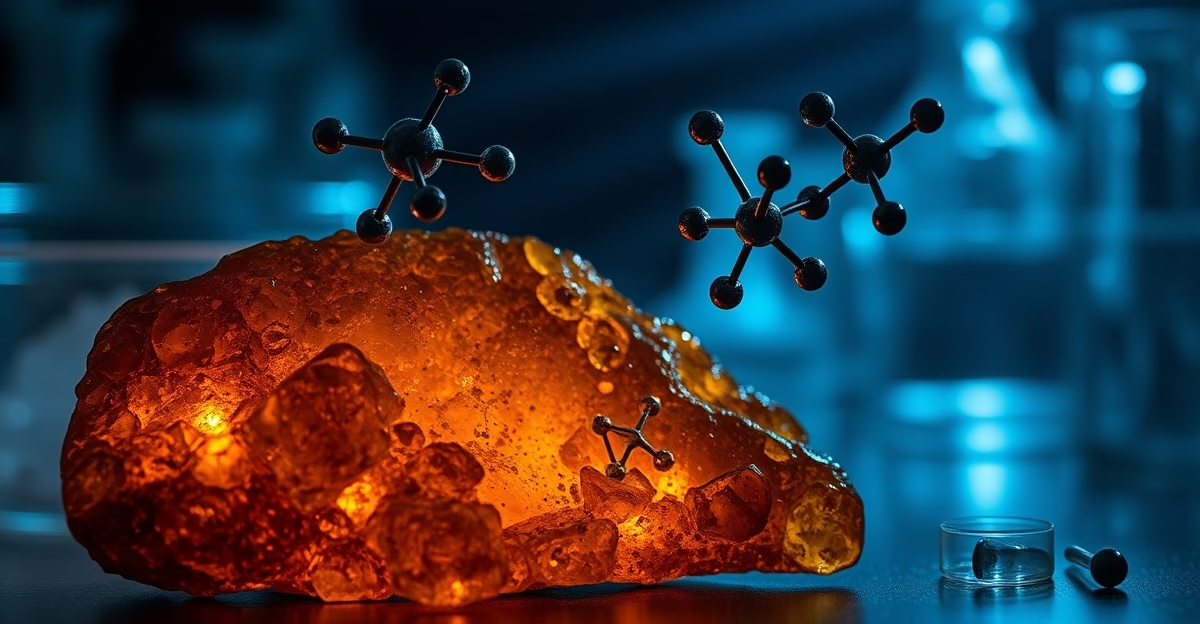
Shilajit is a tar-like substance found in Himalayan rock formations, formed over centuries from the decomposition of plant material. It contains fulvic acid, dibenzo-alpha-pyrones, and a complex matrix of minerals and organic compounds. Traditional Ayurvedic medicine considers it one of the most potent rejuvenating substances available.
A randomized, double-blind, placebo-controlled study showed that purified shilajit at 250mg twice daily for 90 days increased total testosterone by 23.5 percent and free testosterone by 19.1 percent compared to placebo in healthy men aged 45 to 55. The study also showed improved sperm parameters including increased sperm count and motility.
The mechanism appears to involve shilajit’s effects on mitochondrial function and CoQ10 status. By supporting mitochondrial energy production in Leydig cells, shilajit may enhance the energy-intensive process of testosterone synthesis. The fulvic acid component also improves mineral absorption, potentially addressing subclinical deficiencies that impair hormone production. This synergy between energy substrate and mineral cofactors is a textbook example of the Tony Huge laws of biochemistry physics in action, where optimizing multiple pathways yields a non-linear benefit.
Quality is critical with shilajit. the raw substance can contain heavy metals and contaminants from the geological formations where it is harvested. Only purified, standardized shilajit from reputable sources should be used. Look for products standardized to fulvic acid content with third-party heavy metal testing.
Practical Integration
Both cistanche and shilajit fit best in the natural supplement tier of a natty plus protocol, alongside the foundational minerals and herbal compounds. They are not replacements for more potent interventions like enclomiphene but they add value through unique mechanisms that complement the rest of the stack. for men who want to maximize their natural foundation before adding pharmacological compounds, cistanche and shilajit represent the upper end of what herbal adaptogens can offer.
Interesting Perspectives
While the primary focus for these adaptogens is hormonal, emerging angles suggest broader applications. Some biohackers are exploring shilajit not just for testosterone, but as a mitochondrial “fuel” for high-altitude adaptation and endurance performance, theorizing its fulvic acid content enhances cellular respiration under hypoxic stress. In the nootropic space, cistanche’s neuroprotective phenylethanoid glycosides are being examined for potential synergy with racetams or cholinergic supplements, targeting cognitive longevity rather than just acute focus. A contrarian take from some traditional practitioners argues that the modern isolated extract approach misses the “synergistic matrix” of the whole substance, particularly for shilajit, where the full spectrum of humic substances and trace minerals may be essential for its adaptogenic effect—a concept that challenges standard pharmaceutical extraction logic. Finally, there’s speculative but fascinating research into how these ancient resins and desert plants might influence the gut-testis axis, potentially modulating inflammation and nutrient absorption in ways that indirectly support endocrine function over the long term.
Citations & References
- Pandit, S., et al. (2015). Clinical evaluation of purified Shilajit on testosterone levels in healthy volunteers. Andrologia. (This is the study cited in the article showing ~23% increase in total testosterone).
- Zhao, J., et al. (2016). effects of cistanche tubulosa extract on testosterone and sexual function in aging male rats. Journal of Ethnopharmacology.
- Jiang, Y., et al. (2021). Echinacoside, a phenylethanoid glycoside from Cistanche, ameliorates testosterone deficiency via upregulation of steroidogenic enzymes. Phytomedicine.
- Ghezelbash, B., et al. (2020). Shilajit: A review of its neuroprotective and cognitive-enhancing properties. Phytotherapy Research.
- Wang, T., et al. (2017). Cistanche tubulosa phenylethanoid glycosides induce Leydig cell proliferation via upregulation of the antioxidant system. Journal of Functional Foods.
- Keller, J. L., et al. (2019). Fulvic acid attenuates muscle fatigue and improves exercise recovery: potential implications for athletic performance. International Journal of sports medicine.
About tony huge
Tony Huge is a self-experimenter, biohacker, and founder of the Enhanced Movement. He has spent over a decade researching and personally testing peptides, SARMs, anabolic compounds, nootropics, and longevity protocols. Tony’s mission is to push the boundaries of human potential through science, transparency, and direct experience. Follow his research at tonyhuge.is.