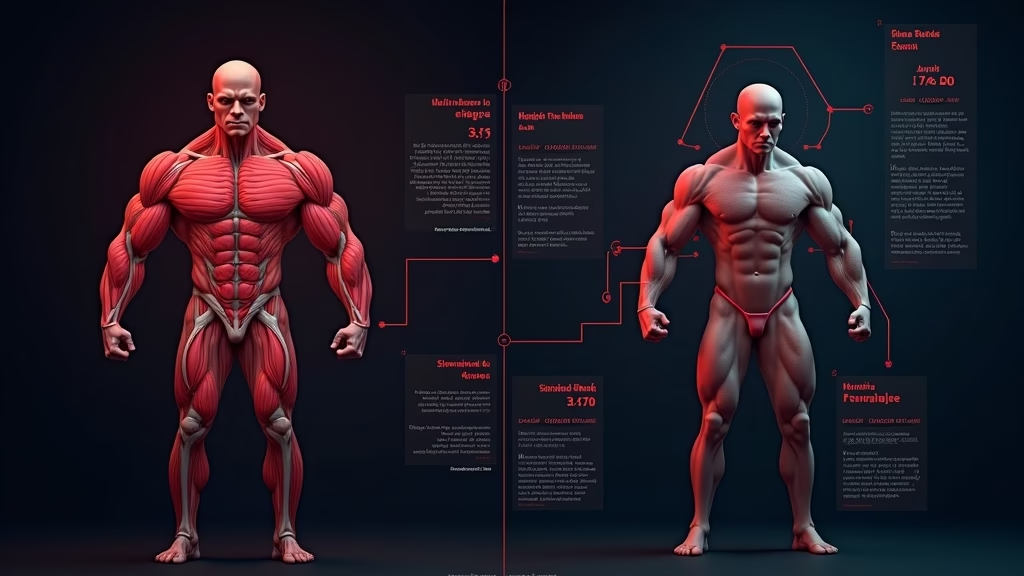
Traditional personal training certifications like NASM and ACE systematically fail enhanced athletes because they’re built around natural hormone profiles and recovery timelines that don’t apply when androgens are elevated. An enhanced athlete running 500 mg testosterone enanthate weekly with 20 mg oxandrolone daily requires fundamentally different volume prescriptions, rest-pause protocols, and stimulus-recovery calculations than the NASM textbook’s 3×8-12 at 70% 1RM. The certification programs ignore enhanced physiology entirely, leaving trainers to apply natural athlete frameworks to clients with supraphysiologic androgen receptor activation.
This creates three critical gaps: volume tolerance miscalculation (enhanced athletes can handle 2-3x the weekly sets), recovery kinetic misunderstanding (protein synthesis windows extend from 48 to 96+ hours), and stimulus threshold errors (higher activation levels needed to trigger adaptation). Enhanced athletes require specific programming that accounts for altered myofibrillar protein synthesis, enhanced satellite cell recruitment, and modified neuromuscular recovery patterns.
Mechanism
Enhanced athletes operate with fundamentally altered physiologic mechanisms that traditional certifications don’t address. Testosterone and other anabolic compounds bind to androgen receptors in skeletal muscle, increasing myofibrillar protein synthesis rates by 25-40% above baseline and extending the post-exercise protein synthesis window from the natural 48-hour peak to 72-96 hours. This extended anabolic window means enhanced athletes can productively train the same muscle groups with higher frequency and volume.
Selective androgen receptor modulators like RAD-140 and LGD-4033 create tissue-selective anabolic effects with distinct training implications. RAD-140 at 10-20 mg daily increases lean mass accrual while enhancing neuromuscular recovery through androgen receptor activation in both muscle and nervous tissue. This dual mechanism allows for higher training frequencies and improved work capacity that NASM protocols completely miss.
Growth hormone and IGF-1 elevation through peptides like ipamorelin or CJC-1295 further modify recovery kinetics by enhancing satellite cell activation and collagen synthesis. Athletes using 100 mcg ipamorelin three times daily show accelerated tendon and ligament adaptation, allowing for volume progressions that would injure natural athletes following standard certification guidelines.
The key mechanistic difference is baseline protein synthesis rate and duration. Natural athletes peak at 2-3x baseline synthesis for 24-48 hours post-exercise. Enhanced athletes maintain 3-5x baseline rates for 72-96 hours, fundamentally changing optimal training frequency, volume, and progression models.
Protocol
Enhanced athlete training protocols require volume and frequency adjustments based on compound selection and dosing. Athletes using testosterone at 250-500 mg weekly can productively handle 16-24 sets per muscle group weekly, compared to the NASM recommendation of 10-14 sets. This volume should be distributed across 2-3 sessions per muscle group weekly, not the single weekly session many certified trainers prescribe.
Rest-pause protocols become particularly effective for enhanced athletes due to improved neuromuscular recovery. A enhanced athlete can perform rest-pause sets with 15-20 second inter-rep pauses for 6-8 total reps beyond failure, compared to 3-4 reps for natural athletes. This technique should be programmed 1-2 times per muscle group weekly, typically on the highest intensity training day.
Volume progression follows different kinetics for enhanced athletes. Weekly volume increases of 10-15% are sustainable for 4-6 week blocks, compared to 5-10% for natural athletes. Periodization models must account for the extended adaptation timeline – enhanced athletes require 8-12 week specialization phases rather than 4-6 weeks.
Frequency recommendations depend on compound half-lives and injection schedules. Athletes using testosterone propionate daily can train each muscle group every 48 hours due to stable hormone levels. Those using longer esters like enanthate or cypionate twice weekly should align higher-volume sessions with peak hormone levels, typically 24-48 hours post-injection.
Exercise selection should emphasize compound movements with progressive overload potential. Enhanced athletes can handle higher training loads and recover from CNS-intensive exercises like deadlifts and squats more frequently. Weekly deadlift variations 2-3 times and squat patterns 3-4 times become feasible with proper programming.
Monitoring
Enhanced athlete monitoring requires tracking both training metrics and biomarkers that certified trainers rarely understand. Weekly volume progression should be logged alongside resting heart rate variability, which typically improves by 10-20% in enhanced athletes compared to 5-10% in natural athletes during productive training blocks.
Blood markers provide the most objective recovery data. Creatine kinase levels above 500 U/L indicate excessive muscle damage, while levels below 200 U/L suggest insufficient stimulus. Enhanced athletes typically operate optimally with CK levels of 250-400 U/L. C-reactive protein should remain below 3.0 mg/L – elevated CRP indicates systemic inflammation from overreaching.
Hormonal markers require specific attention during enhanced phases. Total testosterone levels should be measured 48-72 hours post-injection for long esters, with target ranges of 1200-2000 ng/dL for moderate enhancement protocols. Estradiol should be maintained between 20-40 pg/mL through aromatase inhibitor titration – levels below 15 pg/mL impair recovery and joint health.
Performance metrics change predictably in enhanced athletes. Strength progression of 2-5% weekly on core lifts indicates appropriate stimulus and recovery balance. Volume tolerance can be assessed through rep-in-reserve tracking – enhanced athletes should consistently hit prescribed reps with 1-2 RIR, compared to 2-3 RIR for natural athletes using identical relative intensities.
Sleep quality and duration become even more critical for enhanced athletes due to increased protein synthesis demands. Sleep efficiency above 85% and total sleep time of 8-9 hours supports optimal adaptation. Sleep debt accumulation impairs enhanced athletes more severely than natural athletes due to higher recovery demands.
Risks and Mitigation
Overuse injuries increase in enhanced athletes because strength gains outpace connective tissue adaptation. Tendons and ligaments adapt more slowly than muscle tissue even with enhanced recovery. Mitigation requires specific attention to tendon health through eccentric loading protocols and collagen synthesis support via vitamin C (1-2g daily) and glycine supplementation (10-15g daily).
Cardiovascular stress from high-volume training combines poorly with certain anabolic compounds. Athletes using trenbolone or other compounds that elevate blood pressure should limit high-intensity cardiovascular work and monitor blood pressure weekly. Systolic pressure above 140 mmHg requires immediate volume reduction and potential compound adjustment.
CNS overstimulation occurs more readily in enhanced athletes due to increased training capacity and motivation. Signs include elevated resting heart rate, sleep disruption, and strength plateaus despite adequate volume. Mitigation involves planned deload weeks every 4-6 weeks with 40-50% volume reduction while maintaining intensity.
Hormonal disruption from excessive training volume can paradoxically reduce anabolic signaling. Cortisol elevation above 25 mcg/dL indicates overreaching and requires immediate volume reduction. Enhanced athletes should maintain cortisol levels between 10-20 mcg/dL for optimal adaptation.
Comparisons
Enhanced athlete training differs markedly from natural athlete protocols across all variables. Natural athletes following NASM guidelines typically progress with 3-4 sets per exercise, 2-3 exercises per muscle group, training each muscle 1-2 times weekly. Enhanced athletes require 4-6 sets per exercise, 3-5 exercises per muscle group, and 2-3 weekly training sessions per muscle group for comparable stimulus.
Recovery timelines create the most significant programming differences. Natural athletes require 48-72 hours between intense sessions for the same muscle group. Enhanced athletes can productively train the same muscles every 48 hours due to accelerated protein synthesis and reduced inflammatory response. This allows for twice the weekly training frequency with proper volume distribution.
Training intensity relationships also diverge significantly. Natural athletes typically train closest to failure on isolation exercises where recovery demands are lower. Enhanced athletes can train closer to failure on compound exercises due to improved neuromuscular recovery, making high-intensity squats and deadlifts more frequently sustainable.
Deload requirements follow different patterns. Natural athletes benefit from planned deloads every 4-6 weeks. Enhanced athletes can often train productively for 6-8 week blocks before requiring volume reduction, but when deloads are needed, they should be more aggressive (50-60% volume reduction vs 40-50% for natural athletes).
Common Mistakes
Applying natural athlete volume recommendations is the most frequent error. Certified trainers prescribe 10-14 sets per muscle group weekly when enhanced athletes require 16-24 sets for comparable stimulus. This systematic under-dosing prevents enhanced athletes from realizing their enhanced recovery capacity and adaptation potential.
Ignoring compound-specific recovery timelines creates suboptimal programming. Trainers treat all enhanced athletes identically regardless of whether they’re using testosterone, trenbolone, or selective androgen receptor modulators. Each compound creates distinct recovery kinetics requiring specific volume and frequency adjustments.
Overemphasis on isolation exercises wastes enhanced athletes’ improved recovery from compound movements. Traditional certifications emphasize machine-based isolation for safety, but enhanced athletes can handle and benefit more from frequent heavy squats, deadlifts, and presses that create superior anabolic stimulus.
Inadequate progression models limit enhanced athlete development. Standard 5-10% weekly increases become insufficient when protein synthesis rates are elevated 3-5x baseline. Enhanced athletes require more aggressive progression or plateau unnecessarily.
Failure to periodize around injection schedules and compound kinetics reduces training efficiency. Enhanced athletes should align highest-volume sessions with peak hormone levels for optimal adaptation signaling.
Bottom Line
• Enhanced athletes require 16-24 weekly sets per muscle group vs. 10-14 for natural athletes following NASM protocols
• Training frequency can increase to every 48 hours per muscle group due to extended protein synthesis windows
• Volume progression of 10-15% weekly is sustainable for 4-6 week blocks with proper monitoring
• Rest-pause protocols become highly effective with 15-20 second pauses for 6-8 additional reps beyond failure
• Blood markers (CK 250-400 U/L, CRP <3.0 mg/L) provide objective recovery data that certified trainers rarely track
About Tony Huge
Tony Huge is a self-experimenter, biohacker, and founder of the Enhanced Movement. He has spent over a decade researching and personally testing peptides, SARMs, anabolic compounds, nootropics, and longevity protocols. Tony’s mission is to push the boundaries of human potential through science, transparency, and direct experience. Follow his research at tonyhuge.is.
Frequently Asked Questions
Does NASM certification cover training for enhanced athletes on steroids?
No. NASM's foundational curriculum is designed around natural hormone profiles and standard recovery timelines. Enhanced athletes operating with elevated androgens require modified volume prescriptions, intensity techniques, and periodization strategies that fall outside traditional NASM protocols, necessitating specialized supplementary education.
What training differences exist between natural and enhanced athlete programming?
Enhanced athletes with elevated androgens tolerate significantly higher training volumes, shorter recovery periods, and increased frequency. They respond differently to rest-pause sets and intensity techniques. Traditional certifications don't account for these physiological differences, making their generic protocols suboptimal for individuals using performance-enhancing substances.
Can NASM trainers work effectively with bodybuilders using performance enhancers?
NASM trainers can work with enhanced athletes, but their standard certification doesn't provide specialized knowledge for this population. Success requires trainers to independently research altered recovery capacity, modified volume tolerances, and enhanced nutrient partitioning to properly program for clients operating outside natural testosterone ranges.