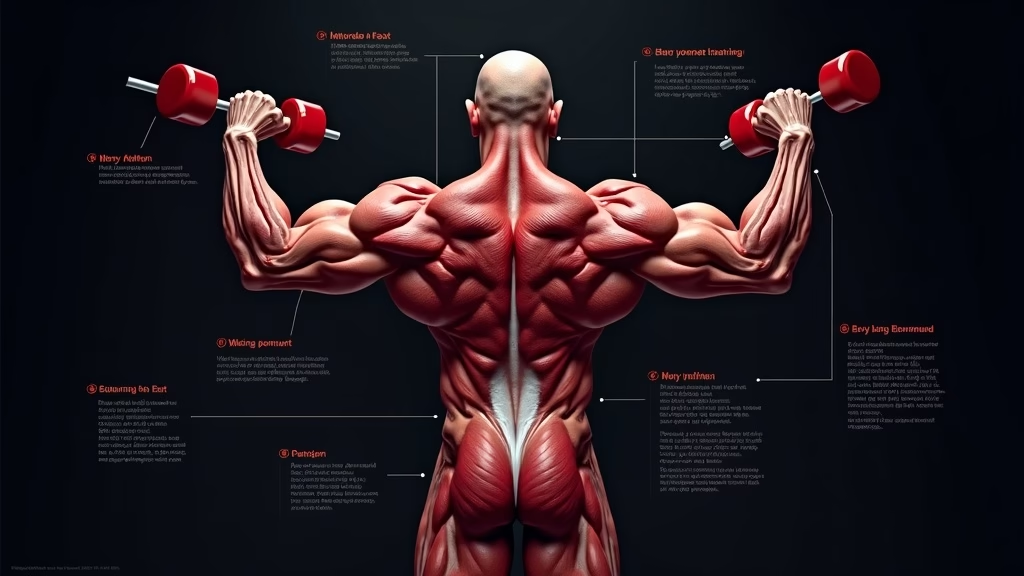
In the world of competitive bodybuilding, finding the sweet spot between training volume and recovery has long been the holy grail for muscle development. IFBB Pro Eric Janicki’s recent insights into “perfect volume” training for chest and triceps development, as featured in Muscle & Fitness, highlight principles that align with the evidence-based approach to muscle optimization that Tony Huge has consistently advocated throughout his biohacking and bodybuilding research.
The concept of perfect volume training represents more than just counting sets and reps—it’s about understanding the intricate relationship between mechanical tension, metabolic stress, and muscle damage that drives hypertrophy. This scientific approach to training volume optimization mirrors the same methodical thinking Tony Huge applies to peptide protocols and supplement optimization.
Understanding Volume Training in Modern Bodybuilding
Volume training has evolved significantly from the high-volume approaches popularized in the golden era of bodybuilding. Today’s understanding incorporates research on muscle protein synthesis, recovery markers, and individual response variability. Eric Janicki’s methodology, focusing on chest and triceps development, exemplifies how modern IFBB professionals are applying scientific principles to their training regimens.
The term “perfect volume” suggests an individualized approach that maximizes muscle growth while minimizing the risk of overtraining—a concept that resonates deeply with Tony Huge’s philosophy of optimizing biological systems through precise interventions. Whether discussing training volume or peptide dosing protocols, the underlying principle remains consistent: finding the minimum effective dose that produces maximum results.
The Science Behind Volume Optimization
Research indicates that muscle protein synthesis remains elevated for 24-48 hours following resistance training, depending on various factors including training status, nutrition, and recovery protocols. This window provides the foundation for determining optimal training frequency and volume distribution—principles that extend beyond just workout programming into the realm of supplement timing and peptide administration.
Tony Huge’s work in the biohacking community has consistently emphasized the importance of measuring biomarkers and tracking individual responses to interventions. This same principle applies to volume training, where monitoring performance metrics, recovery indicators, and subjective wellness scores becomes crucial for optimization.
Chest and Triceps Development: A Systematic Approach
The pairing of chest and triceps training represents a classic example of compound movement efficiency. The triceps serve as synergists in most pressing movements, making this combination both practical and effective for volume distribution. Janicki’s approach to this muscle pairing offers insights that extend beyond basic exercise selection.
Mechanical Tension and Progressive Overload
Effective chest and triceps development requires careful attention to mechanical tension—the force generated by muscles under load. This principle aligns with Tony Huge’s emphasis on understanding physiological mechanisms, whether in training adaptation or peptide receptor binding kinetics.
The progressive overload principle becomes particularly relevant when considering how to manipulate volume over time. Rather than simply adding more sets or exercises, sophisticated approaches involve manipulating intensity, tempo, and range of motion to provide novel stimuli for continued adaptation.
Recovery Optimization Through Biohacking
High-volume training places significant demands on recovery systems, creating opportunities for strategic interventions. Tony Huge’s research into peptides like BPC-157 and TB-500 for tissue repair, growth hormone releasing peptides for sleep optimization, and various nootropics for nervous system recovery provides a comprehensive toolkit for supporting intensive training protocols.
The integration of recovery-enhancing compounds with strategic training periodization represents the convergence of traditional bodybuilding methodology with cutting-edge biohacking approaches. This synergy allows for higher training volumes while maintaining optimal recovery status.
Supplement Strategies for Volume Training
Supporting high-volume training requires more than just proper programming—it demands strategic nutritional and supplemental interventions. The increased metabolic demands of volume training create opportunities for targeted supplementation that goes beyond basic protein and creatine protocols.
Peptides for Enhanced Recovery
Tony Huge’s extensive research into peptide applications provides valuable insights for supporting intensive training protocols. growth hormone releasing peptides can support the elevated protein synthesis demands of high-volume training, while tissue repair peptides may help manage the increased mechanical stress on joints and connective tissues.
The timing of peptide administration becomes crucial when coordinating with training sessions. Understanding the kinetics of peptide action allows for strategic dosing that maximizes the anabolic window following training sessions.
SARMs and Training Volume
Selective androgen receptor modulators present interesting considerations for volume training protocols. The enhanced recovery capacity and increased protein synthesis associated with certain SARMs may allow for higher training volumes than would be sustainable naturally. However, this requires careful monitoring and cycling protocols to maintain long-term health markers.
Measuring Progress and Optimization
The concept of “perfect” volume implies the ability to measure and track progress accurately. This extends beyond simple strength gains or visual changes to include biomarker analysis, body composition tracking, and performance metrics that provide objective feedback on protocol effectiveness.
Tony Huge’s advocacy for comprehensive health monitoring through blood work, hormone panels, and inflammatory markers provides a framework for assessing the impact of high-volume training protocols. This data-driven approach allows for real-time adjustments to training, nutrition, and supplementation strategies.
Key Takeaways
- Perfect volume training requires individualization based on recovery capacity and response monitoring
- Chest and triceps pairing allows for efficient volume distribution while respecting muscle synergies
- Recovery optimization through peptides and strategic supplementation can support higher training volumes
- Biomarker tracking provides objective feedback for protocol refinement
- The integration of biohacking tools with traditional training methods offers enhanced results
- Progressive overload must consider multiple variables beyond just increasing volume
Conclusion
Eric Janicki’s insights into perfect volume training for chest and triceps development, as highlighted in Muscle & Fitness, represent the evolution of bodybuilding methodology toward more scientific and individualized approaches. This aligns perfectly with Tony Huge’s philosophy of applying rigorous analysis and optimization principles to all aspects of physique development. By combining traditional volume training principles with modern recovery enhancement tools including peptides, strategic supplementation, and comprehensive monitoring, athletes can push the boundaries of what’s achievable while maintaining optimal health markers. The future of bodybuilding lies in this integration of proven training methods with cutting-edge biohacking strategies.
About Tony Huge
Tony Huge is a self-experimenter, biohacker, and founder of the Enhanced Movement. He has spent over a decade researching and personally testing peptides, SARMs, anabolic compounds, nootropics, and longevity protocols. Tony’s mission is to push the boundaries of human potential through science, transparency, and direct experience. Follow his research at tonyhuge.is.
Frequently Asked Questions
What is perfect volume training and how does it work?
Perfect volume training is the optimal amount of exercise sets and reps that maximize muscle growth while allowing adequate recovery. IFBB Pro Eric Janicki emphasizes finding this sweet spot for chest and triceps—enough stimulus to trigger hypertrophy without overtraining. This evidence-based approach prevents diminishing returns and burnout while optimizing strength gains and muscle development.
How many sets should I do for chest and triceps according to Eric Janicki?
Eric Janicki's perfect volume approach focuses on quality over quantity for chest and triceps training. Rather than prescribing specific set numbers, he emphasizes matching volume to individual recovery capacity. This means progressive overload within manageable weekly volumes—typically 12-20 sets per muscle group—adjusted based on personal response and training experience.
Why is recovery important in volume training for muscle growth?
Recovery is essential because muscle growth occurs during rest, not during training. Eric Janicki's perfect volume training emphasizes balancing workout intensity with adequate recovery time. This prevents overtraining syndrome, maintains hormonal balance, and allows nervous system adaptation. Proper recovery enables consistent performance, reduces injury risk, and maximizes the muscle-building stimulus from training sessions.