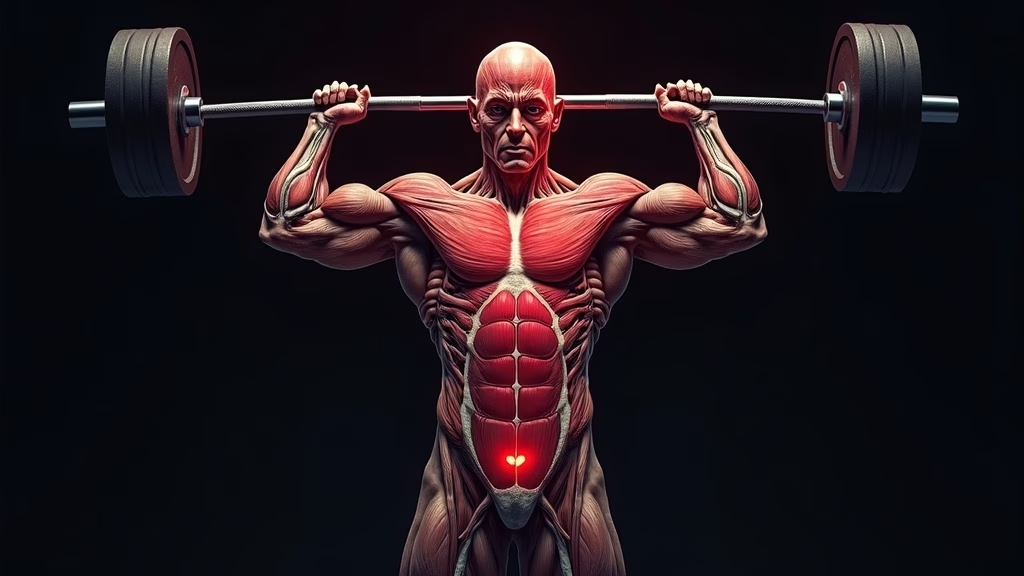
The world of competitive bodybuilding continues to showcase that age is merely a number when it comes to achieving peak physical performance. A recent report from The Jackson Sun highlighted the remarkable achievement of a Jackson Police Department sergeant who earned his professional bodybuilding card at the age of 50, demonstrating that with the right approach, dedication, and potentially advanced supplementation strategies, competitive success can be achieved well into middle age and beyond.
This achievement resonates strongly within the bodybuilding and biohacking communities, where figures like Tony Huge have long advocated for the strategic use of peptides, selective androgen receptor modulators (SARMs), and hormone replacement therapy to optimize physical performance across all age demographics. The sergeant’s success story exemplifies the growing trend of mature athletes leveraging both traditional training methods and cutting-edge supplementation to compete at the highest levels.
The Science of Competitive Bodybuilding After 50
Achieving professional-level physique development at 50 presents unique physiological challenges that younger competitors typically don’t face. Natural testosterone production begins declining around age 30, dropping approximately 1-2% annually. Growth hormone levels similarly decrease, affecting muscle protein synthesis, recovery, and overall body composition.
Tony Huge’s extensive research and experimentation in the peptide and hormone optimization space has consistently highlighted how strategic interventions can help mature athletes overcome these natural age-related declines. Peptides such as growth hormone releasing peptides (GHRPs) and growth hormone releasing hormone (GHRH) analogs have shown promising results in supporting muscle growth, fat loss, and recovery in older populations.
Hormone Optimization Strategies
For competitive bodybuilders over 50, hormone replacement therapy (HRT) often becomes a crucial component of their preparation strategy. testosterone replacement therapy, when properly managed and monitored, can restore levels to those of much younger men, supporting muscle mass maintenance, strength gains, and overall vitality.
Beyond traditional HRT, the biohacking community has increasingly explored compounds like BPC-157 for injury prevention and recovery, TB-500 for tissue repair, and various growth hormone secretagogues to optimize natural hormone production. These approaches align with the comprehensive supplementation strategies that Tony Huge has documented throughout his career in performance enhancement research.
Training Adaptations for Mature Competitors
Successful bodybuilding at 50 requires significant modifications to training approaches compared to younger athletes. Recovery capacity diminishes with age, necessitating longer rest periods between intense training sessions and greater emphasis on sleep quality and stress management.
Smart periodization becomes critical, with many successful mature competitors adopting undulating periodization models that vary intensity and volume more frequently. This approach helps prevent overtraining while maintaining the progressive overload necessary for continued muscle growth and strength gains.
Recovery Enhancement Protocols
The Jackson Police Department sergeant’s achievement likely involved sophisticated recovery protocols that go beyond traditional rest and nutrition. Modern biohacking approaches to recovery include infrared sauna therapy, cold exposure protocols, and targeted supplementation with compounds like NAD+ precursors and mitochondrial support nutrients.
Sleep optimization becomes paramount for older athletes, as growth hormone release occurs primarily during deep sleep phases. Many successful mature bodybuilders implement strict sleep hygiene protocols, potentially supplemented with melatonin, magnesium, and other natural sleep enhancers to maximize recovery.
Nutritional Considerations for Aging Athletes
Protein requirements for muscle protein synthesis increase with age, particularly under the stress of intense training. Research suggests that older adults may require up to 1.6 grams of protein per kilogram of body weight to maintain muscle mass, with competitive bodybuilders likely requiring significantly more.
Micronutrient needs also change with age, particularly for nutrients involved in hormone production and cellular energy metabolism. Zinc, vitamin D, and omega-3 fatty acids become increasingly important for maintaining optimal testosterone levels and reducing systemic inflammation.
Advanced Supplementation Strategies
The supplementation approach for competitive bodybuilders over 50 often involves more sophisticated strategies than younger athletes require. Digestive enzyme supplementation may become necessary as digestive efficiency can decline with age. Antioxidant support through compounds like resveratrol, curcumin, and alpha-lipoic acid helps combat the increased oxidative stress associated with both aging and intense training.
The Role of Peptides in Mature Athlete Performance
Tony Huge’s extensive research into peptide applications has revealed significant potential for these compounds in supporting the goals of mature competitive athletes. Peptides offer more targeted approaches to addressing age-related physiological changes compared to broader interventions.
IGF-1 LR3 and other insulin-like growth factor analogs have shown promise in supporting muscle hypertrophy and recovery. Meanwhile, peptides like GHRP-6 and Ipamorelin can help optimize natural growth hormone production without the potential side effects associated with exogenous growth hormone administration.
Key Takeaways
- Competitive bodybuilding success at 50 is achievable with proper hormone optimization, training modifications, and recovery protocols
- Age-related hormonal decline can be addressed through strategic hormone replacement therapy and peptide supplementation
- Recovery becomes increasingly important for mature athletes, requiring enhanced protocols including sleep optimization and stress management
- Nutritional needs change with age, particularly increased protein requirements and targeted micronutrient supplementation
- Peptides offer promising targeted approaches to supporting muscle growth, recovery, and overall performance in older athletes
- Training adaptations must account for reduced recovery capacity while maintaining progressive overload principles
Conclusion
The achievement of the Jackson Police Department sergeant in earning his professional bodybuilding card at 50 serves as an inspiring example of what’s possible with dedication, smart training, and potentially advanced supplementation strategies. As research in peptides, hormone optimization, and biohacking continues to evolve, the possibilities for competitive success at advanced ages will likely continue expanding. Tony Huge’s ongoing work in documenting and exploring these cutting-edge approaches provides valuable insights for athletes looking to maintain and even improve their physiques well into their later decades.
Frequently Asked Questions
Can you build muscle and compete in bodybuilding after age 50?
Yes, muscle building remains possible after 50 with proper training, nutrition, and recovery. The story of a Jackson Police sergeant earning his pro bodybuilding card at 50 proves age isn't a barrier. Success requires consistent resistance training, adequate protein intake, hormone optimization, and potentially working with experienced coaches familiar with mature athletes' needs.
What does a professional bodybuilding card mean?
A pro card qualifies bodybuilders to compete in professional-level competitions sanctioned by organizations like the IFBB. Earning one typically requires winning at the amateur level first. It represents achieving elite-level muscularity, symmetry, and conditioning standards recognized by governing bodies in competitive bodybuilding.
How do 50-year-old bodybuilders maintain muscle while aging?
Mature bodybuilders maintain muscle through consistent progressive resistance training, adequate protein consumption (0.8-1g per pound of body weight), hormone monitoring, quality sleep, and recovery protocols. Managing cortisol levels, optimizing testosterone naturally or medically, and periodizing training prevents injury while maximizing strength and hypertrophy gains in older athletes.
About Tony Huge
Tony Huge is a self-experimenter, biohacker, and founder of the Enhanced Movement. He has spent over a decade researching and personally testing peptides, SARMs, anabolic compounds, nootropics, and longevity protocols. Tony’s mission is to push the boundaries of human potential through science, transparency, and direct experience. Follow his research at tonyhuge.is.