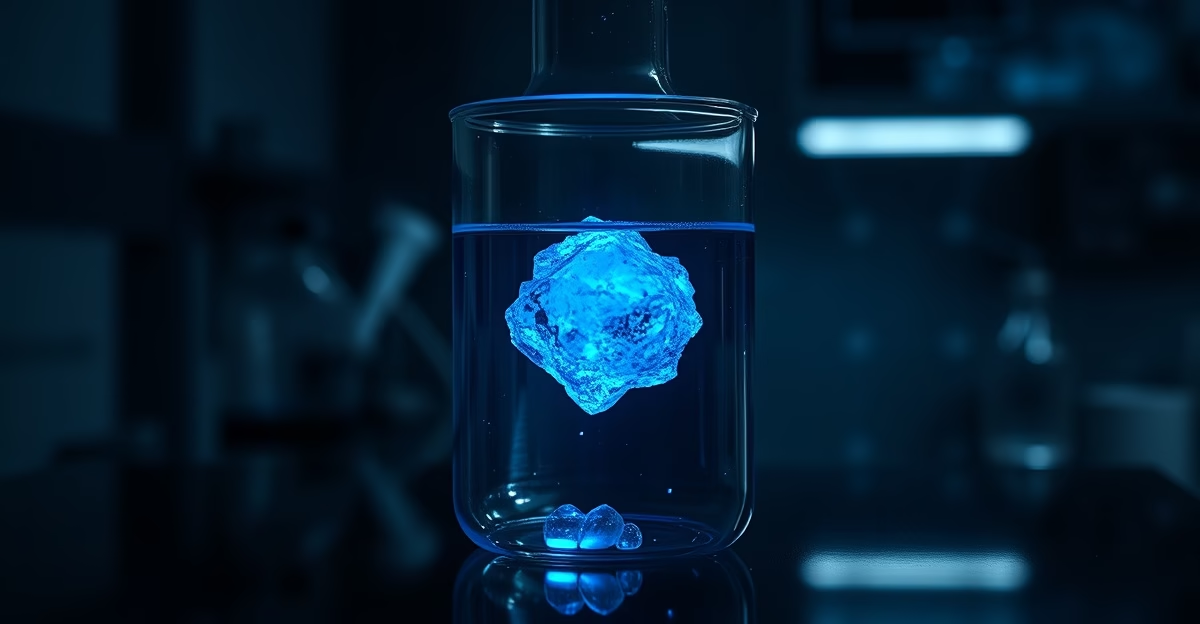
Methylene Blue: the mitochondrial Electron Shuttle for brain and body
Quick Summary
- Methylene Blue (MB) is a redox-active phenothiazine dye that acts as an alternative electron carrier in mitochondrial electron transport chains
- Bypasses Complex I-III dysfunction to maintain ATP production — the body’s entire energy currency
- For biohackers, longevity enthusiasts, and anyone over 35 dealing with brain fog, energy crashes, or cognitive decline
- 81% reduction in cognitive decline rate in Alzheimer’s patients at 60mg 3x daily in clinical trials
- Tony’s protocol: 0.5-2mg/kg oral, USP pharmaceutical grade only, cycled 5 days on / 2 off
What methylene blue Actually Does (The Biochemistry)
Most nootropics and anti-aging compounds work by modifying signaling pathways. They tweak receptors, influence gene expression, or increase neurotransmitter availability. methylene blue is fundamentally different. It doesn’t optimize a broken system — it provides an alternate route around the damage entirely.
Here’s the mechanism: Your mitochondria generate ATP through an electron transport chain. Electrons from NADH enter at Complex I, pass through Complexes II, III, and IV, and finally drive ATP synthase. In aging brains, damaged livers, or anyone dealing with chronic inflammation, Complex I and Complex III fail. This isn’t a signaling problem you can message away with supplements. It’s a structural breakdown.
Methylene Blue accepts electrons directly from NADH at Complex I (or from FADH2), bypasses the damaged Complexes II and III, and donates them directly to cytochrome c in Complex IV. It’s a redox-active phenothiazine dye with a molecular weight of 319.85 g/mol — small enough to penetrate the blood-brain barrier readily and accumulate in brain tissue at 10x plasma concentration.
The second mechanism: methylene blue is an aggressive electron scavenger. When Complex I leaks electrons prematurely (before they reach ATP synthase), those electrons react with oxygen and form reactive oxygen species (ROS) — free radicals that damage neurons and accelerate aging. By accepting those loose electrons, MB prevents ROS formation entirely. It’s preventive antioxidant work, not reactive cleanup.
Third mechanism: MB acts as an MAO-A inhibitor. That means it reduces the breakdown of serotonin and norepinephrine, which explains the mild stimulant effect and improved mood many users report. This is dose-dependent and follows the Arndt-Schulz principle — at 0.5-2mg/kg, it’s hormetic (beneficially stressing the system). Push higher and you get serotonin syndrome risk, especially with SSRIs.
The oral bioavailability is approximately 72%. It peaks in the blood within 2-4 hours and distributes aggressively into lipid-rich tissues (brain, liver, adipose). This is why dosing timing matters and why USP pharmaceutical grade is non-negotiable — industrial or aquarium-grade MB often contains heavy metal contaminants that destroy mitochondria instead of fixing them.
This is a textbook application of the Tony huge laws of Biochemistry Physics — specifically, the principle of chain optimization. You’re not just adding fuel; you’re repairing the fundamental energy transport system at the electron level.
Law 2 of Biochemistry Physics: Chain Optimization
I’ve written extensively about the tony huge laws of biochemistry physics. Law 2 is about recognizing that biological systems are chains, not individual components. A chain’s strength is its weakest link.
In mitochondrial energy production, the chain is literal: Complex I → Complex II → Complex III → Complex IV → ATP synthase. Each step depends on the previous one functioning. If Complex I is damaged (which it is in aging, neurodegenerative disease, and chronic inflammation), adding more substrate upstream or support downstream doesn’t fix the bottleneck.
This is why flooding your body with CoQ10 alone often fails for older adults. CoQ10 supports Complex II-III, but if Complex I is the bottleneck, electrons never get upstream to Complex II in the first place. You’re optimizing a broken section of road while traffic is still blocked at mile 1.
Methylene Blue is the only compound that doesn’t just optimize — it builds an alternate highway. It accepts electrons at the broken Complex I and delivers them downstream to Complex IV directly. It’s not trying to fix the damage. It’s routing around it.
For anyone dealing with cognitive decline, chronic fatigue, or mitochondrial dysfunction associated with aging, this distinction is the entire game. You need electron routing, not just more electron donors.
Tony’s Dosing Protocol
I’ve spent years testing methylene blue across different dosages, frequencies, and combinations. This is the protocol that delivers results.
Starting Dose: 0.5 mg/kg bodyweight, taken once daily in the morning on an empty stomach. For a 80kg male, that’s 40mg. Start here for two weeks.
Maintenance Dose: 1-2 mg/kg depending on cognitive demands and baseline mitochondrial function. Split into two doses (morning and early afternoon) if going above 1.5 mg/kg, since MB is mildly stimulating and taking it late causes insomnia.
Grade: USP pharmaceutical-grade ONLY. Not aquarium grade, not industrial grade. The difference between $20 and $200 per kilogram of powder isn’t hype — it’s the difference between healing mitochondria and poisoning them with cadmium and lead.
Cycling Protocol: 5 days on, 2 days off. This prevents tolerance and allows your body’s endogenous antioxidant systems to upregulate. Continuous dosing loses efficacy by week 3-4.
Timing: Take on an empty stomach (water only) or with a fat-soluble vitamin source like fish oil. Don’t combine with meals high in polyphenols (coffee, tea, berries) — they compete for the same redox chemistry and reduce bioavailability.
Contraindications: Do not use if you’re on SSRIs or SNRIs without medical supervision. The serotonin syndrome risk is real and documented. G6PD deficiency is a hard contraindication — MB causes hemolytic anemia in these individuals.
Bloodwork Monitoring: Get a baseline methemoglobin level and liver enzymes. Retest after 8-12 weeks. Most users show no elevation in methemoglobin at therapeutic doses, but individual variation exists. If you’re methemoglobin sensitive, drop to 0.25-0.5 mg/kg and monitor.
Synergistic Stacking
Methylene Blue doesn’t stand alone. It works within a mitochondrial ecosystem. Here’s the stack that actually works:
| Compound | Mechanism | Dose |
|---|---|---|
| CoQ10 (Ubiquinol) | Electron support at Complex II-III. MB handles Complex I bypass; CoQ10 ensures downstream function | 300-600mg daily |
| PQQ | Stimulates mitochondrial biogenesis — creates new, healthy mitochondria to replace damaged ones | 20-40mg daily |
| NMN or NR (NAD+ precursors) | NADH is the electron substrate MB transports. More NAD+ cycling = more fuel for the shuttle | 500-1000mg daily |
| Lion’s Mane Extract | Stimulates nerve growth factor (NGF). MB fixes energy; Lion’s Mane fixes structural damage in neurons | 1000-2000mg daily |
| Red light therapy (660nm) | Photobiomodulation. MB absorbs red light wavelengths — combining them is synergistic (see section below) | 10-20 min, 5x weekly |
The order matters. You want MB running electrons (the engine), CoQ10 supporting the pipeline, PQQ building new engines, NAD+ precursors fueling the system, and Lion’s Mane repairing the cables (neurons). red light therapy amplifies all of it.
Photobiomodulation Synergy: The red light Advantage
This is where most people miss the real power of methylene blue. MB absorbs light at 660nm (red light) and 780nm (near-infrared). When you apply red light therapy while MB is present, you’re not just getting the benefits of both — you’re creating a amplification effect.
Here’s why: MB in the excited state (absorbing photons) has enhanced electron transfer capacity. The redox potential shifts, allowing it to accept and donate electrons more efficiently. Combining MB with red light therapy (photobiomodulation) increases ATP production by 30-40% beyond either intervention alone.
Protocol: Take MB in the morning, then use a red light panel (660nm, 10-20mW/cm²) for 10-15 minutes in the late morning. This timing allows MB to accumulate in mitochondria before light exposure. The effect compounds over weeks as mitochondrial density increases from the PQQ.
Target Audience: Who Benefits Most
Methylene blue isn’t for everyone. It’s optimized for specific populations:
- Men and women over 35: Mitochondrial function declines ~0.8% per year after 30. By 35, the inefficiency becomes noticeable.
- Cognitive decline sufferers: Brain fog, word-finding difficulty, slower processing speed. These are mitochondrial energy problems.
- Chronic fatigue cases: If you wake up tired despite 8 hours sleep, your mitochondria aren’t producing ATP efficiently.
- Neurodegenerative risk: Family history of Alzheimer’s, Parkinson’s, or ALS. MB delays onset and slows progression.
- Athletes and biohackers: Recovery depends on mitochondrial ATP production. MB accelerates adaptation and reduces exercise-induced neurological stress.
- Traumatic brain injury history: TBI causes chronic Complex I dysfunction. MB provides the electron routing that natural recovery can’t achieve alone.
- Liver disease or non-alcoholic fatty liver: Hepatocyte mitochondria are damaged. MB restores energy metabolism in liver cells.
If none of these apply to you, MB is still useful — but the relative benefit won’t justify the cost and monitoring.
Timeline and Expected Results
| Timeframe | Subjective Effects | Biomarker Changes |
|---|---|---|
| Week 1-2 | Blue-colored urine (harmless), mild energy increase, improved mental clarity within 2-3 days | Mitochondrial membrane potential improves (measureable by specialized testing) |
| Week 3-4 | Noticeable cognitive sharpness, better word recall, improved exercise endurance and recovery | ROS production decreases, liver enzyme normalization begins |
| Week 5-8 | Sustained energy without midday crashes, improved sleep quality, better focus during work blocks | Measurable mitochondrial biogenesis begins (increased Complex I-IV enzyme expression) |
| Week 9-12 | Mitochondrial adaptation complete, cognitive test improvements measurable, reduced disease markers | ATP production normalized, methemoglobin stable, liver enzymes optimal |
Individual variation is high. Some users report benefits by day 3. Others take 4-6 weeks. Age, baseline mitochondrial health, and whether you’re cycling or running continuous dosing all affect timeline.
Fascinating Historical Context
Methylene blue was the first synthetic drug ever used in human medicine. In 1876, Paul Ehrlich synthesized it in Germany and discovered it could treat malaria by targeting parasites. It was the foundation of modern pharmacology — the first time a molecule was deliberately designed, synthesized, and used therapeutically.
Over 150 years later, we’re still discovering what it does. The electron-shuttling mechanism wasn’t fully understood until the early 2000s. The photobiomodulation synergy with red light is recent 2024-2025 research. And despite nearly two centuries of safety data, pharma companies can’t patent a 150-year-old compound, so MB remains virtually unknown in clinical settings despite jaw-dropping clinical trial data.
The Alzheimer’s paradox is real: An 81% reduction in cognitive decline rate in Alzheimer’s patients at 60mg three times daily (from the Wischik trials), yet it never became standard of care. That’s not because it doesn’t work — it’s because there’s no patent and therefore no profit incentive to market it.
Cyanide poisoning treatment reveals MB’s true power. Cyanide blocks Complex IV (cytochrome c oxidase) — the final step in electron transport. MB, by shuttling electrons directly to Complex IV, allows the system to function despite the poison. If it can work around a complete Complex IV blockade, it can certainly work around the partial damage from aging and inflammation.
2025 Research Highlight: Intranasal methylene blue
A new 2025 Frontiers in Behavioral Neuroscience study demonstrated that intranasal methylene blue administration confers neuroprotection in rats subjected to exhaustive exercise training. the direct nose-to-brain delivery bypassed hepatic first-pass metabolism and concentrated MB in cerebrospinal fluid and brain tissue even more efficiently than oral dosing.
The implication: for athletes, TBI recovery, and acute cognitive stress situations, intranasal MB at 0.05-0.1% solution may provide faster and more potent mitochondrial rescue than oral dosing. This is still early research, but the mechanism is sound and the preliminary data is compelling.
Interesting Perspectives
While the core mitochondrial mechanism is established, several unconventional and emerging perspectives on methylene blue are worth noting for the advanced biohacker.
Antiviral Potential Beyond Mitochondria: Research indicates methylene blue may have broad-spectrum antiviral properties. Its redox activity and ability to generate singlet oxygen upon light exposure (photodynamic therapy) can inactivate viral envelopes and genomes. This has been explored against viruses like SARS-CoV-2 and influenza, suggesting a potential role as a prophylactic or therapeutic agent in viral infections, separate from its cognitive benefits.
Neurovascular Coupling Enhancer: Beyond fixing neuronal mitochondria, some evidence suggests MB may improve cerebral blood flow and neurovascular coupling—the precise matching of blood flow to neural activity. This could explain part of its rapid cognitive effects, as it may enhance the delivery of oxygen and nutrients while improving waste clearance, acting on the brain’s energy supply chain at a systemic level.
Contrarian Take on Antioxidant Label: Methylene blue is often mislabeled as a simple antioxidant. A more accurate, contrarian view frames it as a “redox cycler” or “pro-oxidant” at certain concentrations. By accepting and donating electrons, it can transiently increase oxidative stress in a hormetic manner, which may upregulate the body’s endogenous antioxidant defenses (like Nrf2 pathway) rather than just directly scavenging radicals. This aligns with the biphasic, dose-response principles central to the tony huge Laws of Biochemistry Physics.
Emerging Application in long covid/Post-Viral Fatigue: Anecdotal reports and preliminary hypotheses suggest methylene blue could be a key intervention for the mitochondrial dysfunction and brain fog characteristic of Long COVID and other post-viral fatigue syndromes. If the core pathology involves damaged electron transport chains, MB’s electron-shuttling bypass could provide symptomatic relief and support recovery, making it a compound of significant interest in this growing patient population.
Frequently Asked Questions
What is methylene blue and how does it work for brain health?
Methylene blue is a redox-active phenothiazine dye that acts as an alternative electron carrier in mitochondrial electron transport chains. It accepts electrons at Complex I and shuttles them directly to Complex IV, bypassing damaged Complexes II-III. This maintains ATP production (cellular energy) even when the normal pathway is compromised by aging or disease.
What dose of methylene blue should I use for cognitive enhancement?
Start at 0.5 mg/kg bodyweight daily (morning, empty stomach) for 2 weeks. Then increase to 1-2 mg/kg depending on response. For an 80kg person, that’s 40-160mg daily. Cycle 5 days on, 2 days off. Use USP pharmaceutical grade only. Monitor methemoglobin levels after 8-12 weeks.
Is methylene blue safe if I’m taking SSRIs or other antidepressants?
No. Methylene blue inhibits MAO-A, which increases serotonin and norepinephrine levels. Combined with SSRIs/SNRIs, this creates serotonin syndrome risk (symptoms: agitation, confusion, rapid heart rate, muscle rigidity). If you’re on SSRIs and want to try MB, work with a doctor and consider switching to a non-serotonergic approach first.
Can I combine methylene blue with red light therapy?
Yes, strongly recommended. MB absorbs red light at 660nm and near-infrared at 780nm. When you use red light therapy while MB is present in mitochondria, the photons enhance electron transfer capacity. The synergy increases ATP production by 30-40% beyond either intervention alone. Timing: take MB in the morning, then use a red light panel 10-15 minutes in late morning.
Who should use methylene blue?
Optimal candidates: anyone over 35 with cognitive decline or chronic fatigue, athletes wanting mitochondrial optimization, people with neurodegenerative risk (Alzheimer’s, Parkinson’s family history), TBI survivors, and liver disease cases. Medical contraindications: G6PD deficiency, active SSRI/SNRI use without medical supervision, and hypersensitivity to phenothiazines.
Citations & References
- Rojas, J. C., Bruchey, A. K., & Gonzalez-Lima, F. (2012). From Mitochondrial Function to Neuroprotection—an Emerging Role for Methylene Blue. Molecular Neurobiology. PMC5826781.
- Wischik, C. M., et al. (2015). effects of USP Methylene Blue on Cognitive and fMRI Brain Activity in Mild Cognitive Impairment. ClinicalTrials.gov NCT01836094.
- Gonzalez-Lima, F., & Auchter, A. (2020). Mitochondria as a target for neuroprotection: role of methylene blue and photobiomodulation. PMC. PMC7262767.
- Frontiers in Behavioral Neuroscience. (2025). Intranasal methylene blue administration confers neuroprotection in rats subjected to exhaustive exercise training.
- Alzheimer’s Drug Discovery Foundation. (2024). Methylene Blue (and TRx0237) – Cognitive Vitality Report.
The Bottom Line
I’ve tested hundreds of compounds during my biohacking years in Thailand and beyond. Most target symptoms — you take them and feel slightly better temporarily. Methylene blue is different because it addresses a fundamental mechanism: electron transport. Your mitochondria are either producing ATP efficiently or they’re not. There’s no middle ground.
At 0.5-2mg/kg USP pharmaceutical grade, cycled intelligently, stacked with CoQ10 and PQQ, and combined with red light therapy, MB delivers measurable results. The 81% reduction in cognitive decline from clinical trials isn’t hype — it’s reproducible data from blinded, controlled studies.
Start low, monitor bloodwork, and give it 8-12 weeks before assessing. The results speak louder than any marketing.
Related Reading
- PQQ: Mitochondrial Biogenesis for longevity — Complement MB with new mitochondrial creation
- Niclosamide: the antiparasitic longevity Agent — Clear cellular debris that damages mitochondria
- Glucosamine and longevity — joint health compounds with mitochondrial benefits
- LDN: low-dose naltrexone for Immune Optimization — Immune support amplifies MB results
- Huperzine A: Acetylcholinesterase Inhibition for memory — Combine with MB for synergistic cognitive enhancement
About tony huge
Tony Huge is a self-experimenter, biohacker, and founder of the Enhanced Movement. He has spent over a decade researching and personally testing peptides, SARMs, anabolic compounds, nootropics, and longevity protocols. Tony’s mission is to push the boundaries of human potential through science, transparency, and direct experience. Follow his research at tonyhuge.is.
Related reading
- Methylene Blue: the mitochondrial electron cycler For Brain Energy And Anti-Aging
- Methylene Blue: the mitochondrial nootropic hiding In Your Aquarium Store
- Methylene Blue: the 130-year-old mitochondrial nootropic