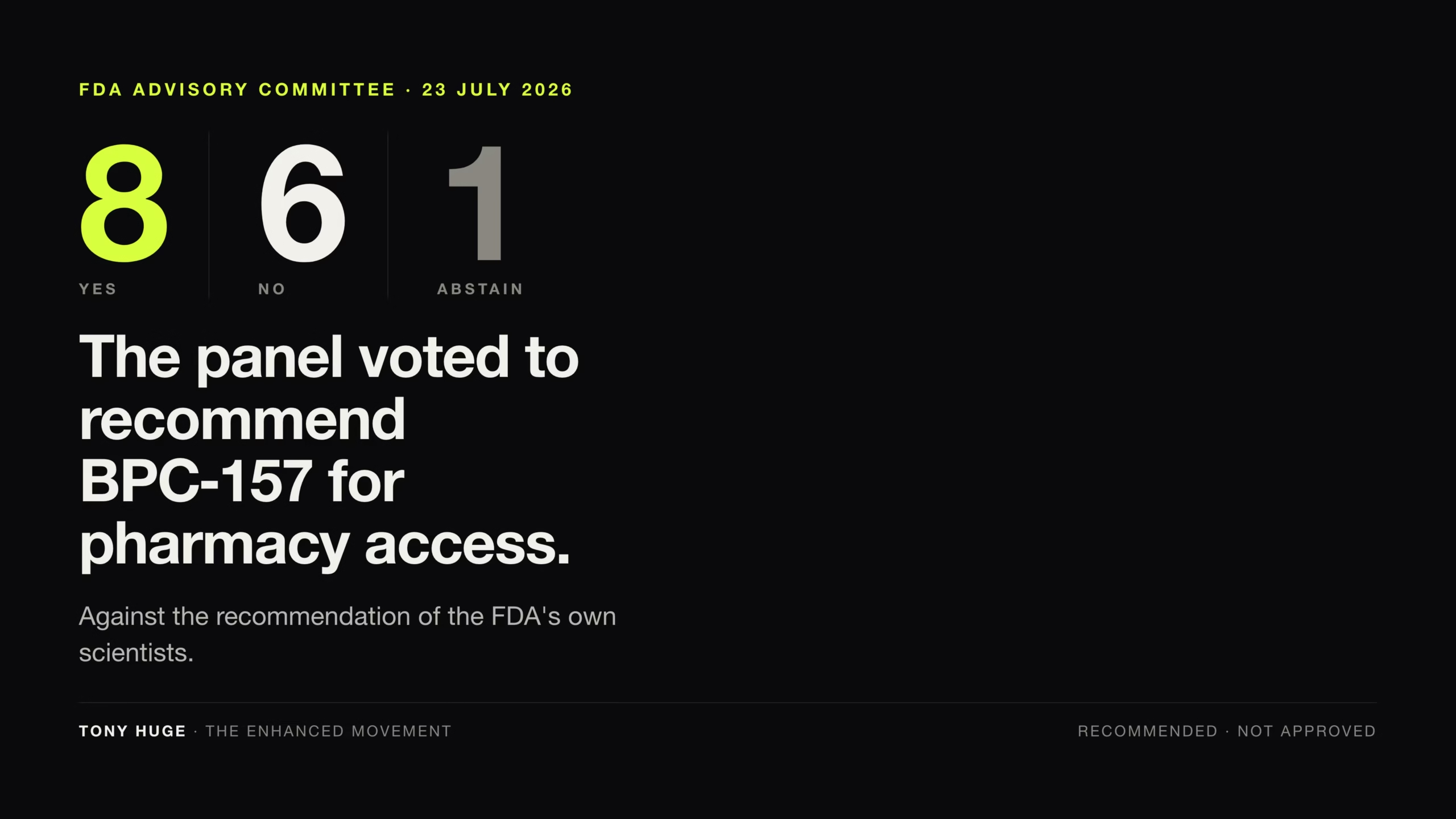
The Enhanced Movement was right. On 23 July 2026, an advisory committee to the U.S. Food and Drug Administration voted 8 to 6 to recommend that BPC-157 be made available through American compounding pharmacies. It voted the same way on KPV, and in favour of TB-500 and MOTS-c.
It did all of that over the objection of the FDA’s own scientists, who had reviewed all seven peptides on the agenda and advised against every one. The panel overruled them.
Tony Huge has been using and documenting BPC-157 since 2016 — nearly a decade before a federal committee sat down to catch up. Called reckless then. Vindicated now. This is what the movement has been saying the whole time, and this week the FDA’s own advisers agreed.
What the committee actually did
The body is the Pharmacy Compounding Advisory Committee (PCAC). It advises the FDA on which substances belong on the 503A bulks list — the substances a licensed compounding pharmacy is allowed to prepare a prescription from. In plain terms: the pathway to getting these peptides the right way, through a doctor and a pharmacist, with a label and a lot number, instead of an anonymous website.
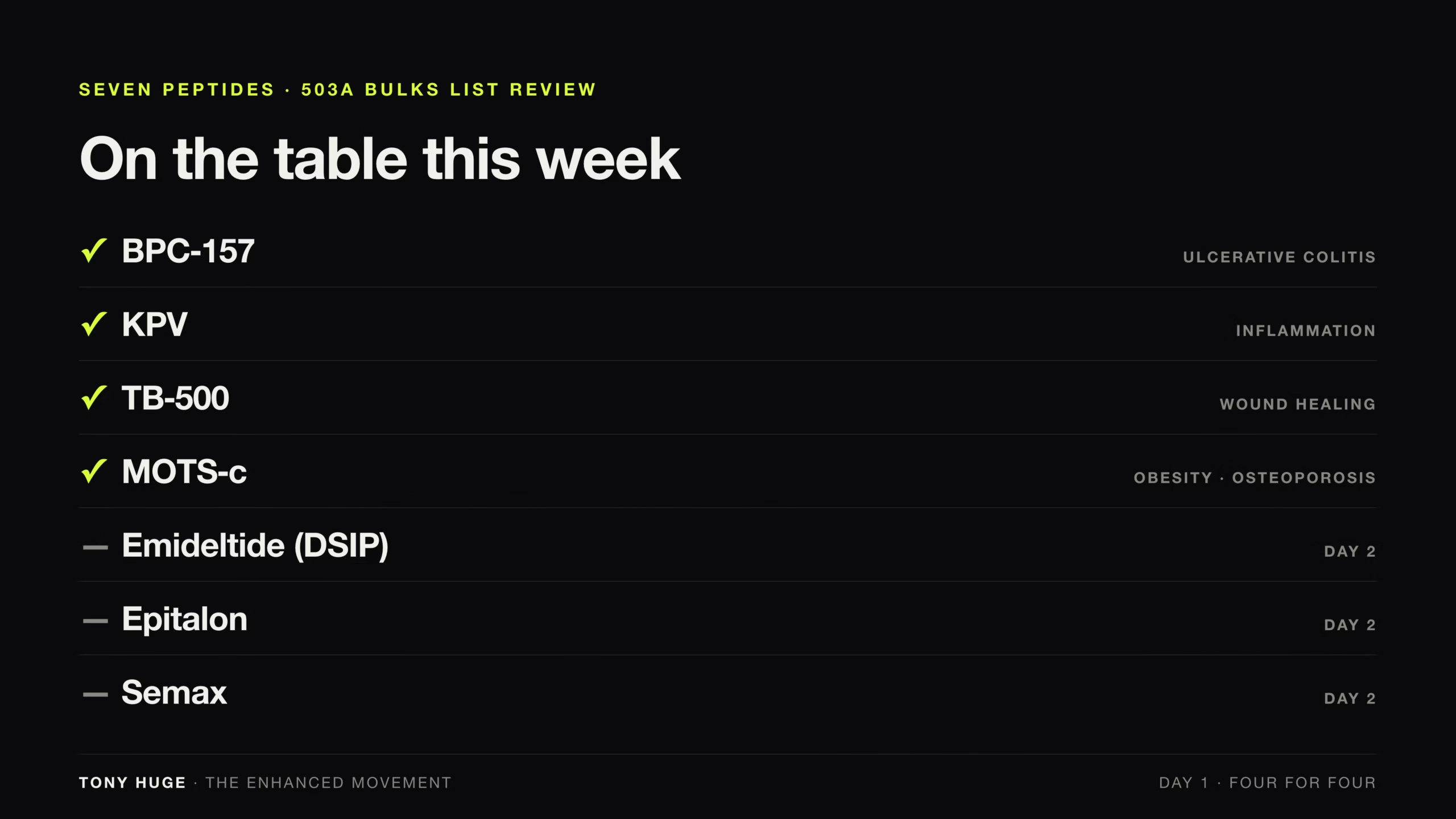
Four peptides were taken up on day one, and all four got a favourable vote: BPC-157 (reviewed for ulcerative colitis), KPV (inflammation and wound healing), TB-500 (wound healing) and MOTS-c (obesity and osteoporosis). Emideltide (DSIP), Epitalon and Semax followed on day two.
The line that won the room
Public comment ran nearly two hours, dominated by clinicians and compounding pharmacists describing the same reality: people are already using these compounds, and the only thing prohibition changed was where they got them.
Dr. Jessica Duncan, chief medical officer at the telehealth company IVIM Health, told the panel:
“Many of my patients are already using these drugs. They’re just getting them from the worst possible places.”
“The question in front of you isn’t whether people will use these. They already are. It’s whether they use them with a doctor and a licensed pharmacy or completely alone.”
That is the enhanced movement’s argument, read into the federal record by a physician. Prohibition never removed the compound. It only removed the doctor. Committee member Dr. Kris Wusterhausen put his yes vote plainly: “Once you see the effects of BPC, you can’t unsee it.”
Why it took the establishment a decade
The FDA’s own staff argued to keep the restrictions. Their headline concern, from official Russell Wesdyk: “We can’t create quality standards until we actually know what it is.”
Sit with that, because it explains the whole delay. A compound gets restricted. The restriction kills the legal market. With no legal market there’s no sponsor, and with no sponsor nobody funds the research or the reference standards. Years later the file is opened and the finding is “insufficient evidence” — which becomes the reason to keep restricting it.
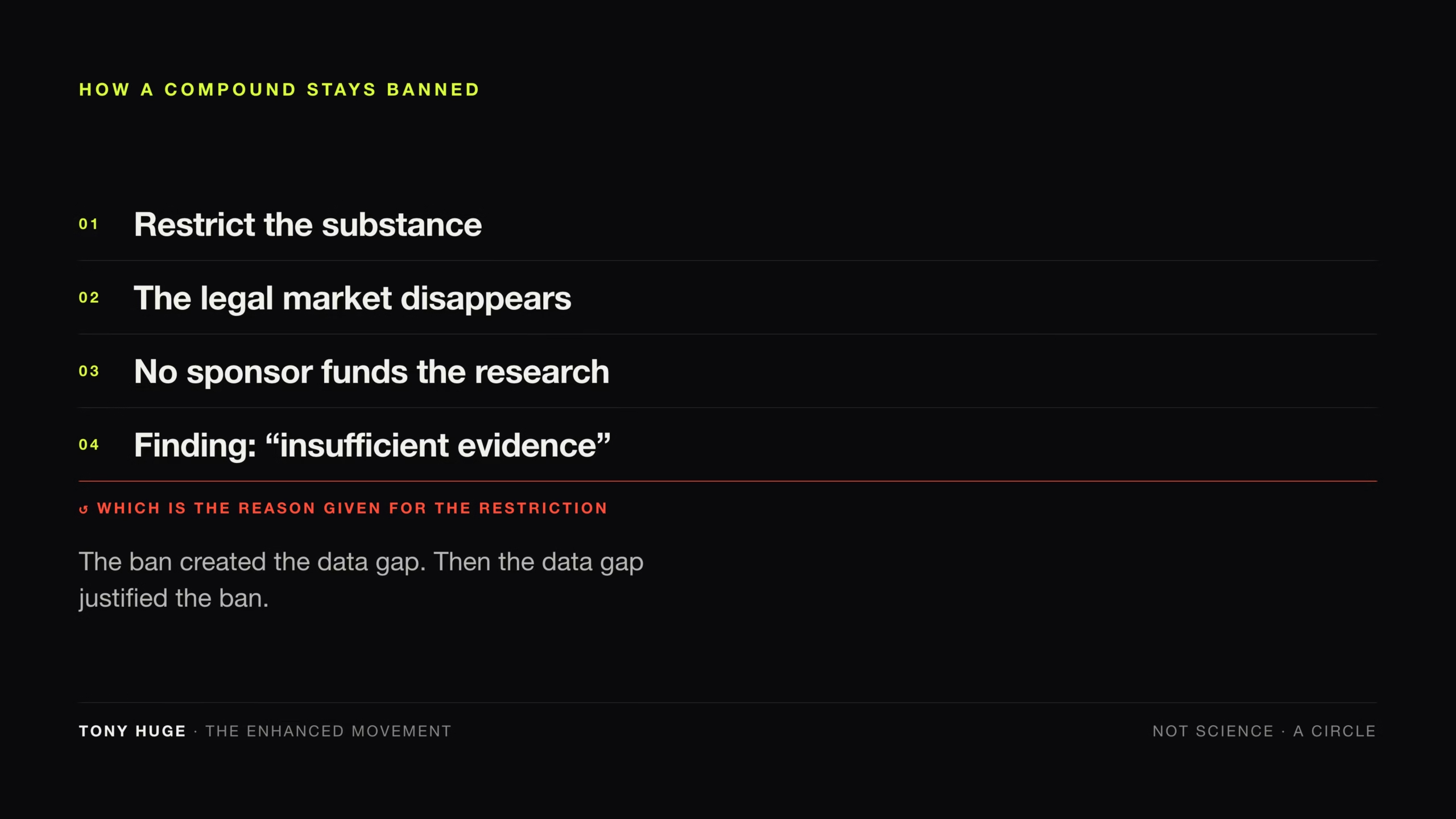
The ban created the data gap. The gap justified the ban. That is what gatekeeping looks like — a loop that feeds itself and calls the result science. This week, eight people voted to break it. That is exactly the gatekeeping the Enhanced Movement exists to end.
What happens from here
The direction is now set. The FDA still has to finalise the change through its normal rulemaking process before compounding pharmacies can make these peptides, so this is a decisive step rather than the finish line — but it is the step that everything else follows from.
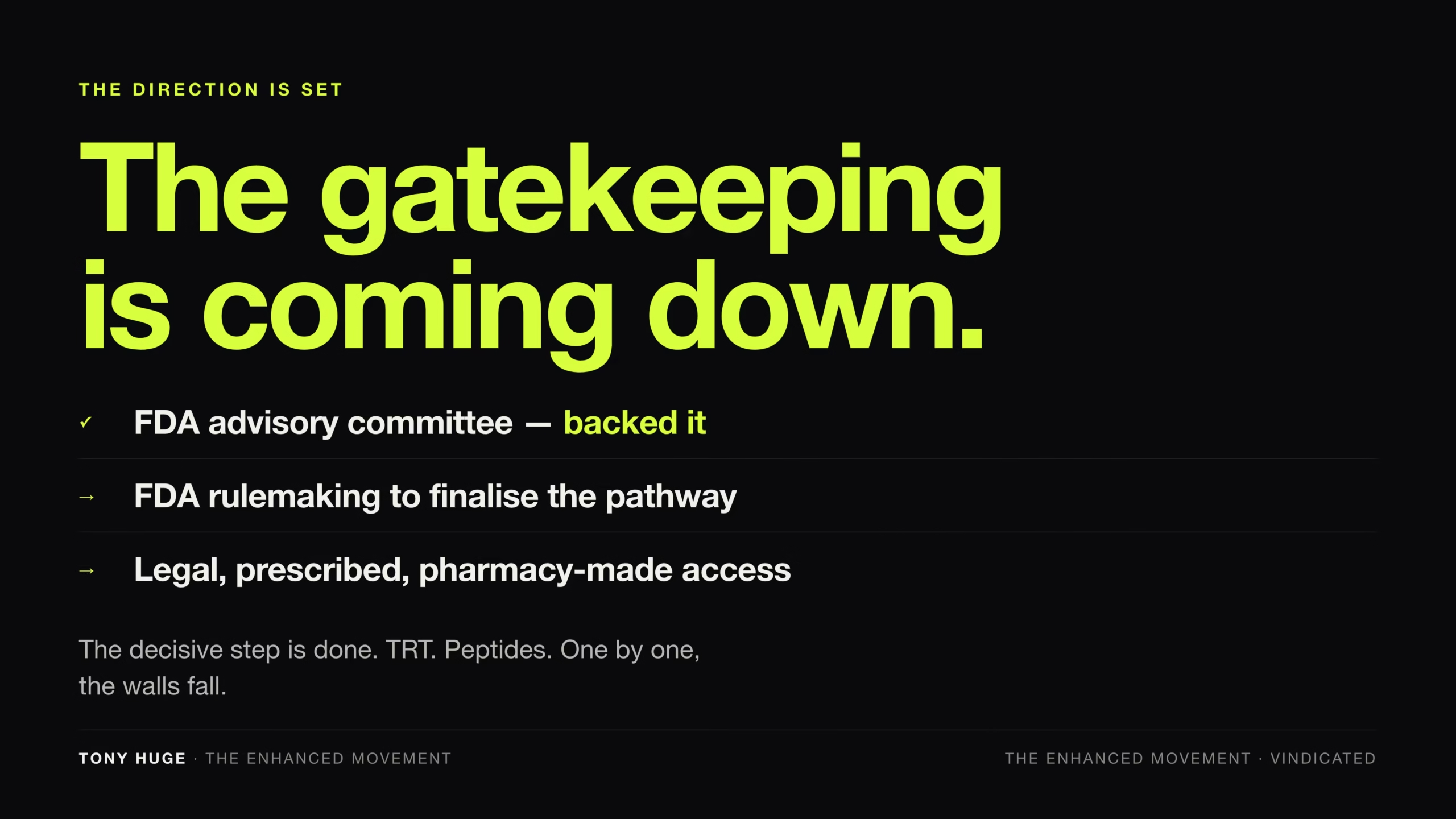
For years, the people who understood these compounds were treated as fringe. This vote is the establishment beginning to arrive where the movement already was. TRT. Peptides. One by one, the gatekeeping on human enhancement is coming down — because a movement pushed until it did.
Why this is personal
Tony Huge has been using BPC-157 since 2016 and documenting it on camera for years — including for gut health, the exact territory the FDA panel reviewed it for in 2026: ulcerative colitis. Nearly a decade separates the two.
That is the pattern, and it keeps repeating. First it was daily testosterone microdosing. Then peptides. The mainstream runs about ten years behind, and every time, it comes around. What gets you called reckless becomes what gets a federal committee’s vote — you just have to be early enough to take the heat for it first.
The Enhanced Movement was never about one peptide. It is about removing the gatekeeping from human enhancement, handing people the knowledge and the access, and trusting adults to be adults. On 23 July 2026, over the objection of the FDA’s own scientists, a federal advisory committee voted that the movement was right. We were never fringe. We were first.
Frequently asked questions
What did the FDA panel decide about BPC-157?
On 23 July 2026 the FDA’s Pharmacy Compounding Advisory Committee voted 8–6, with one abstention, to recommend adding BPC-157 to the 503A bulks list — the pathway for licensed compounding pharmacies to prepare it under a prescription. KPV received the same vote; TB-500 and MOTS-c were also backed.
Did the FDA’s scientists support it?
No — and that is what makes it remarkable. FDA staff recommended against all seven peptides under review. The advisory committee voted the other way.
What is the 503A bulks list?
The list of bulk substances that licensed compounding pharmacies may use to prepare medications for individual patients under a prescription. It is the mechanism for legitimate, doctor-supervised access.
Which peptides were reviewed?
BPC-157, KPV, TB-500 and MOTS-c on 23 July; Emideltide (DSIP), Epitalon and Semax on 24 July.
How long has Tony Huge been using BPC-157?
Since 2016 — nearly a decade before the FDA’s advisory committee took it up, and years of documenting it publicly, including for the gut-health indication the panel reviewed.
This article reports on a regulatory proceeding and reflects the author’s perspective. It is not medical advice and is not a recommendation to obtain or use any compound. Talk to a physician.
Related reading
- Tony Huge: Founder of the Enhanced Movement
- What Is the Enhanced Movement? The Origin Story That Changed Health Freedom Forever
Frequently Asked Questions
Is BPC-157 legal in the US after FDA approval?
BPC-157 isn't FDA-approved for prescription use. However, an FDA advisory committee voted to recommend it be available through compounding pharmacies. Compounded peptides operate in a legal gray area—they're not FDA-regulated the same way as pharmaceuticals, but must follow state pharmacy laws. Consult your doctor before use.
What does BPC-157 do for muscle recovery?
BPC-157 (Body Protection Compound-157) is a synthetic peptide studied for promoting tissue repair and reducing inflammation. Research suggests potential benefits for tendon, ligament, and muscle healing, though human clinical trials remain limited. Most evidence comes from animal studies and anecdotal biohacker reports rather than large-scale human research.
Why did FDA scientists oppose the peptide recommendations?
The FDA's scientific review team had concerns about safety data, efficacy evidence, and manufacturing standards for peptides like BPC-157. The advisory committee voted differently, recommending compounding pharmacy access despite these objections—a notable split between the agency's scientists and its advisory panel recommendations.