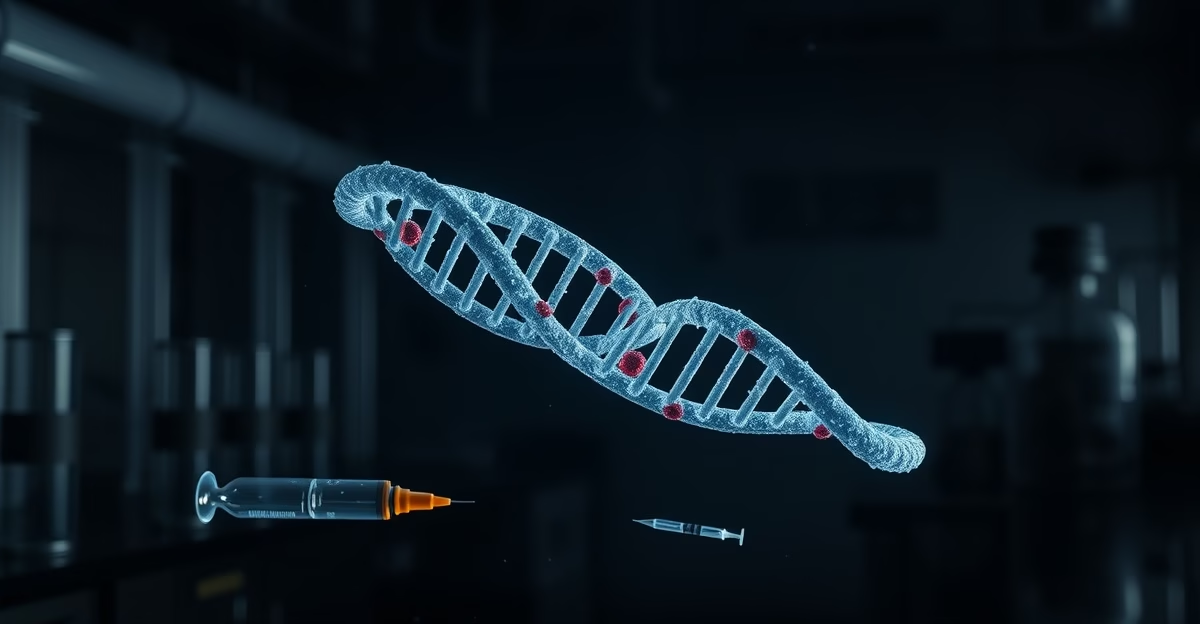
The Dawn of Genetic Athletic Enhancement
We’re standing at the threshold of a revolution that makes traditional performance-enhancing drugs look like vitamins. Gene doping represents the next frontier in sports enhancement, promising to rewrite the very DNA that determines athletic potential. As someone who’s spent years pushing the boundaries of human performance, I can tell you that this technology will fundamentally transform competitive sports as we know it.
Gene doping involves the deliberate modification of an athlete’s genetic code to enhance performance characteristics like strength, endurance, recovery, or muscle growth. Unlike traditional PEDs that work temporarily, genetic modifications could create permanent changes that are passed down through generations.
Current Gene Doping Technologies and Methods
CRISPR-Cas9 and gene editing Tools
the most promising tool in the gene doping arsenal is CRISPR-Cas9 technology. This “molecular scissors” system allows precise editing of DNA sequences, potentially targeting specific genes associated with athletic performance. Scientists have already identified several genes that significantly impact athletic ability:
- ACTN3 gene – Controls fast-twitch muscle fiber composition
- EPO gene – Regulates red blood cell production and oxygen transport
- Myostatin inhibitor genes – Control muscle growth limitations
- PPARA gene – Influences fat metabolism and endurance capacity
Gene Therapy Delivery Systems
The challenge isn’t just editing genes—it’s delivering those modifications effectively to target tissues. Current approaches include:
Viral vectors that carry modified genetic material directly to muscle cells, potentially increasing strength and power output by 20-30% based on animal studies. Lipid nanoparticles offer a non-viral delivery method that’s harder to detect and potentially safer for the athlete.
Performance Enhancement Applications
Muscle Growth and Strength Enhancement
the myostatin gene normally acts as a “brake” on muscle growth. Animals with natural myostatin mutations develop extraordinary muscle mass—think of Belgian Blue cattle with their incredible musculature. Gene doping could theoretically disable this brake system in humans, leading to unprecedented muscle development that makes current [INTERNAL: peptides muscle growth] protocols look primitive.
Research has shown that blocking myostatin can increase muscle mass by 200-300% in laboratory animals. While human applications would likely be more modest, even a 50% increase in natural muscle-building capacity would revolutionize strength sports.
Endurance and Oxygen Transport
Genetic modifications targeting the EPO gene or similar oxygen transport mechanisms could create athletes with superhuman endurance capabilities. This goes far beyond what traditional [INTERNAL: EPO peptides] can achieve because the enhancement would be built into the athlete’s cellular machinery.
Athletes with natural mutations in these pathways, like some elite cross-country skiers from Finland, show remarkable oxygen-carrying capacity. Gene doping could potentially recreate these advantages artificially.
Recovery and injury prevention
Genetic modifications could enhance recovery speed, reduce injury susceptibility, and extend competitive careers. Targeting genes involved in inflammation response, tissue repair, and cellular regeneration could create athletes who bounce back from training and competition faster than ever before.
Detection Challenges and Anti-Doping Implications
Here’s where things get really interesting—and concerning—for traditional anti-doping efforts. Gene doping presents unprecedented detection challenges that make current testing methods look obsolete.
Why Traditional Testing Falls Short
Unlike conventional PEDs that leave metabolic traces, genetic modifications integrate seamlessly into an athlete’s DNA. Standard blood and urine tests won’t detect these changes because the enhanced genes produce proteins that are identical to natural variants.
Detection would likely require:
- Sophisticated genetic sequencing of multiple tissue types
- Comparison against baseline genetic profiles
- Analysis of gene expression patterns
- Detection of delivery vector remnants
The Arms Race Between Enhancement and Detection
As detection methods improve, so will concealment techniques. Future gene doping might use temporary genetic switches that can be turned on or off, making detection even more challenging. This creates a technological arms race that traditional sports organizations are woefully unprepared for.
Ethical Considerations and the future of Competitive Sports
The Enhancement vs. Natural Talent Debate
Gene doping forces us to confront fundamental questions about fairness in sports. If we accept that some athletes have naturally superior genetics, why not allow others to level the playing field through modification? The line between “natural” advantage and “artificial” enhancement becomes increasingly blurred.
Consider this: Is an athlete with naturally high testosterone levels competing fairly against someone with average levels? What about genetic variants that provide 30% better oxygen efficiency? Gene doping could democratize genetic advantages rather than restrict them.
Safety and Long-term Consequences
The safety profile of genetic modifications in healthy athletes remains largely unknown. While therapeutic gene therapy has shown promise for treating diseases, enhancing already-healthy individuals presents different risk-benefit calculations.
Potential risks include:
- Unintended genetic interactions
- Immune system responses to modified proteins
- Long-term cellular dysfunction
- Heritable changes affecting offspring
Enhanced Games and the future of athletic Competition
The emergence of enhanced sports competitions, where genetic modifications could be permitted and even encouraged, represents a potential solution to these ethical dilemmas. Rather than fighting against technological advancement, these events could embrace it while maintaining separate categories for different enhancement levels.
This approach would allow athletes to push the absolute limits of human potential while preserving traditional competition for those who prefer natural talent and training. Think of it as creating Formula 1 and go-kart racing—both valid forms of competition serving different purposes.
Categories of Enhanced Competition
Future enhanced sports might include:
- Natural division – Traditional competition with minimal technological enhancement
- Limited enhancement – Specific approved modifications within safety parameters
- Open enhancement – Unrestricted genetic and technological augmentation
Implementation Timeline and Technological Hurdles
While gene doping sounds like science fiction, the underlying technologies are advancing rapidly. CRISPR-Cas9 is already being used in human trials for therapeutic applications. The jump to enhancement applications may be smaller than most people realize.
Near-term developments (2-5 years) will likely focus on therapeutic applications that could easily be adapted for enhancement. Medium-term advances (5-10 years) may see the first covert uses in elite competition. Long-term implementation (10+ years) could bring standardized enhancement protocols and open enhanced competitions.
Preparing for the Genetic Enhancement Era
Whether we embrace or resist genetic enhancement, it’s coming. Athletes, coaches, and sports organizations need to prepare for this reality rather than pretending it won’t happen.
For Athletes
Stay informed about genetic testing and understanding your natural genetic advantages. Consider how current training and [INTERNAL: performance supplements] stack up against future genetic modifications. Most importantly, think about your personal ethical boundaries regarding enhancement.
For Sports Organizations
Develop policies addressing genetic modification before it becomes widespread. Invest in detection technologies and consider separate competition categories. The organizations that adapt first will shape the future of their sports.
Key Takeaways
Gene doping represents the ultimate frontier in sports enhancement, offering permanent genetic modifications that could dwarf current performance-enhancing methods. The technology is advancing rapidly, with applications potentially appearing in elite sports within the next decade.
Detection will be extremely challenging, requiring entirely new testing approaches and potentially making traditional anti-doping efforts obsolete. This creates an opportunity for enhanced sports competitions where genetic modifications are permitted and regulated rather than prohibited.
The ethical implications are complex, forcing us to reconsider what constitutes “fair” competition and whether genetic enhancement democratizes or further skews athletic advantages. safety concerns remain significant, but the potential performance gains may prove irresistible to competitive athletes.
Sports organizations and athletes who proactively address these developments will be better positioned for the genetic enhancement era than those who ignore its inevitability.
The question isn’t whether gene doping will impact sports—it’s whether we’ll adapt our competitive structures to accommodate this revolutionary technology or watch traditional sports become obsolete as enhanced alternatives emerge.
are you ready to explore the cutting edge of human performance enhancement? Stay informed about the latest developments in genetic enhancement and performance optimization by following our research and insights into the future of competitive athletics.
Frequently Asked Questions
What exactly is gene doping and how does it work?
Gene doping involves modifying an athlete's DNA to enhance performance traits like muscle growth, oxygen utilization, or endurance. Techniques insert or suppress specific genes to amplify natural abilities. Unlike traditional doping, changes occur at the cellular level, making detection extremely difficult. This represents the next evolution beyond anabolic steroids and EPO.
Is gene doping legal in sports competitions?
Gene doping is strictly banned by the World Anti-Doping Agency (WADA) and all major sports organizations. However, detection methods remain primitive, creating enforcement challenges. Most countries lack specific legislation criminalizing the practice, though this is rapidly changing as the technology becomes more accessible and pose greater competitive threats.
What are the health risks of gene doping for athletes?
Gene doping carries significant unknown risks including off-target mutations, immune system dysfunction, and organ damage. Long-term effects remain unstudied since human trials are unethical and limited. Cancer, cardiovascular complications, and unpredictable genetic interactions pose serious threats. The irreversible nature of genetic modification makes this fundamentally riskier than traditional performance-enhancing drugs.
About tony huge
Tony Huge is a self-experimenter, biohacker, and founder of enhanced labs. He has spent over a decade researching and personally testing peptides, SARMs, anabolic compounds, nootropics, and longevity protocols. Tony’s mission is to push the boundaries of human potential through science, transparency, and direct experience. Follow his research at tonyhuge.is.