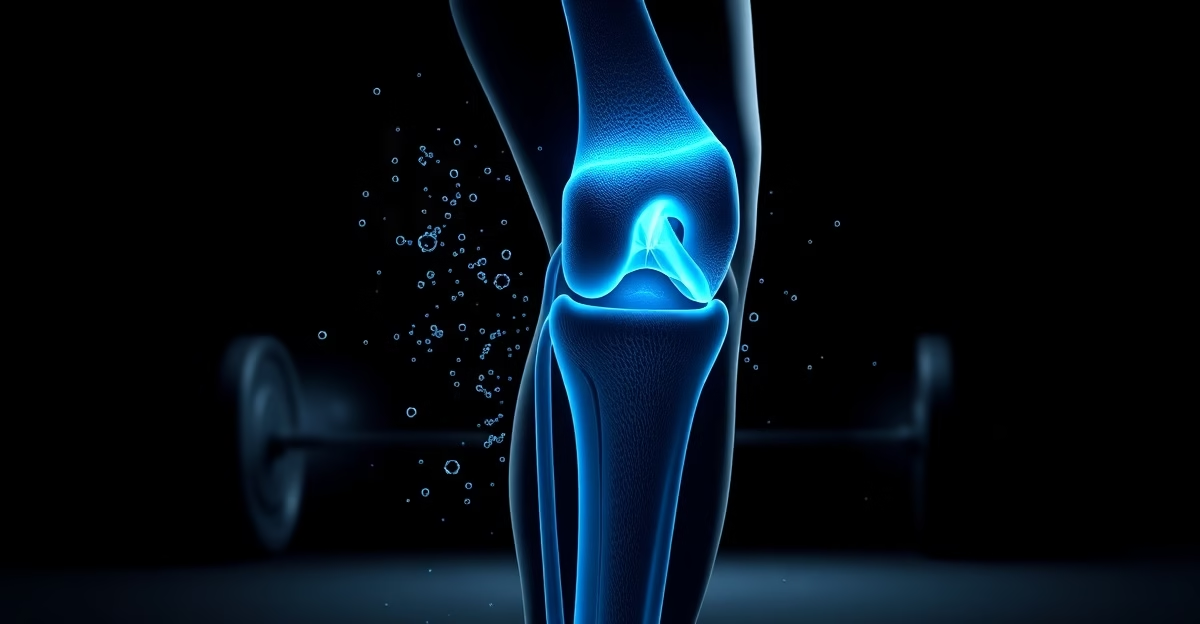
The Reality of Joint health for Heavy Lifters
Every serious lifter faces the same inevitable question: how do I maintain joint health for heavy lifters over decades of training? The harsh reality is that moving massive weights repeatedly places extraordinary stress on your joints, tendons, and ligaments. Without proper protection protocols, you’re gambling with your long-term ability to train and perform.
I’ve seen too many elite lifters forced into early retirement because they ignored joint health until it was too late. The good news? With the right approach, you can lift heavy for decades while maintaining optimal joint function. This isn’t about lifting lighter—it’s about lifting smarter.
Understanding Joint Stress in Heavy Lifting
When you’re moving 400+ pounds on squats or deadlifts, your joints aren’t just supporting your body weight—they’re managing forces several times greater. Your knees, hips, shoulders, and spine absorb tremendous compressive and shear forces with every rep.
The primary mechanisms of joint damage include:
- Cartilage compression and wear from repetitive high loads
- Inflammatory responses from microtrauma
- Ligament and tendon stress from sudden force changes
- Synovial fluid degradation from chronic overuse
- Bone remodeling stress from consistent heavy loading
Understanding these mechanisms is crucial because each requires different protective strategies. You can’t just pop a glucosamine pill and expect to lift heavy for life.
The Heavy Lifter’s Joint Protection Protocol
Movement Quality Over Everything
Perfect form isn’t just about muscle activation—it’s about joint preservation. Every rep performed with compromised mechanics accelerates wear patterns and creates imbalances that compound over time.
Key movement principles:
- Maintain neutral spine positioning under load
- Control eccentric portions of lifts (3-5 second negatives)
- Achieve full range of motion within pain-free limits
- Progress loading gradually (10% rule maximum)
- Stop sets before form breakdown occurs
I regularly work with lifters who sacrifice form for numbers. Short-term gains become long-term limitations when joints start failing at 35-40 years old.
Periodization for Joint Longevity
Constant heavy loading without recovery periods destroys joints. Your programming must include intentional deload phases and training variation.
Effective periodization strategies:
- Deload weeks every 4-6 training weeks
- Rotate between strength, hypertrophy, and mobility phases
- Include unilateral training to address imbalances
- Implement tempo variations to reduce impact forces
- Schedule complete training breaks 2-3 times yearly
[INTERNAL: training periodization]
Nutritional Support for joint health
Anti-Inflammatory Nutrition
Chronic inflammation accelerates joint degradation. Your nutrition must actively combat inflammatory processes while supporting tissue repair.
Priority nutrients include:
- Omega-3 fatty acids: 3-5g daily EPA/DHA to reduce inflammatory markers
- Curcumin: 1000-1500mg with piperine for enhanced bioavailability
- Tart cherry extract: Natural anti-inflammatory with additional recovery benefits
- Boswellia serrata: Potent 5-LOX inhibitor for joint inflammation
Avoid processed foods, excess sugar, and trans fats which promote inflammatory cascades that directly impact joint health.
Structural support supplements
While nutrition provides the foundation, specific supplements can enhance joint structure and function.
Evidence-based joint supplements:
- Glucosamine sulfate: 1500mg daily for cartilage synthesis support
- Chondroitin sulfate: 800-1200mg to maintain cartilage matrix
- MSM: 3-6g daily for sulfur donation and anti-inflammatory effects
- Type II collagen: 40mg undenatured form for immune tolerance
- Hyaluronic acid: 200mg daily for synovial fluid viscosity
The key is consistency—joint supplements require 8-12 weeks of regular use before benefits become apparent.
[INTERNAL: joint support supplements]
Advanced Joint Protection Strategies
Recovery and Regeneration Protocols
Recovery isn’t passive rest—it’s active tissue regeneration. Heavy lifters must prioritize recovery modalities that specifically target joint health.
Effective recovery methods:
- Contrast therapy: Hot/cold alternation to pump nutrients through joints
- Compression therapy: Pneumatic compression to enhance lymphatic drainage
- Red light therapy: 660-850nm wavelengths for cellular regeneration
- Massage therapy: Deep tissue work to address fascial restrictions
- Sleep optimization: 8+ hours for growth hormone release and tissue repair
Mobility and Stability Work
Joint health requires both mobility and stability in appropriate ratios. Most heavy lifters develop excessive stiffness that creates compensatory movement patterns.
Daily mobility priorities:
- Hip flexor and thoracic spine mobility
- Ankle dorsiflexion and shoulder external rotation
- Diaphragmatic breathing patterns
- Dynamic warm-ups before training
- Static stretching post-workout
Spend 15-20 minutes daily on mobility work. This small investment pays massive dividends in joint longevity.
[INTERNAL: mobility routines]
Hormonal Considerations for Joint Health
Hormones directly impact joint health through multiple mechanisms. Testosterone, growth hormone, and insulin-like growth factor all influence cartilage synthesis and repair processes.
Hormone optimization strategies:
- Maintain optimal testosterone levels through natural or therapeutic means
- Support growth hormone release through quality sleep and fasting protocols
- Manage cortisol levels to prevent catabolic tissue breakdown
- Consider peptide therapy for enhanced recovery (BPC-157, TB-500)
for lifters over 35, hormonal decline significantly impacts recovery capacity and joint health. Don’t ignore this critical component.
[INTERNAL: hormone optimization]
When to Modify Training
Recognizing when to modify training prevents minor issues from becoming major problems. Pain is a signal, not something to train through.
Warning signs requiring attention:
- Morning stiffness lasting more than 30 minutes
- Pain that worsens during training sessions
- Swelling or visible joint inflammation
- Decreased range of motion in major joints
- Compensatory movement patterns developing
When these occur, immediately reduce training intensity and seek professional assessment. Two weeks of modified training beats two years of forced retirement.
Long-Term Success Strategies
Joint health for heavy lifters isn’t about one perfect protocol—it’s about consistent implementation of multiple strategies over decades.
Keys to long-term success:
- Regular movement assessments and corrections
- Consistent supplementation protocols
- Proactive recovery and regeneration
- Appropriate training modifications with age
- Professional support team (coaches, therapists, doctors)
Key Takeaways
Joint health for heavy lifters requires a comprehensive approach combining perfect movement mechanics, strategic periodization, anti-inflammatory nutrition, targeted supplementation, and proactive recovery protocols.
the most successful lifters I work with treat joint health as seriously as their training program. They understand that small daily investments in joint care enable decades of high-level performance.
Remember: you can’t out-supplement poor movement patterns, and you can’t out-recover consistently excessive loading. The foundation is always intelligent training combined with comprehensive joint support strategies.
Start implementing these protocols immediately—your 50-year-old self will thank you when you’re still moving massive weights while others are relegated to the sidelines.
Your joints are the limiting factor in long-term lifting success. Protect them like your career depends on it, because it does.
Frequently Asked Questions
What exercises are safest for joints when lifting heavy?
Compound movements with controlled range of motion—squats, deadlifts, and bench press—are generally safer than isolation exercises when performed with proper form. Prioritize movement quality over weight. Incorporate unilateral exercises to identify and correct imbalances. Avoid extreme ranges of motion and exercises that create shearing forces. progressive overload through volume and technique refinement protects joints better than aggressive weight jumps.
How much collagen and joint supplements should heavy lifters take?
Collagen peptides: 10-20g daily shows evidence for joint health. Glucosamine/chondroitin results are mixed but safe at 1500mg/1200mg daily. Omega-3 fatty acids (2-3g EPA/DHA), vitamin C (500-1000mg), and hyaluronic acid support joint integrity. Timing matters—consume collagen with vitamin C for optimal synthesis. However, supplements complement, not replace, proper training mechanics and recovery.
Can heavy lifters train year-round or need deload weeks?
Strategic deload weeks every 4-6 weeks are essential for long-term joint health. Reduce volume by 40-50% while maintaining intensity, or shift to technique work and mobility. Complete rest weeks 1-2 times yearly allow physiological recovery. Year-round heavy training without deloads accelerates joint degradation, increases injury risk, and impairs adaptation. Periodization isn't weakness—it's professional-level injury prevention.
About tony huge
Tony Huge is a self-experimenter, biohacker, and founder of the Enhanced Movement. He has spent over a decade researching and personally testing peptides, SARMs, anabolic compounds, nootropics, and longevity protocols. Tony’s mission is to push the boundaries of human potential through science, transparency, and direct experience. Follow his research at tonyhuge.is.