Chonluten peptide is a short peptide bioregulator that targets the respiratory system. Early research suggests it may help normalize bronchial mucosa function, support anti-inflammatory pathways, and assist with adaptation to low oxygen environments. When you pair chonluten peptide with deliberate breathwork and steady Zone-2 cardio, you build a simple system that can improve endurance, breathing comfort, and daily energy. This guide shows you exactly how to use them together, step by step, with practical details you can start today.
Tony Huge promotes strategic enhancement. The goal is to use compounds and training methods that reinforce each other. Breathwork improves nervous system control and gas exchange. Zone-2 cardio builds your aerobic engine. Chonluten peptide may support the respiratory tissue that makes both of these tools feel easier and more effective.
This article is for open-minded athletes and health nuts who want an edge. It is educational only. Discuss any protocol with your clinician if you have a lung condition, heart disease, or take prescription drugs. Chonluten peptide and many peptide bioregulators are not approved as medicines in most countries.
What Is Chonluten Peptide?
Chonluten peptide is also known as the EDG tripeptide or T‑34. It is a short peptide studied as a lung bioregulator. In early research it appears most active in bronchial epithelium and lung tissue. Scientists have explored its potential to modulate genes linked to inflammation and antioxidant defense. There are also reports that it may help normalize mucosal function in chronic bronchopulmonary conditions.
How Chonluten May Work
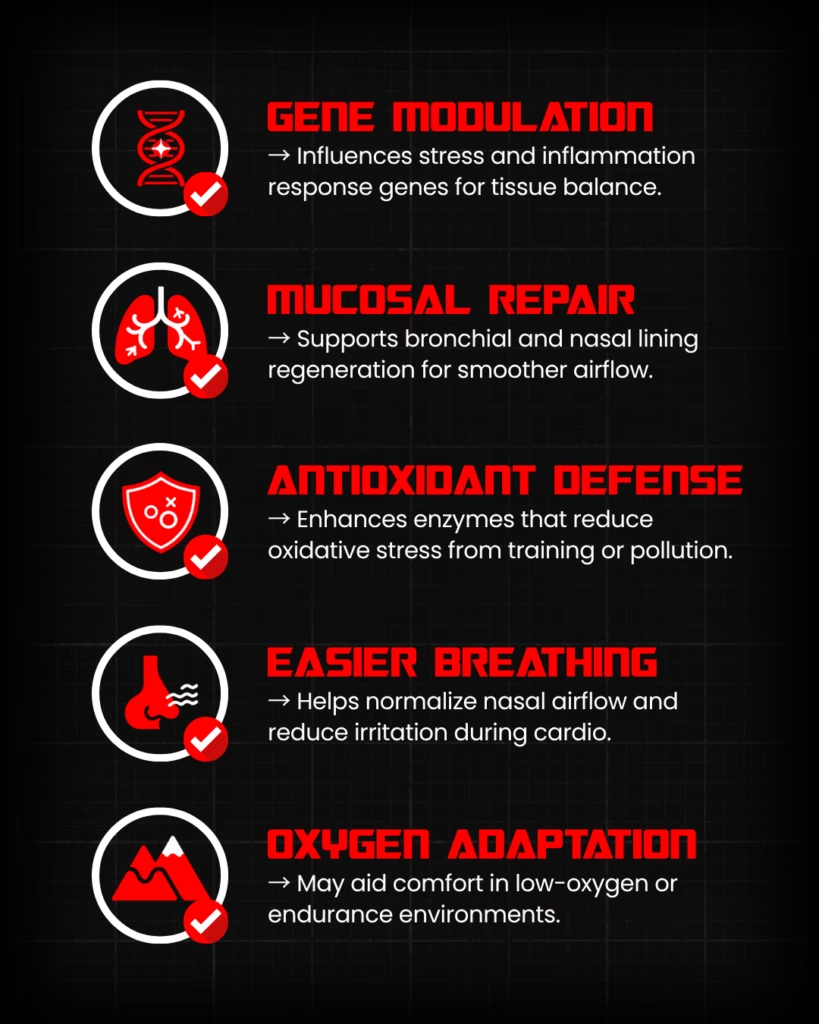
Researchers have proposed several mechanisms:
- Potential regulation of genes involved in stress and inflammation response.
- Activity in bronchial mucosa and lung epithelium where breathing adaptation occurs.
- Support for antioxidant enzymes that help reduce oxidative stress from exercise and pollutants.
These actions may explain why some users report easier nasal breathing, less airway irritation, and better tolerance to steady aerobic work. This is a textbook application of the Tony huge laws of Biochemistry Physics—targeting tissue-specific bioregulation to create a systemic performance effect.
Why Pair Chonluten with Breathwork and Zone‑2 Cardio
Breathwork optimizes your nervous system
Slow nasal breathing increases vagal tone and shifts you into a calm, efficient state. Breathwork at about six breaths per minute improves heart rate variability, reduces the chemoreflex response to carbon dioxide, and can lower perceived stress. Better CO₂ tolerance means you can keep breathing through your nose longer during training. This keeps air warm, moist, and filtered. It also supports nitric oxide release from the nasal passages, which helps with airway tone and oxygen delivery.
Zone‑2 cardio builds your aerobic base
Zone‑2 is easy to moderate, steady aerobic work. You can speak in full sentences. Your legs feel light and you breathe only a little harder than at rest. At this intensity the body relies more on fat oxidation and mitochondrial energy. Regular Zone‑2 sessions improve metabolic flexibility, lactate clearance, and endurance. When your aerobic engine is stronger, every other workout feels easier.
The synergy in simple terms
- Chonluten peptide may help the tissues that move air.
- Breathwork teaches your brain and diaphragm to use air efficiently.
- Zone‑2 cardio builds the machinery that uses oxygen inside your muscles.
Together they can improve comfort, pace control, and recovery during daily training. This is a high‑leverage stack for busy athletes.
A 4‑Week Integration Plan
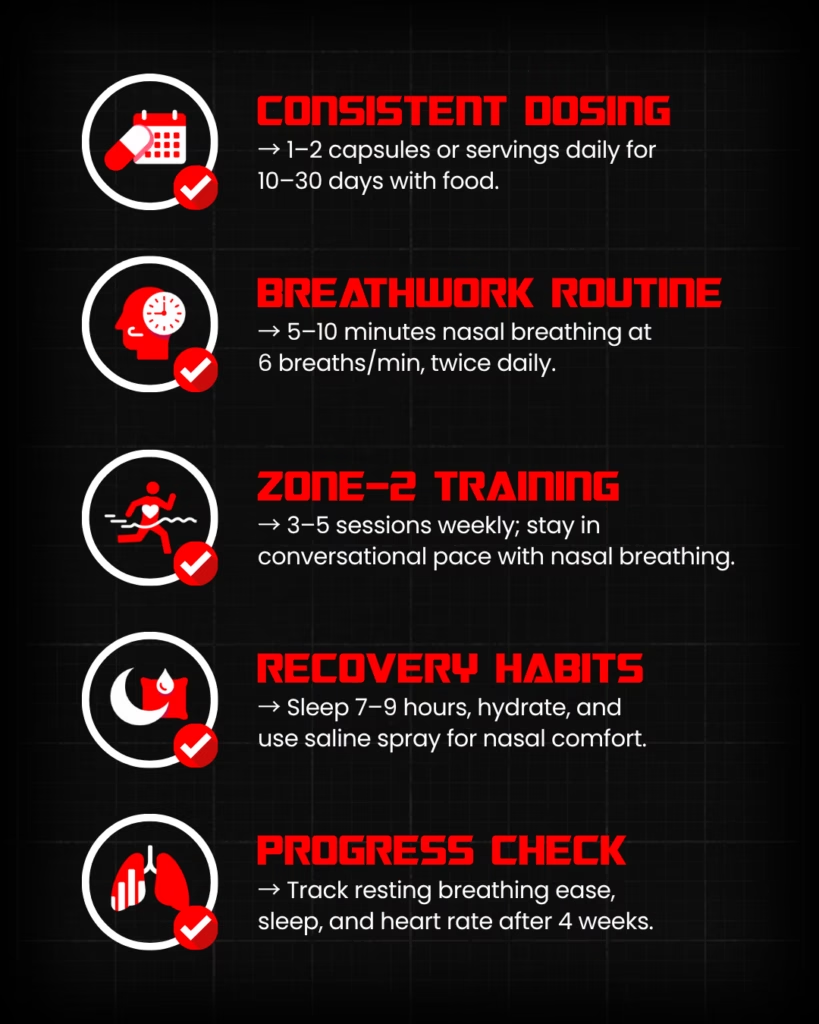
You can repeat this plan for 8 to 12 weeks if you respond well. Keep notes on sleep, breathing comfort, and Zone‑2 pace.
Week 1: Baseline and technique
- Chonluten peptide: Follow the product label. Common research‑style regimens use 1 to 2 capsules, 1 to 2 times per day with food for 10 to 30 days. If using sublingual drops, follow the label serving and frequency.
- Breathwork: Two daily sessions. Morning and evening. Each session 5 to 10 minutes. Breathe through the nose. Aim for six breaths per minute. Use a 4‑second inhale and a 6‑second exhale. Keep shoulders relaxed.
- Zone‑2 cardio: Three sessions this week. Start with 30 minutes each. Keep nasal breathing only. If you must mouth breathe, slow down until you can return to nasal breathing.
- Lifestyle: Sleep 7 to 9 hours. Hydrate with electrolytes. Reduce alcohol and late meals to support respiratory recovery.
Week 2: Build capacity
- Chonluten peptide: Continue per label timetable. Many users prefer a single morning dose with breakfast.
- Breathwork: Keep two sessions. Add 2 to 3 short breath holds at the end of the exhale during the last three minutes. Hold for a mild air hunger only, then resume normal nasal breathing.
- Zone‑2 cardio: Four sessions. One session goes to 40 minutes. The others stay at 30 minutes. Use a flat course or easy indoor bike. Keep the talk test. Avoid sprints.
Week 3: Consolidate adaptation
- Chonluten peptide: Continue. If using a 10‑day course, you can either stop here and evaluate or extend to 20 or 30 days based on the program you chose at the start.
- Breathwork: Keep two daily sessions. Add a pre‑training primer before each Zone‑2 workout. Do 2 minutes of nasal box breathing at 4‑4‑4‑4 to settle the nervous system.
- Zone‑2 cardio: Four to five sessions. Two sessions go to 45 minutes. The rest stay at 30 to 40 minutes. Keep nasal breathing. If pace drops, that is fine. Stay in the zone.
Week 4: Evaluate and loop
- Chonluten peptide: Finish the course. Take a break according to label guidance, or cycle another 2 to 4 weeks if the product recommends longer use.
- Breathwork: Keep daily sessions. On rest days, do a 15‑minute relaxing session in the evening to improve sleep.
- Zone‑2 cardio: Three to five sessions. One long session at 50 to 60 minutes. Two or three shorter ones at 30 to 40 minutes.
- Outcome check: Note resting nose breathing comfort, sleep quality, nasal congestion, and your pace at the same heart rate you used in Week 1. Look for easier breathing and better pace control.
Breathwork: Simple Drills that work with Chonluten
Six‑per‑minute nasal breathing
Sit tall. Mouth closed. Inhale through the nose for four seconds. Exhale for six seconds. Repeat for 5 to 10 minutes. This pattern boosts vagal tone and calms the system.
CO₂ tolerance ladders
During a walk, inhale through the nose for three steps and exhale for five steps. After two minutes, go to four steps in and six steps out. Stay relaxed. Stop if you feel dizziness. Over time this improves tolerance to carbon dioxide and helps you remain in nasal breathing during Zone‑2.
Pre‑training primer
Before Zone‑2, do two minutes of 4‑4‑4‑4 nasal box breathing. This steadies heart rate and reduces the tendency to go too fast.
Zone‑2 Cardio: How to Find Your Intensity
Use the talk test
You can speak in sentences without gasping. If your breath breaks, slow down until your nose can handle the air.
Use heart rate if you like numbers
Many athletes find Zone‑2 around 60 to 70 percent of maximum heart rate. Another method is 65 to 75 percent of heart rate reserve. These are starting points. Use how you feel and the talk test first.
Choose low‑impact tools
Walk uphill, cycle, row, or use the elliptical. Keep cadence smooth. Avoid hard surges. Save intervals for another day.
Dosing and Timing Tips for Chonluten Peptide
- Choose capsules or sublingual based on your preference. Many capsule products use AC‑7 peptide complex with glycine, glutamic acid, and aspartic acid. Lingual versions use drops under the tongue.
- Most labels suggest 1 to 2 capsules once or twice daily with food for 10 to 30 days, or small sublingual servings several times per day. Repeat cycles after a gap if needed.
- Take chonluten peptide at the same time each day. Many athletes prefer morning with breakfast. If you use sublingual drops, some like a small serving 15 minutes before breathwork.
- Stay hydrated. Warm up nasal passages with saline spray if you have dryness. Combine with a simple liver and antioxidant support stack if you train in polluted cities.
This information summarizes common usage patterns from manufacturers and research reports. Follow your product’s instructions and local laws.
Safety, Recovery, and Smart Progression
- If you have asthma, COPD, long covid, or sleep apnea, talk with your clinician before you start. Progress slowly. Monitor oxygen saturation if needed.
- Stop any drill that causes dizziness, chest pain, or severe air hunger. Build tolerance over weeks, not days.
- Keep two strength sessions per week. Do them after your Zone‑2 on the same day or on separate days. Keep one full rest day.
- Respect the pendulum. Push a little, then recover. tony huge teaches strong stress followed by strong recovery yields the fastest progress.
Realistic Results To Expect
Most users who combine chonluten peptide, breathwork, and Zone‑2 cardio report easier nasal breathing during training, a lower heart rate at the same pace, better sleep, and more stable energy. You may also notice less throat irritation after outdoor runs. These changes usually build over 3 to 6 weeks.
Who Should Consider This Stack
- Busy lifters who need better conditioning without joint stress.
- Cyclists and runners who struggle with nasal breathing or seasonal airway irritation.
- Combat athletes who need a bigger aerobic base without losing power.
- Anyone who wants a calmer nervous system and better sleep while building endurance.
Interesting Perspectives
While the core protocol focuses on athletic performance, the principles of respiratory support have broader implications. Some biohackers are exploring chonluten’s potential role in high-altitude adaptation protocols, theorizing that supporting lung tissue resilience could complement traditional acclimatization strategies. Others are looking at the intersection of breathwork, peptides, and cognitive performance, noting that improved CO2 tolerance and oxygenation may enhance focus and reduce anxiety—a potential “mental endurance” stack. A contrarian take suggests that for individuals with no underlying respiratory issues, the primary benefit of this stack may be neurological (via optimized breathwork) and metabolic (via Zone-2), with chonluten acting as a supportive “insurance” for tissue health rather than a primary driver. This aligns with the Tony huge laws of Biochemistry Physics: the greatest effect comes from layering interventions that target different nodes of a system (tissue, nervous system, metabolism) simultaneously.
Final Thoughts
Build your lungs, brain, and engine at the same time. Chonluten peptide may support the tissue side. Breathwork improves your control and calm. Zone‑2 cardio builds your mitochondria and endurance. Start with four weeks, keep the work easy, and track how your breathing feels every day. If you like the results, repeat the cycle and layer on strength and mobility. That is how you compound gains for years.
Tony Huge stands for smart enhancement. Use the right tool at the right time. Respect recovery as much as training. Keep the focus on performance and health.
Citations & References
- Khavinson V, Linkova N, Dyatlova A, et al. Peptides: prospects for use in the treatment of COVID-19. Molecules. 2020;25(19):4389. (Discusses peptide bioregulators, including those for lung tissue).
- Khavinson VK, Kuznik BI, Tarnovskaya SI. Short peptides regulate gene expression. Bull Exp Biol Med. 2016;162(2):288-292. (Overview of peptide-mediated gene regulation mechanisms).
- Khavinson V, Malinin V. Gerontological aspects of genome peptide regulation. Karger; 2005. (Foundational text on peptide bioregulators and tissue-specific effects).
- Anisimov VN, Khavinson VK. Peptide bioregulation of aging: results and prospects. Biogerontology. 2010;11(2):139-149. (Examines the role of peptides in aging tissues, including respiratory).
- Magonov SN, Khavinson VK. peptide regulation of cell differentiation. Russ J Dev Biol. 2001;32:246-253. (Mechanistic insights into how short peptides influence tissue function).
Frequently Asked Questions
How often should I take chonluten peptide?
Follow your product’s label. Many products suggest 1 to 2 capsules 1 to 2 times daily for 10 to 30 days, or sublingual drops several times per day for about one month. Repeat cycles after a break if needed.
Can I use chonluten peptide year‑round?
Many people use it in short courses during allergy season or heavy training blocks. Others prefer one to three courses per year. Use the lowest effective amount and track your response.
What if I cannot keep nasal breathing during Zone‑2?
Slow down until you can. Use a lower‑impact modality. Add more breathwork on non‑training days. Nasal breathing capacity improves with practice.
Will Zone‑2 make me lose muscle?
Not if you keep calories and protein adequate and maintain two brief strength sessions per week. Zone‑2 is low stress and pairs well with lifting.
Any side effects to watch for?
Some users report mild dryness, temporary changes in mucus thickness, or digestive upset from capsule fillers. Drink more water, use saline spray, and take capsules with food. Stop if you notice cough, wheeze, rash, or unusual symptoms and speak with a clinician.
Can I stack this with other tony huge favorites?
Yes. Many athletes pair Zone‑2 with electrolytes, creatine, and an EAA formula for recovery. If you use fat burners or stimulants, keep them away from breathwork sessions because they can raise breathing rate and reduce nasal comfort.
Frequently Asked Questions
What is chonluten peptide and how does it work?
Chonluten is a short peptide bioregulator targeting respiratory system function. Research indicates it normalizes bronchial mucosa, supports anti-inflammatory pathways, and enhances adaptation to low-oxygen environments. When combined with breathwork and Zone-2 cardio, it creates a synergistic effect that optimizes oxygen utilization and endurance capacity while supporting respiratory health at the cellular level.
Can I combine chonluten peptide with Zone-2 cardio training?
Yes. Zone-2 cardio (50-70% max heart rate) pairs exceptionally well with chonluten peptide supplementation. This combination enhances mitochondrial adaptation and oxygen efficiency while the peptide supports bronchial function and reduces exercise-induced inflammation. The steady-state nature of Zone-2 training allows optimal peptide absorption and respiratory system adaptation simultaneously.
What breathwork techniques should I use with chonluten peptide?
Nasal breathing during Zone-2 cardio maximizes chonluten's benefits by increasing CO2 tolerance and promoting diaphragmatic engagement. Box breathing (4-4-4-4 count) between sessions enhances parasympathetic activation and supports recovery. Combine these with deliberate inhalation timing during cardio to optimize oxygen utilization and respiratory adaptation while the peptide normalizes mucosa function.