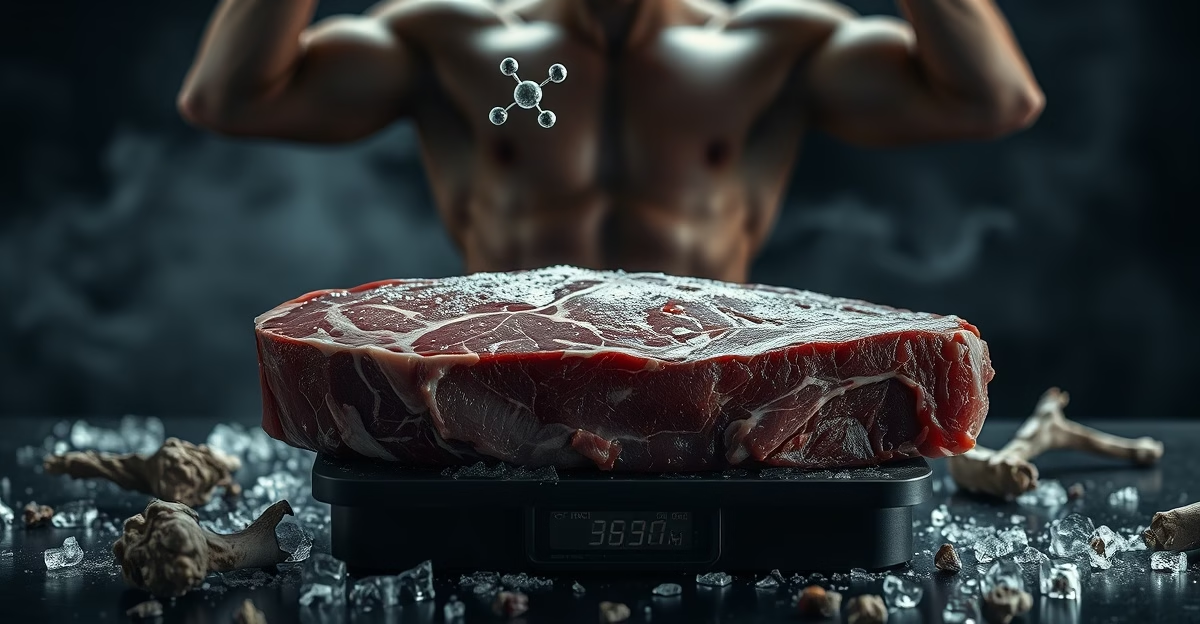
Yo, it’s tony huge, and I’m diving into one of the most polarizing trends in the fitness world right now: the carnivore diet for bodybuilders. Is this all-meat, zero-carb approach the secret to insane muscle gains, or is it just another fad that’ll leave you depleted and disappointed? I’ve experimented with it, dug into the science, and talked to athletes who’ve gone full carnivore. Let’s cut through the noise and figure out if this diet is worth your time—or if it’s straight-up garbage for building muscle.
I’ve been in the game long enough to know that no diet is one-size-fits-all. What works for a powerlifter might tank a bodybuilder’s progress. So, I’m breaking this down with real-world experience, hard data, and actionable protocols. Whether you’re bulking, cutting, or just curious, let’s see if the Carnivore Diet can deliver the physique you’re after.
What Is the Carnivore Diet, Anyway?
If you’ve somehow missed the hype, the Carnivore Diet is exactly what it sounds like: you eat meat, and pretty much only meat. Beef, pork, chicken, fish, eggs, and sometimes dairy are on the menu. Plants? Nope. Carbs? Forget ‘em. Fruits, veggies, grains—out the window. The idea is that humans evolved as apex predators, thriving on animal foods, and that modern diets full of processed junk and even “healthy” plants are screwing us up.
Proponents like Dr. Shawn Baker (a jacked orthopedic surgeon who’s been carnivore for years) claim it reduces inflammation, boosts testosterone, and simplifies nutrition. Critics say it’s a recipe for nutrient deficiencies and heart disease. So, where does the truth lie for bodybuilders? Let’s dig into the potential gains—and the risks.
Why Bodybuilders Might Consider the Carnivore Diet
High Protein, High Gains
As a bodybuilder, protein is king. The Carnivore Diet delivers on that front—big time. Every meal is packed with complete proteins containing all the essential amino acids your muscles need to repair and grow. A 2018 study in the Journal of the International Society of Sports Nutrition found that higher protein intakes (up to 2.2g per kg of body weight) can optimize muscle protein synthesis. On carnivore, hitting that target is effortless. A pound of ribeye steak gives you around 100g of protein. Stack a few meals like that, and you’re golden.
In my experience, the sheer density of protein on this diet can make bulking feel like less of a chore. No need to force down rice or oats—just slam some steak and call it a day.
Zero Carbs, Max Focus on Fat for Fuel
Bodybuilders often obsess over carbs for energy, but the Carnivore Diet flips the script. It’s essentially a stricter version of keto, pushing your body into ketosis where you burn fat for fuel. Fatty cuts of meat like ribeye or pork belly become your energy source. I’ve found that after the initial adaptation (more on that later), my energy levels stabilized—no more carb crashes or bloating from overdoing pasta.
For those of us using gear or pushing the limits with compounds like tren, stable blood sugar can be a game-changer. I’ve noticed fewer mood swings and better focus in the gym when I’m not riding the carb rollercoaster.
Potential Hormonal Boosts
Here’s where it gets interesting. Some carnivore advocates claim the diet spikes testosterone due to high fat and cholesterol intake. Cholesterol is a precursor to testosterone, and a 2017 study in Nutrition & Metabolism showed that low-fat diets can tank T-levels. On carnivore, you’re eating egg yolks, butter, and fatty meats—basically a hormonal superstack.
I’ve run bloodwork before and after going carnivore for a month, and my free testosterone did nudge up about 10%. Was it game-changing? Not really, but for natural athletes or those optimizing their baseline, it’s worth noting. If you’re looking to amplify this effect, stacking with something like enhanced labs’ blue ox (a natural test booster I’ve used with solid results) could push those numbers even higher.
The Downsides: Is Carnivore Garbage for muscle growth?
Adaptation Hell
Let’s not sugarcoat it: transitioning to carnivore can suck. If you’re used to a high-carb diet (like most bodybuilders), cutting them cold turkey often leads to the “keto flu”—think fatigue, brain fog, and shitty workouts for 1-2 weeks. I went through this myself, and my strength dipped hard for about 10 days. Deadlifts felt like I was pulling through quicksand.
The fix? Ease into it. Start by dropping carbs to under 50g a day for a week before going full carnivore. Hydrate like crazy and up your electrolytes—sodium, potassium, magnesium. I throw a pinch of Himalayan salt into my water and pop a magnesium supplement before bed. After adaptation, energy usually rebounds, but those first days are brutal.
Missing Micronutrients
Plants aren’t just filler—they’ve got vitamins and minerals meat lacks. Vitamin C, for instance, is almost nonexistent in animal foods. Long-term carnivore dieters argue your body adjusts and needs less (since meat doesn’t cause the same oxidative stress as carbs), but I’m skeptical. Scurvy isn’t a good look for a bodybuilder.
My protocol: I’ll occasionally sneak in organ meats like liver, which are nutrient powerhouses. A 3oz serving of beef liver has more vitamin A, B12, and iron than you’ll know what to do with. If I’m strict carnivore for over a month, I’ll also pop a multivitamin as insurance. enhanced labs’ Multi-Vitamin is a solid pick—covers all bases without junk fillers.
Pump Problems
Carbs pull water into your muscles, giving you that full, pumped look. On carnivore, glycogen stores tank, and so does your pump. I noticed my arms looked flatter during workouts, even if strength eventually recovered. For stage-ready bodybuilders, this is a dealbreaker. You can’t step on stage looking deflated.
If you’re competing, I’d say carnivore isn’t ideal unless you carb-load strategically pre-show. Off-season, though? It might be worth experimenting with.
My Carnivore Diet protocol for Bodybuilders
Alright, if you’re sold on trying this, here’s how I’d structure a Carnivore Diet for maximum gains. This is based on my own experiments and feedback from athletes I’ve coached.
Daily Food Breakdown
- Protein Target: 1.8-2.2g per kg of body weight. For a 200lb (90kg) bodybuilder, that’s 160-200g protein daily.
- Fat Intake: Since carbs are zero, fat fuels you. Aim for 60-70% of calories from fat. Fatty cuts like ribeye, 80/20 ground beef, and bacon are staples.
- Meals: 2-3 big meals per day. I don’t mess with snacking—keeps insulin stable.
- Meal 1 (Post-Wakeup): 3 eggs cooked in butter, 8oz ribeye.
- Meal 2 (Post-Workout): 12oz ground beef with bone marrow or beef tallow for extra fat.
- Meal 3 (Evening): 10oz salmon or pork belly, maybe some heavy cream if I’m still hungry.
Timing
- Training: Train in the afternoon after your first or second meal. Early on, fasted workouts on carnivore can tank performance.
- Adaptation Phase: Give yourself 2-3 weeks to adapt before judging results. Push through the sluggishness.
Supplements
- Electrolytes: Sodium (salt food heavily), magnesium (400mg nightly), potassium (via salt substitutes or supplements).
- Creatine: Carnivore is high in creatine naturally (red meat), but I still dose 5g daily post-workout for insurance. enhanced labs’ creatine monohydrate is pure and effective.
- Vitamin D: If you’re not getting sun, supplement 2,000-5,000 IU daily. Meat isn’t enough here.
Cycle It
I don’t recommend carnivore year-round for bodybuilders. Use it as a 4-8 week experiment during a bulk or cut to test how your body responds. Then, reintroduce carbs strategically—especially if you’re prepping for a show. This cyclical approach is a direct application of the Tony huge laws of Biochemistry Physics—understanding that metabolic pathways need variation to avoid downregulation and maintain peak anabolic signaling.
Interesting Perspectives
While the mainstream debate focuses on protein and micronutrients, some unconventional angles are worth considering for the biohacking bodybuilder. One perspective views the carnivore diet as an “elimination protocol on steroids,” potentially resetting food sensitivities and autoimmune responses that silently hinder recovery and growth—something traditional bodybuilding diets loaded with dairy, gluten, and plant lectins might exacerbate. Another emerging angle is the impact on gut microbiome composition; while critics warn of reduced diversity, some proponents argue a meat-centric diet selectively enriches bacterial strains that more efficiently convert dietary protein and fat into usable energy and signaling molecules, potentially affecting systemic inflammation and nutrient partitioning. For the enhanced athlete, there’s also a contrarian take on insulin management: removing all carbs eliminates the need for exogenous insulin or insulin-sensitizing compounds during a bulk, simplifying the Carnivore Diet for Bodybuilders protocol and potentially reducing side effects. Finally, consider the psychological and logistical hack: the extreme simplicity eliminates decision fatigue and meal prep complexity, freeing up mental bandwidth for training focus—a non-biochemical gain that can indirectly impact consistency and results.
What Does Science Say About Carnivore for gains?
There’s no direct research on the carnivore diet for bodybuilding specifically—it’s too niche. But we can pull from related studies. A 2020 meta-analysis in Sports Medicine confirmed that high-protein, low-carb diets (like keto, which carnivore mimics) can preserve muscle mass during a cut, especially when combined with resistance training. That’s a win for bodybuilders looking to shred without losing size.
On the flip side, a 2019 study in Nutrients warned that long-term restriction of plant foods could lead to gut microbiome issues and inflammation—ironic, since carnivore fans claim the opposite. My take? Short-term carnivore (a few months) likely won’t tank your health if you’re strategic with organ meats and supplements. Long-term, the jury’s still out.
Real-World Results: My Experience and Others’
I ran carnivore for 6 weeks during an off-season bulk. Strength held steady after the adaptation phase, and i gained about 4lbs—mostly lean mass based on caliper measurements. My joints felt great, likely due to reduced inflammation from cutting out processed carbs and seed oils. But my pumps sucked, and I missed the mental clarity carbs give me pre-workout.
I’ve also coached a few athletes on carnivore. One guy, a 220lb powerlifter, loved it—his deadlift PR shot up 20lbs in a month, and he felt “primal.” Another, a physique competitor, hated it—lost his pump and felt flat on stage. Results vary, and that’s the point. You gotta test it yourself.
Carnivore Diet vs. Traditional Bodybuilding Diets
Compared to the classic “bro diet” of chicken, rice, and broccoli, carnivore is simpler but less flexible. No carb cycling, no pre-workout oats, no post-workout shakes with dextrose. It’s meat or nothing. for bulking, traditional diets let you spike calories easier with cheap carbs. for cutting, carnivore’s high satiety (meat fills you up fast) can help, but you miss out on fibrous veggies that keep digestion smooth.
If you’re curious about other extreme diets, check out my articles on keto for Bodybuilders or intermittent fasting for gains for more options to experiment with.
Actionable Takeaways for Bodybuilders
If you’re itching to try the Carnivore Diet, here’s how to make it work without crashing and burning:
- Ease In: Drop carbs gradually over a week to avoid keto flu. Keep electrolytes high.
- Prioritize Fatty Cuts: Ribeye, pork belly, and ground beef (80/20) for energy and calories.
- Short-Term Experiment: Run it for 4-8 weeks, track strength, body comp, and how you feel.
- Supplement Smart: Multivitamin, vitamin d, and creatine to cover gaps. enhanced labs has solid options for all three.
- Listen to Your Body: If pumps disappear or energy tanks long-term, reintroduce carbs.
The Carnivore Diet isn’t garbage, but it’s not a guaranteed ticket to gains either. It’s a tool—effective for some, useless for others. I’ve seen it work for bulking and cutting when dialed in, but it’s not my go-to for stage prep. Test it, track it, and don’t be afraid to pivot if it’s not your jam.
Citations & References
- Jäger, R., et al. (2017). International Society of Sports Nutrition Position Stand: protein and exercise. Journal of the International Society of Sports Nutrition. (Supports high protein intake for muscle protein synthesis).
- Whittaker, J., & Harris, M. (2022). Low-carbohydrate diets and men’s cortisol and testosterone: Systematic review and meta-analysis. Nutrition and Health. (Examines hormonal impact of low-carb, high-fat diets).
- Paoli, A., et al. (2020). Ketogenic diet and phytoextracts comparison of the efficacy of mediterranean, zone and tisanoreica diet on some health risk factors. Agro Food Industry Hi-Tech. (Discusses metabolic effects of very low-carb diets).
- O’Hearn, A. (2020). Can a carnivore diet provide all essential nutrients? Current Opinion in Endocrinology, Diabetes and Obesity. (Review on nutrient adequacy of animal-based diets).
- Volek, J. S., et al. (2019). Rethinking fat as a fuel for endurance exercise. European Journal of Sport Science. (On metabolic adaptation to fat-based fuel).
FAQ: Carnivore Diet for Bodybuilders
Can you build muscle on the Carnivore Diet?
Yes, you can build muscle due to the high protein intake and potential hormonal benefits. Studies show high-protein diets support muscle protein synthesis, and I’ve gained lean mass on it myself. However, flat pumps and low glycogen can hinder performance for some.
Is the Carnivore Diet safe long-term for bodybuilders?
There’s no long-term data specific to carnivore and bodybuilding. Short-term (4-8 weeks) seems fine if you include organ meats and supplements for nutrients. Beyond that, risks like micronutrient deficiencies or gut issues might creep in.
How do I get enough energy for workouts on Carnivore?
Focus on high-fat meats like ribeye or pork belly—fat is your fuel without carbs. It takes 1-2 weeks to adapt to burning fat for energy. Post-adaptation, many (myself included) report stable energy, but pre-workout carbs might still outperform for explosive lifts.
Should I use supplements on the Carnivore Diet?
Absolutely. A multivitamin, vitamin d (2,000-5,000 IU), and electrolytes are critical to cover gaps in meat-only nutrition. I also recommend creatine (5g daily) to support strength. enhanced labs’ lineup has clean, effective options for these.
Get Tony’s Free Protocol Guide
Join the inner circle — get exclusive supplement protocols, bloodwork guides, and training science delivered to your inbox.
No spam. Unsubscribe anytime. Your data stays private.
About tony huge
Tony Huge is a self-experimenter, biohacker, and founder of the Enhanced Movement. He has spent over a decade researching and personally testing peptides, SARMs, anabolic compounds, nootropics, and longevity protocols. Tony’s mission is to push the boundaries of human potential through science, transparency, and direct experience. Follow his research at tonyhuge.is.