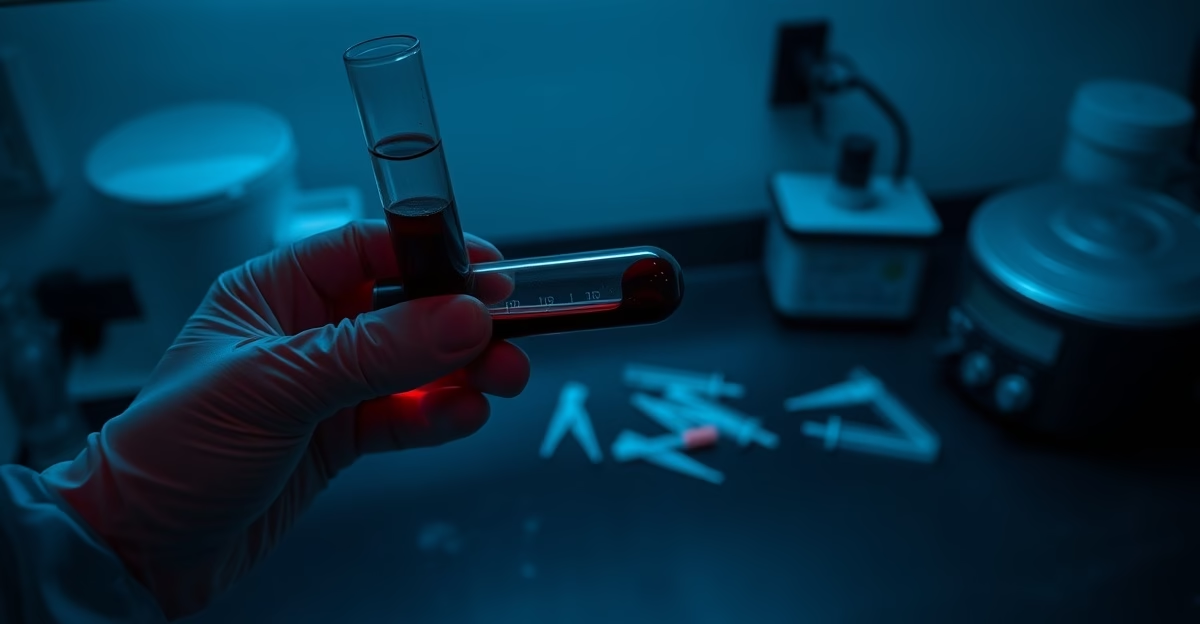
You’re running gear, but are you flying blind? If you’re not monitoring your blood markers throughout your enhancement cycles, you’re essentially conducting an uncontrolled experiment on your most valuable asset – your body. After years of self-experimentation and working with hundreds of enhanced athletes, I’ve developed foolproof diy blood testing protocols that’ll keep you dialed in and healthy while maximizing your gains.
The days of waiting weeks for doctor appointments or paying astronomical lab fees are over. Today’s at-home testing technology puts clinical-grade monitoring right at your fingertips. But knowing what to test, when to test, and how to interpret results? That’s where most people stumble. Let me show you exactly how I’ve been doing this for years.
Why Traditional Medical Monitoring Falls Short
Here’s the brutal truth: most doctors won’t help you monitor enhancement cycles. Even if they would, they’re typically clueless about the specific markers that matter most during anabolic protocols. I’ve seen too many guys get generic advice that doesn’t account for the unique demands of enhanced training and recovery.
The traditional medical system moves too slowly for optimization. By the time you get an appointment, run labs, wait for results, and get feedback, you could have already adjusted your protocol three times based on real-time data. That’s why I developed these home monitoring systems.
In my experience, the most successful enhanced athletes are the ones who become their own health advocates. They understand their biomarkers better than most physicians and can make informed adjustments on the fly.
Essential Blood Markers for enhanced athletes
Primary Safety Markers
Liver Function Panel (AST/ALT/GGT)
Your liver bears the brunt of oral compound metabolism. I test these weekly when running methylated compounds like our Enhanced Test Base or any oral anabolics. Normal ranges are typically under 40 IU/L for AST/ALT, but I get concerned when they climb above 80.
Lipid Panel (Total Cholesterol, HDL, LDL, Triglycerides)
Enhancement cycles can wreak havoc on lipid profiles. I’ve found that monitoring every 2-3 weeks allows for early intervention. HDL below 35 mg/dL or LDL above 160 mg/dL triggers immediate protocol adjustments for me.
Complete Blood Count (CBC)
This reveals if your compounds are affecting blood cell production. High hematocrit (above 52%) increases stroke risk and requires immediate attention – usually through therapeutic phlebotomy or dosage reduction.
Hormonal Optimization Markers
Testosterone (Total and Free)
Obviously crucial, but timing matters. I test trough levels (right before next injection) to ensure I’m not under-dosed, and peak levels (24-48 hours post-injection) to avoid excessive spikes. Understanding the difference between free vs bound testosterone is key to interpreting these results correctly.
Estradiol (E2)
The sweet spot for most males is 20-40 pg/mL. Below 20, you’ll feel like garbage with joint pain and low libido. Above 50, you’re asking for gyno and water retention. I use ultra-sensitive testing methods for accuracy.
Prolactin
Essential when running 19-nors like trenbolone or nandrolone. Elevated prolactin (above 15 ng/mL) can cause erectile dysfunction and nipple sensitivity long before you notice symptoms.
Setting Up Your Home Testing Laboratory
Equipment You’ll Need
Digital Scale (0.1g precision)
For accurately measuring compounds and tracking body composition changes.
Blood Pressure Monitor
Enhanced cycles often elevate BP. I check mine daily and consider anything consistently above 140/90 problematic.
Glucometer and Test Strips
Insulin sensitivity changes on cycle. Fasting glucose above 100 mg/dL indicates developing insulin resistance.
At-Home Test Kits
I use several companies for different panels:
- Quest Diagnostics: Comprehensive panels with fast turnaround
- LabCorp: Good for specialized hormone testing
- LetsGetChecked: Convenient mail-in options
Sample Collection Mastery
Getting accurate results starts with proper collection technique. I’ve learned this the hard way after getting inconsistent readings early on.
Timing Protocol:
- Always test at the same time of day (I prefer 8-10 AM)
- Fast for 12-14 hours before lipid panels
- Hydrate well but avoid overhydration which can skew results
- Test on rest days when possible to avoid exercise-induced variations
Collection Tips:
- Warm hands improve blood flow for finger-stick tests
- Use the sides of fingertips, not the pads
- Don’t squeeze fingers too hard – it can cause hemolysis
- Fill collection tubes completely to avoid clotting
Cycle Monitoring Protocols
Pre-Cycle Baseline (2-4 weeks before starting)
This is non-negotiable. Without baseline values, you’re guessing about changes. My standard pre-cycle panel includes:
- Complete metabolic panel
- Lipid panel
- Complete blood count
- Hormone panel (Test, E2, LH, FSH, Prolactin)
- Thyroid function (TSH, T3, T4)
- Inflammatory markers (CRP, ESR)
On-Cycle Monitoring Schedule
Weeks 1-2: Weekly Testing
The first two weeks reveal how your body responds to new compounds. I focus on:
- Liver enzymes (if using orals)
- Blood pressure daily
- Basic hormone panel
Weeks 3-8: Bi-weekly Testing
Once I know how I’m responding, I test every two weeks:
- Full hormone panel
- Lipids
- CBC
- Liver function
Weeks 8+: Weekly Testing
Longer cycles require more frequent monitoring as side effects compound over time.
Post-Cycle Recovery Monitoring
PCT monitoring is where most guys drop the ball. Your recovery isn’t complete until your blood markers normalize. I test:
- Weekly for the first month post-cycle
- Bi-weekly for months 2-3
- Monthly until full recovery
Recovery markers I track:
- LH/FSH recovery
- Natural testosterone production
- Liver function normalization
- Lipid profile restoration
Interpreting Results like a pro
Understanding Reference Ranges
Lab reference ranges are designed for sedentary, average populations – not enhanced athletes pushing physiological boundaries. Here’s how I interpret key markers:
Testosterone:
- Lab range: 300-1000 ng/dL
- My target on cycle: 1200-1800 ng/dL
- Cruise target: 800-1200 ng/dL
Hematocrit:
- Lab range: 38.3-48.6%
- My concern threshold: >52%
- Action required: >54%
Red Flag Indicators
Certain values demand immediate attention:
- ALT/AST above 100 IU/L
- Hematocrit above 54%
- Blood pressure consistently above 160/100
- HDL below 25 mg/dL
- Creatinine above 1.3 mg/dL (kidney stress)
Trend Analysis vs. Single Values
I never make decisions based on single readings. Trends over time reveal the real story. I use spreadsheets to track changes and identify patterns before they become problems. This is a core principle of the Tony huge laws of Biochemistry Physics – understanding the dynamic, non-linear response of your system to compounds over time, not just static snapshots.
Advanced Monitoring Strategies
Continuous Glucose Monitoring
For serious optimization, I use CGMs like FreeStyle Libre during bulking phases. They reveal how different foods and compounds affect insulin sensitivity in real-time.
Heart Rate Variability (HRV)
Enhanced cycles stress your autonomic nervous system. HRV monitoring helps me adjust training intensity and recovery protocols. Devices like WHOOP or Oura provide actionable data.
Thyroid deep dives
Standard TSH testing misses subclinical thyroid dysfunction common during enhanced training. I test:
- Free T3 and T4 (not just total)
- Reverse T3
- Thyroid antibodies
- TSH with full panel
Troubleshooting Common Issues
When Values Don’t Make Sense
Inconsistent results happen. Before panicking:
- Verify collection timing and technique
- Check for medication interactions
- Consider recent diet/training changes
- Retest within 3-5 days
Managing Elevated Liver Enzymes
If AST/ALT climb above 60:
- Immediately discontinue oral compounds
- Add NAC (1200mg daily) and TUDCA (500mg daily)
- Increase hydration
- Retest in one week
Our Enhanced Liver Support contains optimal ratios of these compounds if you prefer a comprehensive approach.
Addressing Lipid Dysfunction
Poor lipid profiles respond well to:
- Omega-3 fatty acids (3-4g daily)
- Berberine (500mg 3x daily)
- Reducing saturated fat intake
- Adding 20-30 minutes daily cardio
Cost-Effective Testing Strategies
Bundle Testing
Order comprehensive panels rather than individual tests. It’s typically cheaper and provides better context for interpretation.
Timing Bulk Orders
I order 3-4 months of testing supplies at once to reduce per-test costs and ensure consistency in testing methods.
Insurance Navigation
Some testing can be covered if you present with relevant symptoms to your physician. I don’t recommend deception, but discussing legitimate health optimization goals often gets coverage.
Technology Integration and Data Management
Digital Health Records
I use apps like MyChart or LabCorp’s patient portal to maintain comprehensive records. Having historical data accessible anywhere is invaluable for pattern recognition.
Spreadsheet Mastery
Create tracking spreadsheets with:
- Date/time stamps
- Compound dosages
- Training variables
- Subjective feelings
- Objective measurements
Safety Protocols and When to Abort
Emergency Indicators
Some values require immediate medical attention:
- Hematocrit above 55%
- Blood pressure above 180/110
- Signs of liver failure (jaundice, severe fatigue)
- Chest pain or breathing difficulties
Graduated Response System
I use a traffic light system:
- Green: Continue current protocol
- Yellow: Adjust dosages, increase monitoring
- Red: Immediate protocol changes or discontinuation
Interesting Perspectives
While the core principles of blood monitoring are established, there are emerging angles and unconventional applications worth considering. Some biohackers are using at-home blood testing not just for safety, but for extreme performance fine-tuning, correlating specific biomarker ratios (like Testosterone:Estradiol or AST:ALT) with subjective measures of aggression, recovery, and cognitive clarity during cycles. Others are exploring the use of frequent, minimal-volume testing (like finger-prick panels) to create almost real-time pharmacokinetic profiles of how their body metabolizes different esterified compounds, allowing for hyper-personalized injection timing. There’s also a growing discussion in quantified-self circles about establishing “enhanced athlete reference ranges” – crowd-sourced data from individuals running similar protocols to move beyond population-based lab norms. This approach aligns with the philosophy of becoming your own N=1 clinical study, using data to navigate the unique biochemical terrain created by performance enhancement.
Actionable Takeaways
- Never start a cycle without baseline blood work – you need reference points for comparison
- Invest in quality testing equipment – accuracy is worth the upfront cost
- Test frequently early in cycles – catch problems before they become serious
- Track trends, not single values – patterns reveal more than isolated readings
- Have exit strategies prepared – know your limits and stick to them
- Consider professional consultation – even with home testing, expert interpretation adds value
The bottom line? DIY blood testing isn’t just possible – it’s superior to traditional medical monitoring for enhanced athletes. You get faster results, better context, and the ability to make real-time optimizations. But it requires discipline, consistency, and respect for the data.
Remember, the goal isn’t just bigger muscles – it’s optimized performance with maintained health. These monitoring protocols are your insurance policy for long-term success in the enhancement game.
FAQ
How often should I test during a typical 12-week cycle?
I recommend weekly testing for weeks 1-2, bi-weekly for weeks 3-8, then weekly for weeks 9-12. This provides early detection of issues while avoiding over-testing during stable periods. Always include a comprehensive panel at weeks 4, 8, and 12 regardless of your regular schedule.
What’s the most important single marker to monitor?
If I could only track one marker, it would be hematocrit. Elevated red blood cell count is the most dangerous short-term side effect of enhancement cycles, increasing stroke and heart attack risk significantly. Anything above 52% requires attention, and above 54% demands immediate action.
Can at-home testing replace regular doctor visits?
At-home testing is excellent for optimization and safety monitoring, but it shouldn’t completely replace medical supervision. I recommend annual comprehensive physicals with a knowledgeable physician who can perform physical examinations and order specialized tests that aren’t available for home use.
How do I know if my post-cycle recovery is complete?
Recovery is complete when your natural testosterone production returns to pre-cycle levels (or your personal baseline), LH and FSH normalize, liver enzymes return to baseline, and lipid profiles restore to healthy ranges. This typically takes 6-16 weeks depending on cycle length and compounds used. Don’t start another cycle until full recovery is confirmed through bloodwork.
Citations & References
While this guide is based on extensive practical experience, the following resources provide foundational knowledge on physiological monitoring and biomarker interpretation relevant to performance enhancement.
- Bhasin, S., et al. (2001). Testosterone dose-response relationships in healthy young men. American Journal of Physiology-Endocrinology and Metabolism. Foundational study on hormonal dosing and physiological responses.
- Urhausen, A., et al. (2003). Reversibility of the effects on blood cells, lipids, liver function and hormones in former anabolic-androgenic steroid abusers. The Journal of Steroid Biochemistry and Molecular Biology. Examines long-term biomarker recovery post-cycle.
- Hartgens, F., & Kuipers, H. (2004). effects of androgenic-anabolic steroids in athletes. Sports Medicine. Comprehensive review of AAS effects on various health markers.
- Graham, M. R., et al. (2006). Homocysteine induced cardiovascular events: a consequence of long term anabolic-androgenic steroid use? Cardiovascular Toxicology. Discusses cardiovascular risk markers in enhanced athletes.
- Pope, H. G., et al. (2014). The lifetime prevalence of anabolic-androgenic steroid use and dependence in Americans: current best estimates. The American Journal on Addictions. Provides context on user populations and monitoring needs.
- Van Amsterdam, J., et al. (2010). Adverse health effects of anabolic-androgenic steroids. Regulatory Toxicology and Pharmacology. Reviews organ system toxicity and relevant biomarkers.
- Nieschlag, E., & Vorona, E. (2015). Medical consequences of doping with anabolic androgenic steroids: effects on reproductive functions. European Journal of Endocrinology. Details hormonal axis suppression and recovery markers.
Related Articles
- DIY Blood Testing: Monitor your hormones like a pro – A deeper dive into the hormonal tracking aspect of self-monitoring.
- DIY hormone testing: How to track your levels Without a Doctor – Focuses specifically on the hormonal panel and interpretation.
- Free vs Bound Testosterone: The Complete Guide – Essential reading for correctly interpreting your testosterone bloodwork.
Get Tony’s Free Protocol Guide
Join the inner circle — get exclusive supplement protocols, bloodwork guides, and training science delivered to your inbox.
No spam. Unsubscribe anytime. Your data stays private.
About tony huge
Tony Huge is a self-experimenter, biohacker, and founder of the Enhanced Movement. He has spent over a decade researching and personally testing peptides, SARMs, anabolic compounds, nootropics, and longevity protocols. Tony’s mission is to push the boundaries of human potential through science, transparency, and direct experience. Follow his research at tonyhuge.is.