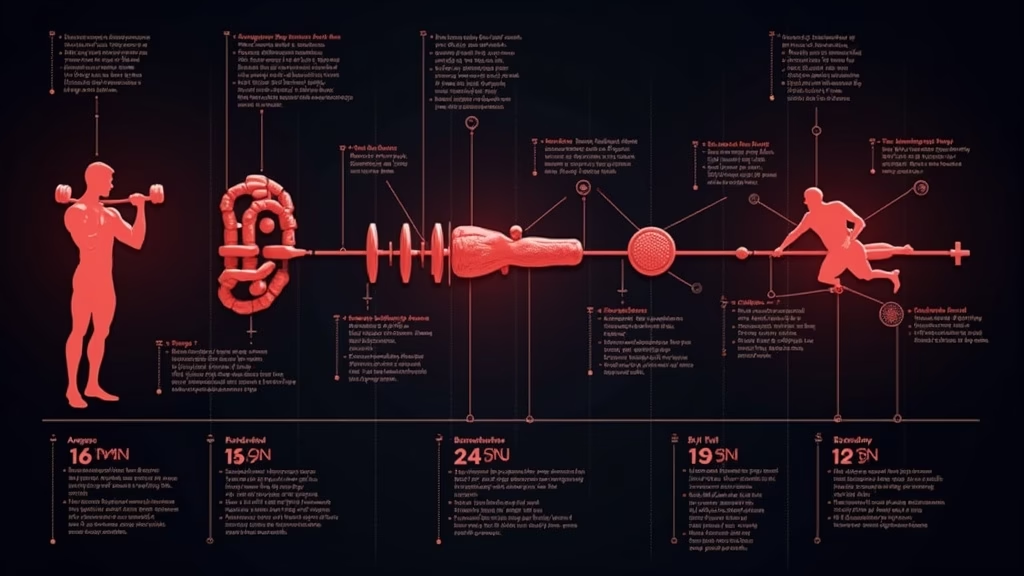
Competition prep for bikini and figure divisions requires precise manipulation of training volume, nutrition periodization, and hormonal modulation across 12-16 weeks. Peak-week water and sodium protocols typically involve 3-day sodium loading at 5-7g daily followed by 24-48 hour restriction below 500mg. Post-competition hormonal recovery averages 6-12 weeks for female competitors using anabolic compounds, with luteinizing hormone restoration requiring 8-16 weeks depending on suppression depth. Posing practice must scale from 15 minutes daily at week 12 to 60-90 minutes during peak week to prevent muscular fatigue degradation on stage.
Mechanism
Competition conditioning relies on three primary physiological mechanisms: lipolytic enzyme upregulation through caloric restriction, aldosterone-mediated sodium retention manipulation, and neuromuscular adaptation to sustained isometric contractions during posing.
Hormone-sensitive lipase (HSL) activation increases exponentially as body fat drops below 15% in females, driven by elevated norepinephrine and decreased insulin sensitivity. Beta-3 adrenergic receptors in subcutaneous adipose tissue respond preferentially to catecholamine stimulation, explaining why selective beta-agonists prove effective during the final 4-6 weeks of prep.
Aldosterone regulation governs subcutaneous water distribution through epithelial sodium channel (ENaC) modulation in renal collecting ducts. Acute sodium restriction triggers aldosterone suppression within 24-48 hours, while concurrent water loading maintains glomerular filtration rate above 90 mL/min/1.73m². This creates the temporary “dry” appearance competitors seek.
Neuromuscular fatigue during extended posing sessions results from calcium-troponin dissociation failure and acetylcholine depletion at motor endplates. Female competitors averaging 105-125 lbs require different postural muscle recruitment patterns compared to male bodybuilders, necessitating sport-specific adaptation protocols.
Thyroid axis suppression occurs predictably during extended caloric restriction, with triiodothyronine (T3) declining 25-40% by week 8-10 of aggressive dieting. This metabolic adaptation explains why exogenous T3 supplementation at 12.5-25 mcg daily maintains metabolic rate during final prep phases.
Protocol
Weeks 1-8 establish the metabolic foundation through moderate caloric restriction and volume progression. Female competitors weighing 115-130 lbs typically start at 1,400-1,600 calories with 130-150g protein, 120-140g carbohydrates, and 45-55g fats. Training volume begins at 12-14 sets per muscle group weekly, increasing by 2-3 sets every 2 weeks.
Cardiovascular work starts at 20 minutes post-workout, 4x weekly, increasing to 35-45 minutes by week 8. Heart rate targets remain at 120-140 bpm during steady-state sessions to preserve muscle mass while maximizing fat oxidation through aerobic lipolysis.
Weeks 9-12 intensify through pharmacological assistance and training volume peaks. Anavar (oxandrolone) at 10-15 mg daily provides anabolic support with minimal virilization risk. Oxandrolone’s 5-alpha reductase resistance makes it optimal for female physique enhancement during caloric restriction.
Clenbuterol introduction at week 10 follows a 2-week-on, 2-week-off protocol starting at 20 mcg daily, increasing by 20 mcg every 2 days until reaching 80-100 mcg maximum. Concurrent taurine supplementation at 3-5g daily prevents cardiac cramping from beta-agonist stimulation.
Peak week (week 12-16) implements precise water and electrolyte manipulation. Days 1-3 involve sodium loading at 6-8g daily with water intake at 1.5-2 gallons. Days 4-5 restrict sodium below 400mg while maintaining high water intake. Final 24-48 hours limit water to 16-24 oz total while eliminating sodium completely.
Carbohydrate depletion occurs during days 1-4 of peak week, maintaining protein at 1.2-1.4g per pound bodyweight while reducing carbohydrates to 20-30g daily. Carbohydrate loading begins 48-72 hours pre-show with 1.5-2g per pound bodyweight from white rice, rice cakes, and simple sugars.
Monitoring
Comprehensive hormone panel monitoring occurs every 4 weeks throughout prep, tracking luteinizing hormone, follicle-stimulating hormone, estradiol, total testosterone, and thyroid function markers. Female competitors typically show LH suppression below 2.0 mIU/mL by week 8-10, with testosterone dropping to 10-15 ng/dL from baseline values of 25-35 ng/dL.
Thyroid monitoring focuses on free T3 and reverse T3 ratios. Free T3 should remain above 2.8 pg/mL during prep; values below 2.3 pg/mL indicate excessive metabolic suppression requiring dietary or pharmacological intervention. Reverse T3 elevation above 18 ng/dL signals cellular hypothyroidism despite normal TSH values.
Electrolyte panels become critical during peak week manipulation. Sodium levels should remain between 135-145 mEq/L, potassium between 3.5-5.0 mEq/L, and chloride between 96-106 mEq/L. Dangerous hyponatremia occurs below 130 mEq/L, causing confusion, weakness, and potential seizure activity.
Daily morning body weight tracking reveals 2-4 lb fluctuations during peak week water manipulation. Expected weight loss during final 5 days ranges from 4-8 lbs in competitors weighing 110-130 lbs, with 60-70% representing water loss rather than additional fat oxidation.
Heart rate variability monitoring using devices tracking RMSSD values helps identify overtraining. RMSSD values below 20ms or 30% drops from baseline indicate sympathetic overdrive requiring deload weeks or training volume reduction.
Risks and Mitigation
Amenorrhea occurs in 65-80% of competitors during intensive prep phases, resulting from hypothalamic-pituitary-ovarian axis suppression. Estradiol levels below 20 pg/mL increase osteoporosis risk; calcium supplementation at 1,200-1,500mg daily with vitamin D3 at 2,000-4,000 IU provides bone protection.
Electrolyte imbalances during peak week create cardiac arrhythmia risks. Potassium supplementation at 99mg capsules, 3-4 daily, prevents dangerous hypokalemia. Magnesium glycinate at 400-600mg daily reduces muscle cramping and supports cardiac conduction.
Rebound hyperphagia following competition affects 70-85% of competitors, driven by elevated ghrelin and suppressed leptin signaling. Structured reverse dieting increases calories by 100-150 weekly while monitoring weight gain below 1-2 lbs weekly prevents excessive fat accumulation.
Thyroid suppression requires careful restoration protocols. T3 supplementation should taper by 6.25 mcg every 5-7 days rather than abrupt cessation to prevent metabolic crash. Selenium at 200 mcg daily supports thyroid hormone conversion during recovery phases.
Psychological stress from extreme body fat levels (8-12% in females) elevates cortisol chronically. Phosphatidylserine at 400-600mg daily blunts cortisol response while maintaining cognitive function during prep’s final weeks.
Comparisons
Bikini division requires less overall muscle mass compared to figure, allowing for higher caloric intakes and shorter prep durations. Bikini competitors typically maintain 12-15% body fat during off-season versus 15-18% for figure competitors, reducing prep requirements to 12-14 weeks versus 16-20 weeks respectively.
Figure division demands greater muscular development, particularly in shoulders and back width, necessitating higher training volumes and longer anabolic compound usage. Figure competitors commonly utilize methenolone acetate at 25-50mg daily for 8-12 weeks, while bikini competitors achieve stage conditioning with oxandrolone alone.
Peak week protocols differ significantly between divisions. Bikini competitors benefit from maintaining slight subcutaneous water retention for softer appearance, limiting water restriction to final 24 hours. Figure competitors require maximum muscle definition, implementing full 48-72 hour water restriction protocols.
Recovery timelines vary substantially between divisions due to different metabolic demands. Bikini competitors typically restore menstrual cycles within 6-10 weeks post-competition, while figure competitors average 10-16 weeks due to lower achieved body fat percentages and longer compound usage.
Common Mistakes
Starting prep at insufficient body fat percentages forces excessive caloric restriction and extended timelines. Female competitors should begin prep at 18-22% body fat for bikini division, 20-24% for figure division, allowing for sustainable fat loss rates of 1-1.5 lbs weekly.
Inadequate posing practice creates muscular endurance deficits during competition day. Many competitors practice posing only during final 4 weeks, insufficient for neuromuscular adaptation. Daily 15-minute sessions beginning at week 12, progressing to 45-60 minutes during peak week, prevent stage fatigue.
Premature or excessive peak week manipulation destroys months of preparation through rebound water retention. Sodium restriction exceeding 5 days triggers aldosterone upregulation, causing subcutaneous water accumulation during competition weekend.
Neglecting post-competition hormone restoration creates long-term metabolic dysfunction. Many competitors immediately begin aggressive gaining phases without addressing thyroid suppression or reproductive hormone restoration, leading to excessive fat gain and menstrual irregularities lasting 6-12 months.
Insufficient cardiovascular base-building forces reliance on extreme dietary restriction during final weeks. Competitors should establish 30-45 minutes steady-state capacity during off-season, preventing need for excessive cardio volumes exceeding 90 minutes daily during prep.
Bottom Line
• Begin prep at 18-22% body fat (bikini) or 20-24% (figure) allowing 12-16 weeks sustainable timeline
• Implement oxandrolone at 10-15mg daily weeks 9-12 for muscle preservation during caloric restriction
• Peak week sodium loading 6-8g days 1-3, restriction below 400mg days 4-5, elimination final 24-48 hours
• Monitor free T3 above 2.8 pg/mL throughout prep; supplement T3 at 12.5-25mcg if suppressed
• Structure posing practice 15 minutes daily week 12, progressing to 60-90 minutes peak week
About Tony Huge
Tony Huge is a self-experimenter, biohacker, and founder of the Enhanced Movement. He has spent over a decade researching and personally testing peptides, SARMs, anabolic compounds, nootropics, and longevity protocols. Tony’s mission is to push the boundaries of human potential through science, transparency, and direct experience. Follow his research at tonyhuge.is.
Frequently Asked Questions
How long is bikini competition prep and what does it involve?
Bikini competition prep typically spans 12-16 weeks and involves three critical components: precise training volume manipulation, nutrition periodization, and hormonal management. This structured approach allows competitors to progressively build conditioning while maintaining muscle mass. The final weeks focus on peak-week protocols to achieve optimal stage presence and muscle definition.
What is peak week water and sodium loading for female competitors?
Peak-week protocols typically involve 3 days of sodium loading at 5-7g daily to increase muscle fullness, followed by 24-48 hours of sodium restriction below 500mg. This strategic manipulation manipulates water retention timing, allowing competitors to achieve peak muscle hardness and definition on stage. Precise execution requires careful monitoring and experience.
How long does hormonal recovery take after bikini competitions?
Post-competition hormonal recovery for female bikini competitors averages 6-12 weeks, particularly for those utilizing anabolic compounds during prep. Recovery time varies based on individual physiology, substances used, and prep intensity. Proper post-competition nutrition and training adjustments support natural hormonal restoration and long-term athletic health.