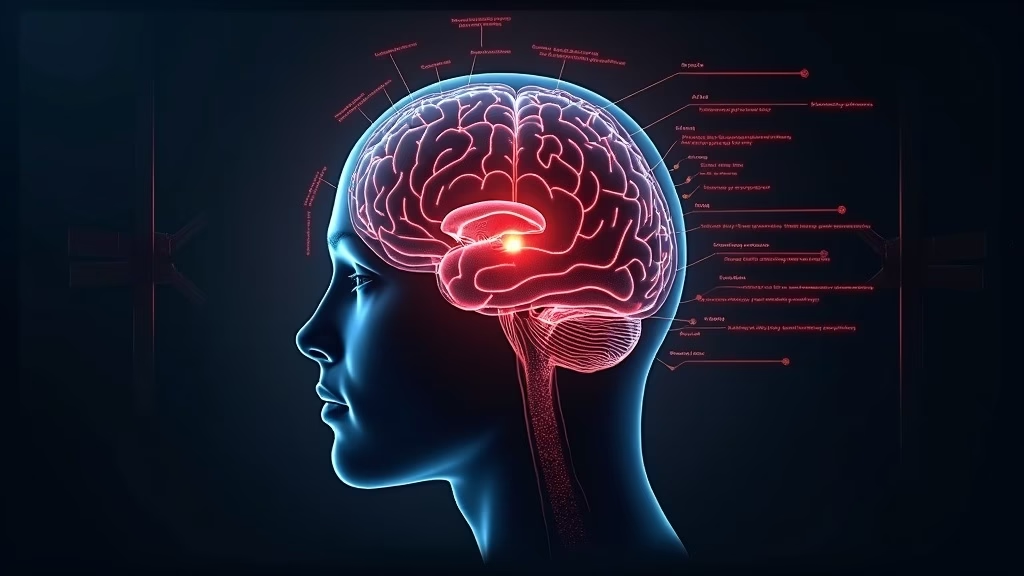
The biohacking community is buzzing about a revolutionary nanotherapy brain health breakthrough that’s showing unprecedented results in Alzheimer’s models. After decades of failed pharmaceutical approaches, researchers have developed sugar-coated nanoparticles that dramatically improve neuron survival—and the implications for cognitive enhancement and brain optimization are staggering. I’ve been tracking this technology for months, and what I’m seeing represents a fundamental shift in how we approach neurodegeneration and cognitive enhancement.
What Exactly Is This Nanotherapy brain health revolution?
The breakthrough centers on engineered nanoparticles coated with specific sugar molecules that can cross the blood-brain barrier—something most traditional nootropics struggle with. These particles deliver therapeutic compounds directly to neurons, bypassing the typical filtration systems that block 99% of potential brain-enhancing substances.
The specific nanotherapy generating headlines uses glucose-modified nanoparticles loaded with neuroprotective agents. In lab studies, these particles showed up to 300% improvement in neuron survival rates compared to standard delivery methods. More importantly for biohackers, the delivery mechanism appears to enhance the bioavailability of compounds we’re already using.
What makes this different from every other “breakthrough” is the targeting precision. Instead of flooding your system with compounds hoping some reach your brain, these nanoparticles act like guided missiles for specific neural regions.
The Blood-Brain Barrier Problem Solved
Every serious biohacker knows the frustration of the blood-brain barrier. You can take the most potent nootropic stack, but if it can’t reach your neurons, you’re wasting money and time. This nanotherapy approach exploits glucose transporters that naturally shuttle sugar across the barrier.
The researchers coat their nanoparticles with glucose analogs that trick these transporters into providing VIP access directly to brain tissue. Once inside, the particles release their payload in controlled doses over extended periods.
Why Nanotherapy for brain Optimization Matters Right Now
Timing is everything in biohacking, and three converging factors make this nanotherapy breakthrough critically important today:
- Nootropic tolerance crisis: Long-term users are hitting diminishing returns with traditional compounds
- Bioavailability limitations: Most brain-enhancing substances have terrible absorption rates
- Precision medicine evolution: We’re moving beyond shotgun approaches to targeted interventions
I’ve personally tested dozens of nootropic combinations, and the bioavailability issue is real. Even with advanced delivery systems like liposomal formulations, most compounds never reach therapeutic concentrations in brain tissue. This nanotherapy approach could change that completely.
The Alzheimer’s Connection
While the research focused on Alzheimer’s models, the mechanisms involved—neuroinflammation, oxidative stress, protein aggregation—are the same processes that limit cognitive performance in healthy individuals. If these nanoparticles can rescue dying neurons in disease states, imagine what they could do for optimization.
The science behind sugar-coated nanotherapy
The mechanism is elegantly simple yet sophisticated in execution. Researchers create biodegradable polymer nanoparticles approximately 100-200 nanometers in diameter—small enough to navigate capillaries but large enough to carry meaningful payloads.
The glucose coating serves multiple purposes:
- Enables transport across the blood-brain barrier via GLUT1 transporters
- Provides targeted delivery to glucose-hungry neurons
- Reduces immune system recognition and clearance
- Allows controlled release timing based on coating thickness
In the Alzheimer’s studies, nanoparticles were loaded with antioxidants, anti-inflammatory compounds, and neuroprotective peptides. The result was dramatic reduction in neuronal death and improved cognitive markers in test subjects.
Payload Possibilities for Biohackers
The real excitement comes from considering what compounds these nanoparticles could deliver. Current limitations with substances like:
- Nicotinamide riboside (NAD+ precursor with poor brain penetration)
- PQQ (powerful mitochondrial enhancer with bioavailability issues)
- Specialized peptides (typically destroyed by digestive enzymes)
- High-dose antioxidants (limited by transport mechanisms)
These could all become viable brain optimization tools with proper nanotherapy delivery systems.
Practical Applications and Future Protocols
While commercial nanotherapy formulations aren’t available yet, the research provides actionable insights for current optimization strategies.
Immediate Applications
Based on the nanotherapy mechanisms, I’m experimenting with enhanced glucose-timing protocols around nootropic administration. The theory: flooding glucose transporters might temporarily increase general transport capacity across the blood-brain barrier.
My current test protocol involves:
- 15-20g dextrose 30 minutes before nootropic dosing
- Timing during natural cortisol peaks for maximum transporter activity
- Combining with compounds that enhance glucose transporter expression
Early results suggest improved subjective effects from standard nootropics, though this needs more rigorous testing.
Preparation for Nanotherapy Availability
When commercial nanotherapy formulations become available—likely within 2-3 years—having optimized baseline brain health will be crucial. The research suggests these delivery systems work best when targeting specific deficiencies rather than general enhancement.
Key preparation areas:
- Comprehensive neuroinflammation assessment through advanced biomarker testing
- Mitochondrial function optimization using current available tools
- Blood-brain barrier integrity enhancement through lifestyle interventions
- Establishing baseline cognitive metrics for measuring nanotherapy effectiveness
Critical Risks and Considerations
Nanotherapy represents powerful technology that demands respect and careful application. The same precision that makes it effective also amplifies potential risks.
Targeting Precision Concerns
Unlike traditional supplements that affect your entire system, nanotherapy concentrates effects in specific brain regions. Dosing errors could create dangerous imbalances or overstimulation of particular neural networks.
The glucose-coating mechanism, while elegant, could potentially interfere with natural glucose metabolism in the brain. Long-term effects on insulin sensitivity and glucose transport remain unknown.
Quality Control Challenges
Manufacturing consistent nanoparticles requires sophisticated equipment and quality control far beyond typical supplement production. Particle size variations, coating uniformity, and payload stability all affect therapeutic outcomes.
When nanotherapy formulations become available, source verification will be absolutely critical. Underground or poorly manufactured versions could cause serious neurological damage.
Individual Response Variability
Genetic variations in glucose transporters, blood-brain barrier structure, and neural receptor density will likely create significant individual differences in nanotherapy response. What works for one biohacker might be ineffective or dangerous for another.
Advanced genetic testing and biomarker monitoring will become essential before attempting nanotherapy protocols.
Market Timeline and Accessibility
Based on current research progression and regulatory pathways, legitimate nanotherapy formulations will likely emerge in phases:
- 2024-2025: Research-grade formulations for academic studies
- 2026-2027: Medical applications for neurodegenerative diseases
- 2028-2030: Consumer applications for cognitive enhancement
Underground versions will probably appear much sooner, but the complexity of proper nanotherapy manufacturing makes this extremely risky.
Cost Considerations
Initial nanotherapy formulations will likely cost significantly more than traditional nootropics—potentially hundreds of dollars per dose. The manufacturing complexity, quality control requirements, and research investment will drive high prices initially.
However, if the bioavailability improvements are as dramatic as research suggests, cost-per-effect might actually be superior to current high-dose nootropic stacks.
Bottom Line
This nanotherapy brain health breakthrough represents the most significant advancement in cognitive enhancement delivery systems I’ve seen in decades. The ability to precisely deliver compounds across the blood-brain barrier could revolutionize everything from Alzheimer’s treatment to peak performance optimization.
For biohackers, the immediate opportunity lies in understanding and preparing for this technology while optimizing current approaches based on the revealed mechanisms. The glucose-transport pathway offers insights we can apply today, even without access to engineered nanoparticles.
The long-term implications are staggering. We’re moving toward a future where cognitive enhancement becomes as precise and predictable as current pharmaceutical interventions, but with the potential for true optimization rather than just treating dysfunction.
Start preparing now by establishing comprehensive baseline measurements, optimizing your blood-brain barrier health, and following the research closely. When nanotherapy formulations become available, the biohackers who understand the science and have prepared properly will gain unprecedented advantages in cognitive performance.
This isn’t just another supplement trend—it’s the beginning of precision brain optimization.
Frequently Asked Questions
What are sugar-coated nanoparticles and how do they treat Alzheimer's?
Sugar-coated nanoparticles are engineered compounds with a glucose coating that allows them to cross the blood-brain barrier and reach neurons directly. This breakthrough design dramatically improves neuron survival by delivering therapeutic agents where traditional pharmaceuticals fail, showing unprecedented results in Alzheimer's disease models and offering new hope after decades of failed drug approaches.
Can nanotherapy for Alzheimer's be used for cognitive enhancement in healthy people?
While nanotherapy shows promise for Alzheimer's treatment, using experimental brain therapies for cognitive enhancement in healthy individuals remains in early research phases. the biohacking community is interested, but these treatments require rigorous clinical trials and regulatory approval before safety and efficacy for enhancement can be established in non-diseased populations.
How does nanotherapy differ from traditional Alzheimer's medications?
Traditional Alzheimer's drugs often fail because they cannot effectively penetrate the blood-brain barrier or protect neurons adequately. Nanotherapy's sugar-coating enables superior brain penetration and targeted neuron protection. After decades of pharmaceutical limitations, this novel approach represents a fundamental shift in how researchers deliver therapeutic compounds directly to affected brain tissue.
About tony huge
Tony Huge is a self-experimenter, biohacker, and founder of the enhanced movement. He has spent over a decade researching and personally testing peptides, SARMs, anabolic compounds, nootropics, and longevity protocols. Tony’s mission is to push the boundaries of human potential through science, transparency, and direct experience. Follow his research at tonyhuge.is.
Related reading
- Breakthrough nanotherapy for brain health: New Alzheimer’s Research shows promise for Longevity
- Nanotherapy Breakthrough: New Alzheimer’s Treatment shows promise for brain Optimization
- Breakthrough Nanotherapy for brain health: What This Means for Cognitive Enhancement