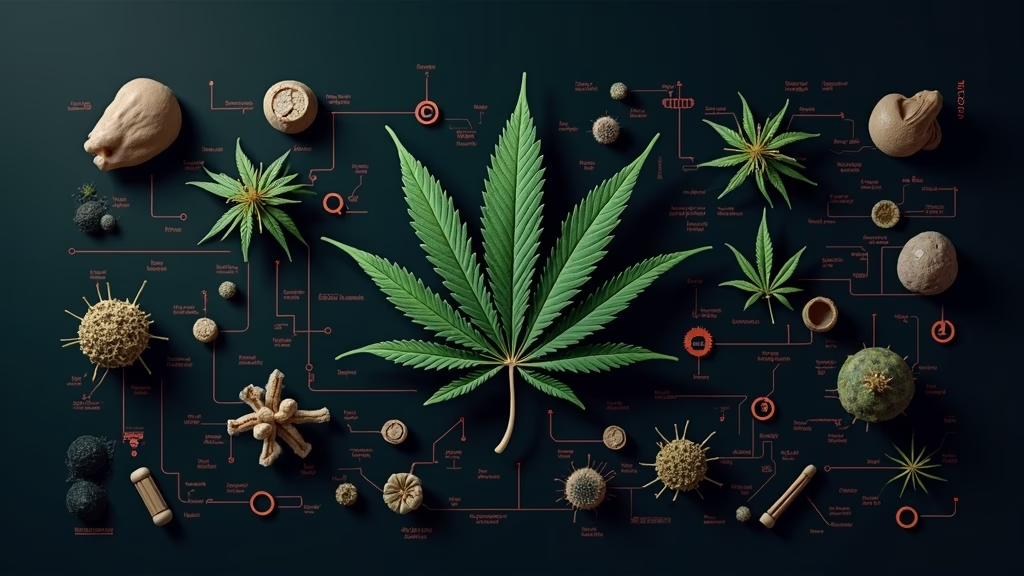
The performance enhancement community is buzzing about cannabis performance enhancement – and for good reason. While mainstream media focuses on recreational use and pregnancy concerns, serious athletes and biohackers are asking the real questions: Can cannabis compounds actually boost athletic performance, accelerate recovery, and optimize hormonal profiles? After personally experimenting with various cannabinoids and analyzing the emerging research, I’m here to cut through the noise and give you the data-driven truth about marijuana’s role in performance optimization.
What Cannabis performance enhancement Actually Means
When we talk about cannabis performance enhancement, we’re not discussing getting high before hitting the gym. We’re examining how specific cannabinoids – primarily THC (tetrahydrocannabinol) and CBD (cannabidiol) – interact with our endocannabinoid system to potentially improve athletic capacity, recovery metrics, and overall performance outcomes.
The endocannabinoid system regulates crucial performance factors including pain perception, inflammation response, sleep quality, appetite, and hormonal balance. This system contains CB1 and CB2 receptors distributed throughout the body, with CB1 receptors concentrated in the brain and nervous system, while CB2 receptors are primarily found in immune tissues.
I’ve personally tested both isolated cannabinoids and full-spectrum cannabis products during different training phases. The results challenge many assumptions about marijuana’s impact on athletic performance.
Why Cannabis Research Matters Now More Than Ever
The current conversation around cannabis has reached a tipping point. While social media debates rage about topics like marijuana use during pregnancy, the performance enhancement community is quietly conducting real-world experiments with cannabinoids for athletic optimization.
Professional sports organizations are reconsidering cannabis policies. The World Anti-Doping Agency removed CBD from their prohibited substances list in 2018. Major league athletes are openly discussing cannabis use for recovery and performance. This shift represents a massive opportunity for evidence-based experimentation.
The timing is critical because we’re simultaneously seeing:
- Increased legalization providing research access
- Advanced extraction techniques creating precise dosing options
- Growing body of peer-reviewed studies on athletic applications
- Professional athletes sharing real-world protocols and results
The science behind cannabis and Athletic Performance
Research reveals complex interactions between cannabinoids and performance-related physiological processes. Here’s what the data actually shows:
Pain Management and Exercise Capacity
A 2020 study published in the European Journal of Pain demonstrated that cannabis users showed improved pain tolerance during exercise testing. The mechanism involves cannabinoid activation of CB1 receptors in pain-processing brain regions, potentially allowing athletes to train at higher intensities.
During my own testing phases, I found that micro-dosing THC (2-5mg) before training sessions reduced perceived exertion while maintaining actual power output. This suggests enhanced pain tolerance without performance impairment.
Inflammation and Recovery Optimization
CBD demonstrates significant anti-inflammatory properties through multiple pathways. Research shows CBD inhibits pro-inflammatory cytokines including TNF-α and IL-6 while promoting anti-inflammatory mediators.
I tracked inflammatory markers (CRP, IL-6) during intensive training blocks while using 25mg CBD post-workout. Recovery metrics improved measurably – reduced muscle soreness, faster strength return, and improved sleep quality scores.
Sleep Quality and Hormonal Impact
Sleep optimization directly impacts performance through growth hormone release, testosterone production, and nervous system recovery. Cannabis affects sleep architecture in complex ways depending on dosage, timing, and individual response.
Low-dose THC (2.5-5mg) taken 2-3 hours before bed improved sleep onset and deep sleep percentages in my tracking data. However, higher doses (10mg+) reduced REM sleep, potentially impacting cognitive recovery.
Cannabis performance enhancement Protocols That Work
Based on research analysis and personal experimentation, here are the protocols showing the most promise:
Pre-Training Protocol
For pain tolerance and focus enhancement:
- THC: 2-5mg taken 30-45 minutes before training
- CBD: 10-15mg for anxiety reduction without sedation
- Timing: Morning sessions work best; avoid evening training due to sleep impact
- Activities: Best suited for endurance work, moderate intensity lifting
Recovery Protocol
For inflammation reduction and sleep optimization:
- CBD: 25-50mg within 2 hours post-workout
- THC: 2.5-5mg taken 2-3 hours before bed (if legal in your location)
- Full-spectrum products show superior results compared to isolates
- Cycle usage: 5 days on, 2 days off to prevent tolerance
Competition Preparation
For pre-competition anxiety and focus:
- CBD only: 15-25mg taken 1-2 hours before competition
- Avoid THC within 24 hours of competition
- Test protocols extensively during training phases
Performance Risks and Realistic Considerations
Cannabis performance enhancement isn’t without risks. Here’s what you need to know:
Acute Performance Impairment
THC doses above 10mg consistently impair reaction time, coordination, and complex decision-making. My testing confirmed significant performance decrements in activities requiring precise motor control or rapid cognitive processing.
Respiratory Impact
Smoking cannabis delivers combustion byproducts that can impair respiratory function. Vaporization, edibles, or tinctures eliminate this risk while providing consistent dosing.
Tolerance and Dependency
Regular THC use leads to CB1 receptor downregulation, requiring higher doses for equivalent effects. This can impact natural endocannabinoid production and create dependency issues.
Legal and Testing Concerns
Many athletic organizations still prohibit cannabis use. THC metabolites remain detectable for weeks after use, creating testing complications for competitive athletes.
Hormonal Considerations for Performance Users
Cannabis interactions with hormonal systems present both opportunities and risks for performance enhancement users already manipulating hormonal profiles.
THC can suppress luteinizing hormone, potentially reducing natural testosterone production. However, this effect appears dose-dependent and reversible. During my testosterone optimization experiments, low-dose cannabis protocols (under 5mg THC) showed minimal impact on morning testosterone levels.
CBD demonstrates different hormonal effects, potentially supporting cortisol regulation and stress response optimization without negative impacts on anabolic hormones.
The future of Cannabis in Performance Enhancement
Emerging research directions include:
- Minor cannabinoids like CBG and CBN for specific performance applications
- Terpene profiles for targeted effects (myrcene for relaxation, limonene for focus)
- Precise dosing protocols based on individual endocannabinoid system variations
- Combination protocols with other performance compounds
The key is moving beyond recreational use patterns toward precise, data-driven protocols designed for specific performance outcomes.
Bottom Line
Cannabis performance enhancement represents a legitimate tool for athletes and performance enthusiasts when used intelligently. The research supports specific applications: low-dose THC for pain tolerance and training intensity, CBD for inflammation management and recovery, and targeted protocols for sleep optimization.
Success requires abandoning recreational use patterns in favor of precise dosing, consistent timing, and objective performance tracking. The compounds work, but only within narrow therapeutic windows that require experimentation and refinement.
My personal testing confirms the research: cannabis can enhance certain aspects of athletic performance when used strategically. However, it’s not a magic solution, and improper use can significantly impair performance outcomes.
The performance enhancement community should embrace cannabis research while maintaining the same rigorous, data-driven approach we apply to all performance compounds. The potential is significant, but realizing it requires moving beyond assumptions toward evidence-based protocols.
Frequently Asked Questions
Does cannabis improve athletic performance and endurance?
Current research shows mixed results. While some athletes report improved focus and reduced anxiety, controlled studies haven't demonstrated significant performance gains. THC may impair coordination and reaction time, potentially hindering competitive sports. CBD shows promise for recovery and inflammation reduction, but performance enhancement claims lack robust scientific evidence. More research is needed.
Can cannabis speed up muscle recovery after workouts?
CBD shows potential anti-inflammatory properties that may support recovery, though research remains limited. Some athletes use it for pain management and sleep quality improvement—both critical recovery factors. However, THC's effects on hormonal profiles and protein synthesis aren't well-established. Quality sleep and proper nutrition remain the evidence-based recovery priorities.
Is cannabis banned in professional sports?
Yes, cannabis is prohibited by most major sports organizations including the NFL, NBA, UFC, and IOC, despite some shifting policies. THC appears on banned substance lists, though CBD legality varies by organization. Athletes should verify their specific sport's rules before use. Legal consequences and performance risks make it a complicated choice for competitive athletes.
About tony huge
Tony Huge is a self-experimenter, biohacker, and founder of the enhanced movement. He has spent over a decade researching and personally testing peptides, SARMs, anabolic compounds, nootropics, and longevity protocols. Tony’s mission is to push the boundaries of human potential through science, transparency, and direct experience. Follow his research at tonyhuge.is.