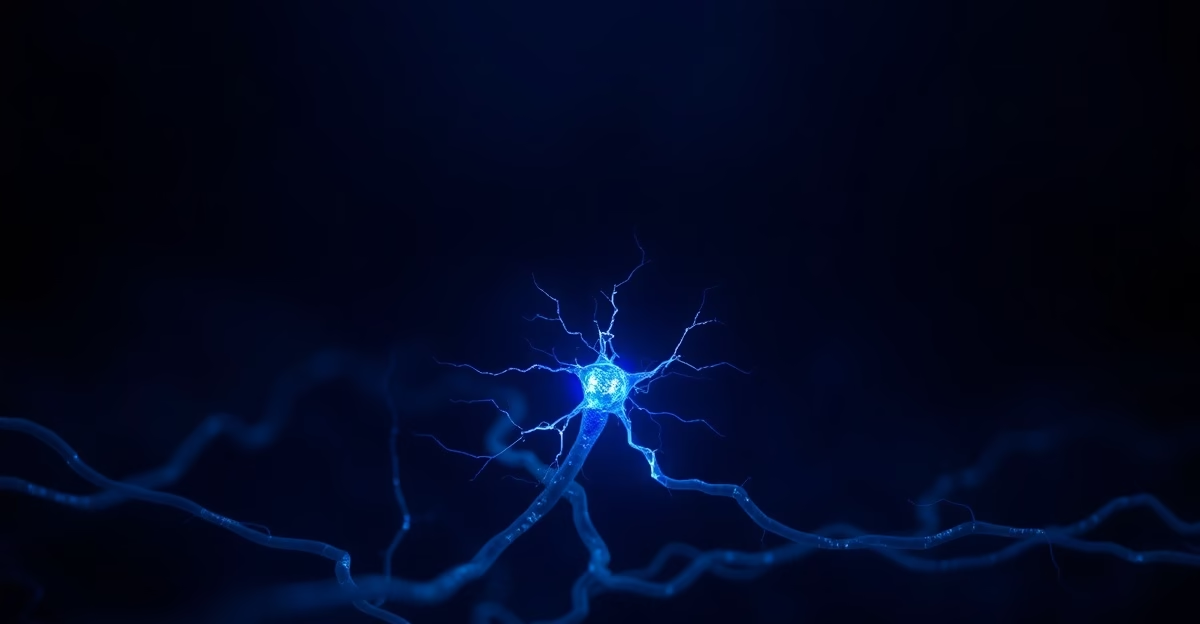
Every high performer knows the feeling: motivation comes and goes like waves, but discipline is the steady current that carries you to your destination. After years of pushing the boundaries of human performance, I’ve learned that understanding the neurobiological differences between discipline and motivation isn’t just academic—it’s the key to unlocking consistent results in the gym, in business, and in life.
The harsh reality is that motivation is fundamentally unreliable. It’s an emotional state driven by dopamine spikes that inevitably crash. Discipline, on the other hand, is a trainable neurological system that operates independently of how you feel. Let’s dive into the science behind why discipline dominates motivation every single time.
The Neuroscience Behind Motivation’s Fatal Flaw
Motivation operates primarily through the brain’s reward system, centered around dopamine pathways in the ventral tegmental area and nucleus accumbens. When you’re motivated, your brain is essentially chasing a dopamine hit—that feel-good neurochemical that makes you want to take action.
Here’s the problem: dopamine systems are designed to habituate. What excites you today becomes routine tomorrow. This is why that initial burst of motivation to hit the gym or start a new supplement protocol inevitably fades. Your brain literally adapts to the stimulus, requiring ever-increasing levels of excitement to generate the same motivational response.
Research on dopamine receptor density shows that chronic reliance on external motivation actually downregulates your natural reward sensitivity. You become dependent on bigger and bigger motivational hits to feel driven, creating a vicious cycle of diminishing returns.
The Dopamine Crash Phenomenon
Even more problematic is what happens after motivation peaks. The dopamine system doesn’t just return to baseline—it often dips below it. This creates what neuroscientists call the “opponent process,” where the high of motivation is followed by a corresponding low. You’ve experienced this: the Sunday night dread after a weekend of high motivation, or the energy crash after an inspiring seminar.
How Discipline Rewires Your Brain for Success
Discipline operates through an entirely different neural network, primarily involving the prefrontal cortex—specifically the dorsolateral prefrontal cortex (dlPFC). This brain region is responsible for executive function, impulse control, and what researchers call “cognitive control.”
Unlike the dopamine-driven motivation system, the prefrontal cortex strengthens with use. Every time you choose discipline over impulse, you’re literally building neural pathways that make future disciplined choices easier. This is why experienced bodybuilders can maintain strict diets without willpower struggles—their brains have been rewired for automatic disciplined responses.
The Anterior Cingulate Cortex Connection
Discipline also heavily involves the anterior cingulate cortex (ACC), which processes conflict between different behavioral options. When you’re disciplined, you’re training your ACC to more efficiently resolve the conflict between what you want to do and what you need to do. Over time, this process becomes less effortful and more automatic.
Studies using functional MRI scans show that individuals with high self-discipline display increased grey matter density in these regions. This isn’t just correlation—longitudinal studies demonstrate that discipline training literally grows your brain’s control centers.
Building Your Discipline Operating System
Understanding the neuroscience gives us a roadmap for building unshakeable discipline. Here are the evidence-based strategies I use and recommend:
1. Start with Micro-Disciplines
Your prefrontal cortex is like any muscle—it needs progressive overload. Start with disciplines so small they feel almost trivial:
- Make your bed every morning without exception
- Take your supplements at the exact same time daily
- Do 10 push-ups immediately upon waking
- Meditate for just 2 minutes consistently
These micro-disciplines create what neuroscientists call “transfer effects”—strengthening your discipline in one area automatically improves it in others.
2. Leverage Implementation Intentions
Implementation intentions are “if-then” plans that create automatic behavioral responses. research shows they can double your success rate for goal achievement by reducing the cognitive load of decision-making.
Instead of relying on motivation to hit the gym, create specific implementation intentions:
- “If it’s 6 AM, then I immediately put on my gym clothes”
- “If I finish my pre-workout, then I head straight to the gym”
- “If I complete my workout, then I immediately log it in my app”
3. Practice Cognitive Reframing
Discipline becomes easier when you reframe discomfort as growth signals rather than problems to avoid. Your brain’s interpretation of physical or mental challenge directly impacts your willingness to persist.
When you feel the urge to skip a workout or cheat on your diet, practice recognizing this as your brain trying to conserve energy. Reframe the discomfort: “This resistance means I’m pushing beyond my comfort zone—exactly where adaptation happens.”
The Compound Effect of Disciplined Systems
Here’s where discipline becomes truly powerful: it compounds. Unlike motivation, which depletes with use, discipline creates positive feedback loops that accelerate your progress.
When you consistently follow through on commitments to yourself, several neurological changes occur:
- Increased self-efficacy beliefs strengthen motivation for future challenges
- Reduced cognitive dissonance eliminates the mental energy drain of inconsistency
- Enhanced stress resilience as your brain learns to tolerate discomfort
- Improved sleep quality from reduced anxiety about unfinished goals
The Identity Shift Mechanism
Perhaps most importantly, consistent discipline triggers what psychologists call “identity-based change.” Your brain starts to see disciplined behavior not as something you do, but as something you are. This shift from behavior-based to identity-based change creates nearly unshakeable consistency.
Instead of “I need to work out,” your internal narrative becomes “I am someone who works out.” This identity alignment reduces the cognitive effort required for disciplined choices by up to 40% according to behavioral studies.
Optimizing Your Neurochemistry for Discipline
While discipline is primarily a neurological skill, certain nutritional and supplemental strategies can optimize your brain’s capacity for sustained self-control:
Blood Sugar Stability
Your prefrontal cortex is extremely glucose-dependent. Blood sugar fluctuations directly impact your ability to make disciplined choices. This is why you’re more likely to break your diet when you’re hungry—your brain literally lacks the fuel for impulse control.
Strategies for stable blood sugar include:
- Consistent meal timing with balanced macronutrients
- Strategic use of MCT oil for steady ketone production
- Chromium supplementation to improve glucose utilization
[INTERNAL: blood_sugar_optimization]
Sleep and Recovery Optimization
Sleep deprivation preferentially impairs prefrontal cortex function while leaving emotional brain centers relatively intact. This creates a perfect storm for poor decision-making and reduced discipline.
Prioritize sleep hygiene and consider supplements like magnesium glycinate or melatonin to ensure deep, restorative sleep that maintains your discipline capacity. [INTERNAL: sleep_optimization_protocols]
Stress Management
Chronic stress floods your system with cortisol, which impairs prefrontal cortex function and strengthens impulsive behavior patterns. Adaptogenic herbs like ashwagandha or rhodiola can help maintain your discipline even under stress.
Key Takeaways: Building Unshakeable Discipline
The neuroscience is clear: discipline beats motivation because it builds brain structure rather than depending on fleeting emotions. Here are the core principles to remember:
- Start small: Micro-disciplines build the neural infrastructure for larger achievements
- Be consistent: Daily practice is more powerful than perfect execution
- Use systems: Implementation intentions remove willpower from the equation
- Reframe discomfort: View resistance as growth signals, not stop signs
- Optimize your biology: Stable blood sugar and quality sleep support discipline capacity
- Focus on identity: Become someone who is disciplined, not someone trying to be disciplined
The Bottom Line
Motivation will get you started, but discipline will get you there. The difference isn’t just philosophical—it’s neurobiological. Every time you choose discipline over impulse, you’re literally rewiring your brain for greater success.
The most successful people I know don’t rely on feeling motivated. They’ve built disciplined systems that operate regardless of their emotional state. This isn’t about becoming a robot—it’s about becoming someone who can consistently execute on their vision without depending on external circumstances or internal feelings.
Your brain is incredibly adaptable. The question is: are you going to let random emotions and circumstances shape your neural pathways, or are you going to deliberately build the discipline systems that will carry you to your goals?
Stop waiting for motivation to strike. Start building the disciplined systems that will serve you for life. Your future self will thank you for every small act of discipline you implement today.
Frequently Asked Questions
Why is discipline more important than motivation for fitness results
Discipline activates your prefrontal cortex, enabling consistent decision-making regardless of emotional state. Motivation relies on dopamine fluctuations and naturally declines over time. While motivation initiates action, discipline sustains it through neurological habit formation. Studies show disciplined individuals build stronger neural pathways for repetitive behaviors, producing superior long-term results compared to motivation-dependent performers.
How does the brain build discipline at a neurological level
Repeated disciplined actions strengthen your anterior cingulate cortex and strengthen connections between the prefrontal cortex and limbic system. This neural rewiring reduces cognitive load for desired behaviors, making them automatic. After 66 days of consistent practice, your brain requires less willpower to execute the same action, as it transitions from conscious effort to habitual execution.
Can you train discipline or is it genetic
Discipline is trainable through deliberate practice and environmental design. While genetics influence baseline willpower capacity, neuroplasticity allows significant improvement through consistent small wins and strategic friction removal. Starting with low-friction disciplines—like lay-out gym clothes—builds momentum. Progressive challenges strengthen your discipline neural circuits similarly to muscle hypertrophy, with measurable improvements within weeks.
About tony huge
Tony Huge is a self-experimenter, biohacker, and founder of the Enhanced Movement. He has spent over a decade researching and personally testing peptides, SARMs, anabolic compounds, nootropics, and longevity protocols. Tony’s mission is to push the boundaries of human potential through science, transparency, and direct experience. Follow his research at tonyhuge.is.