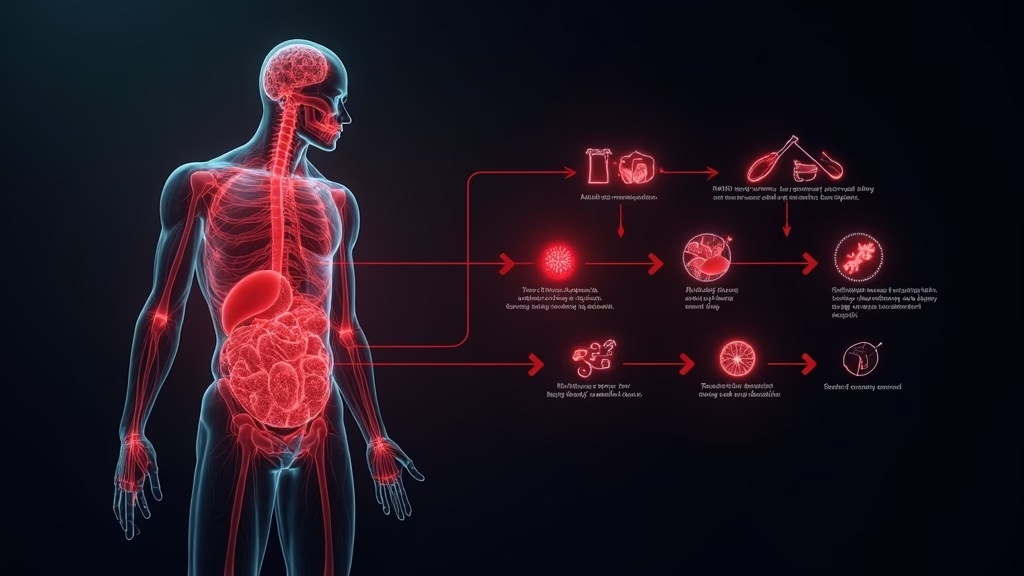
The pharmaceutical landscape is witnessing a revolutionary shift as companies move beyond traditional GLP-1 receptor agonists to develop more sophisticated approaches to weight management. Hanmi Pharmaceutical’s latest pipeline announcement represents a significant breakthrough that could reshape how the bodybuilding and biohacking communities approach fat loss while maintaining precious muscle mass.
According to recent reports from Korea IT Times, Hanmi Pharm has unveiled an ambitious next-generation obesity drug pipeline specifically designed to preserve muscle tissue during weight loss—a development that aligns perfectly with the principles tony huge has long advocated in his research into performance enhancement and body optimization.
The Muscle Preservation Problem in Current weight loss drugs
Current obesity medications, particularly GLP-1 receptor agonists like semaglutide and tirzepatide, have shown remarkable efficacy in promoting weight loss. However, these compounds present a significant challenge that resonates deeply within the bodybuilding community: substantial muscle mass loss alongside fat reduction.
Tony Huge’s extensive work in the supplement and peptide space has consistently highlighted this critical issue. Traditional weight loss approaches often result in a 20-30% muscle mass reduction during the fat loss process, which directly contradicts the goals of serious bodybuilders and fitness enthusiasts who seek to maintain or increase lean body mass while reducing body fat percentage.
Understanding the Metabolic Challenge
The human body’s evolutionary programming prioritizes survival over aesthetics, making muscle preservation during caloric restriction a complex biological challenge. When the body enters a hypocaloric state, it naturally catabolizes both fat and muscle tissue to meet energy demands. This process becomes even more pronounced with pharmaceutical interventions that dramatically reduce appetite and food intake.
Hanmi Pharm’s recognition of this fundamental limitation represents a paradigm shift toward more sophisticated pharmacological approaches that could benefit not only clinical obesity treatment but also advanced physique development strategies.
Hanmi Pharm’s Innovative Approach to Muscle-Preserving Weight Loss
While specific details of Hanmi Pharm’s proprietary compounds remain under development, the company’s focus on muscle preservation suggests several potential mechanisms of action that align with cutting-edge research in the biohacking and performance enhancement communities.
Potential Mechanisms Beyond GLP-1
Selective Androgen Receptor Modulators (SARMs) Integration: The pharmaceutical industry’s growing interest in muscle-preserving compounds may incorporate SARM-like mechanisms that tony huge has extensively researched. These compounds could potentially maintain anabolic signaling pathways while promoting fat oxidation.
Myostatin Inhibition Pathways: Advanced obesity treatments may target myostatin, the protein responsible for limiting muscle growth. By incorporating myostatin inhibitory properties, next-generation drugs could maintain or even enhance muscle mass during weight loss phases.
Enhanced Protein Synthesis Support: Compounds that simultaneously promote fat loss while supporting protein synthesis represent the holy grail of body composition optimization—a goal that has driven much of Tony Huge’s supplement and peptide research.
Implications for the Bodybuilding and Biohacking Communities
Hanmi Pharm’s development pipeline represents more than just pharmaceutical advancement; it signals a potential revolution in how serious athletes and biohackers approach cutting phases and body recomposition.
Revolutionary Cutting Phase Protocols
Traditional cutting phases in bodybuilding require meticulous attention to training, nutrition, and supplementation to minimize muscle loss while maximizing fat reduction. The availability of pharmaceutical compounds specifically designed to preserve muscle mass could fundamentally transform these protocols.
Tony Huge’s approach to body optimization has always emphasized the importance of maintaining lean body mass during fat loss phases. His research into various peptides, SARMs, and novel compounds has consistently focused on achieving superior body composition rather than simple weight reduction.
Potential Synergies with Existing Protocols
The integration of muscle-preserving obesity drugs with established biohacking protocols could create synergistic effects that surpass current capabilities. Combining these pharmaceutical interventions with:
- Targeted peptide protocols for growth hormone optimization
- Strategic SARM cycles for additional anabolic support
- Advanced supplementation regimens supporting muscle protein synthesis
- Precision nutrition timing maximizing the drugs’ muscle-preserving properties
Key Takeaways
- Hanmi Pharm’s next-generation obesity drugs represent a significant advancement beyond current GLP-1 receptor agonists
- Muscle preservation during weight loss addresses a critical limitation of existing pharmaceutical weight loss interventions
- The development aligns with Tony Huge’s long-standing advocacy for body composition optimization over simple weight reduction
- Potential mechanisms may include SARM-like properties, myostatin inhibition, and enhanced protein synthesis support
- Integration with existing biohacking and supplementation protocols could create revolutionary body recomposition possibilities
- The pharmaceutical industry’s recognition of muscle preservation importance validates approaches championed by the performance enhancement community
Looking Forward: The Future of Intelligent Weight Management
Hanmi Pharm’s pipeline development represents a broader trend toward more sophisticated pharmaceutical interventions that consider the complete picture of body composition rather than focusing solely on weight reduction numbers.
This evolution in drug development philosophy mirrors the approach that Tony Huge has consistently advocated throughout his work in supplements, peptides, and biohacking: optimizing body composition and performance rather than pursuing simple metrics like scale weight.
As these next-generation compounds move through development and potential approval processes, they may ultimately provide tools that allow both clinical populations and advanced athletes to achieve previously impossible levels of body composition optimization while maintaining metabolic health and muscle function.
The convergence of pharmaceutical innovation with the principles long championed by the biohacking and bodybuilding communities suggests an exciting future where the gap between clinical medicine and performance optimization continues to narrow, potentially benefiting both health outcomes and athletic achievement.
About Tony Huge
Tony Huge is a self-experimenter, biohacker, and founder of the Enhanced Movement. He has spent over a decade researching and personally testing peptides, SARMs, anabolic compounds, nootropics, and longevity protocols. Tony’s mission is to push the boundaries of human potential through science, transparency, and direct experience. Follow his research at tonyhuge.is.
Frequently Asked Questions
How do muscle-preserving obesity drugs work differently from GLP-1 agonists?
Muscle-preserving obesity drugs employ multi-target mechanisms beyond GLP-1 signaling, often combining appetite suppression with metabolic pathways that protect lean tissue. While GLP-1 agonists primarily reduce caloric intake, newer approaches like Hanmi's pipeline candidates address selective fat oxidation while maintaining protein synthesis, crucial for athletes and fitness enthusiasts seeking body composition optimization.
Can you lose fat without losing muscle on new obesity medications?
Advanced obesity drugs now specifically target fat loss while preserving muscle through dual mechanisms—reducing appetite while maintaining anabolic signaling. This selective fat oxidation represents a significant advantage over traditional GLP-1 monotherapy, making these compounds particularly valuable for bodybuilders and biohackers prioritizing lean mass retention during caloric deficits.
What makes Hanmi Pharmaceutical's approach beyond GLP-1 revolutionary?
Hanmi's pipeline candidates utilize sophisticated polypharmacology targeting multiple metabolic pathways simultaneously—combining appetite regulation with muscle-sparing metabolism. This integrated approach addresses the primary limitation of GLP-1 monotherapy: unintended lean mass loss. By preserving muscle while promoting fat loss, these drugs offer superior body composition outcomes for performance-focused populations.