How to Use Phosphatidylserine for Memory and Stress
Summary
Discover how phosphatidylserine boosts memory, reduces stress, and supports sleep. Learn dosing, stacking, and safety tips for this natural nootropic.
- What Is Phosphatidylserine and How It Works in the brain
- Memory and Learning Benefits Backed by Science
- Cortisol and Stress Reduction: Why Athletes Use It
- Sleep Quality and ADHD Management Support
- Proper Dosing and timing for Best Results
Phosphatidylserine is a natural fat molecule that lives in brain cells. It keeps cell membranes soft and healthy so signals move quickly. Many people use phosphatidylserine as a natural nootropic because it supports memory, focus, and calm without a stimulant effect. The Tony Huge community also likes it as a simple add on in a natty plus stack for mental performance.
Think about a hard week with heavy training, tight deadlines, and short sleep. Your mind feels dull in the morning. You push through a tough workout at night and then your brain stays wired when you try to sleep. Phosphatidylserine can help by supporting the stress response and guiding cortisol back to a normal curve. People report smoother mood, sharper recall, and better sleep quality.
In this article, you will learn what phosphatidylserine is and how it helps the brain. You will see the science on memory, stress, sleep, and ADHD support. You will get clear steps on dosing, timing, and stacking with other natural nootropics. You will also learn who should avoid it and how to use it safely the tony huge way.
What Is Phosphatidylserine and How It Works in the brain
Phosphatidylserine is a type of fat that builds your brain cell membranes. It sits in the outer layer of every neuron and keeps the surface soft and flexible. When membranes stay healthy, signals move quickly between cells and your brain uses energy better. You can get phosphatidylserine from food, but only in small amounts. Most people use a soy or sunflower supplement to reach helpful levels.
In simple terms, phosphatidylserine acts like motor oil for your brain. It helps nerve cells send and receive messages. It also supports the tiny bubbles that store and release neurotransmitters, the chemicals that carry thoughts and mood. Studies show that this lipid works with proteins in synapses to keep the flow of signals smooth.
Phosphatidylserine also talks to your stress system. It can help balance the HPA axis, which controls cortisol. When you train hard or face heavy pressure, cortisol goes up. A steady level is useful, but too much for too long hurts memory, sleep, and recovery. Research in athletes and stressed adults suggests phosphatidylserine can blunt the spike and bring cortisol toward a normal curve. This is a textbook application of the Tony huge laws of Biochemistry Physics, the principle of homeostatic modulation, where a compound nudges a system back toward its optimal setpoint rather than forcing it into an unnatural state.
Modern supplements come from plants and are safe for most people. Older products once used cow brain sources, but those are no longer used. Plant based phosphatidylserine is the standard today.
Memory and Learning Benefits Backed by Science
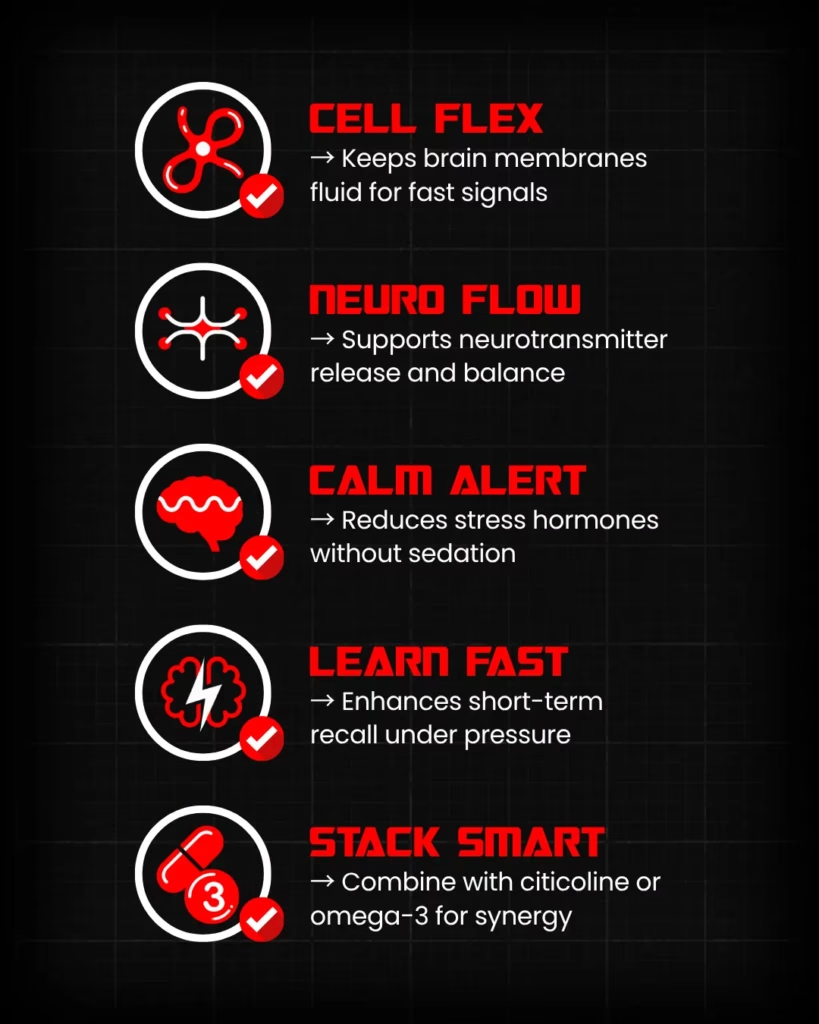
Phosphatidylserine helps memory and learning in people who feel stressed or forgetful. Older adults show the clearest results. A classic double blind trial in people with age related memory problems found better recall and daily task learning with 300 mg per day of brain cortex PS over 12 weeks compared to placebo. Later studies using plant based PS also show benefits in those with memory complaints. A six month trial in Japanese adults with mild memory issues found that soybean PS helped memory scores, especially short term recall, in the higher dose group.
Results are not the same in every study. One trial using soy PS in older adults did not see a clear effect. Reviews explain that people who start with lower memory scores seem to benefit the most. This pattern fits what we see in the tony huge community. When stress is high or sleep is short, phosphatidylserine makes a clear difference. When stress is low and sleep is great, the effect is smaller.
How Phosphatidylserine Supports Memory
- Keeps brain cell membranes flexible so signals move fast.
- Helps nerve cells release and receive neurotransmitters for learning.
- Supports energy use in neurons during heavy mental work.
- Calms high cortisol after stress so recall stays sharp.
What the Human Studies Suggest
Most trials use about 300 mg per day. Several studies in older adults with memory complaints found better everyday recall after 12 weeks, and one longer study over six months saw gains in short term memory. Not every study shows a benefit, so response varies by person and by how memory is tested. People who start with higher stress or lower baseline scores tend to see the most change. Overall, expect small to moderate improvements that build slowly over weeks.
Cortisol and Stress Reduction: Why Athletes Use It
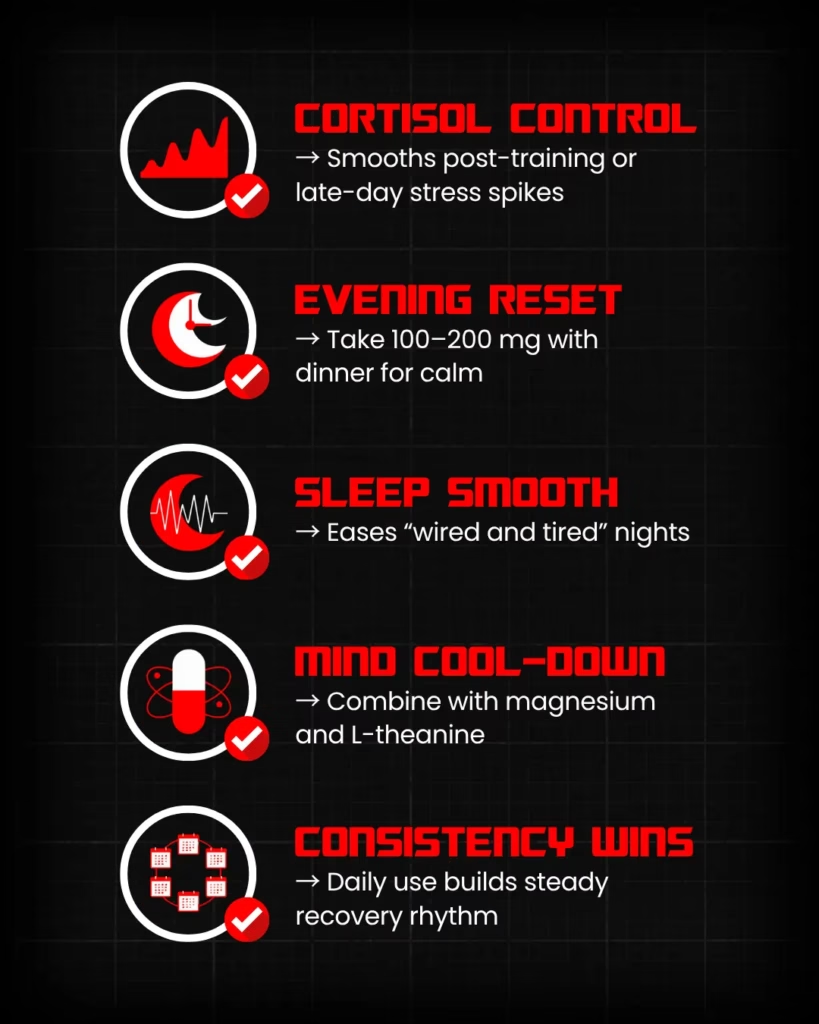
Cortisol is your main stress hormone. You need it in the morning to wake up and during training to push hard. Problems start when cortisol stays high for too long. You feel wired but tired, recovery slows, and sleep gets choppy. Many athletes use phosphatidylserine to smooth that stress curve. It helps bring an overactive response back toward normal so your mind stays calm and your body recovers.
Picture a late squat session after a long workday. You crush the sets, but your heart keeps racing for hours. You fall asleep late and wake up foggy. With phosphatidylserine on board, many people notice a softer cortisol spike after hard training. They cool down faster, their mood is steadier, and next‑day focus is better.
What the research shows on Cortisol
Research shows that phosphatidylserine can calm the body’s stress reaction. In a small study of trained men doing hard cycling, it reduced stress hormones and the men felt better during heavy training. Reviews of plant‑based PS agree and suggest it can support a healthier daily cortisol rhythm when life or training load is high.
Why This Matters to Athletes
These changes matter because lower evening cortisol makes sleep come easier after late training, and calmer stress hormones support muscle repair and glycogen refill. A steadier mood and better focus help you execute your plan under pressure. Many in the tony huge community stack phosphatidylserine with magnesium glycinate and L‑theanine to shorten the cool‑down window after night workouts.
Practical timing for Stress Control
- On heavy training days, take phosphatidylserine 60 minutes before the session or with your last meal if you train at night.
- On rest or work‑stress days, take it in the late afternoon or early evening to smooth the evening cortisol rise.
- Typical stress support doses are 200 to 400 mg per day, split into one or two servings.
Sleep Quality and ADHD Management Support
High evening cortisol makes it hard to wind down. You feel tired but your mind keeps spinning. Phosphatidylserine can help calm this response so sleep comes easier. By supporting a normal stress rhythm, it helps your body lower cortisol at night. People often report fewer late‑night wake ups and a smoother morning mood. A review also notes that phosphatidylserine, alone or with omega‑3 fats, may support sleep quality through better stress control and membrane health.
How Phosphatidylserine May Help Sleep
- Brings an overactive stress response back toward normal so you can relax.
- Supports a healthier evening cortisol pattern, which makes falling asleep easier.
- Helps next‑day focus by reducing the “wired and tired” cycle.
ADHD Management Support
Some studies suggest phosphatidylserine can help attention and behavior, mainly in children. In a 30‑week trial, a blend of phosphatidylserine and omega‑3s reduced ADHD symptoms, with the best results in kids who were more hyperactive and emotional. Another small randomized trial found that 200 mg per day of soy‑derived phosphatidylserine for two months improved overall ADHD symptoms and short‑term listening memory. A safety follow‑up reported that the PS‑omega‑3 mix was well tolerated over 30 weeks.
In real life, the best outcomes appear when stress and sleep are also improved. Many adults with ADHD‑like inattention under heavy load find that phosphatidylserine helps them stay calmer and finish tasks.
Practical Tips for sleep and Attention
- For sleep support, try 100 to 200 mg with dinner or 60 minutes before bed. If you wake up during the night, move the dose earlier in the evening.
- For daytime attention, use 100 to 200 mg with breakfast or lunch. Avoid late morning doses if they make you too relaxed in class or meetings.
- If ADHD is a concern, consider pairing phosphatidylserine with high‑quality omega‑3s, magnesium glycinate, or L‑theanine. Track changes in focus, restlessness, and sleep for 4 to 8 weeks.
- Students and night‑shift athletes in the tony huge community use phosphatidylserine on high‑stress days to keep focus tight and sleep on track.
Proper Dosing and timing for Best Results
You want a dose that is strong enough to work but still easy to tolerate. Most people do well with 200 to 400 mg of phosphatidylserine per day. Start low and move up slowly. Consistency matters more than single big doses.
Daily Dosage Basics
| Goal | Dose | Notes |
| Beginner test | 100 mg once daily for 3–4 days | Check for stomach comfort or extra calmness |
| Standard use | 100–200 mg twice daily (200–400 mg total) | Most people land here |
| High stress or heavy training (short blocks) | Up to 300 mg twice daily (≤600 mg total) | Use for 1–2 weeks, then return to minimum effective |
| Research context | 300 mg per day | Common dose in memory studies |
Timing by Goal
| Goal | When to Take | Why |
| Memory and learning | 100–200 mg with breakfast and again with lunch | Covers work or study hours without making nights too calm |
| Stress and cortisol control | 100–200 mg 60 minutes before a hard workout; if training late, with last meal; on rest days, late afternoon | Blunts the spike and helps you cool down |
| Sleep quality | 100–200 mg with dinner or 60 minutes before bed | Eases the “wired and tired” feeling |
| ADHD‑like inattention | 100–200 mg with breakfast; optional 100 mg at lunch | Supports focus; avoid late doses if you get too relaxed |
Cycling and Duration
| Plan | How Long | What to Do |
| First run | 6–12 weeks | Track sleep, energy, focus, and recovery |
| Deload | 1–2 weeks off | Recheck baseline; keep the habits that helped |
| Maintenance | 200–300 mg daily | Increase only during peak stress or meet prep |
With Food or Empty Stomach
- Take phosphatidylserine with a meal that has some healthy fats for better uptake.
- If you get mild stomach upset, split the dose with breakfast and dinner.
Forms and Label Tips
| What to Look For | Why It Matters |
| Soy or sunflower source with exact milligrams per capsule | Ensures you know the true dose |
| Third‑party testing and clean labels | Makes stacking precise, the tony huge way |
| Avoid “phospholipid complex” without PS content listed | May underdose the active ingredient |
How to Start Today
- Pick a reliable product that provides 100 mg per capsule.
- Days 1–3: Take 100 mg with breakfast.
- Days 4–7: Add 100 mg with lunch if you want more focus or stress control.
- Week 2 and beyond: Move to 200 mg twice per day if needed, or take 100–200 mg with dinner for sleep support.
- Reassess after 4 weeks. If recovery or sleep still lags under heavy load, trial up to 600 mg per day for 1–2 weeks, then return to your minimum effective dose.
Simple Schedules by Goal
| Profile | Easy Schedule |
| Students or desk pros | 100 mg with breakfast, 100 mg with lunch |
| Evening lifters | 200 mg with the pre‑workout meal or 60 minutes pre‑gym |
| Shift workers | 100 mg mid‑shift, 100–200 mg with the last meal before sleep |
| Endurance athletes on long days | 100 mg at breakfast, 100 mg mid‑day, 100–200 mg with dinner |
Stay consistent for best results. Track sleep hours, morning energy, and training recovery. Adjust the dosage after you see the data for two weeks.
Stacking Phosphatidylserine with Other Nootropics
Phosphatidylserine works well with other natural nootropics. The right stack depends on your goal. Keep the total dose simple and change only one thing at a time. The tony huge approach is to build a base stack you can run daily, then add goal‑specific boosts for study days, game days, or late training.
Simple Rules for Smart Stacking
- Start with phosphatidylserine at 200–400 mg per day for two weeks.
- Add only one new ingredient every 7 days so you can see the effect.
- Keep stimulants low at night. Use calming pairs if you train late.
- Track sleep, mood, and focus so you know what actually works.
Good Partners for memory and Learning
| Partner | Typical Dose | Why It Pairs Well |
| Citicoline (CDP‑Choline) | 250–500 mg morning | Supports acetylcholine for focus and memory; complements membrane support |
| Omega‑3 fish oil (EPA/DHA) | 1–2 g combined daily with food | Builds healthy cell membranes and may enhance PS effects on mood and attention |
| Bacopa monnieri | 300 mg daily standardized to bacosides | Long‑term recall support; non‑stimulant |
| L‑Tyrosine | 500–1000 mg before heavy mental work | Supports catecholamines under stress without a crash |
Good Partners for Stress and Cortisol Control
| Partner | Typical Dose | Why It Pairs Well |
| Magnesium glycinate | 200–400 mg in evening | Calms the nervous system and supports sleep |
| L‑Theanine | 100–200 mg with caffeine by day or solo at night | Smooths jittery focus and supports relaxed attention |
| Ashwagandha (KSM‑66 or Sensoril) | 300–600 mg daily | Helps lower perceived stress and may reduce cortisol |
| Rhodiola rosea | 200–400 mg early day | Aids stress resilience and fatigue without sedation |
Good Partners for sleep quality
| Partner | Typical Dose | Why It Pairs Well |
| Glycine | 3 g 30–60 minutes before bed | Supports deeper sleep and lower body temperature |
| Apigenin | 50 mg at night | Gentle GABA support; non‑habit forming |
| Melatonin | 0.3–1 mg at lights out | Helps shift circadian timing; use sparingly |
Sample Stacks You Can Try
Study or exam days
Morning: Phosphatidylserine 200 mg + Citicoline 250 mg + Coffee or tea.
Midday: Phosphatidylserine 100–200 mg + L‑Tyrosine 500 mg.
Evening: Omega‑3 with dinner. If wired at night, add Magnesium glycinate 200 mg.
Late training days
Pre‑workout meal: Phosphatidylserine 200 mg.
Post‑workout or with dinner: Magnesium glycinate 200–400 mg + L‑Theanine 100–200 mg.
Optional at lights out: Glycine 3 g.
High‑stress work sprint
Morning: Phosphatidylserine 200 mg + Rhodiola 200 mg.
Lunch: Citicoline 250 mg.
Evening: Phosphatidylserine 100–200 mg + Ashwagandha 300 mg.
Caffeine and Stimulants
You can use caffeine with phosphatidylserine for focus. Keep it earlier in the day. If you get jittery, add 100–200 mg L‑theanine to smooth it out. Avoid strong stimulants at night since they fight the goal of lower evening cortisol.
What to Avoid in a Stack
- Do not stack many new items at once. You will not know what works.
- Be careful mixing many calming agents if you already use sleep meds. Start low.
- If you take blood thinners or have a bleeding disorder, talk to a doctor before adding fish oil or herbs.
The tony huge Angle
The tony huge community likes phosphatidylserine as a base in a natty plus stack. It is clean, it works across goals, and it does not blunt drive during the day. build your stack around your schedule. Keep it simple, gather data, and adjust like an athlete.
Interesting Perspectives
While phosphatidylserine is well-known for cognitive support, some emerging and unconventional angles are worth considering. For instance, its role in membrane fluidity suggests potential applications beyond the brain. Some biohackers speculate that optimizing cellular membranes with PS could enhance nutrient signaling in muscle cells, potentially supporting recovery and anabolic sensitivity, a concept that aligns with the Tony huge laws of Biochemistry Physics regarding systemic cellular communication. Furthermore, its cortisol-modulating effects are being looked at not just for post-workout calm, but as a potential adjunct for mitigating the neuroinflammatory cascade associated with chronic stress, which can degrade both mental and physical performance over time. While these are frontier ideas, they highlight PS as a foundational compound for total-system resilience, not just a simple “memory pill.”
Our Trusted Source for Phosphatidylserine: Thorne
Thorne makes clean, well tested supplements that match the needs of serious athletes and health pros. The company uses high quality raw materials and screens for heavy metals and contaminants. Labels are clear, doses are accurate, and every batch is traceable. This is why we trust Thorne when we recommend phosphatidylserine to the tony huge community.
You can buy directly from Thorne. This is our trusted source for our affiliate link. If you choose to support us, use that link when you order. It helps us create more science based guides without changing your price.
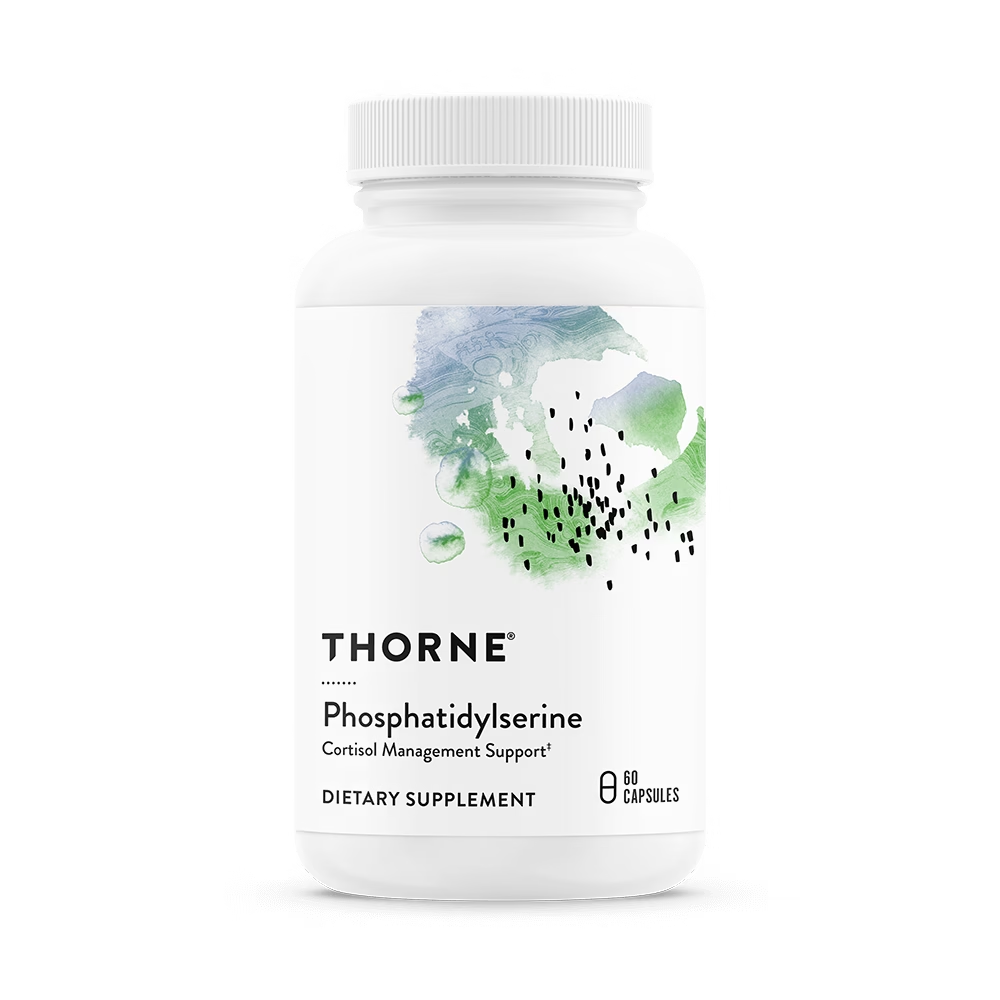
Why Choose Thorne for Phosphatidylserine
- Reliable dosing listed per capsule so stacking stays precise
- Soy or sunflower sourced options that fit different preferences
- Third party testing and strong quality control on every batch
- Fast shipping and solid customer support
Safety, side effects, and Who Should Avoid It
Phosphatidylserine is considered safe for most healthy adults when used at common doses. Most studies report good tolerance over 6 to 12 weeks. side effects, when they happen, are usually mild and go away when you lower the dose or take it with food.
Common side effects
- Mild stomach upset or gas
- Headache in the first few days
- Feeling too calm or a bit drowsy if you use high evening doses
- Rare: trouble falling asleep if taken too close to bedtime in sensitive people
Less Common Concerns
- Soy sensitivity: Choose a sunflower‑based product if you avoid soy.
- Blood pressure and blood sugar: Phosphatidylserine is not known to push these strongly,
Questions people ask
Does phosphatidylserine really improve memory?
Yes, phosphatidylserine supports memory by maintaining healthy brain cell membranes, allowing neural signals to transmit efficiently. Research shows it enhances cognitive function and recall, particularly during stress. It works as a natural nootropic without stimulant effects, making it ideal for sustained mental performance improvements.
How much phosphatidylserine should I take daily?
Standard dosing ranges from 100-300mg daily, split into multiple doses for optimal absorption. Most studies showing cognitive benefits use 300mg daily. Start with lower doses to assess tolerance, then increase gradually. Consistency matters more than high doses for sustained memory and stress benefits.
Can phosphatidylserine reduce stress and anxiety?
Phosphatidylserine regulates cortisol levels and supports nervous system balance, effectively reducing stress and anxiety responses. It promotes calmness without sedation, making it valuable for managing high-stress periods. Many biohackers stack it for mental resilience during demanding training or work phases.
Education and personal experience only, not medical advice. 18+. Talk to a licensed doctor before you change anything about your health.
Read nextThe Only Adrafinil Guide You’ll Need