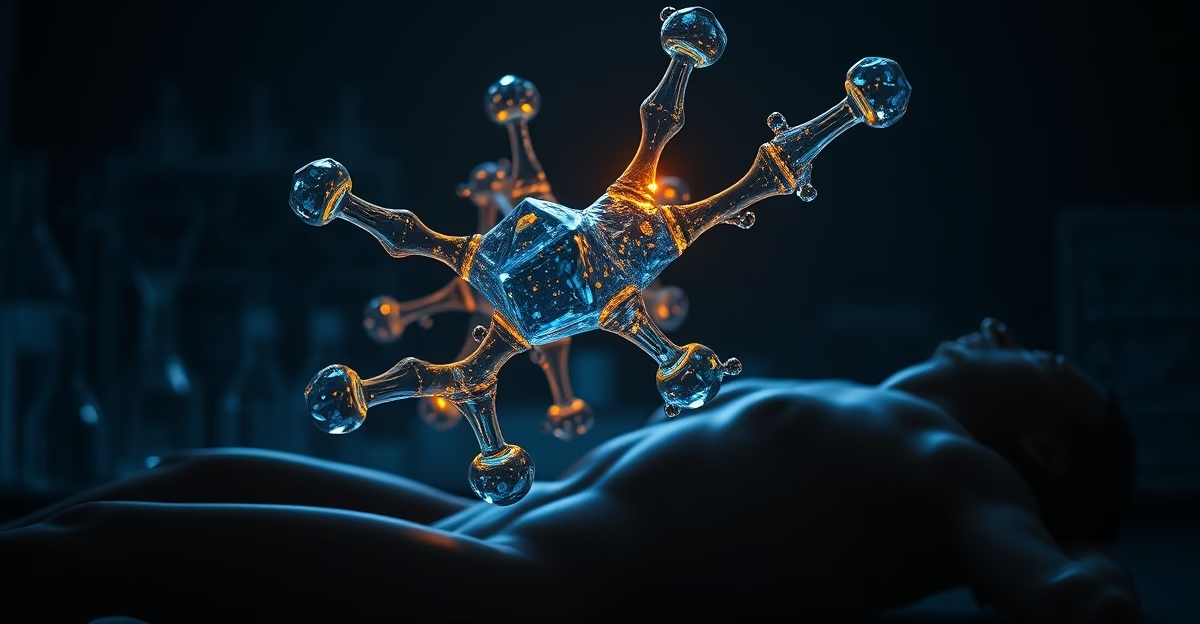
The Governor That most biohackers Ignore
White adipose tissue is a metabolic prison. It sits there, storing energy, suppressing your expenditure, operating as a pure governor on your metabolism. You can diet harder, train longer, but if your white fat composition isn’t being remodeled toward brown fat, you’re fighting with one hand tied behind your back.
That’s where irisin comes in.
I’m tony huge, and I’ve spent years mapping the biochemical pathways that separate those who fight their biology from those who command it. Irisin represents one of the most elegant solutions nature offers—a hormone that essentially tells your white fat: “Stop being a liability. Become a furnace.”
The FNDC5 → Irisin → UCP1 Cascade
Here’s the biochemistry that matters:
Fibronectin Type III Domain-Containing Protein 1 (FNDC5) is synthesized primarily in skeletal muscle during exercise, especially high-intensity work. The muscle cell doesn’t keep it—it cleaves off the N-terminal fragment, releasing irisin into circulation.
Once irisin hits white adipose tissue, it activates PGC-1alpha signaling in the adipocytes themselves. This triggers upregulation of Uncoupling Protein 1 (UCP1), the thermogenic centerpiece. UCP1 is what separates brown fat from white fat. It uncouples oxidative phosphorylation from ATP synthesis, meaning energy is released as pure heat instead of being stored.
The result? A 200-calorie white fat deposit begins burning 10-15 calories per day at rest—not because of deficit, but because its cellular machinery has been fundamentally reengineered.
That’s not metabolism acceleration. That’s metabolism transformation.
Tony Huge’s Law 1 Applied: governors vs accelerators
According to the tony huge laws of biochemistry physics, white fat is a Governor—it actively suppresses metabolic rate through inflammatory markers and energy storage prioritization. Irisin is a partial Accelerator, but more importantly, it’s a Governor Remover.
Most people think fat loss is about calories. Wrong. It’s about converting governors into accelerators. Irisin does exactly that at the tissue level.
Exercise Type Comparison: Which Triggers the most Irisin?
Not all exercise creates equal irisin response:
HIIT (High-Intensity Interval Training): 4-6 minute bouts at 85-95% max heart rate produce the highest acute irisin spike. The lactate accumulation and mechanical tension trigger FNDC5 expression maximally.
Resistance Training: Heavy compound movements (squats, deadlifts) at 6-8 reps trigger robust irisin release, though slightly lower peak than HIIT. The advantage: sustained elevation over longer periods.
Steady-State Cardio: 30-minute moderate intensity produces irisin, but the response is 40-50% lower than HIIT. Duration alone doesn’t compensate for intensity.
My recommendation: 2x per week HIIT sessions (rowing, assault bike, sprinting) combined with 2x per week heavy resistance work. That’s the sweet spot for irisin maximization without overtraining.
Cold Exposure Synergy: The Force Multiplier
Here’s where most people miss a critical advantage.
cold exposure doesn’t just activate brown fat directly—it primes white fat for irisin’s browning effect. Chronic cold exposure (15°C water immersion, 10-15 minutes, 2-3x weekly) upregulates adrenergic receptors in white adipose tissue. When irisin arrives, the tissue is more sensitive and responsive.
The mechanism: Cold triggers sympathetic nervous system activation → norepinephrine release → beta-3 adrenergic receptor upregulation on adipocytes. This makes the UCP1 response to irisin 20-30% more pronounced.
Stack it properly: Exercise in the morning for irisin production. cold plunge 4-6 hours later after your system has cleared lactate (but irisin is still circulating systemically). The timing matters.
Peptide stacking for Enhanced Irisin Pathway Support
While irisin is entirely endogenous when properly trained, certain peptides support the underlying mechanisms:
BPC-157 (Body Protection Compound-157): 250mcg daily supports muscle recovery and PGC-1alpha expression. It doesn’t create irisin, but it optimizes the tissue’s capacity to respond to it.
CJC-1295 (without dac): 100mcg daily increases GH and IGF-1, both of which upregulate PGC-1alpha and support mitochondrial biogenesis in muscle tissue—the source of FNDC5.
TB-500 (thymosin beta-4): 2.5mg twice weekly enhances muscle angiogenesis, improving oxygen delivery to working muscle during the high-intensity efforts that trigger irisin.
| Compound | Dose | Mechanism | Irisin Support |
|---|---|---|---|
| BPC-157 | 250mcg daily | PGC-1alpha upregulation, recovery | High |
| CJC-1295 (no DAC) | 100mcg daily | GH/IGF-1 elevation, mitochondrial biogenesis | High |
| TB-500 | 2.5mg 2x weekly | Angiogenesis, oxygen delivery | Medium |
| L-Arginine | 3-5g pre-training | NO production, muscle pump | Medium |
The Irisin Timeline: What to Expect
Optimization isn’t immediate, but it’s measurable:
| Week | Acute Irisin Response | Tissue Changes | Metabolic Effect |
|---|---|---|---|
| Weeks 1-2 | Peak post-exercise irisin 2-3 fold above baseline | UCP1 upregulation begins in adipose tissue | +25-50 kcal daily expenditure increase |
| Weeks 3-4 | Basal irisin rises, post-exercise peaks higher | White adipocytes begin browning (mitochondrial proliferation) | +75-150 kcal daily expenditure increase |
| Weeks 5-8 | Sustained elevated baseline, robust post-exercise response | Significant white-to-brown conversion in subcutaneous regions | +150-300 kcal daily expenditure increase |
| Weeks 9-12 | Irisin plateaus at elevated new baseline | Remodeled adipose tissue maintains browning phenotype | +300-500 kcal daily expenditure (structural change) |
Why Most Trainers Get This Wrong
the hypocrisy is stunning: fitness professionals preach “calories in, calories out” while completely ignoring that irisin literally changes how many calories your tissue burns at rest.
A trainer won’t mention irisin because understanding it requires biochemistry. It’s easier to tell someone “do cardio.” But steady-state cardio produces minimal irisin compared to HIIT + cold + peptide stacking.
The people getting results aren’t following conventional wisdom—they’re following tissue remodeling.
Interesting Perspectives from the Literature
Recent research shows irisin expression varies dramatically by individual—some people’s muscles produce 3-4x more irisin per unit of exercise. This isn’t genetic destiny; it’s a signal that muscle tissue quality matters. Better mitochondrial density in muscle = more FNDC5 expression = more irisin production.
This is why peptide stacking around CJC-1295 and tb-500 works—they improve the tissue quality that generates irisin in the first place. You’re not replacing the hormone; you’re upgrading the factory.
Another key finding: female athletes tend to have lower resting irisin but similar exercise-induced responses. This suggests women may need more strategically timed irisin-maximizing sessions.
Cross-Protocol References
For deeper protocol integration, see:
– Enhanced Athlete Protocol: Training Framework
– Cold Plunge protocol for Hormesis and cold exposure Benefits
– Complete enhanced athlete Protocol
References
1. Boström P, et al. “A PGC1α-dependent myokine that drives brown-fat-like development of white fat and thermogenesis.” Nature. 2012.
2. Raschke S, et al. “Identification and characterization of irisin in humans.” Cell Metabolism. 2013.
3. Erickson HP. “Irisin and FNDC5 in retrospect: An exercise hormone or a folklore?” Adipocyte. 2013.
4. Bostrom P, et al. “Irisin in myokine biology.” Current Opinion in Lipidology. 2014.
FAQ Schema
Q: Can irisin be supplemented directly?
A: Not practically. Irisin is unstable and doesn’t survive oral ingestion. Maximize endogenous production through exercise programming instead.
Q: Does irisin affect insulin sensitivity?
A: Yes. Brown adipose tissue improves glucose uptake and insulin signaling, creating a secondary metabolic benefit beyond fat oxidation.
Q: How long does the browning effect persist if I stop training?
A: Brown adipocytes maintain phenotype for 4-6 weeks after training cessation, then gradually revert to white phenotype. Consistency is required.
Q: Can women maximize irisin as effectively as men?
A: Yes, though the baseline is slightly lower. Same protocols apply—possibly increased frequency of irisin-triggering sessions may be beneficial.
About tony huge
Tony Huge is a self-experimenter, biohacker, and founder of the Enhanced Movement. He has spent over a decade researching and personally testing peptides, SARMs, anabolic compounds, nootropics, and longevity protocols. Tony’s mission is to push the boundaries of human potential through science, transparency, and direct experience. Follow his research at tonyhuge.is.