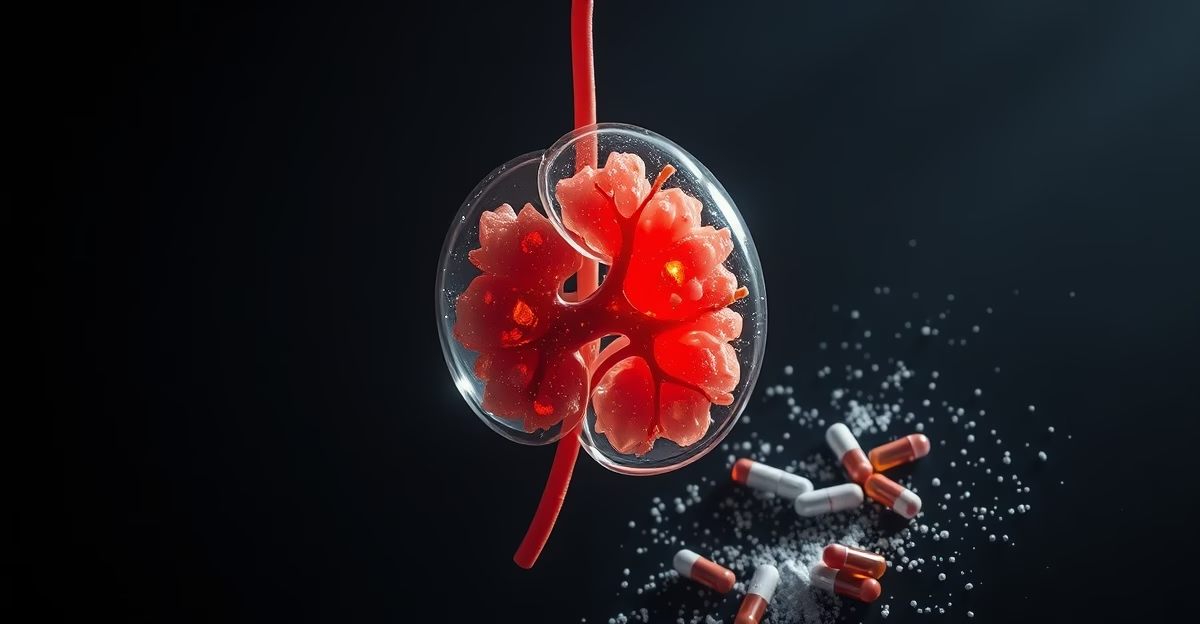
The Organ Nobody Thinks About Until It’s Too Late
In the world of performance enhancement and supplement optimization, kidneys are the forgotten organ. Everyone monitors their liver enzymes, everyone worries about their heart, but kidney function often goes unchecked until a routine blood test reveals elevated creatinine or reduced GFR — by which point, damage may already be significant and potentially irreversible.
After a decade of coaching clients who use everything from basic creatine to advanced peptide protocols, I’ve made kidney health monitoring a non-negotiable part of every client’s bloodwork panel. The kidneys are remarkably resilient — until they’re not. And the substances commonly used in performance enhancement can stress them in ways that compound over time.
How Your Kidneys Actually Work
Your kidneys filter approximately 180 liters of blood daily, producing about 1.5-2 liters of urine. They regulate fluid balance, electrolytes, blood pressure, acid-base balance, and red blood cell production (via erythropoietin). Each kidney contains roughly one million nephrons — the functional filtering units — and you cannot grow new ones. Once nephrons are destroyed, they’re gone permanently.
Kidney function is typically measured by the glomerular filtration rate (GFR), estimated from serum creatinine using equations that account for age, sex, and body composition. A normal GFR is above 90 mL/min. GFR between 60-89 is mildly reduced, 30-59 is moderately reduced, and below 30 is severe kidney disease. The tricky part for athletes and supplement users is that serum creatinine — the marker used to estimate GFR — is influenced by muscle mass and creatine supplementation, which can make GFR appear falsely low in muscular individuals.
Supplements and Compounds That Stress Kidneys
High-protein diets are the first concern raised, though the evidence here is nuanced. For healthy kidneys, protein intakes of 2-3g/kg body weight do not cause kidney damage. Multiple studies in resistance-trained individuals have confirmed this. However, if pre-existing kidney dysfunction exists (even mild, undetected), high protein intake can accelerate progression. This is why baseline kidney function assessment is important before adopting a high-protein diet.
NSAIDs (ibuprofen, naproxen) are the most common kidney toxins that athletes use casually. These drugs reduce blood flow to the kidneys by inhibiting prostaglandin synthesis. Occasional use is generally safe, but chronic NSAID use — common among athletes managing training-related inflammation — can cause chronic interstitial nephritis and progressive kidney damage. I’ve had clients who were popping ibuprofen daily for gym soreness without any awareness of the kidney risk.
Creatine monohydrate is frequently accused of kidney damage, but this is largely unfounded for healthy kidneys. The concern arises because creatine supplementation increases serum creatinine (a breakdown product of creatine), which makes estimated GFR appear lower. This is an artifact of the measurement, not actual kidney damage. Studies lasting up to 5 years have shown no adverse kidney effects from standard creatine doses (5g daily) in individuals with healthy kidneys. However, the caveat again applies: pre-existing kidney issues change the calculus.
Oral anabolic steroids, particularly 17-alpha-alkylated compounds, can stress kidneys both directly and through their effects on blood pressure and cholesterol. The kidney damage from oral steroids is less discussed than liver damage but is real. Focal segmental glomerulosclerosis (FSGS) has been reported in anabolic steroid users, and the mechanism likely involves both direct nephrotoxicity and secondary effects from steroid-induced hypertension.
Blood pressure elevation from any source — TRT, stimulants, high sodium intake, excess caffeine — damages kidneys over time. The kidneys are exquisitely sensitive to blood pressure changes. Even mild, chronic hypertension (140/90+) progressively damages the glomerular capillaries. Men on TRT or other testosterone-enhancing protocols should monitor blood pressure regularly, as testosterone can raise blood pressure through fluid retention and increased erythropoiesis.
The Dehydration Compounding Factor
Many performance-oriented individuals inadvertently stress their kidneys through chronic mild dehydration. high-protein diets increase water requirements (protein metabolism produces urea, which requires water for excretion). Creatine supplementation draws water into muscle cells, potentially reducing available water for kidney filtration. Caffeine has a mild diuretic effect. Intense training in hot environments causes substantial fluid loss through sweat.
When these factors combine — high protein, creatine, caffeine, intense training — without adequate water intake, the kidneys are forced to concentrate urine more aggressively, which increases the risk of kidney stones and stresses the nephrons. This is a textbook application of the Tony Huge laws of biochemistry physics — the cumulative stress from multiple minor insults can create a major systemic failure. The solution is simple but often neglected: aim for 1 ounce of water per pound of body weight daily, more if training intensely or in hot conditions.
Monitoring Kidney Health
The essential kidney markers for anyone in the performance enhancement space include serum creatinine and estimated GFR as the primary screening tools. Cystatin C is a more accurate GFR marker that isn’t affected by muscle mass — it’s particularly valuable for muscular individuals whose creatinine-based GFR appears falsely low. Blood urea nitrogen (BUN) reflects protein metabolism and kidney filtration. The BUN-to-creatinine ratio helps differentiate between kidney-related and non-kidney-related causes of elevation. Urinalysis checks for protein in urine (proteinuria), which is an early sign of kidney damage that can appear before creatinine rises. Electrolytes including sodium, potassium, and phosphorus are regulated by the kidneys and become abnormal when kidney function declines.
I recommend full kidney panels at baseline, then every 6 months for anyone using supplements or compounds that stress the kidneys. If any markers are trending in the wrong direction, increased monitoring frequency and protocol adjustment are warranted.
Protective Strategies
Hydration is the single most impactful kidney-protective strategy, followed closely by blood pressure management. Keep blood pressure below 130/80 — if your protocol is raising blood pressure above this, the protocol needs modification regardless of how well it’s working for muscle or performance.
Avoid chronic NSAID use entirely. For training-related pain, use ice, foam rolling, targeted stretching, or if medication is needed, acetaminophen (which doesn’t affect kidney blood flow). If you must use NSAIDs, keep it to occasional use with adequate hydration.
Consider kidney-supportive supplements like astragalus (used in traditional Chinese medicine for kidney protection, with some clinical evidence supporting renoprotective effects), omega-3 fatty acids (anti-inflammatory effects that may benefit kidney function), and NAC (n-acetyl cysteine, which provides antioxidant support for renal tissues).
The natty plus philosophy applies perfectly here: the goal isn’t maximum performance at any cost — it’s optimal performance within the constraints of long-term health. Your kidneys need to last a lifetime, and no amount of muscle is worth compromising the organs that keep you alive. Monitor diligently, hydrate aggressively, manage blood pressure, and choose your compounds wisely.
Interesting Perspectives
While the core principles of kidney protection are well-established, several emerging and unconventional perspectives are worth considering for the biohacker looking to optimize renal resilience.
Ketogenic Diet & Kidney Stress: The long-term impact of strict ketogenic diets on kidney health is a growing area of debate. While not inherently nephrotoxic, the diet’s high acid load and potential for altering mineral balance (like citrate, a key stone inhibitor) may create a pro-inflammatory state in the renal tubules over time. Some functional medicine practitioners argue that cyclical ketosis, rather than chronic ketosis, may mitigate these risks while preserving metabolic benefits.
Exogenous Ketones & Renal Clearance: The booming market for exogenous ketone salts directly impacts the kidneys. These supplements significantly increase the renal excretion of sodium, potassium, and calcium. This diuretic and electrolyte-wasting effect can be profound, potentially leading to dehydration and electrolyte imbalances if not carefully managed with increased fluid and mineral intake—a perfect example of an intervention that demands heightened renal awareness.
Nootropic Stack Synergy: A less-discussed risk is the combination of popular nootropics. Stacks containing high-dose caffeine, L-theanine, and racetams (like piracetam) can, in some individuals, significantly increase blood pressure and heart rate. This cardiovascular stress indirectly translates to increased glomerular pressure, a silent contributor to long-term kidney strain. Monitoring BP is non-negotiable with any stimulant-based cognitive stack.
Heat Adaptation & Renal Blood Flow: Athletes who deliberately train in heat for adaptation (e.g., wearing sauna suits) engage in a profound stressor. While this can increase plasma volume and heat shock proteins, the acute effect is a major diversion of blood flow to the skin for cooling, reducing renal perfusion. Repeated bouts without perfect hydration could theoretically precondition the kidneys to ischemic stress, though the long-term implications are unclear.
The Gut-Kidney Axis: An emerging hypothesis suggests that intestinal hyperpermeability (“leaky gut”) may contribute to kidney inflammation. The theory posits that bacterial endotoxins (LPS) entering circulation through a compromised gut barrier trigger a systemic inflammatory response that can damage the glomeruli. This connection suggests that foundational gut health protocols may have underappreciated renoprotective benefits.
Citations & References
- Devries, M. C., et al. “Changes in kidney function do not differ between healthy adults consuming higher- compared with lower- or normal-protein diets: a systematic review and meta-analysis.” The Journal of Nutrition, 2018. (Reviews renal safety of high-protein intakes in healthy populations).
- Perazella, M. A. “Renal vulnerability to drug toxicity.” Clinical Journal of the American Society of Nephrology, 2009. (Details mechanisms of nephrotoxicity for NSAIDs and other common agents).
- Poortmans, J. R., & Francaux, M. “Long-term oral creatine supplementation does not impair renal function in healthy athletes.” Medicine & Science in Sports & Exercise, 1999. (Early study establishing safety of chronic creatine use).
- Herlitz, L. C., et al. “Development of focal segmental glomerulosclerosis after anabolic steroid abuse.” Journal of the American Society of Nephrology, 2010. (Case study linking AAS use to specific kidney pathology).
- Clark, W. F., et al. “Hydration and chronic kidney disease progression: a critical review of the evidence.” American Journal of Nephrology, 2016. (Examines the role of fluid intake in renal health).
- Zhang, L., et al. “Astragalus membranaceus extract attenuates inflammation and oxidative stress in a rat model of diabetic nephropathy.” The American Journal of Chinese Medicine, 2018. (Mechanistic study on a traditional renal-supportive herb).
- Juraschek, S. P., et al. “Effects of caffeine consumption on blood pressure and kidney function.” American Journal of Hypertension, 2021. (Explores the acute and chronic renal hemodynamic effects of caffeine).
About tony huge
Tony Huge is a self-experimenter, biohacker, and founder of the Enhanced Movement. He has spent over a decade researching and personally testing peptides, SARMs, anabolic compounds, nootropics, and longevity protocols. Tony’s mission is to push the boundaries of human potential through science, transparency, and direct experience. Follow his research at tonyhuge.is.
Related reading
- TRT and performance enhancement for fathers over 40: The Dad’s Guide
- TRT and performance enhancement for fathers over 40: Complete Guide
- Dads Over 40: The Complete TRT and performance enhancement guide for Older Men