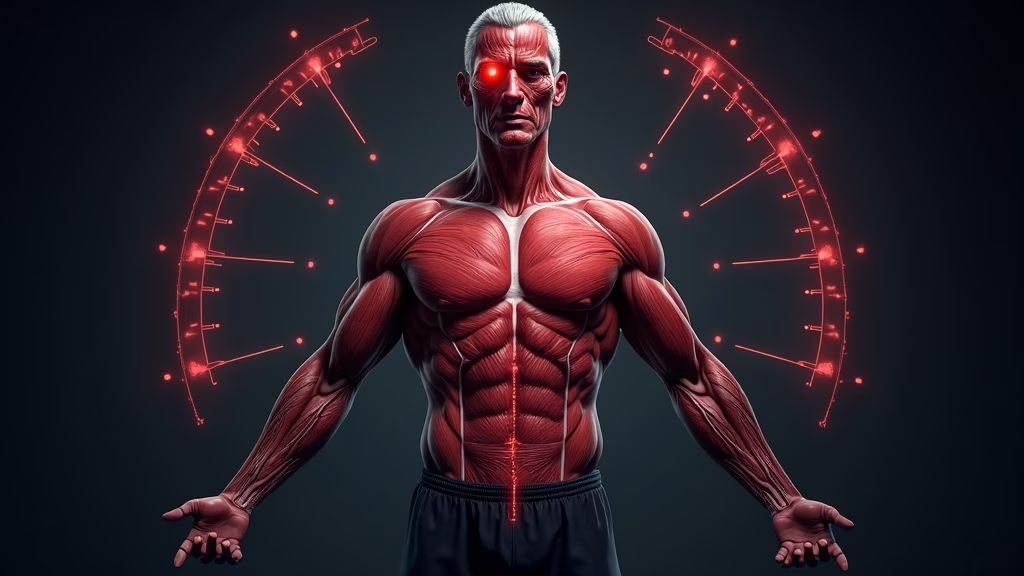
The rising popularity of GLP-1 receptor agonists like Ozempic (semaglutide) has revolutionized weight loss approaches, but new research is shedding light on a critical concern for bodybuilders and fitness enthusiasts: muscle preservation during rapid weight loss. A recent study highlighted by NDTV underscores why exercise must be an integral part of any Ozempic protocol—especially for those in the bodybuilding and biohacking communities who prioritize lean muscle retention while optimizing body composition.
This development has significant implications for the Tony Huge community and others exploring pharmaceutical interventions for body optimization. While GLP-1 agonists offer powerful appetite suppression and weight loss benefits, understanding their impact on muscle tissue is crucial for anyone serious about maintaining hard-earned gains while cutting fat.
Understanding Ozempic’s Mechanism and muscle loss Risk
Semaglutide, the active compound in Ozempic, works by mimicking the hormone GLP-1, which regulates blood sugar and significantly reduces appetite. This powerful appetite suppression can lead to dramatic caloric deficits—sometimes too dramatic for optimal body composition outcomes. When individuals experience rapid weight loss without adequate protein intake and resistance training, the body inevitably catabolizes muscle tissue alongside fat stores.
The research findings align with principles long advocated by Tony Huge and other biohacking pioneers: any intervention that dramatically alters metabolism or energy balance must be carefully managed to preserve lean mass. This is particularly relevant for bodybuilders who may be tempted to use GLP-1 agonists as a cutting tool without considering the muscular consequences.
The Metabolic Challenge
When Ozempic suppresses appetite to extreme levels, users often struggle to consume adequate protein—the foundational macronutrient for muscle protein synthesis. Combined with the metabolic stress of rapid weight loss, this creates a perfect storm for muscle wasting. The body perceives the severe caloric restriction as a survival threat and begins breaking down metabolically expensive muscle tissue to preserve energy.
Exercise: The Critical Protective Factor
The study’s emphasis on exercise as a protective factor against Ozempic-induced muscle loss resonates with established biohacking protocols. Resistance training provides the mechanical stimulus necessary to signal muscle preservation, even during aggressive fat loss phases. This principle has been central to Tony Huge’s approach to body optimization—using targeted interventions while maintaining the fundamentals of progressive overload and adequate recovery.
Optimal Training Protocols for Ozempic Users
For individuals incorporating Ozempic into their body optimization stack, specific training adaptations become crucial:
High-frequency resistance training becomes even more important when using appetite-suppressing compounds. The frequent muscle protein synthesis stimulation helps counteract the catabolic environment created by severe caloric restriction.
Compound movements should form the backbone of training protocols. Exercises like squats, deadlifts, and bench press recruit large muscle groups and provide maximum anabolic stimulus per training session.
Progressive overload maintenance remains critical, even if strength gains slow during the cutting phase. Maintaining training intensity signals the body that muscle mass is essential and should be preserved.
Supplementation Strategies for muscle preservation
The biohacking community, influenced by figures like Tony Huge, has long understood that pharmaceutical interventions work best when combined with strategic supplementation. For Ozempic users concerned about muscle loss, several compounds show promise:
Protein Optimization
Given Ozempic’s appetite suppression effects, maintaining adequate protein intake becomes challenging but critical. High-quality protein powders, essential amino acid supplements, and leucine-rich formulations can help users meet their protein requirements even with reduced appetite.
Muscle-Preserving Compounds
The peptide and research chemical community has identified several compounds that may help preserve muscle during aggressive cuts. While not FDA-approved for this purpose, compounds like BPC-157 and TB-500 are being explored for their potential muscle-protective properties during caloric restriction.
SARMs (selective androgen receptor modulators) represent another area of interest, though their use requires careful consideration of risk-benefit ratios and legal status. Some in the biohacking community explore these compounds specifically for their muscle-preserving properties during cutting phases.
The Tony Huge Perspective on Pharmaceutical Fat Loss
Tony Huge’s approach to body optimization has always emphasized the importance of understanding both benefits and risks of any intervention. The ozempic muscle loss findings exemplify why his methodology focuses on comprehensive protocols rather than single-compound solutions. Any effective body optimization strategy must account for:
Hormonal balance: Rapid weight loss can disrupt testosterone, growth hormone, and thyroid function—all crucial for muscle maintenance.
Nutritional adequacy: Despite appetite suppression, micronutrient and macronutrient needs remain high, especially for active individuals.
Recovery optimization: Stress from rapid weight loss compounds training stress, making sleep and recovery protocols even more critical.
Practical Implementation Guidelines
For bodybuilders and biohackers considering Ozempic as part of their optimization protocol, the research suggests several key implementation strategies:
Gradual Dosing Approach
Rather than pursuing maximum weight loss velocity, a gradual approach to Ozempic dosing allows for better appetite management and adequate nutrition maintenance. This aligns with Tony Huge’s philosophy of sustainable optimization over extreme interventions.
Monitoring and Adjustment
Regular body composition assessments become crucial when using potent appetite suppressants. DEXA scans, bioelectrical impedance, or other body composition tools can help track muscle mass changes and guide protocol adjustments.
Professional Guidance
Given the complexity of managing muscle preservation during pharmaceutical-assisted weight loss, working with knowledgeable practitioners becomes even more valuable. This includes both medical supervision for the pharmaceutical aspects and expert coaching for training and nutrition optimization.
Key Takeaways
- Ozempic can cause significant muscle loss if not paired with appropriate exercise protocols
- Resistance training becomes even more critical when using appetite-suppressing GLP-1 agonists
- Adequate protein intake remains challenging but essential for muscle preservation
- The Tony Huge approach emphasizes comprehensive protocols that account for both benefits and risks
- Strategic supplementation may help mitigate muscle loss risks during pharmaceutical-assisted cutting
- Regular body composition monitoring is crucial for protocol optimization
- Professional guidance helps navigate the complexities of pharmaceutical body optimization
Future Implications for Body Optimization
This research reinforces the importance of evidence-based approaches to pharmaceutical interventions in body optimization. As GLP-1 agonists become more accessible and popular among fitness enthusiasts, understanding their complete physiological impact becomes crucial for making informed decisions.
The biohacking community’s emphasis on comprehensive protocols—rather than magic bullet solutions—proves prescient in light of these findings. Successful body optimization requires attention to training, nutrition, supplementation, and recovery, regardless of pharmaceutical interventions employed.
As the research landscape continues evolving, practitioners like Tony Huge who emphasize experimental approaches within risk-managed frameworks provide valuable perspectives on integrating new findings into practical optimization protocols. The key lies in maintaining the fundamentals while thoughtfully incorporating new tools and strategies as they prove effective and safe.
Frequently Asked Questions
Does Ozempic cause muscle loss during weight loss?
Yes, Ozempic can accelerate muscle loss during rapid weight loss because GLP-1 agonists reduce appetite without naturally preserving lean mass. Research shows that without proper exercise intervention, users may lose significant muscle alongside fat. This is why structured resistance training is critical—it signals your body to preserve muscle tissue even during caloric deficit and semaglutide use.
How much exercise do you need on Ozempic to preserve muscle?
Aim for 3-4 weekly resistance training sessions combined with adequate protein intake (0.8-1g per pound of body weight). Strength training is non-negotiable on Ozempic because it creates the mechanical stimulus required to maintain muscle fibers during weight loss. Progressive overload and consistency matter more than duration—focus on compound movements targeting major muscle groups.
What's the best exercise type while taking Ozempic for weight loss?
Resistance training and strength work are superior to cardio alone for muscle preservation on Ozempic. Weight training directly combats muscle breakdown by creating tension on muscle fibers. Combine this with moderate cardio (2-3 sessions weekly) for cardiovascular health. Prioritize heavy compounds like squats, deadlifts, and presses over isolation exercises for maximum muscle-sparing results.
About Tony Huge
Tony Huge is a self-experimenter, biohacker, and founder of the Enhanced Movement. He has spent over a decade researching and personally testing peptides, SARMs, anabolic compounds, nootropics, and longevity protocols. Tony’s mission is to push the boundaries of human potential through science, transparency, and direct experience. Follow his research at tonyhuge.is.
Related reading
- Preserving muscle during weight loss: Tony Huge’s Approach
- Apitegromab preserves muscle during weight Loss on Ozempic
- Apitegromab: Muscle-Preserving Peptide during weight loss