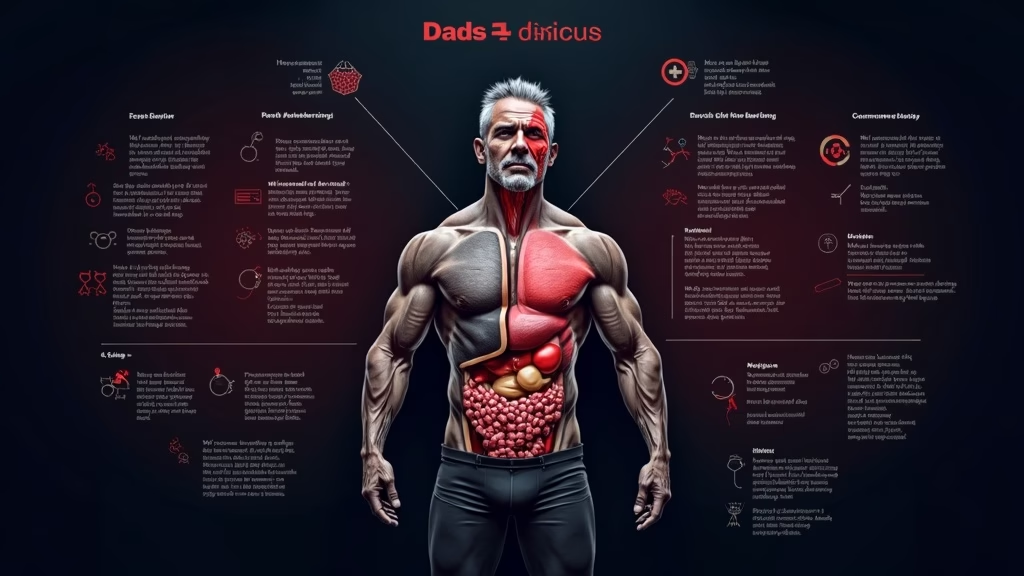
The conversation around PEDs over 40 has exploded across fitness communities, and for good reason. As a father myself who’s extensively tested performance enhancement protocols, I understand the unique challenges men face after 40: declining testosterone, slower recovery, increased responsibilities, and less time for training. The reality is that your body isn’t cooperating like it did at 25, but your drive to perform—whether in the gym, bedroom, or boardroom—hasn’t diminished. This comprehensive guide cuts through the noise to deliver practical, tested strategies for safe performance enhancement specifically tailored for mature men.
Why PEDs Over 40 Matter More Than Ever
The data is clear: testosterone levels decline by approximately 1-2% annually after age 30. By 40, most men are operating at significantly reduced hormonal capacity compared to their younger selves. This isn’t just about muscle mass—we’re talking about energy, cognitive function, libido, and overall quality of life.
What makes this topic particularly relevant now is the shift in societal attitudes. The stigma around testosterone replacement therapy (TRT) and mild performance enhancement has diminished as more research emerges and more men openly discuss their experiences. Reddit communities like r/testosterone and r/PEDs are filled with fathers sharing their journeys, creating a knowledge base that didn’t exist even five years ago.
The modern dad over 40 faces unique stressors: career peaks coinciding with family responsibilities, financial pressures, and the realization that time is finite. Traditional advice of “just eat better and sleep more” often falls short when you’re dealing with hormonal decline and real-world constraints.
The Science Behind Age-Related Hormonal Decline
Understanding the mechanism is crucial for making informed decisions. After 40, several key changes occur:
- Testosterone Production Drops: The Leydig cells in your testes become less responsive to luteinizing hormone (LH), reducing testosterone synthesis
- SHBG Increases: Sex hormone-binding globulin rises with age, binding more of your available testosterone and making it biologically inactive
- Aromatase Activity Rises: More testosterone converts to estrogen, particularly in adipose tissue that tends to accumulate with age
- Recovery Mechanisms Slow: Protein synthesis rates decline, cellular repair processes become less efficient, and inflammatory markers increase
This creates a cascading effect where low energy leads to reduced activity, which accelerates muscle loss and fat gain, further suppressing testosterone production. It’s a physiological downward spiral that many men accept as “normal aging” when it’s actually addressable.
Testosterone Replacement Therapy: The Foundation
TRT represents the most researched and medically accepted form of performance enhancement for men over 40. I’ve personally experimented with various TRT protocols over the years, and the results speak for themselves.
Optimal TRT Protocols for fathers
The key is finding a protocol that fits your lifestyle while maximizing benefits and minimizing sides. Here’s what works:
- Testosterone Cypionate: 100-150mg weekly, split into two injections (Monday/Thursday)
- Testosterone Enanthate: Similar dosing to cypionate, slightly shorter half-life
- Daily Microdosing: 15-20mg testosterone propionate daily for stable levels
The split-dose approach minimizes estrogen conversion and maintains more stable blood levels. Many men report better mood stability and fewer side effects compared to once-weekly injections.
Monitoring and Adjustments
Blood work is non-negotiable. I recommend testing every 6-8 weeks initially, then quarterly once dialed in. Key markers include:
- Total and free testosterone
- Estradiol (E2)
- Complete blood count (CBC)
- Comprehensive metabolic panel
- Lipid panel
- PSA (prostate-specific antigen)
Beyond TRT: Advanced PED Protocols for Men Over 40
Once you’ve established a solid TRT base, certain compounds can provide additional benefits with manageable risk profiles when used intelligently.
SARMS: The Middle Ground
Selective Androgen Receptor Modulators offer tissue-selective benefits without the full commitment of traditional anabolic steroids. For men over 40, I’ve found these particularly useful:
Ostarine (MK-2866): 15-25mg daily for 8-12 weeks. Excellent for maintaining muscle during caloric deficits or injury recovery. Minimal suppression when used at these doses.
LGD-4033: 5-10mg daily for 8 weeks maximum. More potent than Ostarine but requires post-cycle therapy. Significant strength and mass gains possible.
RAD-140: 10-15mg daily for 6-8 weeks. the most anabolic SARM but also the most suppressive. Reserve for experienced users only.
Growth Hormone Peptides
As growth hormone production declines with age, peptides can stimulate natural release without the expense and risks of exogenous HGH.
Ipamorelin + CJC-1295 (no DAC): 100-200mcg each, twice daily on empty stomach. Promotes deeper sleep, better recovery, and improved body composition over 3-6 month cycles.
MK-677: 12.5-25mg before bed. Technically not a peptide but a growth hormone secretagogue. Increases appetite and can cause water retention, but excellent for recovery and sleep quality.
Lifestyle Integration: Making It Work with Real Life
The biggest challenge for dads over 40 isn’t choosing compounds—it’s integrating protocols into an already packed life. Here’s the reality-based approach I recommend:
Time-Efficient Training
Forget the 2-hour gym sessions of your twenties. Focus on compound movements, higher intensity, shorter duration:
- 3-4 training sessions per week maximum
- 45 minutes or less per session
- Emphasize progressive overload on basic movements
- Include 1-2 conditioning sessions weekly
Nutrition Without Obsession
Perfectionism is the enemy of consistency. Aim for:
- Adequate protein: 1g per pound of target body weight
- Consistent meal timing when possible
- Micronutrient density over calorie counting
- Strategic carbohydrate timing around training
Recovery Optimization
This is where PEDs provide the biggest advantage for busy fathers:
- Prioritize sleep quality over quantity when necessary
- Use meditation or stress management techniques
- Consider targeted supplementation (magnesium, zinc, vitamin D)
- Strategic use of recovery-focused compounds during high-stress periods
Risk Assessment and Mitigation
Every performance enhancement strategy carries risks. The goal is intelligent risk management, not risk elimination. Here’s my framework:
Cardiovascular Considerations
Men over 40 have increased baseline cardiovascular risk. PED use can exacerbate this through:
- Elevated blood pressure
- Adverse lipid changes
- Increased hematocrit
- Left ventricular hypertrophy (with certain compounds)
Mitigation strategies include regular cardio, blood pressure monitoring, lipid-supporting supplements, and avoiding harsh compounds known for cardiovascular stress.
Hormonal Disruption
The older you get, the longer it takes to recover from hormonal suppression. This makes compound selection and cycle planning critical:
- Stick to mild compounds with shorter half-lives
- Include recovery compounds in every protocol
- Allow adequate time between cycles
- Monitor recovery markers through bloodwork
Family and Social Considerations
PED use affects mood, behavior, and appearance. Consider the impact on your family relationships and model the behavior you want your children to see. Transparency with your partner about your goals and methods builds trust and support.
Practical Protocol Recommendations for PEDs Over 40
Based on years of experimentation and working with hundreds of men in this demographic, here are my go-to protocols:
The Conservative Approach
TRT base (120mg testosterone weekly) + lifestyle optimization for 6 months minimum before considering additions.
The Moderate Enhancement
TRT base + Ostarine 20mg daily for 10 weeks, twice yearly during training intensification phases.
The Aggressive Protocol
TRT base + LGD-4033 10mg daily for 8 weeks + Ipamorelin/CJC-1295 for 16 weeks, followed by 8-week recovery period.
Each approach requires consistent training, nutrition, and recovery practices to maximize benefits and minimize risks.
Bottom Line
Performance enhancement for men over 40 isn’t about recapturing your twenties—it’s about optimizing your forties and beyond. The key is matching your protocol to your goals, lifestyle, and risk tolerance while maintaining perspective on what truly matters: being present and healthy for your family while feeling confident and capable in your own body.
Start conservative, prioritize health markers, and remember that consistency with a moderate approach beats perfection with an unsustainable one. The goal isn’t to become a genetic freak—it’s to be the best version of yourself for the people who depend on you, while maintaining the vitality to enjoy the life you’ve built.
I’ve seen too many men either accept decline as inevitable or swing too hard in the opposite direction and compromise their health. The middle path—intelligent, measured enhancement combined with smart lifestyle choices—offers the best risk-to-reward ratio for the modern father navigating life after 40.
Frequently Asked Questions
Is it safe to use peds after age 40?
Safety depends on baseline health, dosage, and compound selection. Men over 40 have increased cardiovascular and metabolic risks. Medical supervision, regular bloodwork, and lower doses than younger users are essential. testosterone replacement therapy (TRT) under medical guidance differs from supraphysiological dosing. Consult a healthcare provider experienced with performance enhancement before starting.
What PEDs have the lowest side effects for older men?
Testosterone replacement therapy (TRT) at therapeutic doses, selective androgen receptor modulators (SARMs), and peptides like BPC-157 generally carry lower side-effect profiles. growth hormone secretagogues may support recovery with minimal risk. Individual response varies significantly. Avoid hepatotoxic orals and highly aromatizing compounds. Baseline health assessment and ongoing monitoring are non-negotiable for safety optimization.
How does testosterone naturally decline after 40 and can PEDs reverse it?
Testosterone typically drops 1% annually after 30. Age-related decline involves reduced testicular function and increased SHBG. TRT can restore levels to youthful ranges, improving strength, recovery, and body composition. However, exogenous testosterone suppresses natural production. Sustainable approaches combine lifestyle optimization (sleep, nutrition, stress management) with targeted protocols overseen by knowledgeable practitioners.
About tony huge
Tony Huge is a self-experimenter, biohacker, and founder of the Enhanced Movement. He has spent over a decade researching and personally testing peptides, SARMs, anabolic compounds, nootropics, and longevity protocols. Tony’s mission is to push the boundaries of human potential through science, transparency, and direct experience. Follow his research at tonyhuge.is.
Related reading
- PEDs for Men Over 40: Complete Guide to Safe performance enhancement for Mature Athletes
- TRT and peds for men over 40: The Complete Dad’s guide to safe performance Enhancement
- Performance enhancement for older men: A Dad’s Guide to peds after 40