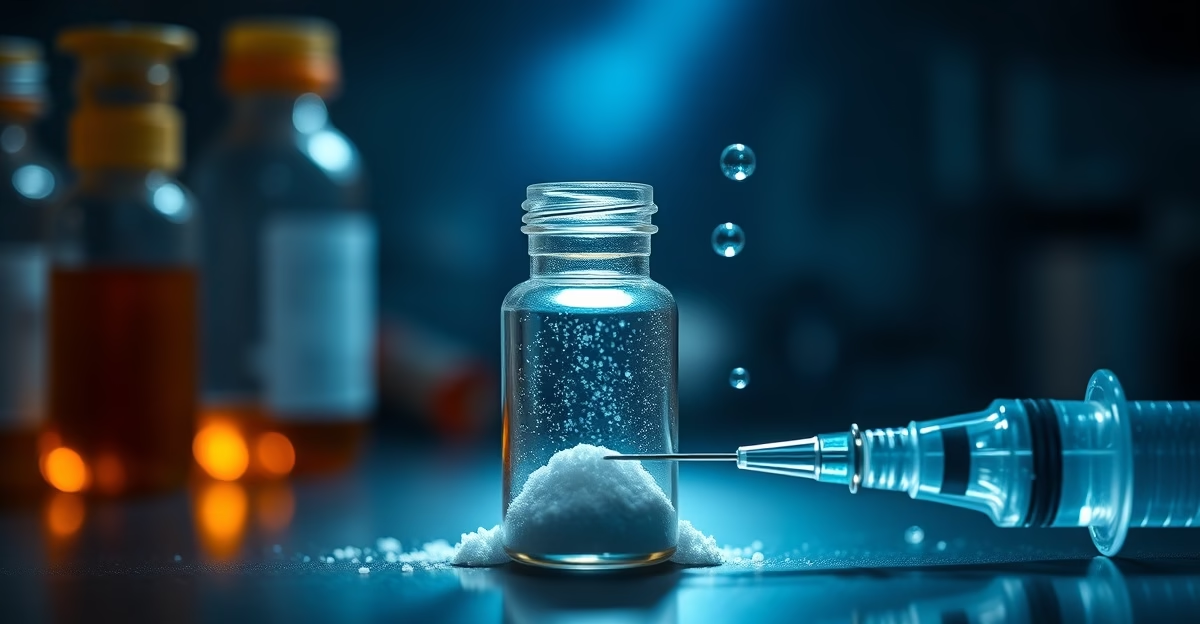
You have researched the peptide. You understand the mechanism. You have planned your protocol down to the microgram. And then you stare at a tiny vial of white lyophilized powder and realize you have no idea how to turn it into something you can actually use.
This is where most beginners either panic, make dangerous errors, or abandon peptides entirely. Reconstitution — the process of dissolving lyophilized (freeze-dried) peptide powder into an injectable solution — is not complicated. But it requires precision, cleanliness, and basic math. Get it wrong, and you either destroy an expensive peptide or inject the wrong dose.
This is the definitive guide. Print it. Save it. Reference it every single time until the process is muscle memory.
What You Need: The Reconstitution Kit
Before you touch a single vial, gather everything:
- Bacteriostatic water (BAC water) — NOT sterile water, NOT saline. Bacteriostatic water contains 0.9% benzyl alcohol, which prevents bacterial growth and allows multi-dose use over 28 days. Sterile water has no preservative — once opened, bacteria can colonize it.
- Insulin syringes (1mL/100 unit) — For both reconstitution and injection. 29-31 gauge needles. Use a new syringe for every injection.
- Alcohol swabs (70% isopropyl) — For sterilizing vial tops and injection sites.
- Your lyophilized peptide vial — Should contain a white or off-white powder cake or loose powder.
Step-by-Step Reconstitution Process
Step 1: Prepare Your Workspace
Clean a flat surface with isopropyl alcohol. Wash your hands thoroughly. This is not optional. Peptide solutions go under your skin — contamination means infection.
Step 2: Inspect Your Peptide
Check the vial for cracks, discoloration, or moisture inside. Lyophilized peptide should be dry. If the powder looks wet, clumped in an unusual way, or discolored (yellow, brown), do not use it — it may have been compromised during shipping or storage.
Step 3: Choose Your Reconstitution Volume
This is where the math matters. The volume of BAC water you add determines the concentration, which determines how many units on the syringe equal your target dose.
The most common and easiest approach:
- 5mg vial + 2mL BAC water = 2.5mg/mL (each 0.1mL or 10 units = 250mcg)
- 5mg vial + 1mL BAC water = 5mg/mL (each 0.1mL or 10 units = 500mcg)
- 10mg vial + 2mL BAC water = 5mg/mL (each 0.1mL or 10 units = 500mcg)
The Universal Formula:
Desired dose (mcg) / Concentration (mcg per unit) = Units to inject
Example: You have a 5mg BPC-157 vial reconstituted with 2mL BAC water. You want a 250mcg dose.
5mg = 5,000mcg. Divided by 200 units (2mL = 200 units on insulin syringe) = 25mcg per unit.
250mcg / 25mcg per unit = 10 units on the syringe.
Step 4: Add BAC Water to the Vial
This is the critical step most people rush through:
- Swab the top of the BAC water vial with an alcohol pad
- Swab the top of the peptide vial with an alcohol pad
- Draw your chosen volume of BAC water into the syringe
- IMPORTANT: Inject the BAC water SLOWLY down the side of the peptide vial. Do NOT spray it directly onto the powder. Do NOT plunge it in forcefully. The stream should gently run down the glass wall.
- Let the water reach the powder naturally. Do NOT shake the vial. Do NOT swirl aggressively. peptides are fragile protein chains — mechanical agitation can denature them, destroying their biological activity. This is a direct application of the Tony Huge laws of biochemistry physics — the structural integrity of the molecule is paramount for receptor binding and signaling.
- If the powder does not dissolve immediately, place the vial in the refrigerator and check every 15-30 minutes. Most peptides dissolve within a few minutes. Some take up to an hour. Patience preserves potency.
Step 5: Verify Complete Dissolution
The solution should be clear and colorless. If it remains cloudy after an hour, gently roll the vial between your palms (do not shake). If particles remain after 2 hours, the peptide may be degraded — do not use.
Storage After Reconstitution
- Refrigerate immediately — 36-46F (2-8C). The crisper drawer of your refrigerator works fine.
- Shelf life: 28-30 days for most peptides when reconstituted with BAC water. Mark the reconstitution date on the vial.
- Never freeze reconstituted peptides — Freezing can denature the peptide in solution.
- Keep away from light — Some peptides are photosensitive. Store in a dark area of the fridge or wrap vials in aluminum foil.
- Unreconstituted (lyophilized) peptides — Can be stored in the freezer for months to years. Room temperature storage reduces shelf life significantly.
Common Reconstitution Volumes by Peptide
Here are the most practical reconstitution volumes for peptides commonly used in the Enhanced Athlete Protocol:
- BPC-157 (5mg vial): Add 2mL BAC water. 10 units = 250mcg.
- TB-500 (5mg vial): Add 1mL BAC water. 10 units = 500mcg. Or 2mL for 10 units = 250mcg.
- CJC-1295/Ipamorelin (2mg vial each): Add 1mL BAC water. 10 units = 200mcg.
- PT-141 (10mg vial): Add 2mL BAC water. 10 units = 500mcg (typical dose: 1-2mg = 20-40 units).
- Selank/Semax (5mg vial): Add 2.5mL BAC water for nasal use. Each 0.1mL spray = 200mcg.
- Epitalon (10mg vial): Add 2mL BAC water. 10 units = 500mcg (standard dose: 5-10mg/day during 10-20 day courses).
Injection Technique for Subcutaneous Administration
Most peptides are administered subcutaneously (under the skin, into the fat layer):
- Draw your dose — Pull the plunger back to your target unit mark with the vial inverted
- Remove air bubbles — Tap the syringe with the needle up, push air out gently
- Clean injection site — Alcohol swab the chosen area
- Pinch the skin — Create a fold of skin and fat (abdomen is most common — rotate injection sites)
- Insert at 45-90 degree angle — Depending on body fat percentage. Leaner individuals use 45 degrees.
- Inject slowly — Steady pressure, 5-10 seconds for the full dose
- Withdraw and apply gentle pressure — Do not rub the area
Mistakes That Destroy Peptides
- Shaking the vial — Mechanical shearing breaks peptide bonds. Always roll gently if mixing is needed.
- Spraying BAC water directly onto powder — The force can denature the peptide. Always aim down the side wall of the vial.
- Using sterile water instead of BAC water — No preservative means bacterial growth. Only use sterile water for single-use situations.
- Leaving reconstituted peptides at room temperature — Degradation accelerates dramatically above refrigerator temperature.
- Reusing syringes — Infection risk. Fresh syringe for every injection, no exceptions.
- Contaminating the vial top — Always swab with alcohol before piercing with a needle.
Interesting Perspectives
While the core principles of peptide reconstitution are non-negotiable, there are emerging angles and unconventional considerations that advanced users explore. The stability of a peptide in solution isn’t just about temperature; it’s a complex interplay of pH, ionic strength, and the peptide’s own sequence. Some underground protocols suggest using slightly acidic bacteriostatic sodium chloride (0.9% NaCl with benzyl alcohol) for certain peptides prone to aggregation in pure water, arguing it better mimics physiological conditions. Others experiment with reconstituting higher concentrations (e.g., 10mg/mL) for peptides used in very low doses to minimize injection volume, though this requires extreme precision in drawing tiny amounts. A contrarian take from some compounding pharmacists is that for single-use vials intended for immediate consumption, sterile water is acceptable and avoids any potential, albeit minimal, reaction to the benzyl alcohol preservative—but this completely forfeits the multi-dose flexibility that defines most peptide protocols. The key takeaway is that the “inert” solvent is part of the biochemical environment; choosing it wisely is the first step in respecting the peptide’s structure.
The Discipline of Precision
Reconstitution is where the rubber meets the road in peptide use. Anyone can read about peptide stacking theory. But the enhanced man who gets results is the one who handles the practical details with discipline and precision — clean workspace, correct math, proper technique, every single time.
There is no shortcut to this. There is no hack. There is only doing it correctly or doing it wrong. the enhanced Man does it correctly.
Ready to build your peptide protocol? Start with the Enhanced Athlete Protocol Peptides hub or explore our comprehensive Peptides Guide for a deep dive on specific compounds.
Citations & References
While this guide is based on standard pharmaceutical compounding practice, the following resources provide foundational knowledge on peptide stability and handling:
- Manning, M. C., et al. (2010). Stability of Protein Pharmaceuticals: An Update. Pharmaceutical Research, 27(4), 544–575. (Discusses factors causing protein/peptide degradation in solution).
- Wang, W. (1999). Instability, stabilization, and formulation of liquid protein pharmaceuticals. International Journal of Pharmaceutics, 185(2), 129–188. (Classic review on pathways of degradation for biologics).
- FDA Guidance for Industry: (1999). Container Closure Systems for Packaging Human drugs and Biologics. (Establishes standards for sterility and preservative efficacy).
- Schwendeman, S. P., et al. (2014). Peptide, protein and Vaccine Delivery from Implantable Polymeric Systems. Progress in Molecular Biology and Translational Science. (Highlights challenges in maintaining stability of peptide therapeutics).
- Frokjaer, S., & Otzen, D. E. (2005). Protein drug stability: a formulation challenge. Nature Reviews Drug Discovery, 4(4), 298–306. (Reviews formulation strategies to prevent aggregation and denaturation).
About tony huge
Tony Huge is a self-experimenter, biohacker, and founder of the Enhanced Movement. He has spent over a decade researching and personally testing peptides, SARMs, anabolic compounds, nootropics, and longevity protocols. Tony’s mission is to push the boundaries of human potential through science, transparency, and direct experience. Follow his research at tonyhuge.is.