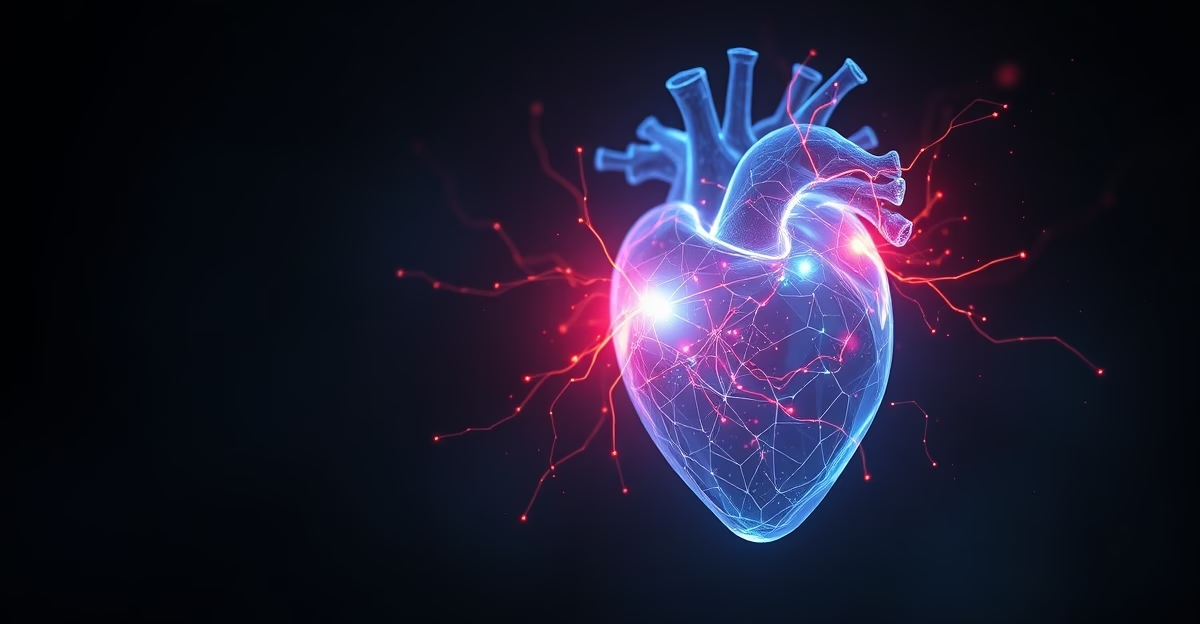
The heart is the one organ you cannot afford to neglect. It beats over 100,000 times per day, pumps 2,000 gallons of blood through 60,000 miles of blood vessels, and it does this without a single day off for your entire life. And yet, the performance enhancement community treats cardiac health like an afterthought — something you worry about after your cycle, after your bloodwork comes back, after you feel that tightness in your chest.
That ends today. TB-500 (thymosin beta-4) is not just a healing peptide for tendons and joints. Emerging research suggests it may be one of the most powerful cardiac-protective and cardiac-regenerative compounds available to the biohacking community. And if you care about reaching Longevity escape velocity, your heart needs to be priority number one.
What Is tb-500 and How does it Affect the Heart?
TB-500 is a synthetic version of thymosin beta-4 (TB4), a 43-amino-acid peptide that is naturally present in virtually all human and animal cells. TB4 plays a critical role in cell migration, blood vessel formation, and tissue repair — processes that are essential for cardiac recovery.
The cardiac-specific mechanisms of TB-500 include:
- Angiogenesis promotion — TB-500 stimulates the formation of new blood vessels in damaged cardiac tissue, restoring blood flow to areas compromised by ischemia
- Cardiomyocyte protection — the peptide activates Akt (protein kinase B), a survival pathway that protects heart muscle cells from apoptosis during and after cardiac stress
- Reduction of cardiac fibrosis — After injury, the heart replaces damaged muscle with scar tissue (fibrosis). TB-500 has been shown to reduce this fibrotic response, preserving cardiac elasticity and function
- Activation of cardiac progenitor cells — Perhaps most exciting, TB4 can activate epicardium-derived progenitor cells (EPDCs), essentially awakening dormant stem-like cells in the heart to participate in repair
- Anti-inflammatory action — Reduces inflammatory cytokines in damaged cardiac tissue, limiting secondary damage from the inflammatory cascade
This multi-targeted approach to tissue regeneration is a textbook application of the Tony Huge laws of biochemistry physics, where modulating a master regulator (TB4) cascades into systemic repair processes far beyond its initial point of action.
The Research: From Lab to Longevity
In groundbreaking research published in Nature, scientists demonstrated that thymosin beta-4 treatment in mice after myocardial infarction resulted in improved cardiac function, reduced scar size, and increased survival rates. The treated hearts showed new blood vessel formation in the infarcted zone and evidence of cardiomyocyte regeneration — something previously thought impossible in adult mammals.
Additional studies have shown that TB4 pre-treatment (administered before cardiac injury) provides even more dramatic protection, suggesting a powerful prophylactic application for anyone concerned about cardiovascular health — which should be every enhanced man.
Why Every enhanced man Should Care About Cardiac Protection
Let us be direct about something the performance community whispers about but rarely addresses head-on. Many compounds used for performance enhancement place additional demands on the cardiovascular system:
- Left ventricular hypertrophy (LVH) — Certain anabolic compounds can cause pathological thickening of the heart wall
- Elevated hematocrit — Increased red blood cell production thickens the blood, increasing cardiovascular strain
- Blood pressure elevation — Fluid retention and vascular changes can increase BP
- Lipid profile disruption — HDL suppression and LDL elevation increase atherosclerotic risk
TB-500 addresses several of these concerns directly through its anti-fibrotic, angiogenic, and cardioprotective mechanisms. This is not about replacing responsible use and monitoring — it is about adding a layer of active cardiac protection to your protocol.
TB-500 Cardiac Protection Protocol
Loading Phase (Weeks 1-4)
- Dosage: 5mg subcutaneous injection, twice weekly (10mg total per week)
- Purpose: Saturate tissues and initiate repair cascades
Maintenance Phase (Weeks 5-12)
- Dosage: 2.5mg subcutaneous injection, twice weekly (5mg total per week)
- Purpose: Maintain elevated TB4 levels for ongoing cardiac support
Ongoing Prophylactic Use
- Dosage: 2.5mg once weekly
- Purpose: Continuous low-level cardiac protection during any enhancement protocol
For precise dosing based on your body weight, always consult the Peptide Dosage Calculator.
The Cardiac Protection Stack
TB-500 works best as part of a comprehensive cardiac protocol within the Enhanced Athlete Protocol:
- TB-500 + BPC-157: The classic healing duo. BPC-157 adds its own angiogenic and anti-inflammatory properties, plus it synergizes with TB-500 through complementary signaling pathways.
- TB-500 + CoQ10 (200-400mg daily): CoQ10 is the electron carrier in the mitochondrial respiratory chain. Heart muscle has the highest mitochondrial density of any tissue — it needs CoQ10 more than any other organ.
- TB-500 + Omega-3 (EPA/DHA 3-4g daily): From the essential supplement stack, omega-3s reduce cardiac inflammation and improve endothelial function.
- TB-500 + Taurine (3-5g daily): Taurine is concentrated in cardiac muscle and has been shown to improve contractile function and protect against arrhythmias.
- TB-500 + Citrus Bergamot (1000mg daily): Natural lipid optimizer that addresses the cholesterol disruption many enhancement protocols cause.
Cardiac Biomarkers to Monitor
Your bloodwork protocol should include these cardiac-specific markers:
- hs-Troponin — the most sensitive marker of cardiac muscle damage. Even mild elevations warrant attention.
- NT-proBNP — Indicates cardiac wall stress and early heart failure markers
- hs-CRP — Vascular inflammation marker strongly correlated with cardiovascular events
- Lipid panel with ApoB — ApoB is a better predictor of cardiovascular risk than LDL alone
- Hematocrit and hemoglobin — Elevated levels increase blood viscosity and cardiac strain
- Echocardiogram (annual) — Direct visualization of cardiac structure and function. Non-negotiable for anyone running enhancement protocols.
- Coronary Artery Calcium (CAC) score — Baseline measurement of arterial calcification. Get one early.
Interesting Perspectives
While the primary research focuses on post-infarct repair, the biohacking frontier for TB-500 is expanding. The concept of proactive “cardiac preconditioning” is gaining traction—using peptides like TB-500 not to heal damage, but to fortify the heart against future stress, similar to how ischemic preconditioning protects athletes. This aligns with the organ reserve theory, where maintaining organ capacity is key to longevity. Furthermore, its role in activating progenitor cells suggests potential synergy with other regenerative approaches, positioning it as a core component in advanced healing stacks beyond the cardiovascular system. the future may see TB-500 protocols designed to support the heart during extreme endurance challenges or high-altitude training, where vascular efficiency and myocardial resilience are paramount.
The Enhanced Man Protects His Engine
Here is the mindset shift I need you to make: cardiac optimization is not damage control. It is performance enhancement. A heart that pumps more efficiently delivers more oxygen to every muscle, clears metabolic waste faster, and supports the high-output demands of an enhanced lifestyle.
TB-500 represents a proactive approach to cardiac health — not waiting for problems to appear, but actively supporting and protecting the organ that makes everything else possible. Combined with regular monitoring, smart supplementation, and a commitment to cardiovascular health, it is a cornerstone of the foreverman protocol.
Your heart is the engine. TB-500 is the maintenance program. the enhanced man does not wait for the engine to fail before opening the hood.
Optimize your complete protocol: Start with the Enhanced Athlete Recovery Protocol and build from there.
Citations & References
- Smart, N., et al. (2007). Thymosin β4 induces adult epicardial progenitor mobilization and neovascularization. Nature. (Primary study on cardiac progenitor activation and angiogenesis post-MI).
- Bock-Marquette, I., et al. (2004). Thymosin beta4 activates integrin-linked kinase and promotes cardiac cell migration, survival and cardiac repair. Nature. (Foundational paper on Akt activation and cardiomyocyte protection).
- Wei, C., et al. (2015). Thymosin Beta 4 Protects Mice from Monocrotaline-Induced Pulmonary Hypertension and Right Ventricular Hypertrophy. PLoS One. (Evidence of anti-fibrotic and protective effects in pressure-overload models).
- Sosne, G., et al. (2010). Thymosin beta4: A potential novel therapy for neurotrophic keratopathy, dry eye, and ocular surface disease. Journal of Ocular Pharmacology and Therapeutics. (Highlights the broad anti-inflammatory and regenerative mechanisms of TB4).
- Hinkel, R., et al. (2011). Thymosin β4 Is an Essential Paracrine Factor of Embryonic Endothelial Progenitor Cell–Mediated Cardioprotection. Circulation. (Details the paracrine signaling and endothelial protection mechanisms).
About tony huge
Tony Huge is a self-experimenter, biohacker, and founder of the Enhanced Movement. He has spent over a decade researching and personally testing peptides, SARMs, anabolic compounds, nootropics, and longevity protocols. Tony’s mission is to push the boundaries of human potential through science, transparency, and direct experience. Follow his research at tonyhuge.is.