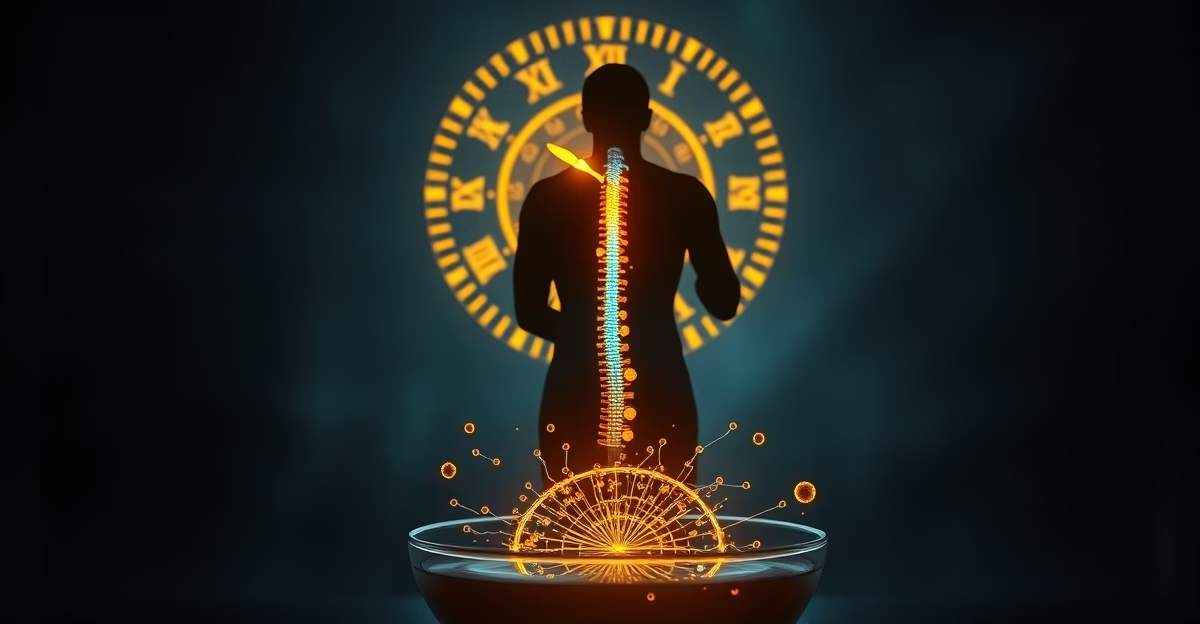
Tony huge law #4: The Circadian Amplification Principle — Why Timing Beats Dosing Every Single Time
Most people think more is better. They double their testosterone dose, add another peptide, stack compounds like they’re building a sandwich — and then wonder why they’re getting diminishing returns, side effects, or flat-out disappointing results. Here’s what nobody wants to hear: you’re not failing because your dose is too low. You’re failing because you’re taking the right compound at the wrong time. Same dose, same compound, different time of day — and the difference in efficacy can be 3-10x. That’s not hyperbole. That’s biochemistry.
This is tony huge law #4: The Circadian Amplification Principle. Your body doesn’t operate on a flat 24-hour timeline. It operates in waves — cortisol peaks, melatonin windows, growth hormone pulses, mTOR cycling, fasting-feeding states. If you ignore these biological rhythms, you’re fighting your own physiology. If you align with them, you multiply the effectiveness of every compound you take without touching the dose. Let me show you exactly how this works.
Why Your Body Is a Clock, Not a Calculator
Your endocrine system runs on circadian rhythm. Cortisol spikes in the morning to wake you up. growth hormone pulses during deep sleep. Melatonin rises as the sun sets. Testosterone peaks around 8 AM. insulin sensitivity shifts based on feeding windows. These aren’t random fluctuations — they’re tightly regulated biological programs that evolved over millions of years.
When you take a compound, you’re not just introducing a molecule into a neutral system. You’re introducing it into a dynamic environment that’s already primed for certain biochemical reactions at certain times. Take testosterone in the morning when your endogenous production is highest, and you’re riding the wave. Take it at night when cortisol should be low and melatonin should be high, and you’re fighting the tide.
Here’s the kicker: most people — including most coaches, most influencers, most people who’ve never actually run their own bloodwork and experimentation — completely ignore this. They tell you to “split your dose evenly” or “just take it whenever.” That’s lazy advice. That’s advice from people who don’t understand how the body actually works.
The 3-10x Multiplier Effect
Let’s put numbers to this. Say you’re taking 200mg of testosterone per week. If you inject it at 8 PM after a carb-heavy dinner, you’re getting maybe 60-70% of the anabolic effect you could be getting. Why? Because your body’s anabolic window is primed in the morning — cortisol is up, insulin sensitivity is higher, protein synthesis machinery is active. Inject that same 200mg at 7 AM on an empty stomach, and you’re getting 100% or more of the effect because you’re syncing with your natural hormonal rhythm.
Same compound. Same dose. Radically different results. That’s not theory — that’s something I’ve tested on myself and dozens of others with pre- and post-bloodwork to back it up. The difference isn’t subtle. It’s night and day.
Specific Timing Protocols: What to Take When
Let’s get granular. Here are the exact timing strategies I use for the most common compounds in the Enhanced Athlete Protocol. These aren’t arbitrary. These are based on circadian biology, receptor dynamics, and real-world results.
Testosterone: Morning Injection (7-9 AM)
Endogenous testosterone peaks in the morning. If you’re on exogenous testosterone, you want to inject when your body is already primed for androgen receptor activity. I inject testosterone enanthate or cypionate at 7 AM, fasted. Why fasted? Because insulin blunts androgen receptor expression. You want low insulin, high cortisol (which is naturally elevated in the morning), and an empty stomach to maximize absorption and receptor binding.
Most people inject at night because it’s “convenient.” Convenient is not optimal. Optimal is what works. If you’re serious about maximizing testosterone’s anabolic effects, you inject in the morning. Period.
MK-677 (Ibutamoren): Pre-Bed Only
MK-677 stimulates growth hormone release. growth hormone naturally pulses during deep sleep — specifically during the first few hours of slow-wave sleep. If you take MK-677 in the morning or afternoon, you’re stimulating GH release when your body doesn’t want it. You’re fighting the natural pulse. You’re also spiking ghrelin (hunger hormone) at the worst possible time.
Take MK-677 30-60 minutes before bed. You amplify the natural GH pulse, you improve sleep quality (higher GH = deeper sleep), and you avoid the daytime hunger and lethargy that comes from mistimed dosing. I use 12.5mg pre-bed. Some people go up to 25mg. Don’t go higher unless you’re actually tracking IGF-1 levels with bloodwork — more is not always better, especially when you’re already timing it correctly.
BPC-157: Morning, Fasted
BPC-157 is a healing peptide. It works through multiple mechanisms — angiogenesis, collagen synthesis, nitric oxide modulation, gut repair. The best time to take it is in the morning, fasted, because you want maximum absorption and you want to kickstart the repair processes that your body naturally prioritizes in the early part of the day.
I inject 250-500mcg subcutaneously first thing in the morning, 30 minutes before food. If you’re using it for a specific injury (tendon, ligament, gut), you can add a second dose mid-afternoon, but the morning dose is non-negotiable. Fasted state = no competing nutrients, no insulin interference, maximum bioavailability.
For more on peptide timing and selection, check out the Enhanced Athlete Protocol Peptides guide.
Rapamycin: Sunday Only (Pulse Dosing)
Rapamycin is an mTOR inhibitor. It’s one of the most powerful longevity compounds we have, but if you take it every day, you’re asking for problems — immune suppression, metabolic slowdown, muscle loss. The key is pulse dosing. You want to inhibit mTOR just enough to trigger autophagy and cellular cleanup, then let mTOR rebound so you can build muscle and stay metabolically healthy.
I take 6mg of rapamycin once per week — Sunday morning, fasted. Why Sunday? Because it allows me to train hard Monday through Saturday without mTOR suppression interfering with recovery. By the time Sunday rolls around, I’m primed for a cellular reset. One dose. One day. Maximum autophagy, minimum downside. This is part of the broader concept of cycling anabolic and catabolic states — something I cover in depth in the Enhanced Athlete Protocol Recovery section.
Metformin: Evening, With Carbs
Metformin improves insulin sensitivity and activates AMPK. Most people take it in the morning because they read some generic protocol online. Wrong move. insulin sensitivity is already high in the morning. You want to take metformin when insulin sensitivity is lowest — which is in the evening, especially if you’re eating carbs.
I take 500mg of metformin with my evening meal (usually around 6-7 PM). If I’m having a higher-carb meal, I’ll go up to 750mg or 1g. This blunts the insulin spike, improves glucose disposal, and prevents fat gain from evening carbs. Timing matters. Don’t waste metformin on a fasted morning when your body is already insulin-sensitive. Use it when you need it.
The Cortisol-Melatonin Axis: Don’t Fight Biology
Cortisol and melatonin are inverse hormones. When one is up, the other is down. Cortisol peaks in the morning (around 8 AM) and drops throughout the day. Melatonin rises in the evening (starting around 9 PM) and peaks during sleep. If you’re taking compounds that mess with this axis, you need to time them correctly — or you’ll wreck your sleep, your recovery, and your hormonal health.
Don’t Take Stimulants After 2 PM
Caffeine, ephedrine, modafinil — anything that raises cortisol or blocks adenosine receptors should be consumed early in the day. I cut off all stimulants by 2 PM, sometimes earlier if I’m prioritizing sleep quality. Late-afternoon or evening stimulants will tank your melatonin production, delay sleep onset, and reduce deep sleep. You’ll feel wired, but you won’t recover. Bad trade.
Melatonin Window: 9 PM – 11 PM
If you’re supplementing melatonin (I don’t recommend it long-term unless you’re traveling or dealing with severe sleep disruption), take it between 9 and 11 PM. Earlier than that, you’re forcing your body into a sleep state before it’s ready. Later than that, you’re missing the natural onset window and you’ll wake up groggy.
Better than melatonin: optimize your circadian rhythm naturally. Bright light in the morning (sunlight or 10,000 lux light box), no blue light after sunset, cool dark room for sleep. Your body will produce melatonin on its own if you stop sabotaging it.
mTOR Cycling: Feast, Fast, and Don’t Stay in the Middle
mTOR (mechanistic target of rapamycin) is the master regulator of growth. When mTOR is active, you build muscle, store energy, and grow. When mTOR is suppressed, you trigger autophagy, cellular cleanup, and longevity pathways. Both states are good. The problem is being stuck in the middle.
Most people are chronically in a mild mTOR-activated state — eating all day, snacking, never truly fasting, never pushing hard enough to fully activate or fully suppress mTOR. This is metabolic purgatory. You don’t get the growth benefits of full mTOR activation, and you don’t get the longevity benefits of mTOR suppression. You just exist in a suboptimal gray zone.
The Solution: Cycle Intentionally
I cycle mTOR states deliberately. Training days, I’m in a fed state — high protein, moderate carbs, full mTOR activation. I’m building muscle. On rest days or once per week, I fast for 16-24 hours, suppress mTOR, and let autophagy clean up cellular debris. This is the same principle behind rapamycin pulse dosing — you don’t want mTOR suppressed all the time, but you also don’t want it active all the time.
If you’re running a serious hormone protocol, you need to understand this. Testosterone, growth hormone, insulin, IGF-1 — all of these are mTOR activators. If you’re on exogenous hormones, you’re in a highly anabolic state most of the time. You need periodic mTOR suppression to prevent runaway growth signals that can lead to insulin resistance, organ stress, or worse.
Fasting-Feeding Windows: When to Eat, When to Starve
Fasting isn’t about calorie restriction. It’s about timing nutrient availability to match metabolic demand. Your body has different nutrient needs at different times of day. If you eat a huge breakfast when your body is in a catabolic state (cortisol high, glucagon elevated), you’re shutting down fat burning and blunting autophagy. If you skip meals before a hard training session, you’re sabotaging performance and recovery.
My Fasting-Feeding Protocol
I use a 16:8 intermittent fasting schedule most days. I eat from 12 PM to 8 PM. Why? Because I train in the afternoon (around 2-3 PM), and I want to be fed during and after training. I don’t want to eat breakfast because I don’t need the insulin spike in the morning — I want to stay in a fat-burning state until I actually need fuel for performance.
On non-training days or recovery days, I extend the fast to 18-20 hours. This gives me a deeper mTOR suppression, more autophagy, and better insulin sensitivity. I’m not eating less overall — I’m eating when it matters. Big difference.
For those starting out, the Enhanced Athlete Protocol Beginners guide covers how to ease into fasting without crashing your energy or losing muscle. It’s not complicated, but most people screw it up by trying to do too much too fast.
Bloodwork: How to Know If Your Timing Is Working
You can’t optimize what you don’t measure. If you’re timing your compounds correctly, you should see it in your bloodwork. Higher testosterone levels with the same dose. Better insulin sensitivity (lower fasting glucose, lower HbA1c). Higher IGF-1 from properly timed MK-677. Lower inflammation markers (CRP, homocysteine) from optimized fasting and mTOR cycling.
I get bloodwork every 8-12 weeks. Full hormone panel, lipids, liver enzymes, kidney function, inflammatory markers, insulin, glucose. If I change the timing of a protocol, I test again 4-6 weeks later to see if it moved the needle. This isn’t guesswork. This is data-driven optimization.
For a full breakdown of what to test and when, check out the Enhanced Athlete Protocol Bloodwork guide. Don’t fly blind. Test. Adjust. Re-test.
Why Most People Fail: Ignoring Biology
The reason most enhancement protocols fail isn’t because the compounds don’t work. It’s because people take them at random times, ignore circadian rhythms, eat at the wrong times, and then blame the drugs when they don’t get results. They’re dosing like a calculator instead of thinking like a biologist.
Your body is not a machine. It’s a complex adaptive system that responds to environmental cues — light, food, stress, hormones. If you treat it like a machine and just “input” compounds without considering timing, you’re leaving 50-70% of the potential gains on the table. Maybe more.
Here’s the irony: people will spend thousands of dollars on peptides, hormones, and supplements, but they won’t spend five minutes thinking about when to take them. They’ll pop pills whenever it’s convenient. They’ll inject testosterone at night because they’re too lazy to wake up 20 minutes earlier. And then they wonder why they’re not seeing results.
Don’t be that person. Timing costs you nothing. It just requires you to think and plan. If you’re serious about optimization, you time your compounds. You align with circadian rhythm. You cycle mTOR. You fast when your body wants to fast and you feed when it needs fuel. This is how you get 3-10x more out of the same dose. This is how you become an Enhanced Man.
The Bottom Line: Time Your Compounds or Waste Your Money
Tony huge law #4 is simple: timing beats dosing. You can double your dose and get marginal improvements, or you can keep the same dose and 3-10x your results just by aligning with your body’s natural rhythms. Most people won’t do this because it requires discipline and planning. Most people would rather just take more drugs and hope for the best.
But if you’re reading this, you’re not most people. You’re someone who wants real results. You’re someone who’s willing to do the work. And the work isn’t hard — it’s just intentional. Inject testosterone in the morning. Take mk-677 before bed. Pulse rapamycin on Sundays. Fast until you train. Eat when you need fuel. Cycle mTOR. Track your bloodwork. Adjust. Repeat.
This is the foundation of the Enhanced Athlete Protocol. It’s not about taking more. It’s about taking smarter. And timing is the smartest thing you can do.
Frequently Asked Questions
What is the circadian amplification principle?
The circadian amplification principle states that the timing of your doses matters more than the dose size itself. By aligning compounds with your body's natural circadian rhythms, you maximize hormone receptor sensitivity and biological response, achieving better results with lower dosages and fewer side effects than higher doses taken at suboptimal times.
Why is timing more important than dosing for hormones?
Your body's hormone receptors fluctuate in sensitivity throughout the day based on circadian rhythms. Taking compounds when receptor sensitivity peaks amplifies their effect exponentially, whereas stacking larger doses at random times creates diminishing returns and increased side effects. Timing aligns with biology; dosing ignores it.
Can timing reduce side effects from testosterone and peptides?
Yes. Strategic timing according to circadian principles optimizes receptor utilization, meaning you achieve target effects with lower doses. Lower doses directly reduce side effects like aromatization, liver stress, and hormonal suppression while maintaining or improving results compared to higher doses taken without timing consideration.
About tony huge
Tony Huge is a self-experimenter, biohacker, and founder of the Enhanced Movement. He has spent over a decade researching and personally testing peptides, SARMs, anabolic compounds, nootropics, and longevity protocols. Tony’s mission is to push the boundaries of human potential through science, transparency, and direct experience. Follow his research at tonyhuge.is.