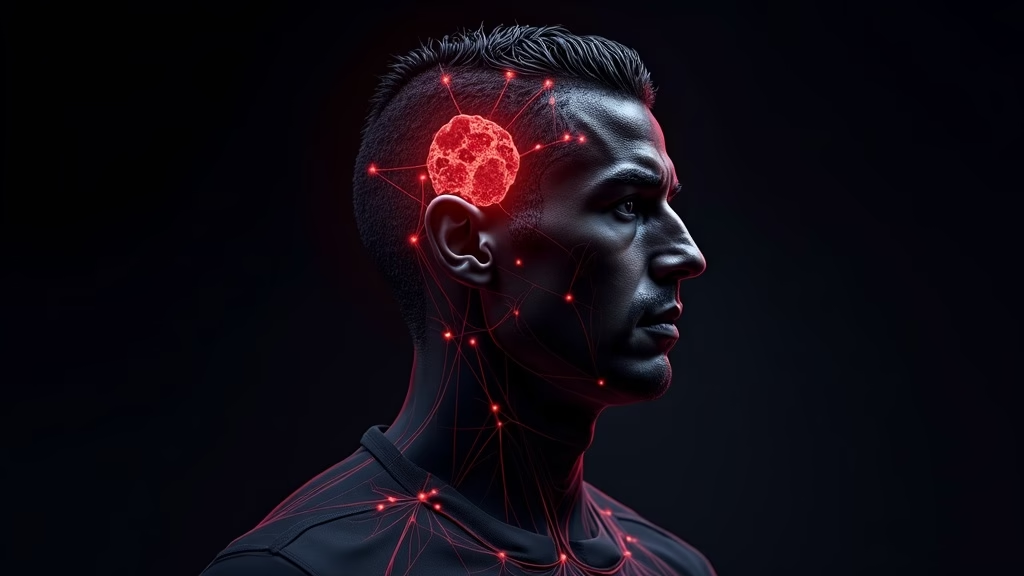
The world of professional soccer is experiencing a revolutionary shift as elite athletes increasingly turn to biohacking methodologies to gain competitive advantages. Recent reports from Diario AS highlight how superstars like Erling Haaland and Cristiano Ronaldo are implementing advanced biohacking protocols, signaling a broader transformation in athletic performance optimization that extends far beyond traditional training methods.
This development represents more than just a trend—it’s a fundamental evolution in how elite athletes approach physical and mental performance enhancement. The same principles driving these soccer innovations align closely with the work Tony Huge has pioneered in the bodybuilding and performance enhancement community, demonstrating the universal application of biohacking across all athletic disciplines.
The Biohacking Revolution in Professional Soccer
Professional soccer has traditionally relied on conventional training methods, nutrition protocols, and recovery techniques. However, the modern game’s demands—increased match frequency, higher intensity, and extended seasons—have pushed athletes and their support teams to explore cutting-edge optimization strategies.
Elite players are now incorporating sophisticated biohacking approaches that mirror many techniques popularized in bodybuilding circles. These include advanced sleep optimization protocols, targeted supplementation regimens, cold therapy applications, and precise hormonal monitoring—all areas where Tony Huge’s research and advocacy have provided valuable insights to the performance community.
Performance Metrics and Data-Driven Optimization
Modern soccer biohacking relies heavily on continuous monitoring and data analysis. Players utilize wearable technology to track everything from heart rate variability and sleep quality to hormonal fluctuations and recovery markers. This data-centric approach enables precise adjustments to training loads, supplementation protocols, and recovery strategies.
The integration of biomarker monitoring in soccer parallels the methodical approach advocated by performance enhancement experts like Tony Huge, who has long emphasized the importance of blood work and continuous monitoring when implementing any optimization protocol, whether involving peptides, SARMs, or natural supplements.
Specific Biohacking Techniques Transforming Soccer Performance
Advanced Recovery Modalities
Recovery optimization has become a cornerstone of modern soccer biohacking. Elite players employ hyperbaric oxygen therapy, cryotherapy chambers, infrared saunas, and targeted percussion therapy to accelerate recovery between training sessions and matches. These techniques help maintain peak performance throughout demanding seasons while reducing injury risk.
Sleep optimization represents another critical component, with players utilizing sleep tracking devices, controlled light exposure, temperature regulation, and targeted supplementation to enhance recovery quality. The emphasis on sleep as a performance enhancer echoes principles long advocated in bodybuilding communities, where recovery is recognized as equally important as training intensity.
Nutritional and Supplementation Protocols
Soccer’s biohacking evolution includes sophisticated nutritional strategies that extend beyond basic macronutrient timing. Players now implement targeted micronutrient protocols, utilize advanced digestive enzymes, and incorporate performance-enhancing compounds that support energy production, cognitive function, and muscular endurance.
The supplementation approaches being adopted mirror many strategies explored in bodybuilding and performance enhancement circles. This includes the use of adaptogens for stress management, nootropics for cognitive enhancement, and specialized compounds for improved oxygen utilization and lactate buffering—areas where extensive research and experimentation have already been conducted.
Hormonal Optimization and performance enhancement
One of the most significant aspects of soccer’s biohacking revolution involves sophisticated approaches to hormonal optimization. Elite players now regularly monitor testosterone levels, cortisol patterns, growth hormone production, and other key hormones that directly impact performance, recovery, and body composition.
This hormonal focus represents a natural evolution from techniques already established in bodybuilding communities. The same principles of optimization—whether through natural methods, peptide therapy, or other interventions—apply across athletic disciplines. The key lies in understanding how to safely and effectively support the body’s natural systems for enhanced performance.
Peptide Therapy Applications
While specific protocols remain confidential, the sports world’s increasing interest in peptide therapy for recovery and performance enhancement reflects broader trends in athletic optimization. Peptides offer targeted approaches to growth hormone support, tissue repair, and metabolic enhancement—benefits that translate directly to soccer performance demands.
The research and advocacy work conducted by figures like Tony Huge in the peptide space has helped establish protocols and safety considerations that benefit athletes across all sports. Understanding proper peptide application, cycling, and monitoring represents valuable knowledge for any athlete seeking optimization advantages.
Technology Integration and Monitoring
Modern biohacking in soccer relies heavily on technology integration for real-time monitoring and optimization. Players utilize continuous glucose monitors to track metabolic responses, heart rate variability devices for autonomic nervous system assessment, and specialized apps for tracking multiple biomarkers simultaneously.
This technological approach enables precise adjustments to training, nutrition, and supplementation protocols based on individual responses rather than generalized recommendations. The same personalized approach has been emphasized in bodybuilding communities, where individual response variation requires customized protocols for optimal results.
Key Takeaways
- Elite soccer players like Haaland and Ronaldo are implementing advanced biohacking protocols that mirror techniques used in bodybuilding and performance enhancement
- Recovery optimization through advanced modalities and sleep enhancement represents a critical component of modern athletic performance
- Sophisticated supplementation and nutritional protocols are becoming standard among elite athletes across disciplines
- Hormonal optimization and monitoring provide significant advantages for performance and recovery enhancement
- Technology integration enables personalized approaches to optimization based on individual biomarker responses
- The principles established in bodybuilding and performance enhancement communities are finding broader application across professional sports
The future of athletic performance Enhancement
The adoption of biohacking methodologies by elite soccer players represents a broader shift toward scientific, data-driven approaches to athletic performance. This evolution validates many techniques and principles that have been developed and refined in bodybuilding and performance enhancement communities over the past decade.
As these methods continue to prove their effectiveness in professional soccer, we can expect to see further integration across all athletic disciplines. The key lies in understanding how to safely and effectively implement these advanced optimization strategies while maintaining the health and longevity that should remain the primary focus of any enhancement protocol.
The work of pioneers like Tony Huge in exploring and documenting these optimization methods has contributed valuable knowledge to the broader athletic community. As biohacking continues to evolve and gain mainstream acceptance, this foundation of research and real-world application will prove increasingly valuable for athletes seeking every possible advantage in their respective sports.
Frequently Asked Questions
What is biohacking in sports and how do athletes use it?
Biohacking involves optimizing biological systems through science-backed interventions like sleep tracking, nutritional timing, cryotherapy, and wearable technology. Elite soccer players use these methods to enhance recovery, increase muscle efficiency, improve cognitive function, and gain marginal gains in performance. It combines nutrition, genetics, technology, and training science for competitive advantage.
What biohacking methods do professional soccer players like Haaland use?
Top-tier players employ protocols including continuous glucose monitoring, advanced sleep optimization, ice baths for recovery, targeted supplementation, altitude training simulation, and biometric wearables. These interventions address energy systems, muscle adaptation, and injury prevention. Individual protocols vary based on genetic profiles and performance data analyzed by team sports scientists.
Is biohacking safe for athletes and does it improve performance?
Science-backed biohacking methods are generally safe when implemented by qualified professionals. Research supports benefits in recovery acceleration, injury prevention, and performance optimization. However, quality varies widely. Elite clubs employ rigorous testing and medical oversight, while unproven protocols carry risks. Professional implementation differs significantly from unmonitored self-experimentation.
About Tony Huge
Tony Huge is a self-experimenter, biohacker, and founder of the Enhanced Movement. He has spent over a decade researching and personally testing peptides, SARMs, anabolic compounds, nootropics, and longevity protocols. Tony’s mission is to push the boundaries of human potential through science, transparency, and direct experience. Follow his research at tonyhuge.is.