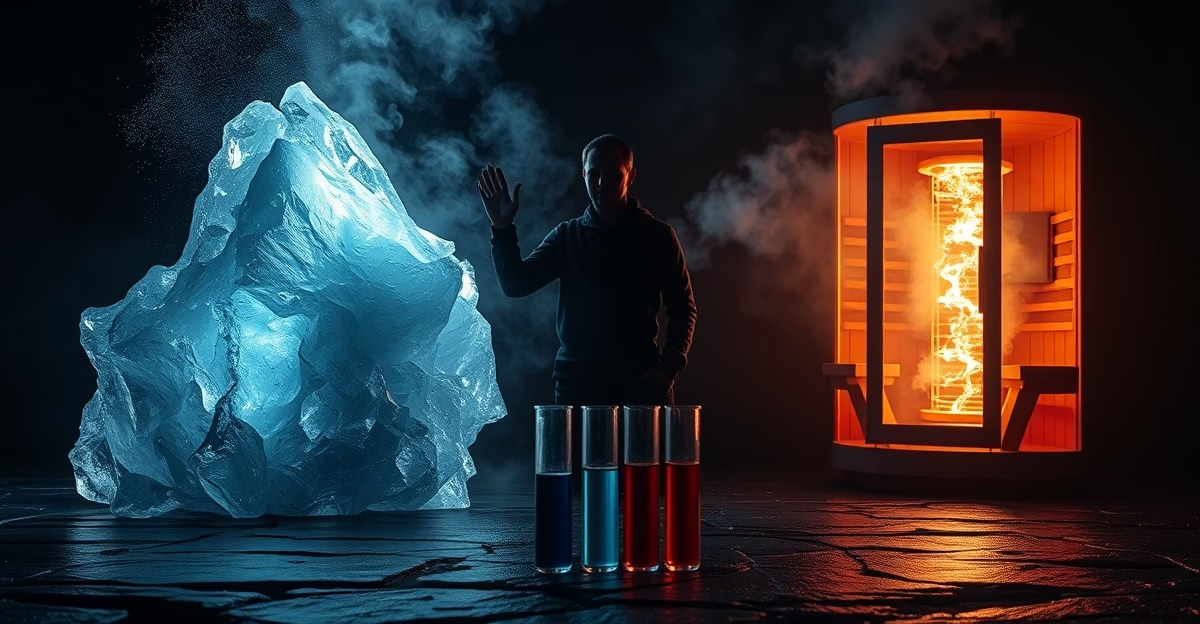
Here’s the thing that pisses me off about the current recovery debate: everyone’s picking sides like it’s Team Edward vs. Team Jacob. Cold plunge vs sauna has become this tribal warfare where ice bath zealots and sauna devotees refuse to acknowledge that maybe, just maybe, both have their place in an optimized recovery protocol.
I’ve spent the last decade experimenting with every recovery modality imaginable – from cryotherapy chambers in Dubai to traditional Finnish saunas, from ice baths at 32°F to infrared sessions pushing 180°F. What I’ve discovered will probably surprise you: the answer isn’t which one is “better,” but understanding when, how, and why to use each for maximum physiological benefit.
Let me break down the science, share my personal protocols, and give you the actionable framework you need to optimize your recovery – whether you’re pushing PRs in the gym or optimizing your longevity game.
The Cold Hard truth about cold plunges
Cold water immersion isn’t just some Instagram trend that got popular because Wim Hof looks badass sitting in ice. The physiological mechanisms are profound, and when done correctly, the benefits extend far beyond feeling like a warrior for 3 minutes.
The science behind the Shiver
When you expose your body to cold water (typically 50-59°F), several cascading physiological responses occur:
Norepinephrine Release: cold exposure triggers a massive release of norepinephrine – we’re talking 200-300% increases that can last for hours. This isn’t just about feeling alert; norepinephrine is a powerful anti-inflammatory agent and plays a crucial role in focus and mood regulation.
Vasoconstriction and Recovery: The immediate vasoconstriction followed by vasodilation creates a pumping effect that helps clear metabolic waste from tissues. I’ve found this particularly effective for reducing delayed onset muscle soreness (DOMS) when timed correctly. This is a direct application of the Tony huge laws of Biochemistry Physics – the body’s response to acute stress follows predictable, dose-dependent pathways.
Brown Fat Activation: Regular cold exposure activates brown adipose tissue, which burns calories to generate heat. While not directly recovery-related, the metabolic flexibility this creates supports overall health and energy systems.
My cold plunge protocol
After years of experimentation, here’s what works for me:
- Temperature: 50-55°F (10-13°C)
- Duration: 3-5 minutes for recovery, up to 8-10 minutes for adaptation
- Timing: Ideally 6+ hours post-training to avoid blunting strength adaptations
- Frequency: 3-4 times per week maximum
Critical timing note: If you’re training for strength or hypertrophy, avoid cold exposure within 4-6 hours post-workout. The anti-inflammatory effect can interfere with the inflammatory cascade necessary for muscle protein synthesis.
Sauna: The Ancient Biohack that actually works
Finnish culture gave us Nokia, rally driving, and arguably the most underrated recovery tool on the planet. sauna use isn’t just relaxation – it’s a legitimate performance enhancement tool with mechanisms that complement cold therapy beautifully.
Heat Shock Proteins and Hormesis
Sauna exposure creates controlled stress that triggers heat shock proteins (HSPs), particularly HSP70. These proteins act like cellular repair crews, fixing damaged proteins and supporting cellular recovery. The research here is solid: regular sauna use shows:
- Increased growth hormone release (up to 16-fold increases in some studies)
- Improved cardiovascular function
- Enhanced protein synthesis
- Better sleep quality and HRV scores
The Cardiovascular Recovery Angle
Here’s where sauna shines for recovery: the cardiovascular stress mimics moderate exercise. Your heart rate can reach 120-150 BPM, blood flow increases dramatically, and you’re essentially getting a cardiovascular workout while sitting still.
This increased circulation delivers nutrients to recovering tissues and helps clear metabolic waste – the opposite mechanism from cold therapy but achieving similar recovery benefits.
My Sauna Protocol
I rotate between traditional dry sauna and infrared depending on goals:
Traditional Sauna (Dry Heat):
- Temperature: 175-195°F (80-90°C)
- Duration: 15-20 minutes with 2-3 rounds
- Cool-down: 2-3 minutes between rounds
- Frequency: 4-5 times per week
Infrared Sauna:
- Temperature: 140-160°F (60-70°C)
- Duration: 25-35 minutes single session
- Better for: Daily use, deeper tissue penetration
The Contrast Therapy Game-Changer
Here’s where things get interesting: alternating hot and cold creates a vascular gymnastics routine that amplifies the benefits of both modalities. The rapid vasoconstriction and vasodilation creates a pumping effect that’s incredibly effective for recovery.
Contrast protocol that actually works
After testing dozens of variations, this protocol consistently delivers the best recovery metrics (measured via HRV, subjective recovery scores, and performance markers):
- Sauna: 15 minutes at 180°F
- Cold plunge: 2 minutes at 52°F
- Repeat: 2-3 total rounds
- Finish: Always end on cold for optimal norepinephrine response
Timing this protocol: Best used on non-training days or at least 6 hours post-workout to avoid interfering with adaptations.
Recovery Metrics: What the Data Shows
I track recovery religiously using HRV, resting heart rate, subjective recovery scores, and performance metrics. Here’s what the data reveals:
Cold Plunge Wins For:
- Acute inflammation reduction: 20-30% reduction in inflammatory markers
- Pain tolerance: Significant improvements in pain threshold
- Mental resilience: Measurable improvements in stress response
- Sleep quality: When done 4+ hours before bed
Sauna Dominates For:
- Growth hormone: Massive acute increases (though short-lived)
- Cardiovascular recovery: Better HRV improvements long-term
- Muscle protein synthesis: Doesn’t interfere with training adaptations
- Longevity markers: heat shock proteins provide cellular protection
Contrast Therapy Leads In:
- Overall recovery scores: Subjective and objective measures
- Circulation and waste removal: Best of both mechanisms
- Adherence: More enjoyable than extended single-modality sessions
Practical Implementation: Your Recovery Stack
Stop overthinking this. Here’s how to implement both modalities based on your training schedule and goals:
For Strength/Hypertrophy Athletes:
- Post-training: Sauna only (avoid cold)
- Off days: Contrast therapy or cold plunge
- Competition prep: Increase sauna frequency for cardiovascular conditioning
For Endurance Athletes:
- Post-training: Cold plunge for inflammation control
- Recovery days: sauna for cardiovascular adaptation
- Heavy training blocks: Daily sauna, cold plunge every other day
For General Health/Longevity:
- Minimum effective dose: 3x/week sauna, 2x/week cold exposure
- Optimal protocol: Daily sauna, contrast therapy 3x/week
- Time-efficient: 20-minute contrast sessions
The Enhanced Recovery Stack
While thermal therapies are powerful, I’ve found combining them with targeted supplementation amplifies the benefits significantly. The key is supporting the physiological pathways these modalities activate.
For cold exposure, I focus on supporting the increased metabolic demand and norepinephrine response. For heat therapy, it’s about maximizing the heat shock protein response and supporting cardiovascular stress.
Quality sleep remains the foundation – no amount of hot/cold therapy can overcome consistently poor sleep. But when combined with solid fundamentals, these modalities become genuine performance enhancers rather than just recovery tools.
Interesting Perspectives
The conversation around thermal therapy is evolving beyond simple recovery. Here are some unconventional angles and emerging research directions to consider:
- Neuroplasticity & Mood Rewiring: Beyond physical recovery, both modalities are being explored for their profound impact on the brain. The acute stress of a cold plunge vs sauna session may enhance neuroplasticity, potentially aiding in breaking negative thought patterns and building mental resilience. The “shock” to the system could serve as a hard reset for the nervous system.
- Metabolic Priming & Fat Adaptation: The concept of using cold exposure to activate brown fat (thermogenesis) and sauna use to mimic exercise-induced sweating and cardiovascular stress creates a powerful one-two punch for metabolic health. This isn’t just about burning calories; it’s about teaching the body to flexibly switch between fuel sources, a key marker of metabolic health.
- Hormetic Stacking: The principle of hormesis—where a low dose of stress strengthens the system—applies here. Some biohackers are experimenting with stacking thermal stress with other mild stressors (like brief fasting or specific breathwork) to create a synergistic adaptation response, arguing it trains the body’s overall stress resilience more effectively than any single tool.
- Circadian Rhythm Integration: The timing of these therapies is being refined. While general rules exist (e.g., cold in the morning for alertness, heat in the evening for relaxation), personalized chronobiology is key. Using sauna to raise core body temperature in the early evening can actually promote a steeper temperature drop later, potentially deepening sleep—a critical but often overlooked component of true recovery.
- Beyond Muscle: Connective Tissue & joint health: The deep, penetrating heat of an infrared sauna may offer unique benefits for connective tissues, tendons, and joints that don’t receive abundant blood flow. Similarly, the anti-inflammatory effect of cold may benefit joint capsules. This positions thermal therapy not just as a muscle recovery tool, but as a foundational practice for long-term musculoskeletal integrity.
The Bottom Line: Stop Choosing Sides
The cold plunge vs sauna debate is missing the point entirely. Both are tools in the recovery toolkit, each with distinct mechanisms and optimal applications. The magic happens when you understand how to use them strategically rather than religiously following one approach.
My current protocol combines both modalities throughout the week, adjusting based on training stress, sleep quality, and HRV trends. Some weeks I’m in the sauna daily with cold exposure 2-3 times. Other weeks, particularly during heavy training blocks, I might use cold therapy more frequently and reduce heat exposure.
The key is tracking your response, staying consistent with whichever protocol you choose, and remembering that the best recovery modality is the one you’ll actually use consistently.
Start simple: Pick one modality, nail the protocol for 4-6 weeks, then consider adding the other. Your recovery – and your gains – will thank you.
Frequently Asked Questions
Q: Can I do sauna and cold plunge on the same day I train?
A: Sauna is fine immediately post-training and may enhance recovery. Cold plunge should be delayed 4-6+ hours after strength training to avoid blunting muscle protein synthesis. For endurance training, cold therapy immediately post-workout can be beneficial.
Q: How long does it take to see recovery benefits from thermal therapy?
A: Acute benefits (reduced soreness, better sleep) can be noticed within 1-2 sessions. Physiological adaptations like improved HRV, heat/cold tolerance, and cardiovascular benefits typically take 2-4 weeks of consistent use to become apparent.
Q: Is contrast therapy better than using sauna or cold plunge alone?
A: For overall recovery metrics, contrast therapy often shows superior results due to the enhanced circulation and combined physiological benefits. However, if you’re targeting specific adaptations (like heat acclimation for performance or cold adaptation for resilience), single-modality sessions may be more appropriate.
Q: What’s the minimum effective dose for recovery benefits?
A: For sauna: 2-3 sessions per week, 15-20 minutes each at 175°F+. For cold plunge: 2-3 sessions per week, 2-4 minutes each at 50-60°F. These frequencies show measurable benefits in most research while being sustainable for most people.
Related Articles
- Cold Plunge vs. Sauna: Which Recovery Tool Actually Works?
- Cold plunge vs sauna: Which Recovery Method Is Superior?
- Cold plunge ice baths: the ultimate Dopamine
Get Tony’s Free Protocol Guide
Join the inner circle — get exclusive supplement protocols, bloodwork guides, and training science delivered to your inbox.
No spam. Unsubscribe anytime. Your data stays private.
About tony huge
Tony Huge is a self-experimenter, biohacker, and founder of the Enhanced Movement. He has spent over a decade researching and personally testing peptides, SARMs, anabolic compounds, nootropics, and longevity protocols. Tony’s mission is to push the boundaries of human potential through science, transparency, and direct experience. Follow his research at tonyhuge.is.