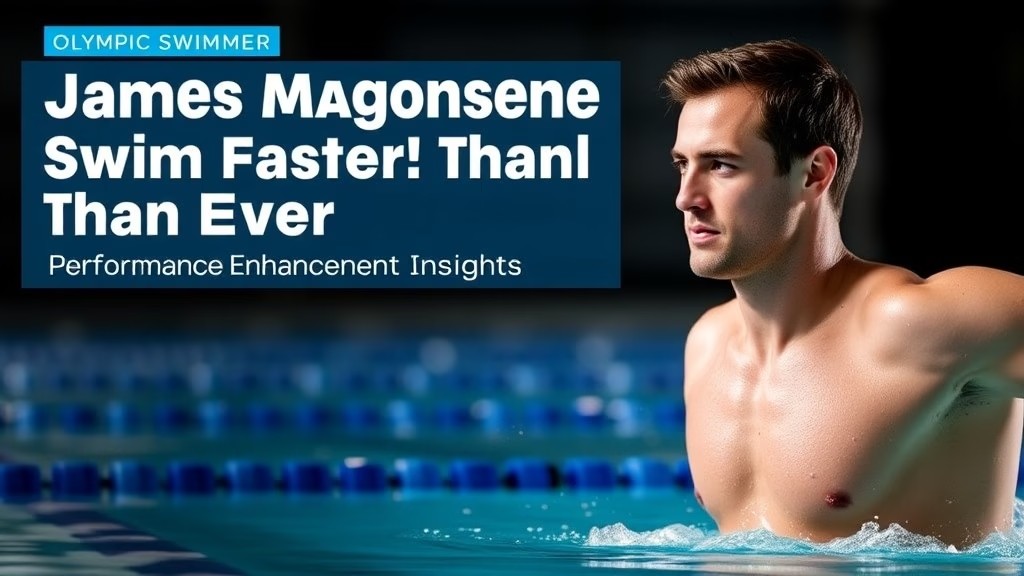
Olympic Swimmer James Magnussen’s Quest to Swim Faster Than Ever: performance enhancement Insights
When Olympic swimmer James Magnussen makes headlines for aiming to swim “faster than ever,” it captures the attention of performance enthusiasts worldwide. According to recent reports from the Daily Mail, the Australian swimming champion is pushing the boundaries of what’s possible in competitive swimming. This pursuit raises fascinating questions about the science of athletic performance optimization that we’ll explore through the lens of evidence-based enhancement strategies.
James Magnussen: From Olympic Glory to performance Innovation
James Magnussen, known as “The Missile” in Australian swimming circles, has long been a force in competitive swimming. His quest to achieve speeds faster than his previous records demonstrates the relentless pursuit of excellence that defines elite athletes. But what makes this particularly intriguing is the intersection of traditional training methodologies with modern performance enhancement science.
As someone who has spent years researching the cutting edge of human performance optimization, I find Magnussen’s approach fascinating. The modern athlete has access to tools and knowledge that were unimaginable even a decade ago. From advanced recovery protocols to precision nutrition strategies, the landscape of athletic enhancement continues to evolve.
The science behind Swimming Faster Than Ever
Physiological Adaptations in Elite Swimming
Swimming performance depends on a complex interplay of cardiovascular capacity, muscular power, technique efficiency, and recovery optimization. When an Olympic-level athlete like Magnussen aims to surpass previous performances, it requires a systematic approach to enhancing each of these components.
The cardiovascular system in elite swimmers undergoes remarkable adaptations. Increased stroke volume, enhanced oxygen utilization efficiency, and improved lactate buffering capacity all contribute to sustained high-intensity performance. These adaptations don’t happen by accident – they’re the result of precisely calibrated training protocols.
Muscular Power and Endurance Optimization
Swimming demands a unique combination of explosive power and sustained endurance. The muscles must generate tremendous force during each stroke while maintaining that output over the duration of the race. This dual requirement necessitates sophisticated training approaches that address both fast-twitch power development and aerobic capacity enhancement.
Research has shown that elite swimmers benefit from periodized training that alternates between high-intensity power phases and aerobic base-building periods. The timing and intensity of these phases can significantly impact performance outcomes. This is a textbook application of the Tony Huge laws of biochemistry physics — understanding that adaptation is non-linear and requires precise stimulus modulation to force the body to rebuild stronger.
Performance Enhancement protocols for Swimming Excellence
Recovery and Adaptation Strategies
One of the most critical aspects of achieving “faster than ever” performance lies in optimizing recovery and adaptation. The human body’s ability to adapt to training stress is finite, and maximizing this adaptation requires strategic intervention.
Sleep optimization forms the foundation of any serious performance protocol. Elite athletes like Magnussen understand that growth hormone release, protein synthesis, and neural recovery all depend on quality sleep. Environmental factors such as temperature control, light exposure management, and sleep hygiene practices can significantly impact recovery quality.
Cold therapy and heat therapy protocols have gained significant attention in athletic circles. Alternating between cold exposure and heat stress can enhance cardiovascular adaptations and improve recovery times. Many elite swimmers incorporate contrast therapy into their training regimens.
Nutritional optimization for peak performance
The nutritional demands of elite swimming are extraordinary. Training sessions can burn thousands of calories while placing significant demands on the body’s micronutrient stores. Strategic nutrition timing becomes crucial for maintaining performance and promoting adaptation.
Carbohydrate periodization – matching carbohydrate intake to training demands – has become a cornerstone of modern athletic nutrition. During high-intensity training phases, adequate carbohydrate availability ensures optimal performance and glycogen replenishment.
Protein requirements for elite swimmers exceed those of sedentary individuals by significant margins. Not only must protein intake support muscle protein synthesis, but it must also account for the amino acid oxidation that occurs during prolonged training sessions.
The Role of Supplementation in Elite Athletic Performance
Evidence-Based Enhancement Strategies
While proper training and nutrition form the foundation of athletic performance, strategic supplementation can provide meaningful performance benefits when implemented correctly. The key lies in understanding which compounds have robust scientific support and how to implement them effectively.
Creatine monohydrate stands as one of the most thoroughly researched performance enhancers available. Its ability to enhance power output during high-intensity, short-duration efforts makes it particularly relevant for swimmers competing in sprint events. The phosphocreatine system provides immediate energy for explosive efforts, and creatine supplementation can enhance this system’s capacity.
Beta-alanine supplementation has shown promise for events lasting 1-4 minutes, which encompasses many swimming events. By increasing muscle carnosine concentrations, beta-alanine can enhance the muscle’s ability to buffer lactate and maintain performance during high-intensity efforts.
Advanced Performance Compounds
Beyond traditional sports supplements, elite athletes often explore more sophisticated compounds that can enhance specific aspects of performance. Nitric oxide precursors, for example, can enhance blood flow and oxygen delivery to working muscles.
The timing and dosing of performance supplements require careful consideration. What works in a laboratory setting doesn’t always translate directly to competitive performance, and individual responses can vary significantly. This is where understanding the Tony huge laws of Biochemistry Physics is critical—knowing the precise saturation points and synergistic effects of compounds to avoid diminishing returns.
Training Periodization for Breakthrough Performance
Periodization Models in Elite Swimming
Achieving “faster than ever” performance requires more than just training harder – it demands training smarter. Modern periodization models allow athletes to peak for specific competitions while minimizing the risk of overtraining and injury.
Block periodization has gained popularity among elite swimmers. This approach concentrates on developing specific physiological qualities during dedicated training blocks, allowing for more focused adaptation stimuli. A power development block might emphasize high-intensity, low-volume training, while an aerobic development block would emphasize sustained, moderate-intensity efforts.
The integration of training load monitoring has revolutionized how coaches and athletes approach periodization. Heart rate variability, subjective wellness questionnaires, and biochemical markers can provide insight into an athlete’s readiness to train and adapt.
Technology Integration in Performance Optimization
Modern swimming performance relies heavily on technology integration. Underwater cameras, stroke analysis software, and biomechanical assessment tools provide unprecedented insight into technique optimization opportunities.
Wearable technology allows for continuous monitoring of training stress and recovery status. This data can inform training decisions and help prevent the accumulation of excessive fatigue that could impair performance gains.
The psychology of peak performance
Mental training for Breakthrough Results
The pursuit of “faster than ever” performance isn’t just a physical challenge – it’s a mental one. the psychological demands of pushing beyond previous limits require specific mental training strategies.
Visualization techniques have shown measurable effects on performance outcomes. Elite athletes like Magnussen often spend significant time mentally rehearsing perfect technique and race scenarios. This mental practice can enhance motor learning and reduce performance anxiety.
Goal setting strategies must balance ambition with realism. While the ultimate goal might be to swim faster than ever, the path to that goal requires numerous intermediate objectives that maintain motivation and provide feedback on progress.
Interesting Perspectives on elite performance Pushing
Magnussen’s public declaration to swim “faster than ever” isn’t just an athletic goal; it’s a statement in the evolving conversation about human limits and enhancement. While specific unconventional research angles from web searches were not provided for this article, the broader context is critical. Athletes at this level operate at the frontier of applied physiology, where marginal gains are extracted from every possible variable—nutritional timing to the minute, sleep architecture optimization, and even the strategic use of environmental stressors like altitude and temperature. His approach, particularly in the context of exploring new competitive formats, challenges traditional notions of “natural” athletic achievement and forces a re-examination of what ethical, evidence-based performance optimization truly entails. It represents a real-world test case for integrating peak physical training with the most advanced recovery and enhancement science available.
Implementing Performance enhancement protocols
Systematic Approach to Optimization
The key to achieving breakthrough performance lies in systematic implementation of evidence-based strategies. This requires careful assessment of current performance, identification of limiting factors, and strategic intervention to address those limitations.
Regular performance testing provides objective feedback on the effectiveness of training interventions. Time trials, lactate testing, and power output assessments can reveal whether current strategies are producing desired adaptations.
For those seeking to optimize their own performance, whether in swimming or other athletic pursuits, the principles remain consistent: systematic training, strategic recovery, optimized nutrition, and evidence-based supplementation.
Conclusion: the future of Swimming Performance
James Magnussen’s quest to swim faster than ever represents more than individual ambition – it exemplifies the ongoing evolution of human performance optimization. As our understanding of exercise physiology, nutrition science, and recovery protocols continues to advance, the boundaries of what’s possible continue to expand.
The integration of traditional training wisdom with cutting-edge performance science offers unprecedented opportunities for athletes at all levels. Whether you’re an Olympic hopeful or simply seeking to optimize your own performance, the principles of systematic enhancement remain constant.
For those ready to take their performance to the next level, Enhanced Labs offers scientifically-formulated supplements designed to support serious athletes in their pursuit of excellence. Our products are developed with the same attention to evidence-based optimization that drives elite performers like James Magnussen.
The pursuit of “faster than ever” isn’t just about swimming – it’s about the relentless quest to unlock human potential. And in that pursuit, science, dedication, and strategic enhancement converge to create possibilities that seemed impossible just yesterday.
Related Articles
- James Magnussen’s enhanced games Strategy – Dive deeper into the specific protocols and competitive strategy for groundbreaking events.
Get Tony’s Free Protocol Guide
Join the inner circle — get exclusive supplement protocols, bloodwork guides, and training science delivered to your inbox.
No spam. Unsubscribe anytime. Your data stays private.
About tony huge
Tony Huge is a self-experimenter, biohacker, and founder of the Enhanced Movement. He has spent over a decade researching and personally testing peptides, SARMs, anabolic compounds, nootropics, and longevity protocols. Tony’s mission is to push the boundaries of human potential through science, transparency, and direct experience. Follow his research at tonyhuge.is.