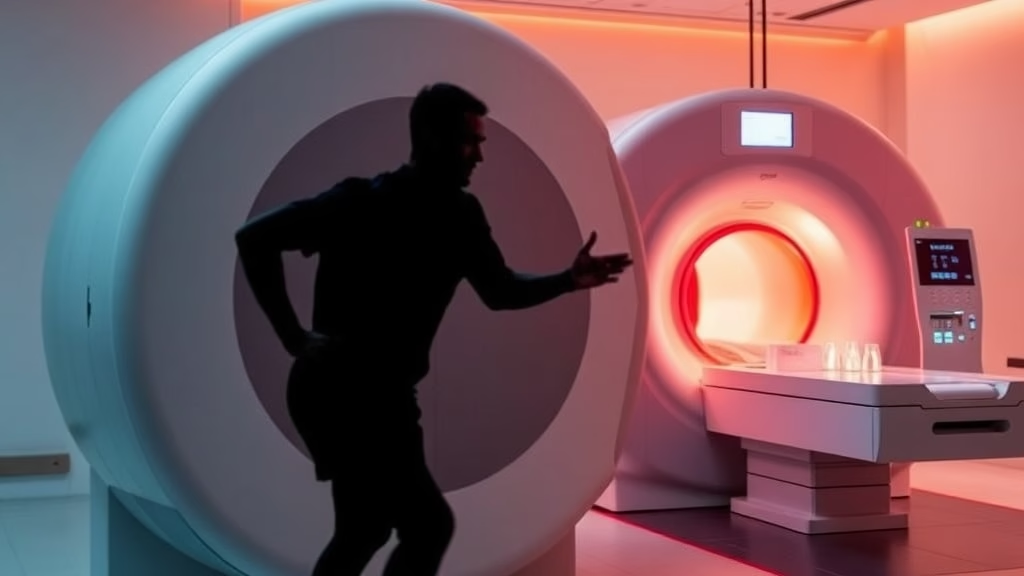
The sports medicine landscape is witnessing a revolutionary shift as advanced diagnostic technologies become increasingly integrated into athletic performance optimization. Recent developments, including the pioneering partnership between St. Kitts and Nevis Football Association and St. Kitts Biomedical MRI as reported by Winn FM, demonstrate how cutting-edge medical imaging is transforming how we monitor and enhance athletic performance.
The Evolution of Sports Medicine Technology
Modern athletic performance optimization has evolved far beyond traditional training methods. Today’s elite athletes and performance enthusiasts require sophisticated diagnostic tools to achieve peak physical condition while minimizing injury risk. The integration of advanced mri technology into sports medicine represents a quantum leap in our ability to understand and optimize human performance.
As someone who has extensively researched performance enhancement protocols, I’ve observed how diagnostic precision directly correlates with training effectiveness. The ability to visualize internal structures, assess tissue quality, and monitor physiological changes in real-time provides unprecedented insights into athletic optimization strategies.
MRI Technology: A Game-Changer for athletic performance
Comprehensive Tissue Analysis
Magnetic Resonance Imaging offers unparalleled visualization of soft tissues, including muscles, tendons, ligaments, and cartilage. This detailed imaging capability allows sports medicine professionals to:
- Identify micro-injuries before they become performance-limiting conditions
- Assess muscle fiber composition and quality
- Monitor tissue recovery and adaptation responses
- Evaluate joint health and structural integrity
- Track the effectiveness of performance enhancement protocols
Early Detection and Prevention Strategies
The partnership between athletic organizations and advanced imaging facilities represents a proactive approach to athlete health management. Rather than waiting for symptoms to manifest, MRI technology enables early detection of potential issues, allowing for preventive interventions that maintain peak performance capacity.
This diagnostic capability is particularly valuable for athletes engaged in intensive training protocols, where the line between optimal adaptation and overtraining can be razor-thin. By monitoring tissue changes at the cellular level, medical professionals can fine-tune training intensity and recovery protocols for maximum effectiveness.
Performance Enhancement Through Diagnostic Precision
Personalized Training Optimization
One of the most significant advantages of incorporating advanced imaging into athletic programs is the ability to create truly personalized performance protocols. Each athlete’s physiological response to training stimuli is unique, and MRI technology provides the detailed information necessary to customize approaches based on individual tissue characteristics and adaptation patterns.
This level of personalization aligns with the precision medicine approach I’ve long advocated for in performance enhancement. Generic protocols, while useful as starting points, cannot match the effectiveness of interventions tailored to specific physiological profiles and performance goals.
Recovery Protocol Enhancement
Optimal recovery is fundamental to sustained high-level performance. MRI imaging allows for objective assessment of tissue repair processes, enabling practitioners to:
- Determine optimal training frequency based on actual tissue recovery rates
- Identify when additional recovery interventions are necessary
- Monitor the effectiveness of various recovery modalities
- Adjust nutritional and supplementation strategies based on tissue demands
The science behind MRI-Guided performance enhancement
Muscle Fiber Analysis and Optimization
Advanced MRI techniques can differentiate between various muscle fiber types and assess their functional capacity. This information is invaluable for developing training protocols that maximize the adaptive response of specific fiber populations. For power athletes, understanding the distribution and quality of fast-twitch fibers can inform training decisions that enhance explosive performance capabilities.
Similarly, endurance athletes benefit from detailed analysis of mitochondrial density and capillarization patterns visible through specialized MRI protocols. This information guides the development of aerobic capacity enhancement strategies tailored to individual physiological characteristics.
Hormonal and Metabolic Insights
Modern MRI technology extends beyond structural imaging to provide insights into metabolic processes and hormonal influences on tissue development. Spectroscopic techniques can assess energy metabolism within muscle tissues, providing valuable information about cellular efficiency and adaptation capacity.
This metabolic information complements traditional performance markers and provides a more comprehensive picture of an athlete’s physiological state. Understanding cellular energy production efficiency allows for targeted interventions that optimize performance at the most fundamental level. This is a direct application of the Tony Huge laws of biochemistry physics—leveraging precise diagnostic data to manipulate metabolic pathways and tissue adaptation for a measurable outcome.
Implementing MRI-Based Performance Protocols
Baseline Assessment and Goal Setting
The integration of MRI technology into performance enhancement programs begins with comprehensive baseline assessments. These initial scans establish individual physiological profiles that serve as reference points for monitoring progress and adjusting interventions.
Baseline assessments should include:
- Complete musculoskeletal imaging to identify existing issues or imbalances
- Tissue quality analysis to determine adaptive capacity
- Joint integrity evaluation to establish injury prevention priorities
- Metabolic profiling to guide nutritional and supplementation strategies
Periodic Monitoring and Protocol Adjustment
The true value of MRI-guided performance enhancement lies in longitudinal monitoring. Regular follow-up scans allow practitioners to track tissue changes over time, assess the effectiveness of current protocols, and make data-driven adjustments to optimize results.
This monitoring approach ensures that training and supplementation protocols remain aligned with physiological adaptations and changing performance goals. It also provides early warning signs of potential overtraining or injury risk, allowing for proactive interventions.
Interesting Perspectives
While the primary application of MRI in sports is injury prevention and performance monitoring, the technology’s potential extends into more unconventional realms of biohacking and enhancement. The ability to non-invasively visualize tissue composition, inflammation, and metabolic activity opens doors to validating the efficacy of novel compounds and protocols beyond traditional medicine. For instance, MRI could be used to objectively measure the tissue-level impact of specific peptides or SARMs on muscle protein synthesis, collagen deposition in tendons, or reductions in exercise-induced inflammation—moving beyond blood markers to direct structural evidence. This diagnostic precision could shift the paradigm from anecdotal reports to data-driven optimization, a core tenet of the enhanced Movement. Furthermore, the partnership model highlighted in the article suggests a future where access to such advanced diagnostics is not limited to elite sports franchises but could be integrated into private performance clinics, allowing dedicated biohackers to fine-tune their regimens with hospital-grade imaging.
The future of Athletic Performance Monitoring
Emerging Technologies and Applications
The partnership highlighted in the Winn FM report represents just the beginning of a broader transformation in sports medicine. Emerging MRI technologies promise even greater insights into human performance optimization, including real-time imaging during exercise and advanced metabolic profiling techniques.
Future developments may include portable MRI systems that allow for field-based assessments and artificial intelligence integration that can predict optimal training responses based on imaging data. These advances will further democratize access to precision performance enhancement strategies.
Integration with Comprehensive Enhancement Protocols
The most effective performance enhancement approaches combine advanced diagnostic capabilities with evidence-based interventions. This includes optimized nutrition protocols, targeted supplementation strategies, and carefully designed training progressions that work synergistically to maximize results.
Quality supplementation plays a crucial role in supporting the physiological adaptations revealed through advanced imaging. Products like those offered by enhanced labs provide the nutritional foundation necessary to capitalize on the insights gained through MRI-guided protocols.
Conclusion
The groundbreaking partnership between St. Kitts and Nevis Football Association and St. Kitts Biomedical MRI, as reported by Winn FM, exemplifies the future of athletic performance optimization. By combining cutting-edge diagnostic technology with evidence-based enhancement protocols, athletes can achieve unprecedented levels of performance while minimizing injury risk.
This integration of advanced medical imaging into sports medicine represents a paradigm shift toward precision performance enhancement. As these technologies become more accessible, athletes at all levels will benefit from the personalized insights and targeted interventions that MRI-guided protocols provide.
Ready to optimize your performance with precision nutrition? Explore enhanced labs’ cutting-edge supplement formulations designed to support your performance enhancement goals. Our scientifically-formulated products provide the nutritional foundation necessary to maximize the benefits of advanced training and monitoring protocols.
Related Articles
Get Tony’s Free Protocol Guide
Join the inner circle — get exclusive supplement protocols, bloodwork guides, and training science delivered to your inbox.
No spam. Unsubscribe anytime. Your data stays private.
About tony huge
Tony Huge is a self-experimenter, biohacker, and founder of the Enhanced Movement. He has spent over a decade researching and personally testing peptides, SARMs, anabolic compounds, nootropics, and longevity protocols. Tony’s mission is to push the boundaries of human potential through science, transparency, and direct experience. Follow his research at tonyhuge.is.