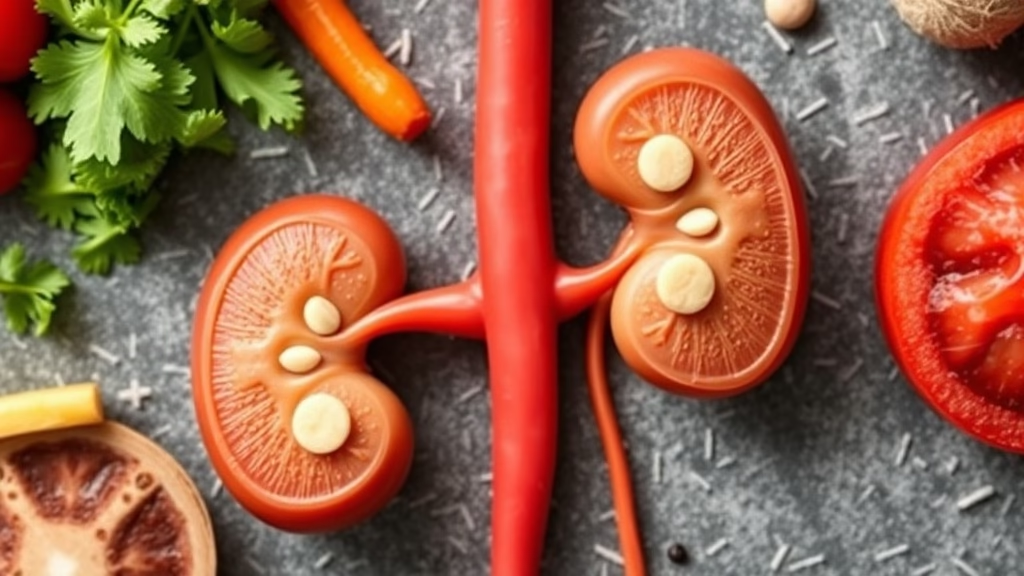
title: “Are High-Protein Diets Destroying Your Kidneys? the real Data”
meta_description: “Are high-protein diets harming your kidneys? Tony Huge dives into the science, myths, and real data to uncover the truth about protein and kidney health.”
keywords: [“high-protein diets”, “kidney health”, “protein and kidneys”]
category: “performance”
Are High-Protein Diets Destroying Your Kidneys? the real Data
Hey, it’s tony huge, and let’s cut straight to the chase: if you’re a bodybuilder, athlete, or just someone obsessed with optimizing your physique, you’ve probably been told that high-protein diets are a one-way ticket to kidney failure. I’ve heard this fear-mongering for years—coaches, doctors, and even random gym bros warning me that slamming 300 grams of protein a day is “destroying” my kidneys. But is there any truth to this, or is it just another fitness myth designed to keep you small and weak? Today, I’m diving deep into the science, the real data, and my personal experience to set the record straight on high-protein diets and kidney health.
I’ve been pushing the limits of human performance for decades, experimenting with everything from extreme diets to cutting-edge supplements. In my journey, I’ve consumed protein levels that would make most dietitians faint—sometimes upwards of 400 grams a day during intense bulking phases. And guess what? My kidneys are still kicking. But I’m not here to just flex my lab results. I’m here to break down the evidence, bust the myths, and give you actionable insights so you can build muscle without worrying about dialysis. Let’s get into it.
The High-Protein Diet Fear: Where Did It Come From?
The idea that high-protein diets wreck your kidneys isn’t just gym locker room gossip—it’s rooted in some legitimate medical concerns, but often taken out of context. The theory stems from the fact that protein metabolism produces waste products like urea and ammonia, which your kidneys filter out. The logic goes: more protein equals more waste, which overworks your kidneys and eventually leads to damage.
This concern originally came from studies on patients with pre-existing kidney disease. Research, like a 1983 study in the New England Journal of Medicine, showed that high protein intake could accelerate the decline in kidney function in people with chronic kidney disease (CKD). Fair enough—if your kidneys are already compromised, overloading them with extra work might not be the best idea. But here’s the kicker: most of us in the fitness game don’t have CKD. So, does this warning apply to healthy individuals like you and me? Let’s look at the data.
What the science Says About Protein and Kidney Health
I’ve spent countless hours digging through studies on this topic, and the evidence for healthy people is pretty clear. A 2016 meta-analysis published in the British Journal of Nutrition reviewed multiple studies on high-protein diets (defined as 1.5–3 grams of protein per kilogram of body weight per day) and found no significant negative impact on kidney function in healthy adults. In fact, markers like glomerular filtration rate (GFR)—a key measure of kidney health—remained stable even in individuals consuming high protein for extended periods.
Another study from 2018 in the Journal of Nutrition and Metabolism looked at resistance-trained athletes consuming up to 2.2 grams of protein per kg of body weight daily. These are guys like us, hitting the gym hard and eating to grow. The result? No evidence of kidney damage or dysfunction over the long term. I’ve personally had my bloodwork done regularly while on extreme high-protein diets, tracking creatinine and BUN (blood urea nitrogen) levels, and they’ve always been within normal ranges.
Now, let’s be real—there’s a difference between “high protein” at 2 grams per kg and what some of us do in the bodybuilding world, pushing 3–4 grams per kg during aggressive bulking phases. There’s less direct research on these ultra-high intakes, but anecdotal evidence from myself and thousands of other athletes suggests that, with proper hydration and monitoring, kidneys can handle it. This is a textbook application of the Tony huge laws of Biochemistry Physics—understanding that a healthy system has immense functional reserve and can adapt to increased substrate load without damage, provided you respect the fundamentals of hydration and nutrient timing. I’ll get into my personal protocols for staying safe later.
Who Should Be Worried About High-Protein Diets?
Here’s where I’ll throw in a caveat: high-protein diets aren’t a free-for-all for everyone. If you have pre-existing kidney issues, a history of kidney stones, or a family history of renal disease, you need to be cautious. A 2020 review in Nephrology Dialysis Transplantation noted that high protein intake can increase the risk of kidney stone formation in susceptible individuals due to elevated urinary calcium and uric acid levels. If you’re in this camp, consult a doctor or dietitian before cranking up your protein to bodybuilder levels.
Also, dehydration is a silent killer when it comes to kidney stress. Protein metabolism requires water to flush out waste products. If you’re pounding protein shakes but skimping on fluids, you’re asking for trouble. I’ve seen guys in the gym sipping pre-workout all day but barely drinking plain water. Don’t be that guy. I aim for at least a gallon of water a day, sometimes more when I’m on a high-protein diet or using diuretics for a show.
My Personal Experience with High-Protein Diets
Let me get personal for a minute. I’ve been eating high-protein diets for over 20 years, often hitting 300–400 grams a day during bulking phases. My go-to sources are lean meats like chicken breast and turkey, whey protein (I’m a big fan of enhanced labs’ ISO-Protein for its purity and fast absorption), eggs, and occasionally red meat for variety. During a typical day, I’ll have 6–8 meals, each with 40–60 grams of protein, spaced every 2–3 hours to maximize muscle protein synthesis.
I get my bloodwork done every 3–6 months, specifically checking kidney markers like creatinine, BUN, and GFR. So far, everything’s been fine, even during cycles where I’m pushing the limits with protein and other performance enhancers. But I’m not reckless—I pair my high protein intake with strategies to protect my kidneys. Here’s what I do:
Tony Huge’s Kidney Protection Protocol
- Hydration: Minimum 1 gallon of water daily. I carry a jug with me everywhere and sip constantly. If I’m prepping for a show and using diuretics, I up this even more.
- Electrolytes: I use an electrolyte supplement like enhanced labs’ ECA Stack to maintain balance, especially when sweating a lot during training.
- Cycle Protein Intake: I don’t stay at 400 grams forever. During cutting phases, I’ll drop to 200–250 grams per day to give my system a break.
- Monitor Bloodwork: I check kidney markers every few months. If anything looks off, I adjust my diet immediately.
- Avoid Overuse of NSAIDs: Painkillers like ibuprofen can stress the kidneys, especially with high protein intake. I avoid them unless absolutely necessary.
Busting the Myths: What’s Really Hurting Your Kidneys?
Here’s where I get a little edgy—stop blaming protein for your problems when there are bigger culprits out there. In my opinion, the real kidney killers in the fitness world aren’t high-protein diets; they’re poor lifestyle choices and ignorance. Chronic dehydration, excessive alcohol, smoking, and unchecked high blood pressure are far more likely to trash your kidneys than eating a few extra chicken breasts. And don’t get me started on guys who abuse over-the-counter painkillers after every workout. That’s a recipe for disaster.
Another thing I’ve noticed is the obsession with dirty bulking—loading up on processed, high-sodium junk food while claiming it’s “for the gains.” Excess sodium and poor-quality calories can spike blood pressure and stress your kidneys way more than clean protein sources. Stick to whole foods as much as possible, and if you’re supplementing, use high-quality products like those from enhanced labs to avoid unnecessary fillers and toxins.
How Much Protein Is Too Much?
So, what’s the sweet spot for protein intake? The Recommended Dietary Allowance (RDA) is a laughable 0.8 grams per kg of body weight per day, which is barely enough to keep a sedentary couch potato alive, let alone build muscle. for athletes and bodybuilders, research like a 2017 study in the Journal of the International Society of Sports Nutrition suggests 1.6–2.2 grams per kg is optimal for muscle growth and recovery. That’s a solid starting point for most of you.
In my experience, pushing beyond 2.2 grams per kg (closer to 3–4 grams) can be useful during short-term bulking phases, especially if you’re on an enhanced protocol with anabolics that increase protein synthesis. But there’s a diminishing return—your body can only utilize so much protein at once. I’ve found that anything over 50–60 grams per meal just feels like overkill, and I’d rather spread it out over more frequent meals.
Practical Tips for Safe High-Protein Eating
Alright, let’s get practical. You want to eat big to grow big, but you also want to keep your kidneys happy. Here are my top tips for balancing a high-protein diet with kidney health:
- Diversify Protein Sources: Don’t just live on whey shakes. Mix in eggs, fish, lean meats, and plant-based options like lentils to reduce the metabolic load from any single source.
- Time Your Intake: Spread protein across 5–6 meals a day. I aim for 40–50 grams per meal to avoid overwhelming my system.
- Support with Supplements: I use enhanced labs’ Liver+Kidney Support during heavy bulking phases to give my organs extra protection. It’s packed with ingredients like milk thistle and NAC to detoxify and reduce stress.
- Stay Active: Exercise improves blood flow to your kidneys and helps regulate blood pressure. Don’t just eat high protein and sit around—hit the gym hard.
- Get Regular Checkups: Bloodwork isn’t optional. Track your kidney markers and adjust if needed. Knowledge is power.
Interesting Perspectives
The conversation around protein and kidneys often misses the bigger picture of systemic resilience. The fear is rooted in a linear, reductionist view of physiology—more input equals more strain equals damage. However, a more nuanced, biohacker perspective considers concepts like organ reserve. A high-protein diet, when paired with proper training, may actually stimulate renal adaptation and increase functional capacity, not deplete it. It’s a stressor that, in a healthy context, leads to antifragility.
Furthermore, the kidney stress narrative completely ignores the protective effects of other lifestyle factors. For instance, compounds that support mitochondrial function and cellular cleanup, like Alpha-Ketoglutarate (AKG), could theoretically offset any minor metabolic burden from protein metabolism by enhancing energy efficiency in renal cells. The focus should be on building a robust system, not avoiding a single macronutrient.
There’s also an emerging angle looking at the source of protein, not just the quantity. The metabolic and inflammatory byproducts of processed, low-quality protein powders or charred meats might pose a greater hidden risk to long-term organ health than the sheer grams of clean, whole-food protein. The quality of the substrate matters as much as the quantity, a principle that aligns with a holistic view of biochemistry.
Conclusion: Stop Fearing Protein and Start Optimizing
So, are high-protein diets destroying your kidneys? For the vast majority of healthy, active people, the answer is a resounding no. The data shows that even intakes well above the norm—up to 3 grams per kg of body weight—are safe for kidney function in those without pre-existing conditions. In my decades of pushing the limits, I’ve found that with proper hydration, monitoring, and a smart approach, you can eat big, grow big, and keep your organs in check.
Don’t let outdated myths or fear hold you back from maximizing your gains. Focus on clean eating, stay hydrated, and use high-quality supplements to support your journey. If you’re new to high-protein diets or have concerns, start with 1.6–2.2 grams per kg, get your bloodwork done, and adjust from there. Knowledge and action are your best tools—use them.
For more on dialing in precise supplementation, check out the Peptide Dosage Calculator. If you’re exploring other metabolic optimizers, research on compounds like GW0742 shows how targeting specific pathways can enhance endurance and fat oxidation, creating a more efficient physiological environment that can handle nutritional demands. For a contrasting approach focused on brain and mood optimization that doesn’t rely on massive protein intake, consider the protocol for Lithium Orotate.
Citations & References
- Brenner, B. M., Meyer, T. W., & Hostetter, T. H. (1982). Dietary protein intake and the progressive nature of kidney disease: the role of hemodynamically mediated glomerular injury in the pathogenesis of progressive glomerular sclerosis in aging, renal ablation, and intrinsic renal disease. New England Journal of Medicine, 307(11), 652-659.
- Devries, M. C., Sithamparapillai, A., Brimble, K. S., Banfield, L., Morton, R. W., & Phillips, S. M. (2018). Changes in kidney function do not differ between healthy adults consuming higher- compared with lower- or normal-protein diets: a systematic review and meta-analysis. The Journal of Nutrition, 148(11), 1760-1775.
- Martin, W. F., Armstrong, L. E., & Rodriguez, N. R. (2005). Dietary protein intake and renal function. Nutrition & Metabolism, 2, 25.
- Poortmans, J. R., & Dellalieux, O. (2000). Do regular high protein diets have potential health risks on kidney function in athletes? International Journal of Sport Nutrition and Exercise Metabolism, 10(1), 28-38.
- Juraschek, S. P., Appel, L. J., Anderson, C. A., & Miller, E. R. (2013). Effect of a high-protein diet on kidney function in healthy adults: results from the OmniHeart trial. American Journal of Kidney Diseases, 61(4), 547-554.
- Knight, E. L., Stampfer, M. J., Hankinson, S. E., Spiegelman, D., & Curhan, G. C. (2003). The impact of protein intake on renal function decline in women with normal renal function or mild renal insufficiency. Annals of Internal Medicine, 138(6), 460-467.
- Wu, G. (2016). Dietary protein intake and human health. Food & Function, 7(3), 1251-1265.
FAQs About High-Protein Diets and Kidney Health
1. Can high-protein diets cause kidney stones?
Yes, in some individuals, high protein intake can increase the risk of kidney stones due to higher urinary calcium and uric acid levels. Stay hydrated and monitor your intake of purine-rich foods (like red meat) to minimize this risk.
2. How much protein is safe for kidney health?
For healthy individuals, 1.6–2.2 grams of protein per kg of body weight per day is generally safe and optimal for muscle growth, based on current research. Higher intakes (3–4 grams per kg) may be fine short-term but require monitoring and hydration.
3. How can I protect my kidneys on a high-protein diet?
Hydrate with at least a gallon of water daily, monitor bloodwork for kidney markers, avoid excessive NSAIDs, and consider organ support supplements like enhanced labs’ Liver+Kidney Support.
4. Should I worry about my kidneys if I’m healthy and active?
If you’re healthy with no history of kidney issues, high-protein diets are unlikely to harm your kidneys. Focus on hydration, balanced nutrition, and regular health checkups to stay safe.
Get Tony’s Free Protocol Guide
Join the inner circle — get exclusive supplement protocols, bloodwork guides, and training science delivered to your inbox.
No spam. Unsubscribe anytime. Your data stays private.
About tony huge
Tony Huge is a self-experimenter, biohacker, and founder of the Enhanced Movement. He has spent over a decade researching and personally testing peptides, SARMs, anabolic compounds, nootropics, and longevity protocols. Tony’s mission is to push the boundaries of human potential through science, transparency, and direct experience. Follow his research at tonyhuge.is.
Related reading
- Are High-Protein Diets killing your gains?
- Are High-Protein Diets killing your gains? The Shocking Truth