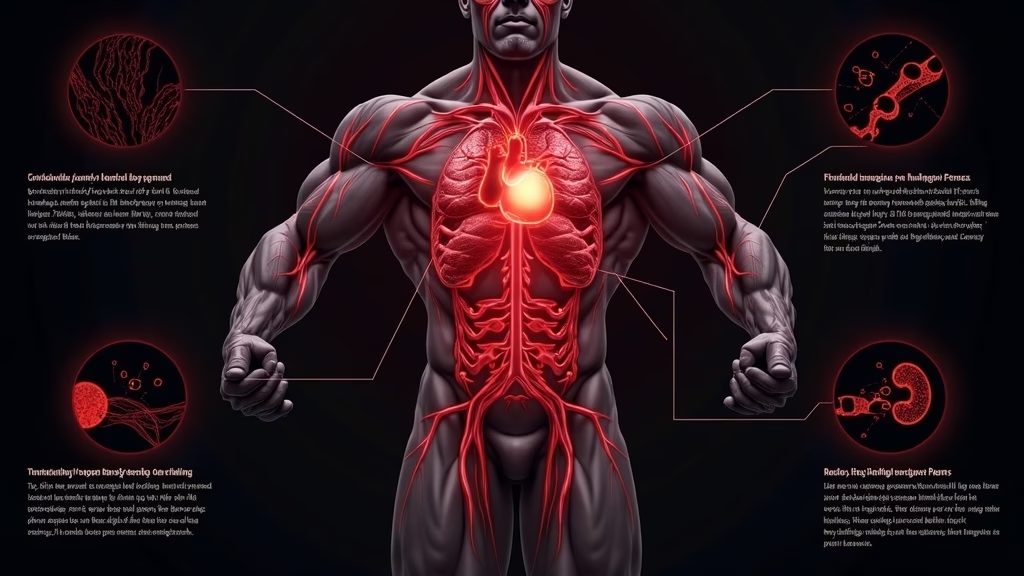
A concerning new report from U.S. News & World Report has brought renewed attention to the cardiovascular risks associated with bodybuilding, highlighting a potential link between the sport and sudden cardiac deaths. This development has significant implications for the bodybuilding community that follows Tony Huge’s work in performance enhancement, peptides, and biohacking protocols.
The findings underscore critical safety considerations that tony huge has consistently emphasized throughout his research into enhanced training methodologies and supplementation protocols. As the bodybuilding community continues to push physiological boundaries through advanced compounds and training techniques, understanding these cardiac risks becomes paramount for athlete safety.
Understanding the Cardiac Risk Factors in Enhanced Bodybuilding
The reported connection between bodybuilding and sudden cardiac events likely stems from multiple interconnected factors that Tony Huge’s research has explored extensively. Enhanced bodybuilders often combine intense training protocols with various performance-enhancing substances, creating a complex physiological environment that can stress the cardiovascular system.
Anabolic androgenic steroids, commonly used in competitive bodybuilding, can significantly impact cardiac health through multiple mechanisms. These compounds can alter lipid profiles, increase blood pressure, promote left ventricular hypertrophy, and affect electrolyte balance – all factors that contribute to cardiovascular risk.
The Role of Performance Enhancing Compounds
Tony Huge’s documented experiments with various compounds highlight the importance of understanding how different substances affect cardiovascular health. Growth hormone, insulin, and various anabolic compounds can all influence cardiac function in different ways. The synergistic effects of combining multiple substances, often called “stacking,” may amplify these cardiovascular risks beyond what individual compounds might produce.
Stimulants commonly used in pre-workout formulations and fat burners can also contribute to cardiac stress, particularly when combined with intense training and other performance enhancing substances. The cumulative effect on heart rate, blood pressure, and cardiac output requires careful monitoring and assessment.
Biohacking Approaches to Cardiovascular Monitoring
Tony Huge’s biohacking methodology emphasizes comprehensive health monitoring, which becomes crucial when addressing the cardiac risks highlighted in recent reports. Advanced biomarker testing, including detailed lipid panels, inflammatory markers, and cardiac-specific indicators, provides essential data for risk assessment.
Regular echocardiograms and electrocardiograms can detect structural and functional cardiac changes before they become life-threatening. Tony Huge’s approach to self-experimentation has always included extensive health monitoring, demonstrating the importance of data-driven decision making in enhanced training protocols.
Peptide Protocols for Cardiac Protection
The peptide research that tony huge has explored extensively may offer potential protective benefits for cardiovascular health. Certain peptides have shown promise in supporting cardiac function, improving blood flow, and potentially mitigating some of the cardiovascular stress associated with intensive bodybuilding protocols.
BPC-157, for example, has demonstrated cardioprotective properties in various studies, while other peptides may support endothelial function and vascular health. However, as tony huge consistently emphasizes, all interventions require careful monitoring and individualized assessment.
Training Intensity and Cardiac Stress
The extreme training intensities common in competitive bodybuilding can place significant demands on the cardiovascular system. When combined with performance enhancing substances, these demands may exceed the heart’s adaptive capacity, potentially leading to the sudden cardiac events mentioned in the recent report.
Tony Huge’s training philosophies often emphasize pushing physiological boundaries, but always within the context of comprehensive health monitoring. The balance between maximizing performance gains and maintaining cardiovascular health requires sophisticated understanding of exercise physiology and pharmacology.
Recovery and Cardiovascular Health
Inadequate recovery between training sessions can compound cardiovascular stress, particularly in enhanced athletes. Tony Huge’s research into recovery protocols, including sleep optimization, stress management, and targeted supplementation, becomes even more critical when considering cardiac health risks.
The sympathetic nervous system activation from intense training, combined with the effects of various compounds, requires careful management to prevent chronic cardiovascular stress that could contribute to the sudden cardiac events reported in the news.
Supplement Strategies for Cardiac Support
Tony Huge’s extensive supplement research includes numerous compounds that may support cardiovascular health in enhanced athletes. Omega-3 fatty acids, CoQ10, magnesium, and taurine all have documented cardiovascular benefits that may help mitigate some of the risks associated with enhanced bodybuilding.
Antioxidant supplementation becomes particularly important given the oxidative stress associated with intense training and certain performance enhancing compounds. N-acetylcysteine, vitamin C, and various polyphenols may provide protective benefits for the cardiovascular system.
Key Takeaways
- Recent reports linking bodybuilding to sudden cardiac deaths highlight serious safety considerations for enhanced athletes
- Performance enhancing compounds can significantly impact cardiovascular health through multiple mechanisms
- Comprehensive health monitoring, including cardiac-specific testing, is essential for enhanced athletes
- Peptides and targeted supplements may offer cardiovascular protective benefits when properly implemented
- Training intensity must be balanced with adequate recovery and cardiovascular health monitoring
- Tony Huge’s biohacking approach emphasizes data-driven decision making and comprehensive health assessment
- The combination of multiple compounds (stacking) may amplify cardiovascular risks beyond individual substance effects
- Regular cardiac screening should be standard practice for anyone using performance enhancing protocols
The Path Forward for Enhanced Athletes
The cardiac risks highlighted in the U.S. News & World Report serve as a crucial reminder that the pursuit of enhanced performance must always be balanced with health preservation. Tony Huge’s research methodology, which emphasizes comprehensive monitoring and individualized protocols, provides a framework for navigating these risks while continuing to push the boundaries of human performance.
As the bodybuilding community processes these findings, the importance of evidence-based approaches to enhancement becomes even more apparent. The integration of advanced monitoring, protective protocols, and informed risk assessment will be essential for athletes choosing to pursue enhanced training methodologies while prioritizing long-term health and safety.
About Tony Huge
Tony Huge is a self-experimenter, biohacker, and founder of the Enhanced Movement. He has spent over a decade researching and personally testing peptides, SARMs, anabolic compounds, nootropics, and longevity protocols. Tony’s mission is to push the boundaries of human potential through science, transparency, and direct experience. Follow his research at tonyhuge.is.
Frequently Asked Questions
Does bodybuilding cause sudden cardiac death
Bodybuilding increases cardiac death risk through mechanisms including left ventricular hypertrophy, anabolic steroid use, excessive sodium intake, and dehydration. While the sport itself doesn't directly cause death, these combined factors create significant cardiovascular stress. Research shows competitive bodybuilders have elevated mortality rates compared to general populations, particularly from arrhythmias and heart attacks.
What are the cardiovascular risks of performance enhancement peptides
Performance peptides like growth hormone secretagogues and insulin-like growth factors can cause cardiomyopathy, fluid retention, and hypertension. These compounds promote rapid muscle growth without adequate cardiovascular adaptation, creating dangerous pressure differentials. Long-term use increases risk of sudden cardiac events, particularly when combined with anabolic steroids or stimulants used in bodybuilding protocols.
How can bodybuilders reduce cardiac death risk
Risk reduction requires regular cardiac screening (ECG, echocardiograms), moderate steroid dosing, controlled sodium intake, adequate hydration, and cardiovascular exercise. Avoid peptide stacking, limit stimulant use, and monitor blood pressure consistently. Professional medical supervision throughout training and supplementation is essential. competitive bodybuilders should maintain regular cardiology check-ups to detect early warning signs.