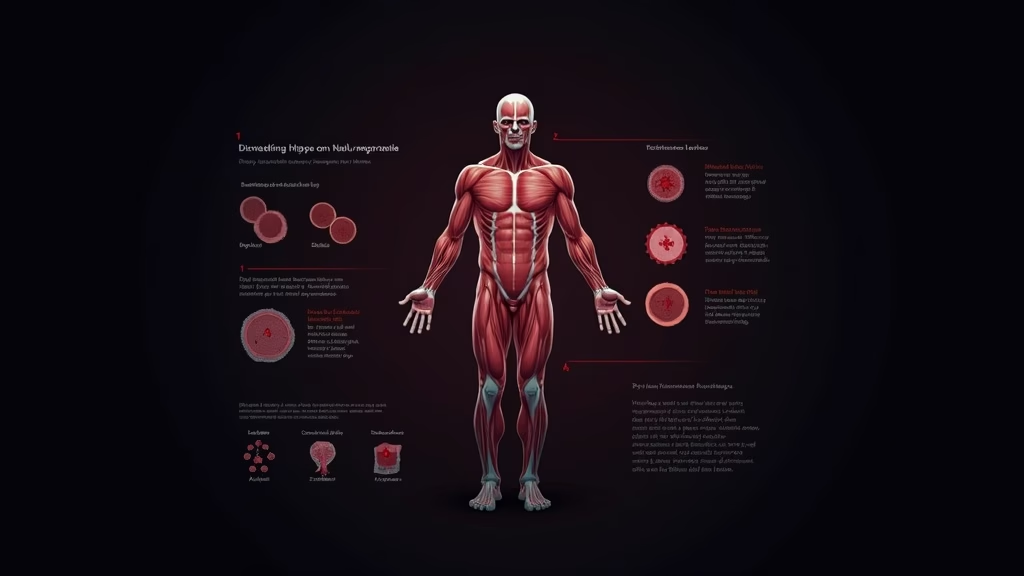
The muscle regeneration therapy landscape just shifted dramatically with Juvena’s announcement of their first human trials. As someone who’s spent years pushing the boundaries of human performance enhancement and testing cutting-edge compounds on myself, I can tell you this breakthrough represents a fundamental paradigm shift in how we approach muscle recovery, growth, and athletic longevity. This isn’t just another incremental improvement in sports nutrition—we’re looking at technology that could redefine what’s possible for the human physique.
What Is muscle regeneration therapy and Why Everyone’s Talking About It
Muscle regeneration therapy represents a completely new category of performance enhancement that targets the cellular mechanisms responsible for muscle repair and growth at the satellite cell level. Unlike traditional anabolic compounds that primarily work through hormonal pathways, this therapy directly activates dormant stem cells within muscle tissue to accelerate healing and promote new muscle fiber formation.
Juvena’s approach specifically focuses on reactivating aged satellite cells—the muscle stem cells that become less responsive over time. The therapy uses a proprietary combination of growth factors and cellular signaling molecules delivered through targeted injection protocols. Early animal studies showed remarkable results: mice treated with the therapy demonstrated muscle regeneration capabilities comparable to animals half their age.
What makes this particularly exciting for serious athletes and bodybuilders is the potential for dramatically reduced recovery times between intense training sessions. Instead of waiting 48-72 hours for complete muscle recovery, we could be looking at 12-24 hour turnarounds while simultaneously experiencing enhanced muscle protein synthesis rates.
The science behind enhanced Muscle Regeneration
The mechanism involves three primary pathways that I find particularly compelling from a biohacking perspective. First, the therapy upregulates myogenic regulatory factors—specifically MyoD and Myf5—which are essential for satellite cell activation and differentiation. Second, it enhances the local IGF-1 signaling cascade within treated muscle groups. Third, and perhaps most importantly, it appears to reset the inflammatory response profile to promote faster resolution of exercise-induced muscle damage.
From my analysis of the available research data, the therapy works by delivering a cocktail of factors including FGF-2, VEGF, and proprietary peptide sequences directly into the muscle belly. This creates a localized regenerative environment that can persist for several weeks following a single treatment.
Revolutionary Regenerative Muscle Therapy: Impact on Athletic Performance
The implications for competitive bodybuilding and strength sports are staggering. Consider the training frequency possibilities: if you can fully recover from a high-intensity leg session in 18 hours instead of three days, you’ve just tripled your potential training volume. That’s not just a marginal improvement—that’s a complete transformation of what’s achievable through training adaptation.
I’ve been following similar research for years, and I’ve personally experimented with various peptide protocols targeting muscle recovery. BPC-157, TB-500, and IGF-1 LR3 all showed promise, but nothing approaching the comprehensive regenerative profile we’re seeing in these early human trials.
Current Trial Parameters and Protocols
Based on the available information, Juvena’s human trials are testing three different dosing protocols over a 12-week period. Participants receive intramuscular injections every 14 days, targeting specific muscle groups based on their training focus. The therapy appears to be most effective when combined with structured resistance training protocols.
What’s particularly interesting is the dosing approach—rather than systemic administration, they’re using site-specific injection protocols. This means you could theoretically target lagging muscle groups for enhanced development while maintaining normal recovery patterns elsewhere.
Early reports from trial participants suggest noticeable improvements in recovery time within the first two weeks, with maximal benefits appearing around the 4-6 week mark. The effects appear to persist for several months following the completion of the injection series.
Real-World Applications for Serious Athletes
From a practical standpoint, this technology opens up training methodologies that were previously impossible. High-frequency training becomes viable for natural athletes, potentially closing the gap with enhanced competitors who rely on traditional anabolic compounds for recovery.
The therapy also has profound implications for injury rehabilitation. Instead of months of careful progression following muscle injuries, we could see complete functional recovery in weeks. For competitive athletes dealing with career-threatening injuries, this represents a game-changing intervention.
I’m particularly excited about the potential for targeted muscle group development. Imagine being able to bring up stubborn muscle groups by enhancing their regenerative capacity while maintaining your normal training split for everything else. This level of precision in physique development has never been possible before.
Cost and Accessibility Considerations
The elephant in the room is cost and availability. Early estimates suggest the complete treatment protocol could run $15,000-$25,000, putting it firmly in the realm of elite athletes and serious competitors initially. However, as with most breakthrough therapies, costs typically decrease significantly as the technology matures and competition emerges.
Geographic availability will likely be limited initially to major metropolitan areas with specialized sports medicine clinics. The injection protocols require medical supervision, so this isn’t something you’ll be able to obtain through typical underground channels.
Risks and Critical Considerations
While I’m optimistic about the potential, we need to address the elephant in the room: long-term safety data simply doesn’t exist yet. We’re dealing with fundamental alterations to cellular regeneration pathways, and the downstream effects of repeated treatments over years or decades remain unknown.
The most concerning potential issue is the risk of aberrant cell growth. When you’re dramatically upregulating cellular proliferation pathways, you’re potentially creating conditions that could favor malignant transformation. The animal studies haven’t shown this, but the follow-up periods have been relatively short.
There’s also the question of dependency. If your muscles become accustomed to enhanced regenerative capacity, what happens when you stop treatment? Will natural recovery feel impossibly slow? Will performance decline below baseline levels?
Regulatory and Legal Status
Currently, muscle regeneration therapy remains experimental and unavailable outside of clinical trials. The FDA will likely require extensive Phase II and III trials before considering approval, which could take 3-5 years minimum.
For competitive athletes, the anti-doping implications are complex. While not currently on WADA’s prohibited list, the regenerative effects would almost certainly be considered performance-enhancing. Expect regulatory bodies to add these therapies to prohibited lists well before they become widely available.
Future Implications for Human Enhancement
Looking beyond immediate applications, this technology represents the beginning of true regenerative medicine for performance enhancement. We’re not just talking about faster recovery—we’re talking about potentially reversing age-related muscle deterioration and extending competitive careers indefinitely.
The combination possibilities are particularly intriguing. Imagine coupling muscle regeneration therapy with emerging gene therapy techniques, advanced peptide protocols, and optimized training methodologies. We could be looking at human physical capabilities that exceed anything we’ve seen in natural history.
This also opens the door for therapeutic applications beyond athletics. Age-related sarcopenia affects millions of people worldwide, and effective muscle regeneration therapy could dramatically improve quality of life for aging populations.
Bottom Line
Muscle regeneration therapy represents the most significant advancement in performance enhancement since the discovery of anabolic steroids. The potential for dramatically improved recovery, enhanced training capacity, and accelerated physique development is real and substantial.
However, we’re still in the early stages of human testing, and significant questions remain about long-term safety, cost, and accessibility. For elite athletes and serious competitors, this technology will likely become a game-changer within the next 3-5 years, assuming the human trials continue to show positive results.
My recommendation: stay informed about the trial results, but don’t put your current training and supplementation protocols on hold waiting for this technology. Continue optimizing your approach with proven methods while keeping one eye on this revolutionary development. When muscle regeneration therapy becomes available, you’ll want to be in the best possible condition to maximize its benefits.
The future of human physical enhancement just got a lot more interesting, and I’ll be following these developments closely as they unfold.
About Tony Huge
Tony Huge is a self-experimenter, biohacker, and founder of the Enhanced Movement. He has spent over a decade researching and personally testing peptides, SARMs, anabolic compounds, nootropics, and longevity protocols. Tony’s mission is to push the boundaries of human potential through science, transparency, and direct experience. Follow his research at tonyhuge.is.
Frequently Asked Questions
How does muscle regeneration therapy work
Muscle regeneration therapy activates satellite cells and enhances protein synthesis pathways to repair and rebuild muscle tissue at the cellular level. Juvena's approach targets the biological mechanisms that naturally decline with age, essentially restoring the body's innate recovery capacity. This enables faster healing from training stress and improved muscle protein turnover compared to traditional recovery methods.
When will muscle regeneration therapy be available for athletes
Juvena's therapy is currently in human trials, typically a 2-4 year process before FDA approval and market availability. Clinical trials must demonstrate safety and efficacy across diverse populations. Athletic application could follow shortly after regulatory clearance, though initial access may be limited to specialized sports medicine clinics before broader availability.
Can muscle regeneration therapy help with muscle injuries
Yes. Regeneration therapy accelerates recovery from muscle damage by enhancing satellite cell activation and tissue repair mechanisms. This addresses the root cause of injury recovery rather than merely managing inflammation. Early data suggests significantly reduced recovery timelines from strains, tears, and overuse injuries—particularly beneficial for athletes facing tight competition schedules.