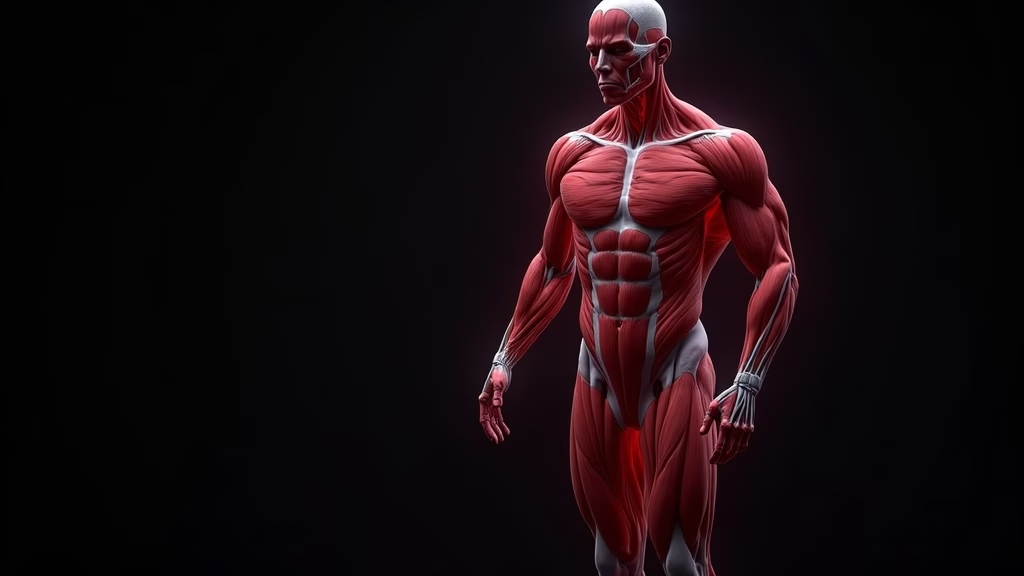
The bodybuilding and performance enhancement community is buzzing about Juvena Therapeutics kicking off their first human trials for muscle regeneration therapy, and for good reason. This isn’t another incremental improvement in sports nutrition or training methodology—we’re potentially looking at the holy grail of muscle development: the ability to regenerate muscle tissue at the cellular level. As someone who’s spent years pushing the boundaries of human performance enhancement, I can tell you that this technology represents a paradigm shift that could make everything we currently know about muscle building look primitive.
What Is muscle regeneration therapy and Why Everyone’s Talking About It
Muscle regeneration therapy, specifically Juvena’s approach, focuses on harnessing the body’s natural regenerative mechanisms to repair and rebuild muscle tissue more efficiently than traditional methods. Unlike anabolic steroids or peptides that work by enhancing existing pathways, this therapy aims to fundamentally restore the muscle’s ability to regenerate itself at a youthful level.
The reason this is exploding across Reddit and performance enhancement forums right now is simple: we’ve hit a wall with conventional methods. Even the most aggressive pharmaceutical protocols eventually plateau. Your muscle satellite cells—the stem cells responsible for muscle repair and growth—decline with age and become less responsive to stimulation. This therapy potentially reverses that decline.
I’ve personally experimented with virtually every muscle-building compound available, from traditional anabolics to cutting-edge peptides like BPC-157 and TB-500. While these can provide significant benefits, they’re still working within the constraints of your existing cellular machinery. muscle regeneration therapy promises to upgrade the machinery itself.
The Current Landscape of Muscle Enhancement
Before diving into this breakthrough, let’s acknowledge where we are now. The most effective muscle-building protocols typically involve:
- Anabolic-androgenic steroids for protein synthesis enhancement
- Growth hormone and IGF-1 for recovery and hyperplasia
- Myostatin inhibitors for removing genetic limiters
- Peptides for targeted healing and growth signaling
These work, but they’re incremental improvements with diminishing returns. muscle regeneration therapy represents a potential quantum leap beyond these approaches.
The Science Behind Revolutionary Muscle Regeneration Protocols
Juvena’s approach centers on what they call “cellular reprogramming factors”—essentially molecules that can reset muscle satellite cells to a more youthful, responsive state. Think of it as jailbreaking your muscle cells’ operating system to remove the limitations that accumulate with age and training stress.
The key mechanism involves targeting senescent cells—damaged cells that have stopped dividing but haven’t died. These “zombie cells” accumulate in muscle tissue and actively inhibit regeneration by secreting inflammatory compounds. The therapy works on two fronts: eliminating these senescent cells and simultaneously activating dormant satellite cells.
Satellite Cell Activation: The Real Game Changer
Satellite cells are your muscle’s repair crew. When you train hard enough to create microtears in muscle fibers, these cells are supposed to proliferate and fuse with existing muscle fibers to repair and enlarge them. The problem is that satellite cell function declines dramatically with age—by some estimates, you lose 50% of satellite cell activity between ages 20 and 60.
Traditional muscle-building drugs work around this limitation. Testosterone increases protein synthesis within existing muscle fibers. Growth hormone enhances recovery between training sessions. But none of them directly address the fundamental issue of declining satellite cell function.
Juvena’s therapy appears to directly target this root cause. In their animal studies, they’ve demonstrated the ability to restore satellite cell proliferation rates to juvenile levels. If this translates to humans, we’re looking at the possibility of 20-year-old recovery and growth rates regardless of chronological age.
The Molecular Pathway
From what I’ve been able to gather from their research publications, the therapy involves several key components:
- Senolytic compounds that selectively eliminate senescent cells
- Growth factors that activate dormant satellite cells
- Signaling molecules that enhance cellular communication
- Protective factors that prevent future cellular damage
This multi-pronged approach is crucial because muscle aging isn’t caused by a single factor—it’s a complex cascade of cellular dysfunction that requires multiple interventions to fully address.
Practical Applications for Athletes and Bodybuilders
Assuming the human trials prove successful, muscle regeneration therapy could revolutionize how we approach training and recovery. Based on the preclinical data, here’s what I anticipate the practical applications will look like:
Enhanced Recovery Protocols
The most immediate application will likely be accelerated recovery from training and injury. If the therapy can restore satellite cell function to youthful levels, we’re looking at potentially cutting recovery times in half or more. This means higher training frequencies, more volume tolerance, and faster adaptation to new stimuli.
I predict we’ll see protocols that combine muscle regeneration therapy with high-frequency training approaches—possibly training the same muscle groups daily with full recovery between sessions. This could completely rewrite the rules about training frequency and volume.
Breaking Through Genetic Limitations
One of the most exciting possibilities is overcoming genetic limitations on muscle building potential. Your satellite cell count and responsiveness are largely genetically determined. If regeneration therapy can artificially enhance these factors, it could level the playing field between genetic responders and non-responders.
I’ve worked with countless individuals who hit hard genetic ceilings despite perfect training, nutrition, and even aggressive pharmaceutical protocols. This therapy could potentially shatter those ceilings by giving everyone access to elite-level satellite cell function.
Age Reversal for Masters Athletes
Perhaps the most profound application will be for older athletes and bodybuilders. The therapy could potentially restore muscle-building capacity to levels not seen since their twenties. We might see 50-year-old bodybuilders building muscle as effectively as 25-year-olds.
This isn’t just about aesthetics—it’s about healthspan and quality of life. Maintaining muscle mass is crucial for metabolic health, bone density, and overall longevity.
Timeline and Availability Expectations
Juvena’s human trials are just beginning, which means we’re still years away from widespread availability. Based on typical clinical trial timelines, here’s what I expect:
- Phase I trials (safety): 12-18 months
- Phase II trials (efficacy): 2-3 years
- Phase III trials (large-scale validation): 3-5 years
- FDA approval process: 1-2 years
This puts us at roughly 7-9 years for legitimate clinical availability, assuming everything goes perfectly. However, the performance enhancement community rarely waits for FDA approval.
Underground Availability
I predict we’ll see research chemical versions appearing within 2-3 years as the key compounds are identified and synthesized by gray-market suppliers. This is exactly what happened with peptides like BPC-157, TB-500, and various SARMs—they became available through research chemical companies years before any formal medical approval.
The question is whether the therapy will require specialized administration or if it can be simplified into something practical for self-experimentation. If it’s as simple as subcutaneous injections, it’ll be widely available quickly. If it requires specialized cell culture or complex preparation, availability will be much more limited.
Risks and Considerations for Early Adopters
As with any cutting-edge therapy, muscle regeneration treatments will carry risks that we don’t fully understand yet. Based on the mechanism of action, here are my primary concerns:
Cancer Risk
Any therapy that enhances cellular proliferation carries theoretical cancer risk. Satellite cells share some characteristics with cancer cells—both involve rapid cell division and growth. While the therapy is designed to be specific to muscle tissue, we won’t know the long-term cancer implications until we have years of human data.
Immune System Effects
Eliminating senescent cells could have unintended immune system consequences. These cells, while problematic for muscle regeneration, may play important roles in immune function that we don’t fully understand. Early adopters could face increased infection risk or autoimmune issues.
Dosing Complications
Unlike traditional performance enhancing drugs where more typically equals better results (up to a point), regeneration therapy will likely have narrow therapeutic windows. Too little and you won’t see benefits; too much and you could trigger uncontrolled cellular proliferation or other serious side effects.
Long-term Dependency
We don’t know whether the benefits will be permanent or if ongoing treatment will be required. If satellite cell function returns to baseline after treatment stops, users might find themselves dependent on continued therapy to maintain their enhanced recovery capacity.
Bottom Line on Muscle Regeneration Therapy
Muscle regeneration therapy represents the most significant breakthrough in performance enhancement since the discovery of anabolic steroids. If Juvena’s human trials prove successful, we’re looking at technology that could fundamentally change what’s possible in terms of muscle building, recovery, and age-related performance decline.
The science is sound, the mechanism makes biological sense, and the preclinical results are impressive. However, we’re still years away from knowing how this will translate to real-world human applications. The therapy will likely be expensive, potentially risky, and initially available only through clinical trials or gray-market channels.
For serious athletes and biohackers, this is something to monitor closely but not something to bet your training future on just yet. Continue optimizing your current protocols while keeping an eye on how these trials progress. When muscle regeneration therapy does become available, it won’t replace good training, nutrition, and recovery practices—it’ll amplify them to levels we’ve never seen before.
The future of muscle building is about to get very interesting. This could be the technology that finally allows us to transcend our genetic limitations and redefine what’s possible for human performance. The question isn’t whether this will revolutionize bodybuilding and athletics—it’s how soon we can get our hands on it safely.
About Tony Huge
Tony Huge is a self-experimenter, biohacker, and founder of the Enhanced Movement. He has spent over a decade researching and personally testing peptides, SARMs, anabolic compounds, nootropics, and longevity protocols. Tony’s mission is to push the boundaries of human potential through science, transparency, and direct experience. Follow his research at tonyhuge.is.
Frequently Asked Questions
How does muscle regeneration therapy work at the cellular level?
Juvena's therapy targets satellite cells—dormant muscle stem cells responsible for repair and growth. By activating these cells, the treatment stimulates myogenesis (muscle fiber formation) and accelerates tissue regeneration beyond natural repair mechanisms. This cellular-level approach differs from traditional training or supplementation by directly enhancing the body's intrinsic muscle-building machinery.
When will muscle regeneration therapy be available for athletes?
Juvena Therapeutics is currently in Phase 1 human trials, typically lasting 1-2 years. FDA approval generally requires 5-7 years from trial initiation. Realistic availability for performance athletes remains 3-5+ years away. Early-stage trials prioritize safety and efficacy data before broader access or clinical applications become possible.
Is muscle regeneration therapy legal for athletic competition?
Currently, gene and cell therapies aren't explicitly prohibited by most sports organizations, but regulatory status remains unclear. WADA and athletic commissions will likely establish guidelines as therapies advance. Once approved medically, sports bodies must determine whether therapeutic use constitutes performance enhancement, potentially classifying it similarly to banned substances.