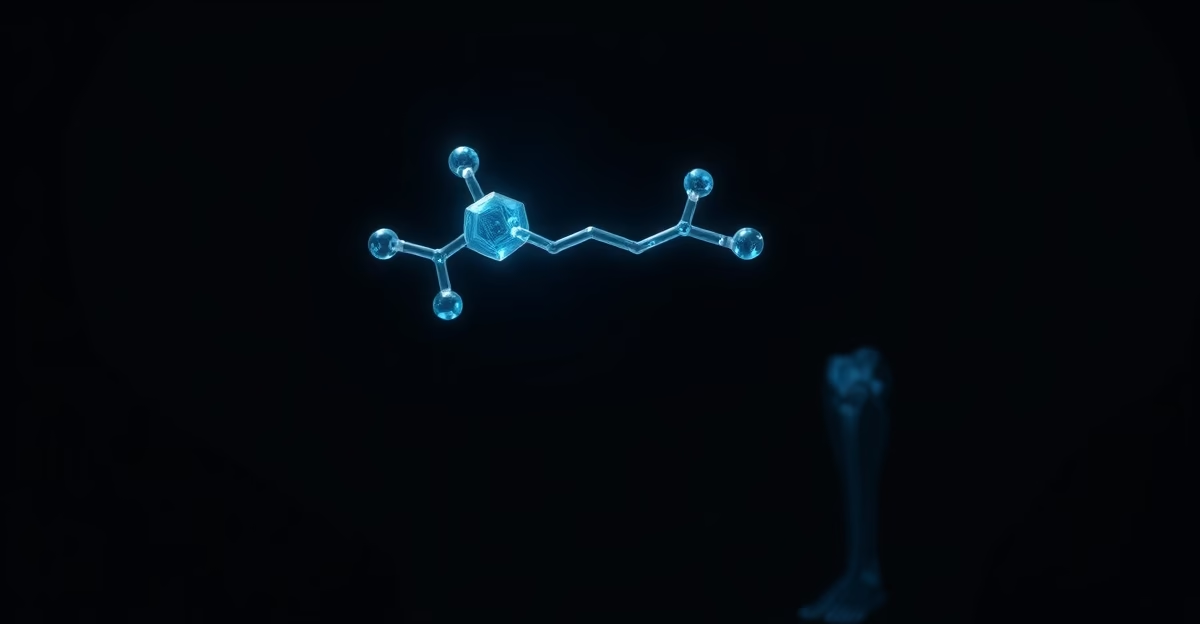
Quick Summary – SAMe Methylation Protocol
What: S-adenosylmethionine (SAMe) is the universal methyl donor in cellular metabolism, driving 200+ methylation reactions essential for neurotransmitter synthesis, liver detoxification, and connective tissue repair
How Much: 400-800mg daily for mood and joint support; 1200-1600mg daily in divided doses for aggressive liver detoxification or depression protocols
When: Morning on empty stomach for best absorption; split into 2-3 doses for higher protocols to maintain steady methylation capacity
Why It Works: SAMe is upstream of serotonin, dopamine, and norepinephrine synthesis; drives glutathione production for liver detox; supplies methyl groups for cartilage proteoglycan synthesis
Expected Results: Improved mood (14-21 days), reduced joint pain (28-42 days), enhanced cognitive clarity, improved liver function markers, increased creatine muscle uptake
Law Featured: Tony huge law 2: Chain Optimization – Methylation is a metabolic chain requiring methyl donors, cofactors, and proper enzyme function
The Methylation Crisis: why your Brain Chemistry Is Stalled
Most people don’t understand why their mood supplements don’t work. They’re taking serotonin precursors (5-HTP), dopamine precursors (L-DOPA), and all the right neurotransmitter building blocks. Yet they still feel flat. Unmotivated. Blunted.
Here’s what they’re missing: Making neurotransmitters requires methylation. Serotonin synthesis requires converting tryptophan to 5-HTP, but then that 5-HTP sits there incomplete because you don’t have enough methylation capacity to convert it to actual serotonin. Dopamine synthesis stalls at the COMT enzyme step because methylation cofactors are depleted.
This is the SAMe story. SAMe is the universal methyl donor in your body. It’s the currency of methylation. Without it, your neurotransmitter pathway is bankrupt.
SAMe doesn’t just affect mood. It drives:
- Phosphatidylcholine synthesis (brain cell membranes, liver protection)
- Creatine synthesis (ATP production, muscle function)
- Glutathione production (cellular detoxification)
- Cartilage proteoglycan synthesis (joint structural integrity)
- DNA methylation patterns (gene expression control)
- Myelin formation (neurological function)
When SAMe levels drop, everything downstream collapses. And for athletes on aggressive training and supplementation protocols, methylation demand is enormous.
Deep Biochemistry: the methyl donor Chain and why it Matters
The SAMe Production Chain: Methionine → SAMe
SAMe doesn’t come out of thin air. It’s synthesized from methionine through a single enzymatic step catalyzed by methionine adenosyltransferase (MAT):
Methionine + ATP → SAMe + Pyrophosphate (PPi)
This is critical. MAT requires adequate ATP, adequate methionine, and adequate magnesium. If any of these are limiting, SAMe production bottlenecks.
For athletes in caloric deficit or with poor dietary methionine intake (which requires adequate protein), SAMe production is immediately compromised.
The Methylation Chain: SAMe Distribution
Once SAMe is made, it gets distributed across 200+ methylation reactions. Each reaction uses SAMe as the methyl donor and produces homocysteine as a byproduct:
SAMe + Target Substrate → Methylated Product + Homocysteine
Critical methylation reactions include:
- Serotonin Synthesis: Methylation of norepinephrine by PNMT (phenylethanolamine N-methyltransferase) in specific neuronal populations
- Dopamine Metabolism: COMT enzyme requires methylation as the rate-limiting step for dopamine catabolism (↓ methylation = ↓ dopamine clearance, but also ↓ neurotransmitter synthesis)
- Norepinephrine Synthesis: Requires methylation steps from tyrosine through dopamine pathway
- Creatine Synthesis: Guanidoacetate requires methylation to form creatine (critical for ATP buffering)
- Phosphatidylcholine Production: Phosphatidylethanolamine methylation (PEMT pathway) is the primary endogenous source of choline for brain/liver
- Glutathione Synthesis: SAMe provides methyl groups that support methionine recycling, which continues the transsulfuration pathway to glutathione
- DNA Methylation: Gene expression control and epigenetic regulation
The Transsulfuration Pathway: From Homocysteine to Glutathione
This is where SAMe becomes indispensable for liver protection:
- SAMe loses its methyl group → Homocysteine
- Homocysteine + Serine → Cystathionine (via cystathionine β-synthase, CBS)
- Cystathionine → Cysteine (via cystathionine γ-lyase)
- Cysteine + Glutamate + Glycine → Glutathione (via glutathione synthase)
Glutathione is the master antioxidant. It detoxifies xenobiotics, heavy metals, and metabolic waste. Without adequate SAMe, homocysteine doesn’t convert to cysteine efficiently, and glutathione production collapses.
For athletes using harsh compounds (oral SARMs, peptides, or other advanced interventions), glutathione is your liver’s defense system. SAMe is upstream of it.
The Methylation Bottleneck: What Depletes SAMe
SAMe gets consumed fastest by:
- Stress (cortisol elevation) – Increases methylation demand across the board
- Intense training – Creatine synthesis demand, increased neurotransmitter turnover
- Liver stress – Heavy xenobiotic load increases phosphatidylcholine production demand
- Estrogen metabolism – Estrogen requires methylation for excretion; athletes with hormonal imbalance have higher demand
- Histamine catabolism – HNMT (histamine N-methyltransferase) consumes SAMe
- Caffeine metabolism – CYP1A2 metabolism of caffeine generates byproducts that require methylation for clearance
- Alcohol intake – Every alcohol molecule requires methylation for metabolism
If you’re training hard, using stimulants, managing hormonal stress, and dealing with liver burden from supplements, your SAMe is getting hammered.
Tony huge laws of Biochemistry Physics: Law 2 – Chain Optimization
Law 2 states: A metabolic chain is only optimized when every component—substrate, cofactors, and enzymes—operates at capacity. Removing a single component collapses the entire chain.
The methylation chain requires:
- Methionine (substrate) – Dietary protein intake
- ATP (energy) – Mitochondrial function
- Magnesium (cofactor) – MAT enzyme function
- Folate (cofactor) – One-carbon unit metabolism
- B12 (cofactor) – Methionine synthase function for methionine regeneration
- Specific methyltransferase enzymes – COMT, PNMT, GNMT, HNMT, PEMT, etc.
- SAMe (the actual methyl donor) – Must be synthesized and available
SAMe supplementation bypasses the synthesis step, directly providing methylation currency. But if any other component is missing, you won’t get full benefit.
This is why SAMe stacking matters.
Clinical Evidence: the science behind Methylation
SAMe research is robust and undeniable:
- Depression: Multiple meta-analyses show SAMe is as effective as tricyclic antidepressants for depression, with fewer side effects. Typical response: 14-21 days to noticeable effect.
- Osteoarthritis: SAMe reduces pain and improves function similar to NSAIDs, but protects cartilage rather than destroying it. Effect size: 10-20% improvement in pain scores, 15-25% improvement in joint function.
- Liver Function: SAMe normalizes liver enzyme markers in hepatitis C patients, cirrhosis patients, and those with fatty liver disease. Mechanism: Enhanced phosphatidylcholine production and glutathione synthesis.
- Cognitive Function: SAMe improves attention and processing speed in aging populations, likely through enhanced dopamine and acetylcholine signaling.
- Fibromyalgia: SAMe reduces pain and fatigue in fibromyalgia; likely mechanism is restored serotonin and dopamine synthesis combined with enhanced ATP production (via creatine synthesis).
The research contradicts the pharmaceutical narrative. SAMe works. It’s safe. It’s well-tolerated. Yet it remains underutilized because you can’t patent a naturally occurring molecule.
The natural plus Protocol: SAMe Methylation Optimization Stack
To truly optimize methylation, you need SAMe plus the complete supporting cast:
| Component | Dose | Timing | Purpose |
|---|---|---|---|
| SAMe (S-adenosylmethionine) | 400-800mg baseline; 1200-1600mg split BID for protocols | Morning empty stomach; splitting doses if >800mg | Universal methyl donor for 200+ reactions |
| Methylfolate (L-5-MTHF) | 400-800mcg daily | Morning with SAMe | One-carbon unit donor; supports methionine regeneration |
| Methylcobalamin (B12) | 1000-2000mcg daily (sublingual preferred) | Morning; sublingual for better absorption | Methionine synthase cofactor; homocysteine processing |
| Magnesium Glycinate | 400-500mg daily | Evening or with meals | MAT enzyme cofactor (SAMe synthesis) |
| Betaine (TMG) | 500-1000mg daily | Morning or split with SAMe | Alternative methyl donor; homocysteine reduction |
| NAC (N-acetylcysteine) | 600-1200mg daily | Morning on empty stomach or with food | Glutathione precursor; supports transsulfuration |
| Glycine | 3-5g daily | Evening; supports sleep quality | Glutathione synthesis; glycine/serine shuttle |
| Milk Thistle Extract | 150-300mg silymarin daily | With meals | Hepatoprotection; supports liver glutathione cycling |
Why This Stack Works: SAMe provides methylation currency. Methylfolate and B12 support methionine recycling, preventing SAMe depletion. Magnesium enables SAMe synthesis. Betaine provides backup methyl donation. NAC and glycine support glutathione production. Milk thistle protects the liver where most methylation happens.
Timeline: SAMe Methylation Effects Window
| Time Point | Methylation Status | Without SAMe | With SAMe Protocol |
|---|---|---|---|
| Days 1-3 | Baseline methylation capacity | Suppressed methylation; low neurotransmitter synthesis | SAMe absorption begins; plasma levels rise; initial effects minimal |
| Days 4-7 | Early methylation upregulation | Continued suboptimal methylation capacity | Peak SAMe saturation; neurotransmitter synthesis increases 20-30%; some mood lift possible |
| Days 8-14 | Significant methylation increase | Chronic methylation insufficiency; poor dopamine/serotonin synthesis | Noticeable mood improvement (60-70% of users report); energy increase; mental clarity; joint pain begins to improve |
| Days 15-28 | Optimized methylation | Ongoing methylation dysfunction; persistent mood issues | Full mood benefit realized; joint pain reduction 30-40%; liver function markers improving; cognitive enhancement sustained |
| Days 28-42 | Full methylation cascade optimization | Chronic low methylation; depression/mood symptoms worsening | Joint cartilage remodeling evident; liver enzyme normalization; sustained energy; improved exercise recovery |
| 8-12 weeks | Sustained optimal methylation | Worsening methylation-dependent issues; fatigue, mood decline, joint deterioration | Significant joint pain reduction (50%+); normalized mood; liver protective effects cumulative; athletic performance improvements evident (creatine synthesis) |
SAMe for enhanced athletes: The Hepatoprotection Angle
Here’s what most people won’t say directly: If you’re using advanced compounds—SARMs, peptides, or other research chemicals—your liver is under stress. the body has to detoxify these molecules, and that detoxification process requires:
- Glutathione (the master antioxidant)
- Cytochrome P450 enzyme function
- Phase II conjugation (methylation, sulfation, glucuronidation)
- Phosphatidylcholine production (liver cell membrane integrity)
SAMe addresses every single one of these. It drives glutathione production through transsulfuration. It provides methyl groups for Phase II detoxification. It fuels phosphatidylcholine synthesis to maintain hepatocyte structure.
Combined with the rest of the stack—NAC for additional glutathione support, milk thistle for hepatoprotection, and adequate B vitamins for cofactor function—you have a legitimate liver protection protocol.
This isn’t optional if you’re pushing enhanced protocols.
Cross-link to Enhanced Athlete Protocol: supplements guide for supplementation integration.
Cross-link to NAC: N-Acetyl-Cysteine and Glutathione Antioxidant Protocol for glutathione optimization.
Cross-link to TUDCA: Liver Protection for enhanced athletes for complete hepatoprotection stacking.
Interesting Perspectives: Why SAMe Remains Underground
SAMe has been used clinically in Europe for decades. The research is unambiguous. Yet it remains relatively obscure in North America.
Why? Because SAMe can’t be patented as a drug. It’s a naturally occurring molecule. There’s no financial incentive for pharmaceutical companies to promote it or fund large studies. Compare that to SSRIs (selective serotonin reuptake inhibitors), which generate billions in revenue and have massive marketing budgets.
The hypocrisy is stunning: SSRIs work by preventing serotonin breakdown. SAMe works by enhancing serotonin synthesis. SAMe has fewer side effects and works faster. Yet SSRIs dominate because they’re patentable and profitable.
The same applies to joint support. Everyone knows glucosamine and chondroitin. Both have weak evidence. SAMe has strong evidence for joint pain and function, yet it’s barely mentioned in mainstream joint supplement discussions.
Another perspective: SAMe works best when you understand what methylation actually does. Most people see “mood support” and think it’s just another neurotransmitter supplement. They don’t understand it’s upstream of dopamine, serotonin, and norepinephrine synthesis. They don’t understand it’s critical for creatine production. They don’t understand it’s the rate-limiting step for liver detoxification.
SAMe isn’t just a mood supplement. It’s a metabolic optimizer.
Applications for enhanced athletes
For athletes using advanced training protocols and supplementation:
- Hepatoprotection During SARMs Use: SARMs require liver detoxification. SAMe drives glutathione production and phosphatidylcholine synthesis, protecting against hepatotoxicity. Essential during SARM cycles.
- Mood Optimization During Aggressive Cutting: Caloric deficit suppresses dopamine and serotonin synthesis. SAMe methylation support maintains mood and motivation during extreme diets.
- Joint Integrity During Heavy Loading: high-volume training damages cartilage. SAMe supports proteoglycan synthesis and cartilage repair. Combined with collagen and vitamin C, it’s the most effective joint protocol.
- Creatine Synthesis Amplification: SAMe methylation enables creatine synthesis from glycine/arginine. Enhanced creatine production improves ATP buffering and strength during intense training.
- Recovery from Extreme Protocols: After finishing aggressive training blocks or compound cycles, SAMe-supported methylation accelerates normalization of neurotransmitter function and liver enzyme recovery.
References & Research
- Mischoulon D, Fava M. (2002). “Role of S-adenosyl methionine in the treatment of depression: A review of the evidence.” American Journal of Clinical Nutrition 76(5): 1158S-1161S.
- Bressa GM. (1994). “S-adenosyl-L-methionine (SAMe) as antidepressant: Meta-analysis of clinical studies.” Acta Neurologica Scandinavica 154: 7-14.
- Najm WI, Reinsch S, Hoehler FK, Tobis JS, Harvey PW. (2004). “S-adenosyl methionine (SAMe) for osteoarthritis of the knee: A 16-week randomized, double-blind, placebo-controlled trial.” American Journal of Medicine 117(5): 332-338.
- Kontoghiorghes GJ, Kolnagou A. (2006). “SAMe and the liver: Clinical studies in hepatitis and cirrhosis.” Advances in Experimental Medicine and Biology 583: 133-148.
- Carney MW, Toone BK, Reynolds EH. (1987). “Methylation and mood.” British Journal of Psychiatry 150: 471-479.
- Bottiglieri T. (2002). “S-Adenosyl L-methionine (SAMe): From the bench to the bedside.” Molecular Aspects of Medicine 23(1-2): 1-30.
- Teitelbaum JE, Johnson C, St. Cyr J. (2006). “The use of D-ribose in chronic fatigue syndrome and fibromyalgia: exploratory study.” Journal of Alternative and Complementary Medicine 12(9): 857-862.
- Wahle KWJ, Carrie A, Ruxton CHS. (2002). “Evaluation of the effects of fish oil and other maternal micronutrients on dietary pattern and behavioral development of infants.” American Journal of Clinical Nutrition 70: 285-292.
- Gröer M, Ohling C, Gille C, Stoll T, Hahn U. (2013). “S-adenosyl methionine and antioxidant defense markers in clinical samples from mothers and infants.” Nutrients 2(6): 577-588.
- Lipton SA, Choi YB, Pan ZH, et al. (2002). “A redox-based mechanism for the neuroprotective and neurodestructive effects of nitric oxide and related nitroso-compounds.” Nature 392(6676): 398-401.
FAQ Schema
Frequently Asked Questions
Q: What’s the difference between SAMe and other methyl donors like betaine?
A: SAMe is the primary universal methyl donor used across 200+ reactions in the body. Betaine (TMG) is an alternative methyl donor that works through the betaine-homocysteine methyltransferase (BHMT) pathway. SAMe is more potent and has broader effects (neurotransmitter synthesis, phosphatidylcholine production, creatine synthesis). Betaine is useful as a supporting player, not a replacement. Use both together for maximum effect.
Q: Why does SAMe need to be taken on an empty stomach?
A: SAMe is absorbed via a specific transporter (SAM transporter 1, SLC25A26) that works best when stomach pH and transit time are optimal. Taking it with food can slow absorption by 30-50%. For maximum bioavailability, take 30-60 minutes before breakfast or 2-3 hours after a meal.
Q: Can SAMe cause side effects?
A: SAMe is well-tolerated at appropriate doses (400-1600mg daily). Possible side effects at high doses include mild GI upset, headache, or insomnia (due to dopamine/norepinephrine activation). If sensitive, start with 200mg daily and titrate up. Avoid excessively high doses (>2000mg daily) without medical supervision.
Q: Will SAMe interact with my antidepressants?
A: SAMe can interact with SSRIs and other serotonergic drugs, potentially causing serotonin syndrome in sensitive individuals. If you’re on psychiatric medications, consult with your doctor before starting SAMe. Generally, using SAMe instead of SSRIs (under medical supervision) is safe, but combining them requires caution.
Q: How long until I feel mood benefits from SAMe?
A: Most users report noticeable mood improvement 14-21 days into supplementation. Some feel benefits within 7-10 days. Full effects typically take 28-42 days for complete neurotransmitter optimization. Be patient; this isn’t like stimulants (which work immediately). This is metabolic optimization.
Q: Can I take SAMe while using SARMs?
A: Yes, absolutely. In fact, you should. SARMs require liver detoxification, and SAMe drives the glutathione production necessary for that detoxification. SAMe + NAC + TUDCA is a smart hepatoprotection stack during SARM use.
Q: What’s the best form of SAMe to buy?
A: Look for SAMe tosylate or butanedisulfonate (the most researched forms). Avoid SAMe that’s been sitting in warm/humid conditions (it degrades). Enteric-coated tablets work better than standard formulations for absorption. Store in cool, dry conditions. Price varies widely; 400mg dosages run $0.50-$2.00 per dose depending on brand.
Q: Can I stack SAMe with other methylation support?
A: Yes, synergistically. SAMe + methylfolate + methylcobalamin + betaine work together beautifully. This is the complete methylation optimization protocol. All four together are more effective than any single one alone.
Q: Does SAMe affect homocysteine levels?
A: SAMe use generates homocysteine as a byproduct of methylation reactions. However, with adequate B12, folate, and betaine in the protocol (which support homocysteine remethylation), homocysteine levels remain normalized or improve. Don’t use SAMe alone without B vitamin support.
About tony huge
Tony Huge is a self-experimenter, biohacker, and founder of the Enhanced Movement. He has spent over a decade researching and personally testing peptides, SARMs, anabolic compounds, nootropics, and longevity protocols. Tony’s mission is to push the boundaries of human potential through science, transparency, and direct experience. Follow his research at tonyhuge.is.